DLPFC-sgACC EEG Connectivity Predicted rTMS Remission in Depression
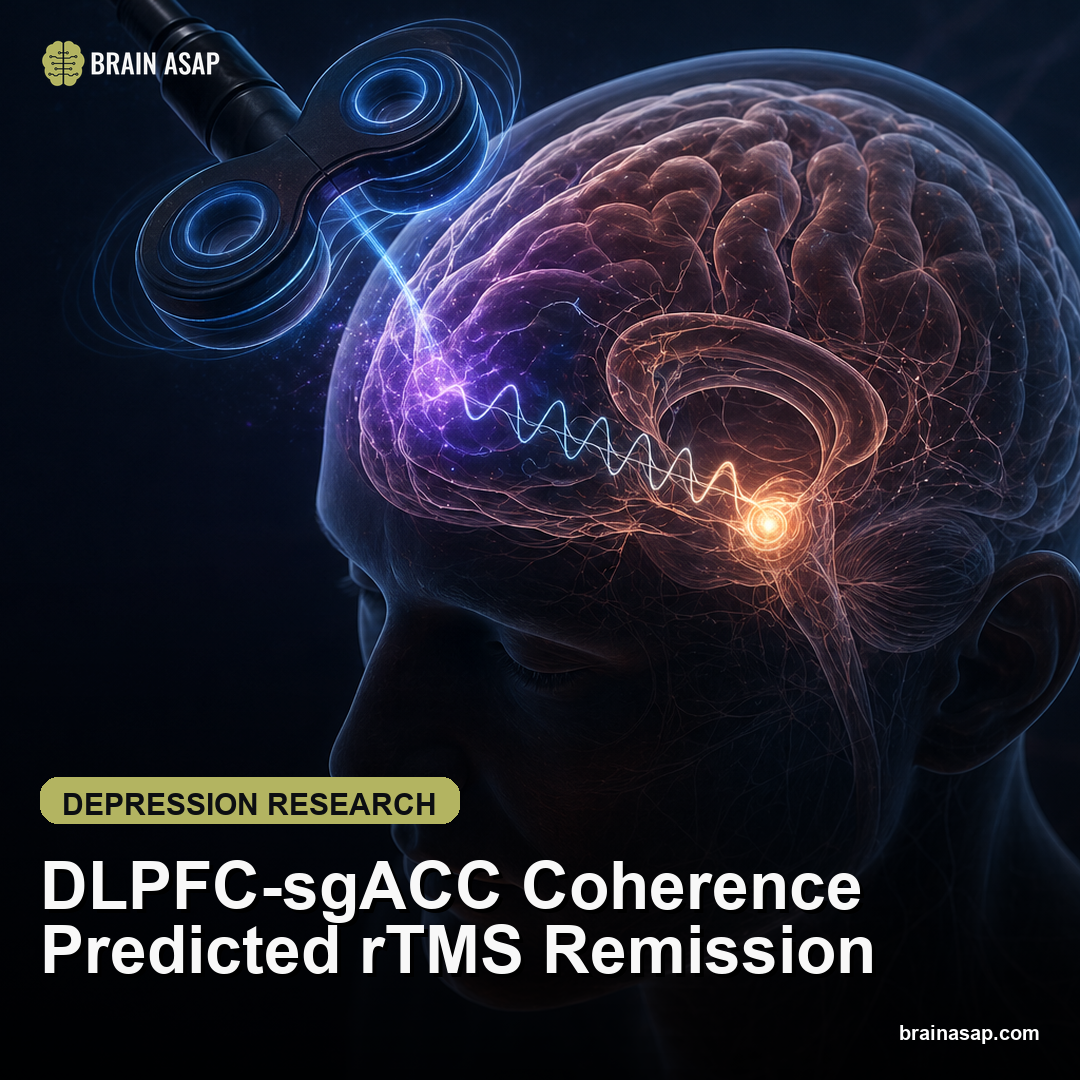
Brain Circuit Signal Predicted rTMS Remission

DLPFC-sgACC Circuit Signal Predicted rTMS Remission TL;DR: Before starting rTMS, patients who later remitted from depression showed lower alpha-band connectivity flowing from the DLPFC to the subgenual cingulate — pointing toward a measurable EEG marker that could help select candidates before weeks of treatment are spent. Key Findings Remitters had lower pre-treatment DLPFC-to-sgACC alpha connectivity: …
Read more

Grin2a Gene Linked to Mediodorsal Thalamus Activity and Belief Updating in Schizophrenia

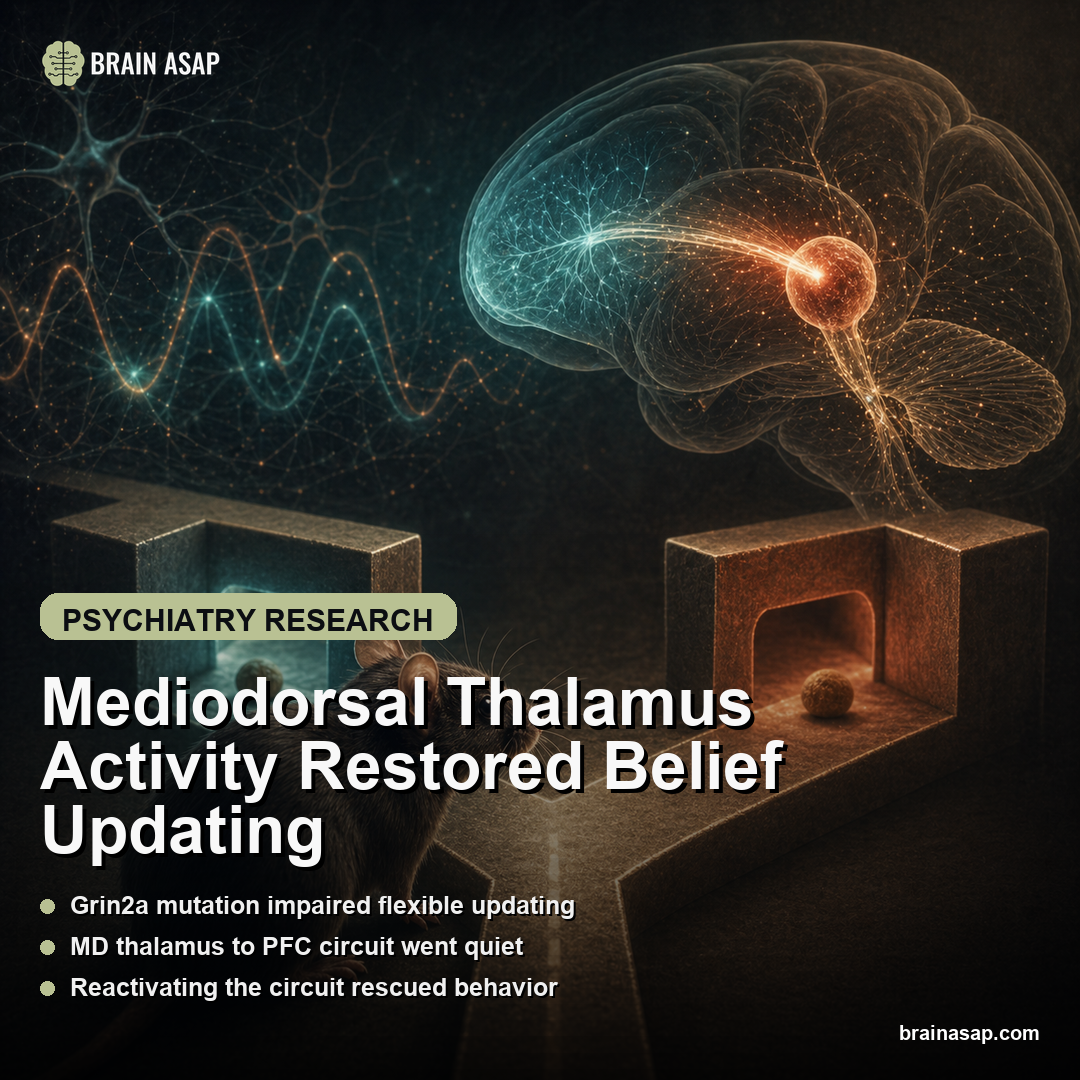
Mediodorsal Thalamus Activity Restored Belief Updating

Mediodorsal Thalamus Activity Restored Belief Updating TL;DR: A Nature Neuroscience mouse study linked a schizophrenia-risk Grin2a mutation to weaker mediodorsal thalamus activity, impaired belief updating, and behavioral rescue when researchers reactivated the thalamus-prefrontal circuit during flexible decision-making in mice. Key Findings Grin2a was the genetic entry point: The mutation affects an NMDA receptor subunit gene …

Read more

FTL1 Iron Protein Reversed Memory Loss in Old Mice

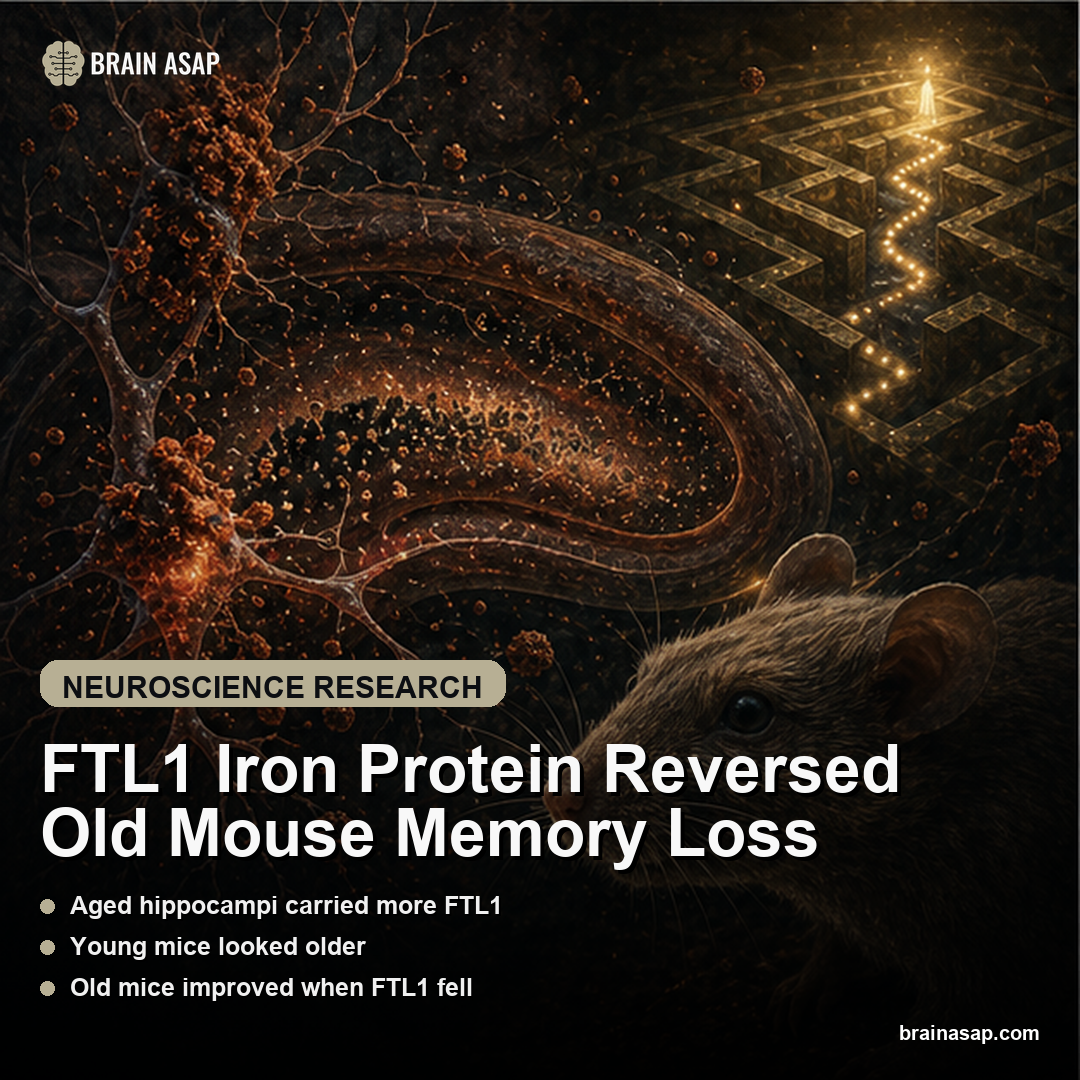
FTL1 Iron Protein Reversed Old Mouse Memory Loss

FTL1 Iron Protein Reversed Old Mouse Memory Loss TL;DR: In old mice, an iron-associated hippocampal protein called FTL1 rose with cognitive decline, made young brains look older when boosted, and improved old-mouse cognition when targeted. Key Findings Aged hippocampi carried more FTL1: Transcriptomic and mass-spectrometry analyses found neuronal FTL1 increased in the hippocampus of old …

Read more

Amygdala Astrocytes Helped Store and Extinguish Fear Memories

How Astrocytes Help the Amygdala Store Fear Memories

How Astrocytes Help the Amygdala Store Fear Memories TL;DR: Amygdala astrocytes were not passive support cells: their calcium signals tracked learned fear states and were required for neuronal fear-memory representations in mice. Key Findings In vivo BLA imaging across multiple mouse cohorts: The team combined astrocyte and neuronal calcium imaging, electrophysiology, and circuit manipulations in …

Read more

ACC Gene Therapy Targeting MOR Mimicked Morphine for Chronic Pain in Mice

How Gene Therapy Mimicked Morphine for Chronic Pain

How Gene Therapy Mimicked Morphine for Chronic Pain TL;DR: A Nature study identified opioid-sensitive neurons in the anterior cingulate cortex and used a synthetic mu-opioid receptor promoter to silence them, producing morphine-like relief of chronic pain unpleasantness in mice without using a systemic opioid drug. Key Findings 700-μm nociceptive hotspot: The authors mapped a narrow …

Read more

Meat Intake Linked to Lower Dementia Risk in APOE4 Carriers

Meat Intake Linked to Lower Dementia Risk in APOE4 Carriers

Meat Intake Linked to Lower Dementia Risk in APOE4 Carriers TL;DR: In APOE4 carriers, higher total meat intake tracked with lower observed dementia risk over 15 years, while a higher processed-to-total meat ratio moved in the unfavorable direction. Key Findings 2,157 dementia-free adults: The study used the Swedish National Study on Aging and Care-Kungsholmen cohort …

Read more

Loneliness Impaired Memory Without Accelerating 6-Year Decline

Loneliness Lowered Memory Without Speeding Decline

Loneliness Lowered Memory Without Speeding Decline TL;DR: In 10,217 older Europeans, loneliness was linked to lower immediate and delayed recall at baseline, but it did not make memory decline faster over 6 years. Key Findings 10,217 SHARE participants: The analysis included adults aged 65 to 94 from 12 European countries who participated in waves 5, …

Read more

1 in 5 Trauma-Exposed Children Met PTSD Criteria in 2025 Meta-Analysis

How Often Trauma-Exposed Kids Develop PTSD Now

How Often Trauma-Exposed Kids Develop PTSD Now TL;DR: An updated meta-analysis of 95 studies found that about 1 in 5 trauma-exposed children met DSM-IV PTSD criteria and about 1 in 8 met DSM-5 criteria, with the highest rates in girls and in youth exposed to interpersonal trauma. Key Findings 95 studies over 30 years: The …

Read more

Egypt’s 1,530-Person Alzheimer’s Cohort Identified Risk Factors

Egypt’s 1,530-Person Alzheimer’s Cohort Captures Risks Western Studies Miss

Egypt’s 1,530-Person Alzheimer’s Cohort Captures Risks Western Studies Miss TL;DR: A DAC-Egypt cohort enrolled 1,530 adults aged 55 to 98, collected blood from 98%, and captured a rural, low-literacy, metabolically burdened population that most dementia datasets do not represent well. Key Findings Rural Egyptian cohort filled a data gap: The cohort recruited community-dwelling Egyptians aged …

Read more

County Economics Explained U.S. Poor Mental Health Gaps

County Economics Explained Poor Mental Health Gaps

TL;DR: A 2019 county-level analysis found that income, SSI, SNAP, education, commute, and work patterns explained about 70% of U.S. variation in frequent poor mental health days. Key Findings 70% county variation explained: The overall model explained 70.0% of between-county variation in adults reporting more than 14 poor mental health days in the past month. …

Read more