TL;DR: A 2026 study in the European Journal of Nuclear Medicine and Molecular Imaging reported that adolescent bipolar II depression showed lower thalamic structural-functional connectivity coupling and glucose metabolism than adolescent major depressive disor…
Read article ↗
TL;DR: A 2026 systematic review and meta-analysis in Bipolar Disorders found that poor medication adherence in bipolar disorder was linked to substance use, psychotic features, lower insight, poorer functioning, and several markers of more severe illness, but…
Read article ↗
TL;DR: A 2026 study in Nature Communications found that neuropsychiatric disorder risk did not map onto cognition as one general trait. Schizophrenia, bipolar disorder, ADHD, autism, and Alzheimer’s disease showed different genetic links with reaction time, fl…
Read article ↗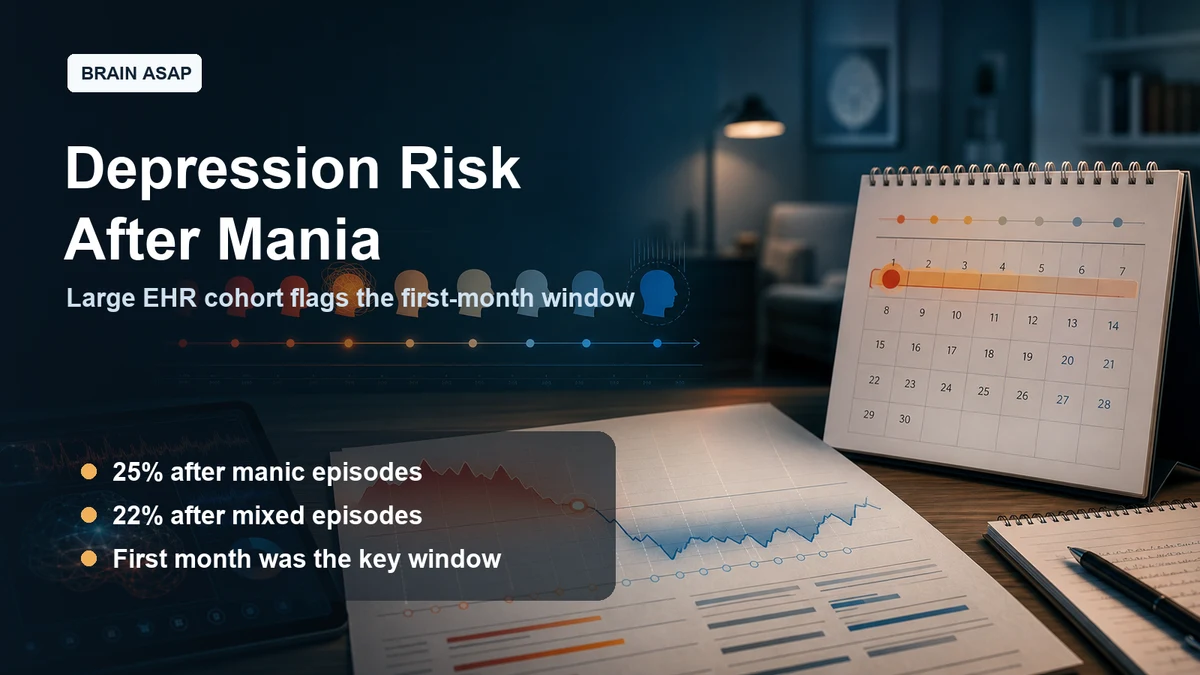
TL;DR: A 2026 medRxiv retrospective cohort study found that depression often followed bipolar manic or mixed episodes quickly, with 25% of manic episodes and 22% of mixed episodes transitioning to depression within 1 month. Key Findings First-month risk window…
Read article ↗
TL;DR: A 2026 review in Purinergic Signalling argues that ATP-gated P2X receptors, especially P2X7 and P2X4, may connect stress-related neuroinflammation with depression and bipolar-disorder biology. Key Findings P2X7 focus: The review describes P2X7 receptor…
Read article ↗
TL;DR: A 2026 cohort study in The British Journal of Psychiatry found that lithium prescribing around pregnancy was rare in UK primary care records, and most pre-pregnancy lithium users did not stay on treatment through all three trimesters. Key Findings 752,1…
Read article ↗
TL;DR: A 2026 systematic review in Molecular Psychiatry found that microglia-related findings across major depression, bipolar disorder, and schizophrenia were better explained by biological subgroups than by one uniform diagnosis-by-diagnosis inflammation pat…
Read article ↗
TL;DR: A 2026 mixed-methods study in BMC Psychiatry found that adults in psychiatric treatment valued group-based physical activity less as generic exercise and more as structured, socially supported care, with 97% of questionnaire participants saying they fel…
Read article ↗
TL;DR: A 2026 study in European Archives of Psychiatry and Clinical Neuroscience of 755 Korean adults with mood disorders found that three distinct childhood ADHD traits each tracked with different adult clinical features, suggesting ADHD’s influence on mood-d…
Read article ↗
TL;DR: A 2026 Molecular Psychiatry ENIGMA mega-analysis found that medication status in bipolar disorder was linked to subtle differences in subcortical brain volume, with antiepileptic and antipsychotic exposure most consistently tied to smaller hippocampal a…
Read article ↗