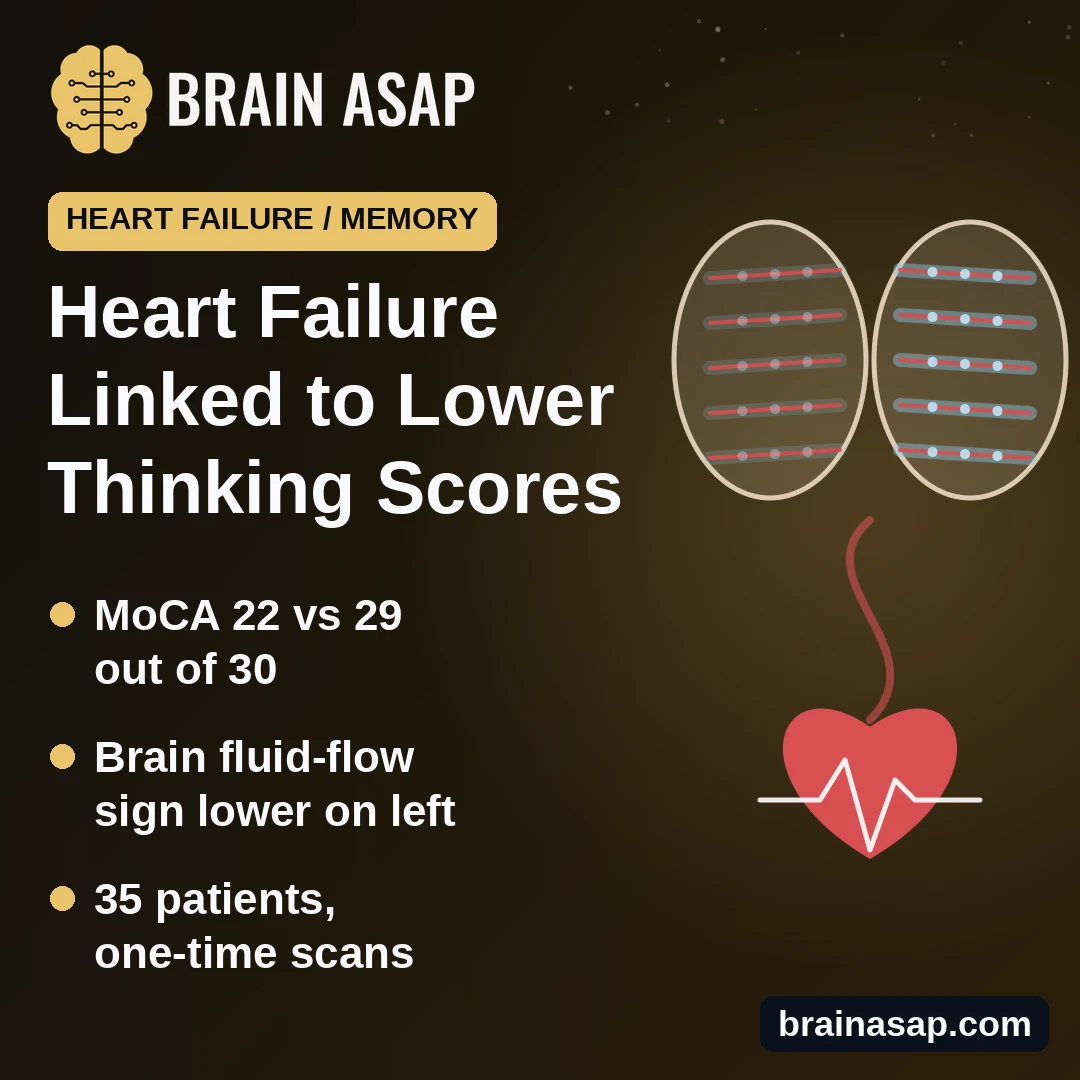
TL;DR: People with a common type of heart failure scored lower on thinking tests than healthy people of similar age, and an MRI sign of the brain’s fluid-clearing system was lower on the left side of their brains. Lower values of that sign went with lower thin…
Read article ↗
TL;DR: Across four small studies, adults with vestibular migraine, a type that causes dizzy spells, scored noticeably lower on thinking tests than healthy people, even between attacks. The review was small and could not rule out anxiety, poor sleep or medicine…
Read article ↗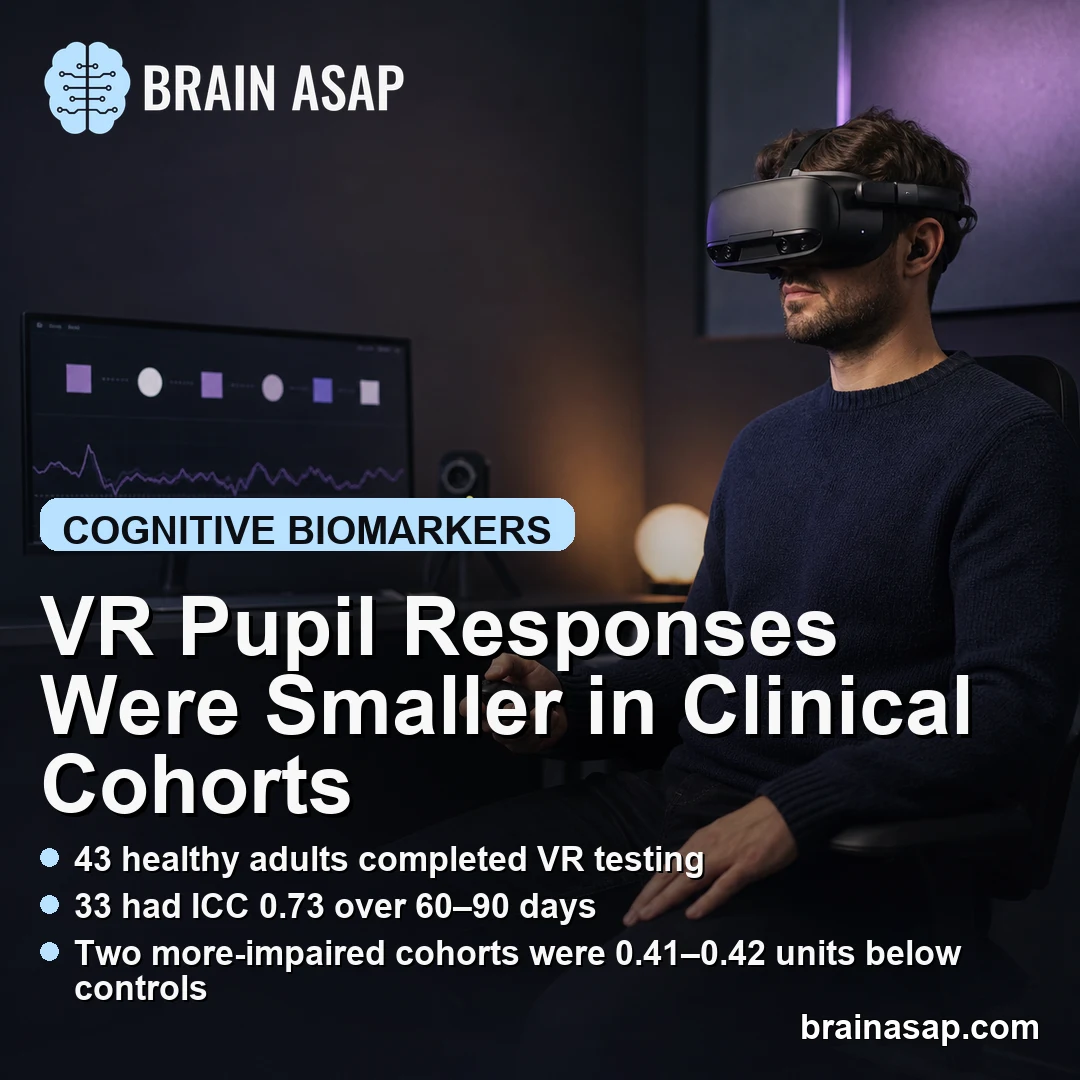
TL;DR: A 2026 medRxiv preprint found that pupil dilation measured inside a virtual reality (VR) headset increased as working-memory load rose in healthy adults, was reproducible 60–90 days later in 33 returnees, and was smaller under the highest load in cognit…
Read article ↗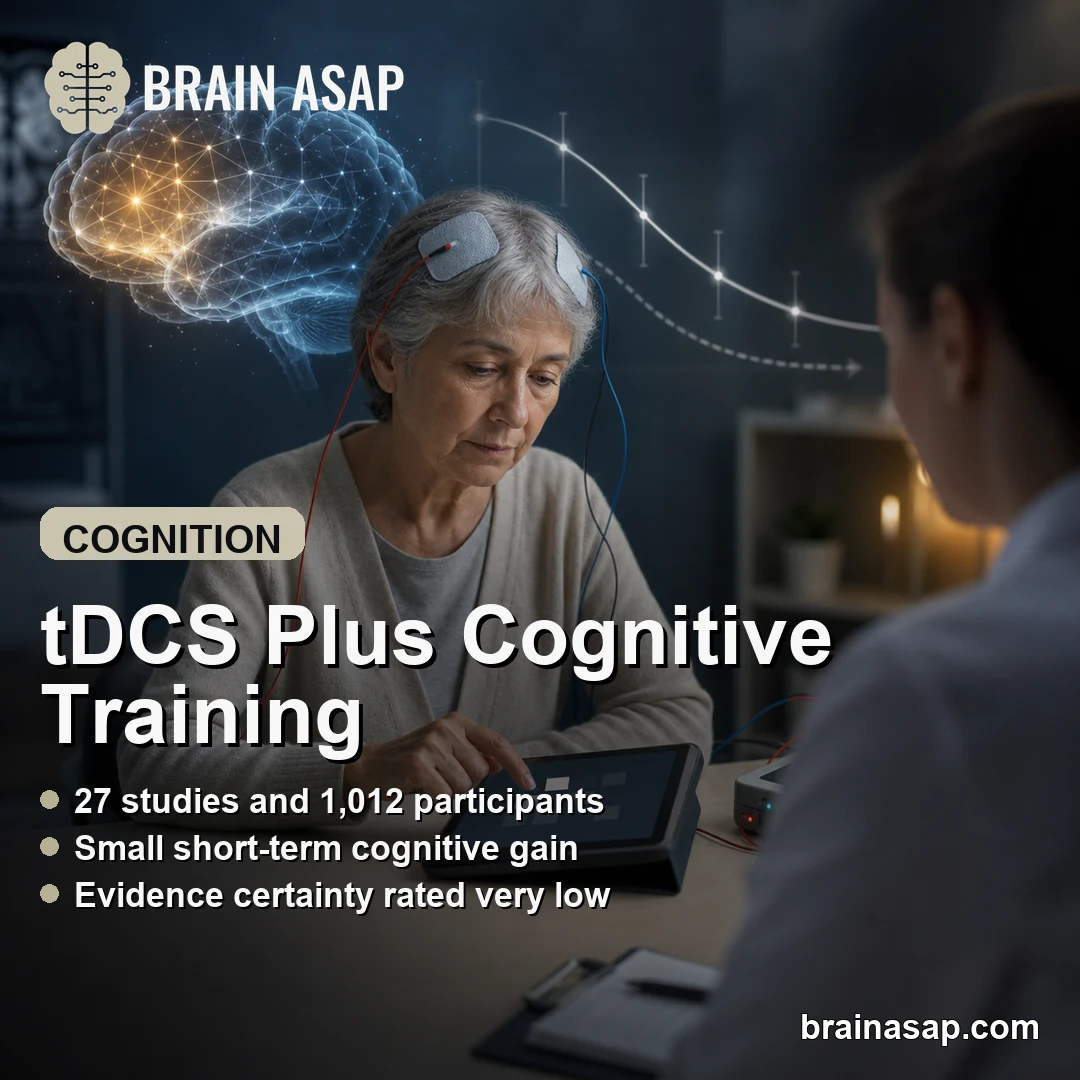
TL;DR: A 2026 systematic review posted on medRxiv found that transcranial direct current stimulation (tDCS), a weak noninvasive brain-stimulation method, added to cognitive training produced a small short-term cognitive benefit across 27 trials, but the effect…
Read article ↗
TL;DR: A 2026 BMC Psychiatry study found that antipsychotic dose was not associated with Montreal Cognitive Assessment (MoCA), a brief cognitive screening test, in clinically stable schizophrenia patients under 40, while higher symptom scores and longer illnes…
Read article ↗
TL;DR: A 2026 rat study in Psychopharmacology found that THC exposure during late adolescence left adult animals with elevated anxiety-like behavior and impaired object-recognition and spatial-memory performance after a drug-free recovery period. Key Findings…
Read article ↗
Guanfacine extended release (GXR) may effectively improve cognitive impairments and brain activity in long-COVID patients. Highlights: Patient Presentation: A 32-year-old woman experienced cognitive impairments such as difficulty in word recall, reading, and w…
Read article ↗
Women experiencing midlife stress-related exhaustion have a higher risk of developing dementia at a younger age and exhibit long-term cognitive impairments. Highlights: Higher Dementia Risk: Women with midlife stress-related exhaustion had a nearly threefold i…
Read article ↗
TLDR: Objective olfactory dysfunction 1-3 months after COVID-19 predicts post-COVID condition (PCC) and reduced quality of life after one year, while subjective symptoms do not. Highlights: Individuals with objectively measured olfactory dysfunction shortly af…
Read article ↗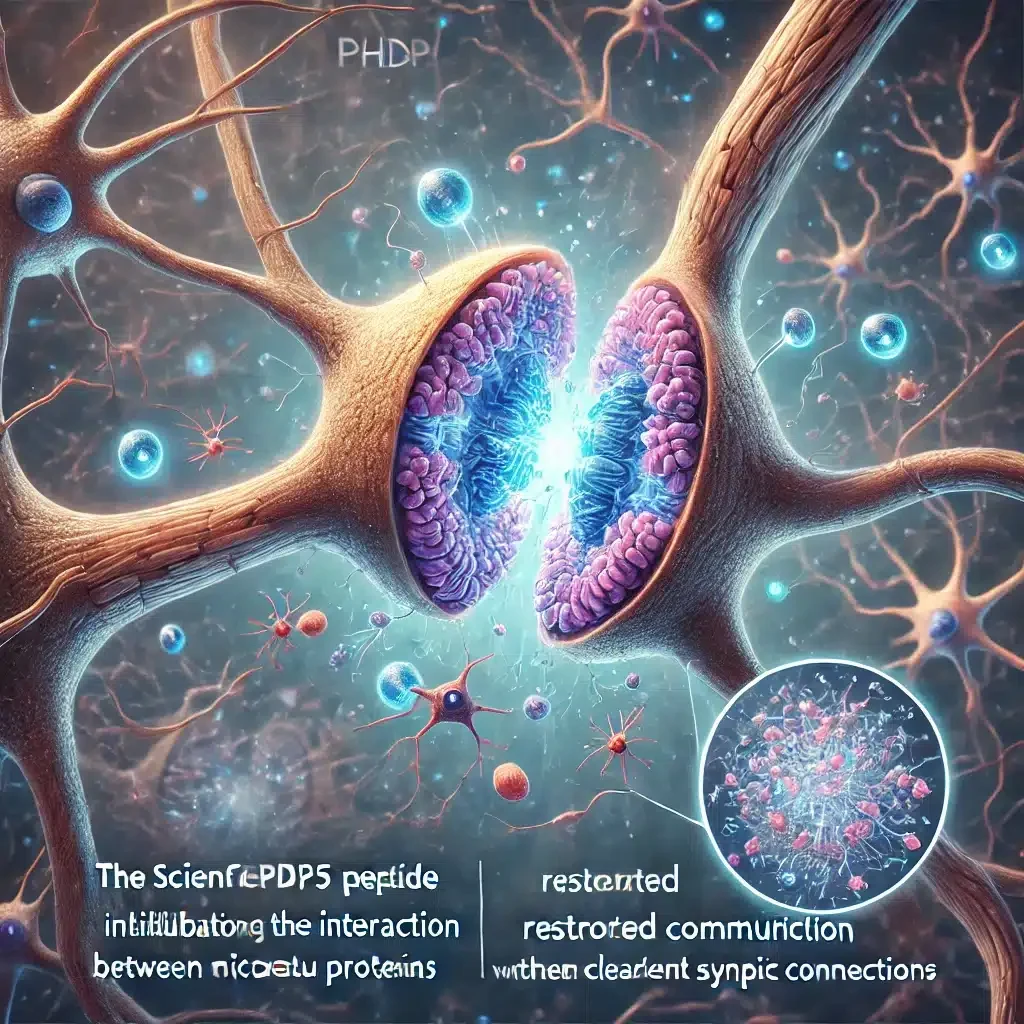
TLDR: Researchers demonstrated that intranasal administration of the peptide FITC-PHDP5-CPP reverses early cognitive impairment in Alzheimer’s disease (AD) model mice, showing potential as a treatment for AD-associated cognitive decline. Highlights: PHDP5, der…
Read article ↗