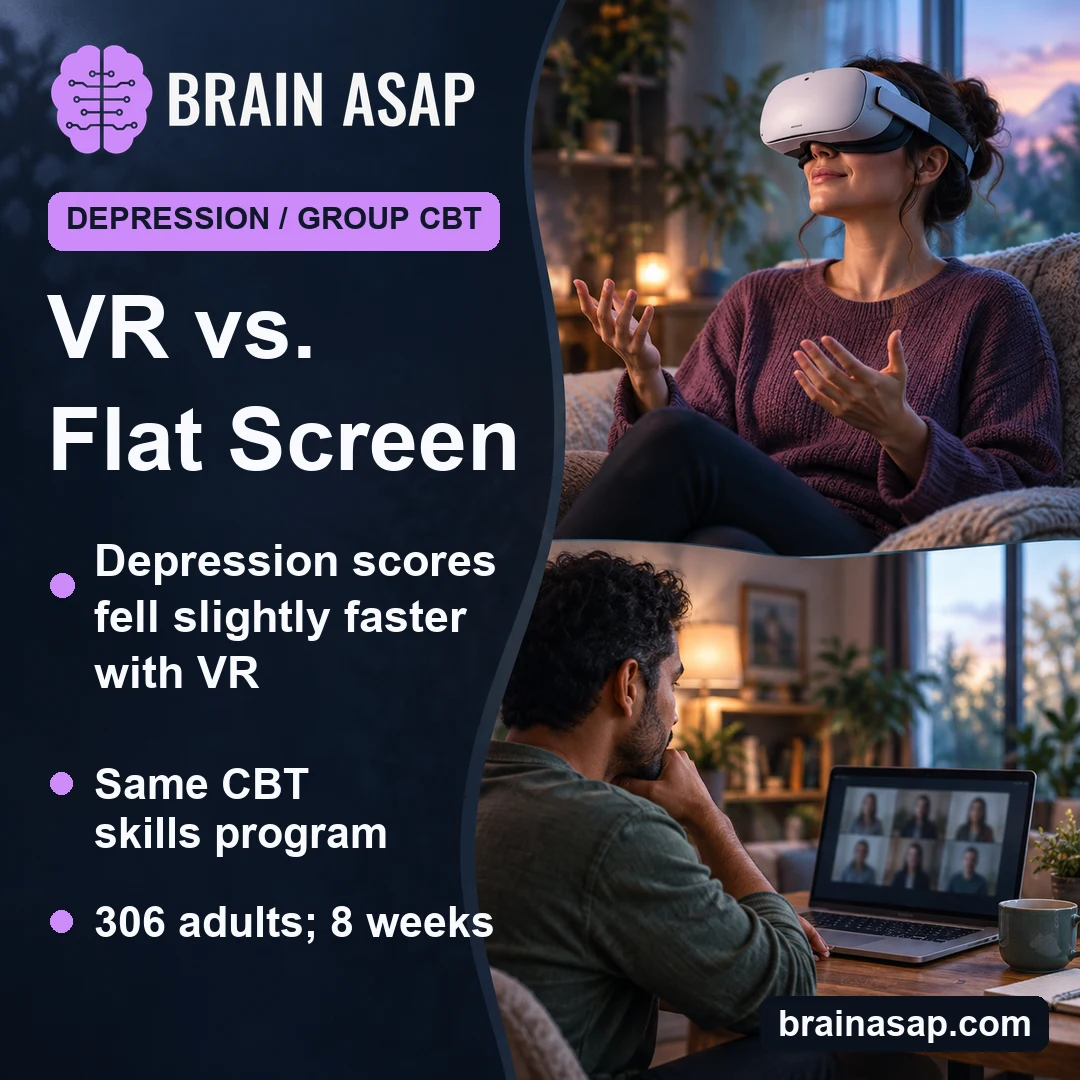
TL;DR: A 2026 randomized trial in Journal of Medical Internet Research gave adults with elevated depression symptoms the same coach-led group skills program through either a VR headset or a flat screen. Depression scores fell slightly faster in the VR group ov…
Read article ↗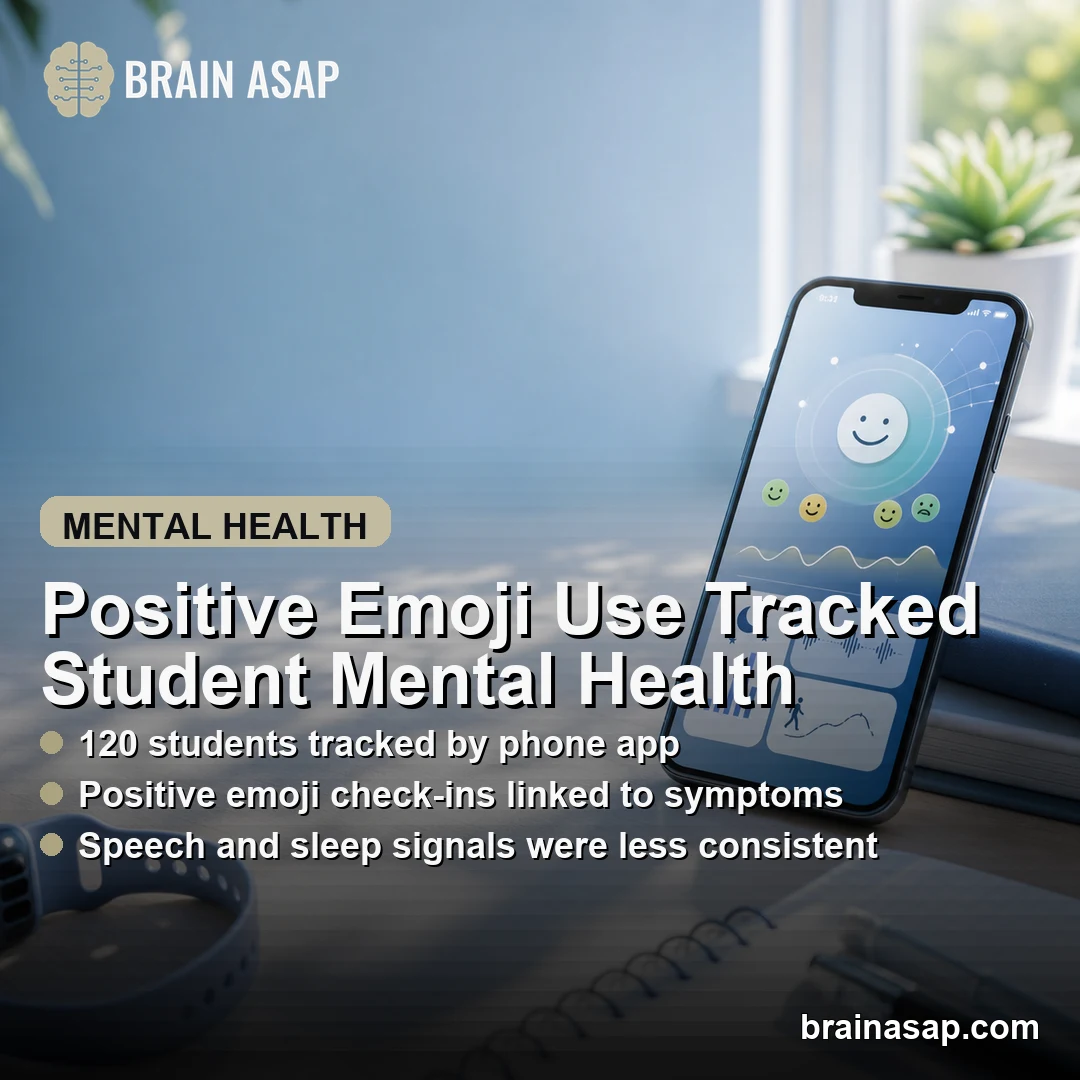
TL;DR: A 2026 Research Square preprint followed 120 college students with a smartphone app and found that a higher share of positive emoji check-ins was the most consistent digital marker tied to lower depression, lower anxiety, and higher flourishing. Key Fin…
Read article ↗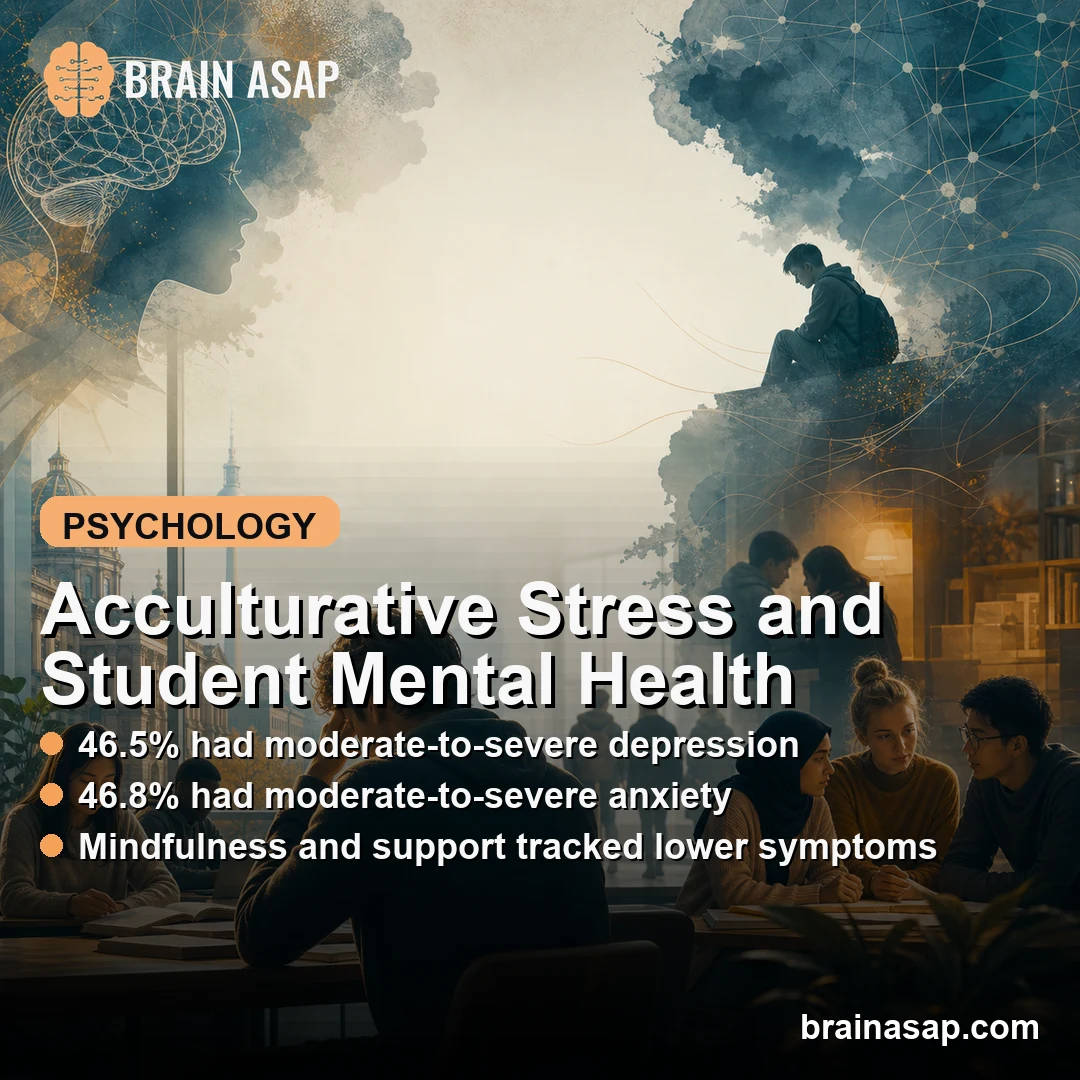
TL;DR: A 2026 study in BMC Psychology found high rates of depression, anxiety, and recent self-harm thoughts among international students in Germany, with acculturative stress linked to worse mental health and mindfulness, optimism, self-efficacy, acceptance,…
Read article ↗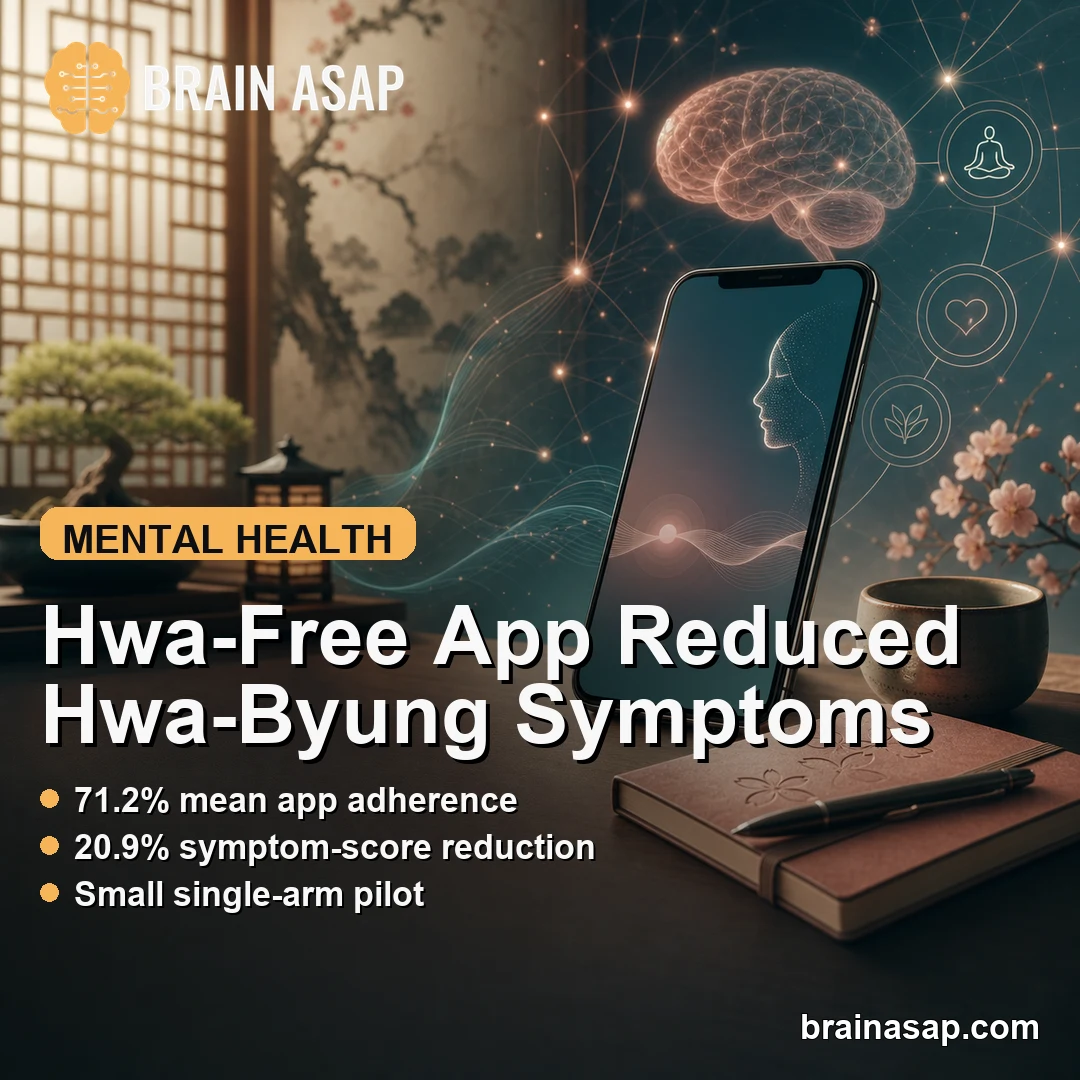
TL;DR: A 2026 medRxiv preprint reported that Hwa-free, a 4-week acceptance and commitment therapy app for Hwa-byung, was used on an average of 19.9 of 28 days and was followed by lower Hwa-byung symptoms, depression scores, and state anger in a small single-ar…
Read article ↗
TL;DR: A 2026 study in Neuropsychiatric Disease and Treatment followed 55 adults after mild-to-moderate COVID-19 and found that neurocognitive test performance improved over time after both Alpha/Delta-era and Omicron-era infections. Key Findings 55-person lon…
Read article ↗
Body Roundness Index Flagged Depression Risk in Dementia TL;DR: Body roundness index, not BMI, flagged a dementia subgroup with more than threefold higher odds of depressive symptoms. Key Findings Highest BRI tripled odds: Among people with dementia, those in…
Read article ↗