TL;DR: A 2026 mouse study in Nature Communications found that early-life high-fat/high-sugar diet exposure left sex-specific adult feeding and hypothalamic changes, and microbiota-targeted interventions partly restored those effects. Key Findings Early-life HF…
Read article ↗
TL;DR: A 2026 study in Biochemistry and Biophysics Reports found that cannabinoid receptor 1 (CB1R) undergoes autophagy-linked degradation in mouse cortical neurons, but p62 deficiency did not make CB1R the main driver of obesity and low activity in p62 knocko…
Read article ↗
TL;DR: A 2026 mouse study in iScience found that anesthetic emergence slowed sharply below 31.9°C because two hypothalamic thermoregulatory pathways pushed anesthesia in opposite directions: preoptic BDNF neurons deepened anesthesia, while a dorsomedial-hypoth…
Read article ↗
TL;DR: A 2025 mouse study in Cell mapped a sleep-growth hormone circuit, showing how hypothalamic GHRH and somatostatin neurons coordinate hormone pulses and then feed back onto wakefulness. Key Findings GH rose in REM and NREM: Growth hormone release was enha…
Read article ↗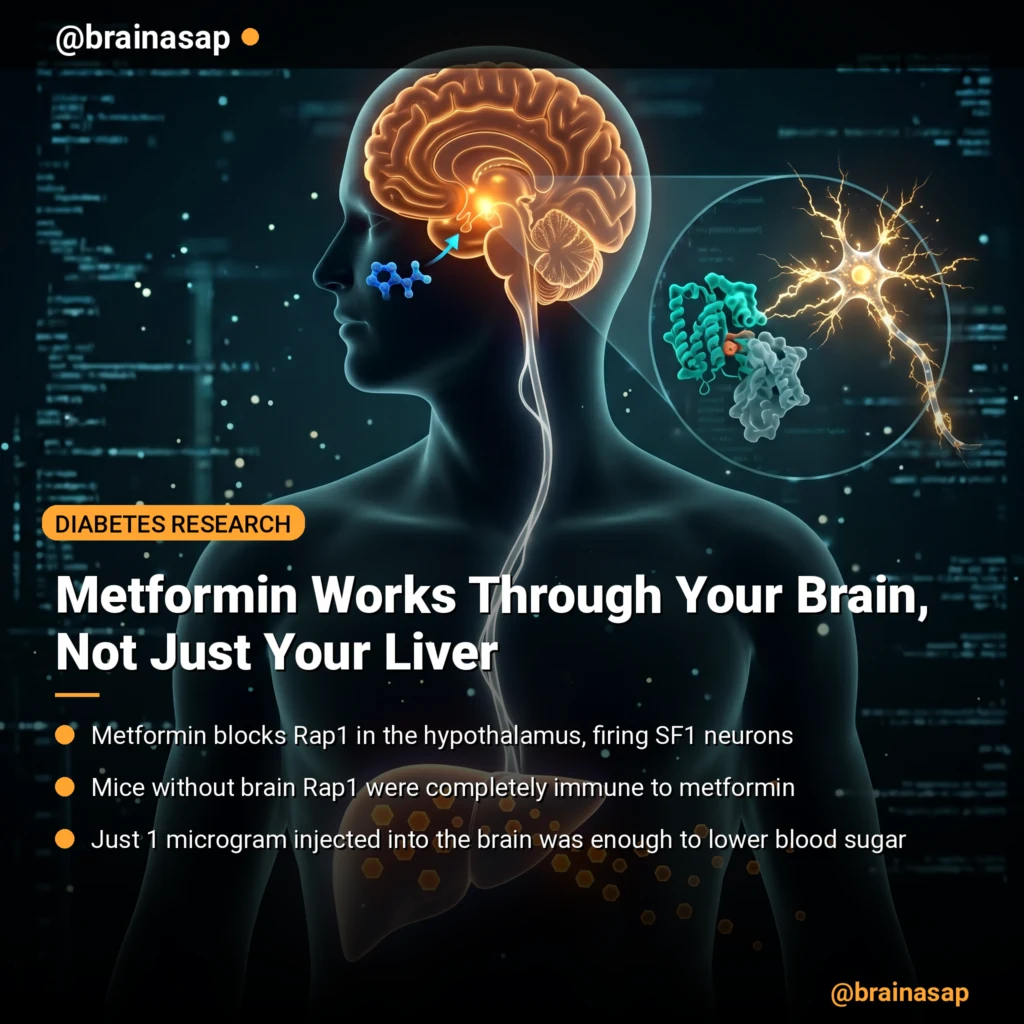
Metformin’s Secret Weapon: How the Brain Controls Blood Sugar TL;DR: Metformin’s glucose-lowering effect depends on a brain signaling pathway—it inhibits Rap1 in the hypothalamus, activating neurons that tell the liver to stop overproducing glucose. For decade…
Read article ↗
Addiction involves complex interactions between the brain’s reward circuitry and stress systems. The adrenal cortex and its hormones are emerging as key players. Key Facts: The hypothalamic-pituitary-adrenal (HPA) axis regulates adrenal cortex hormone secretio…
Read article ↗
Researchers have uncovered novel details about a specific population of brain cells that regulate obesity. Their findings provide increased understanding of the intricate neural circuits controlling energy balance and point to potential new therapeutic targets…
Read article ↗