TL;DR: In 149 people with memory problems or dementia, blood levels of some brain markers tracked spinal fluid levels well, but others did not match at all. Two common measures of a leaky blood-brain barrier also did not agree with each other. Key Findings Blo…
Read article ↗
TL;DR: In a small pilot study, immune cells from people in an untreated schizophrenia episode made more of their energy by burning sugar than cells from healthy people or from patients stable on medication. There was no sign of higher inflammation in the blood…
Read article ↗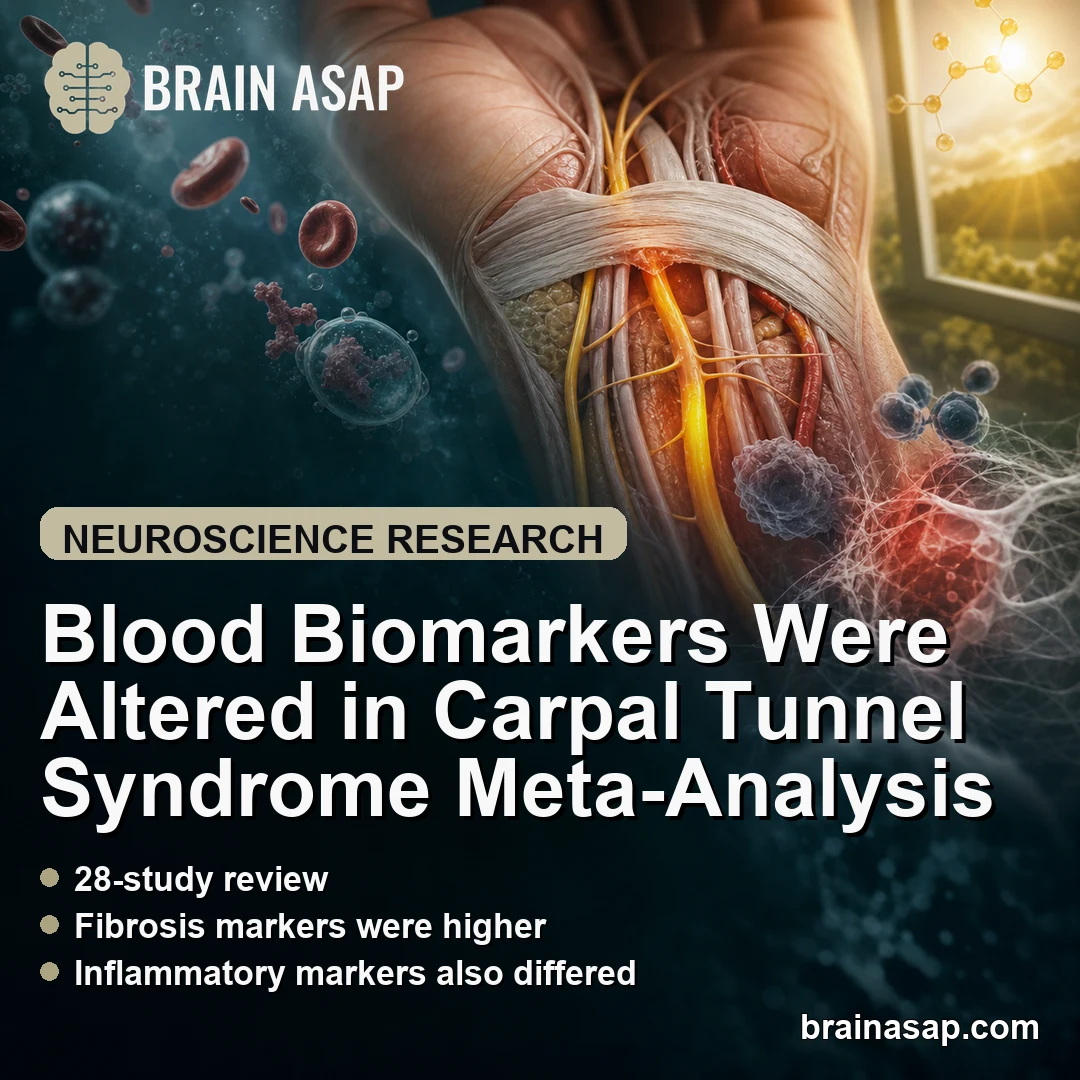
TL;DR: A 2026 systematic review and meta-analysis in Musculoskeletal Science and Practice found that people with carpal tunnel syndrome had higher blood markers tied to fibrosis and inflammation, along with lower vitamins and minerals, but the evidence was too…
Read article ↗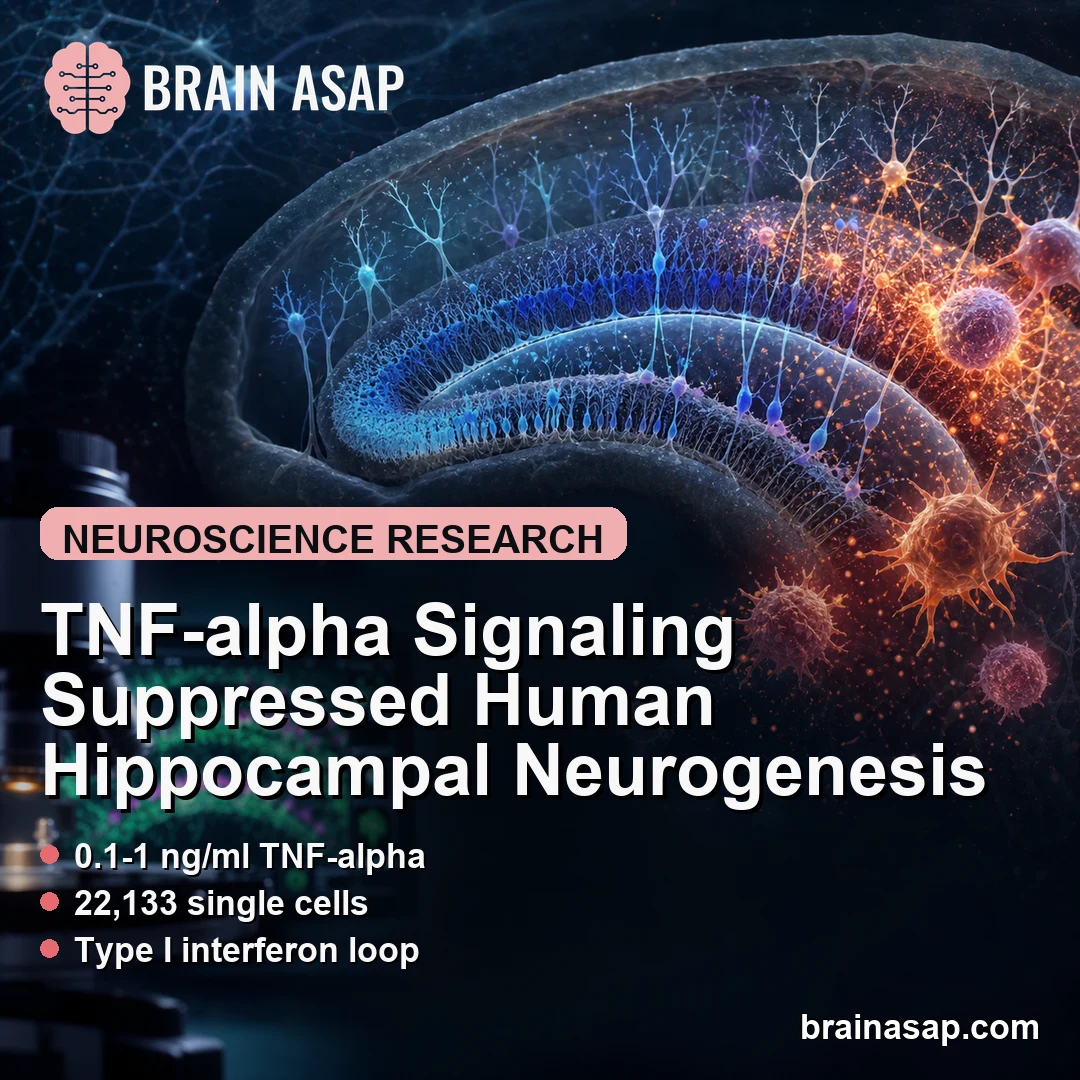
TL;DR: A 2026 Nature Communications study found that chronic tumor necrosis factor alpha (TNF-alpha), an inflammatory cytokine, pushed human hippocampal progenitor cells toward type I interferon activity, lower neuroblast formation, and CXCR3-dependent T-cell…
Read article ↗
TL;DR: A 2026 systematic review and meta-analysis in Brain, Behavior, & Immunity – Health found that adding celecoxib to antidepressants was linked to lower depressive symptom scores in 7 small trials, but the efficacy evidence was rated very low certainty. Ke…
Read article ↗
TL;DR: A 2025 human proteomics study in Molecular Metabolism found that about 10 days of medically supervised water-only fasting caused weight loss and lower circulating amyloid beta proteins, but also increased inflammatory and platelet-activation markers. Ke…
Read article ↗
TL;DR: A 2026 systematic review in The British Journal of Psychiatry linked schizophrenia to a multisystem advanced-aging phenotype, including older-appearing brain scans, shorter telomeres, inflammation, and higher dementia risk. Key Findings 170 studies incl…
Read article ↗
TL;DR: A 2026 study in Brain, Behavior, & Immunity – Health found that depression symptoms, alcohol use, and alcohol use disorder (AUD) symptoms were not associated with C-reactive protein (CRP), a blood inflammation marker, or a pro-inflammatory cytokine inde…
Read article ↗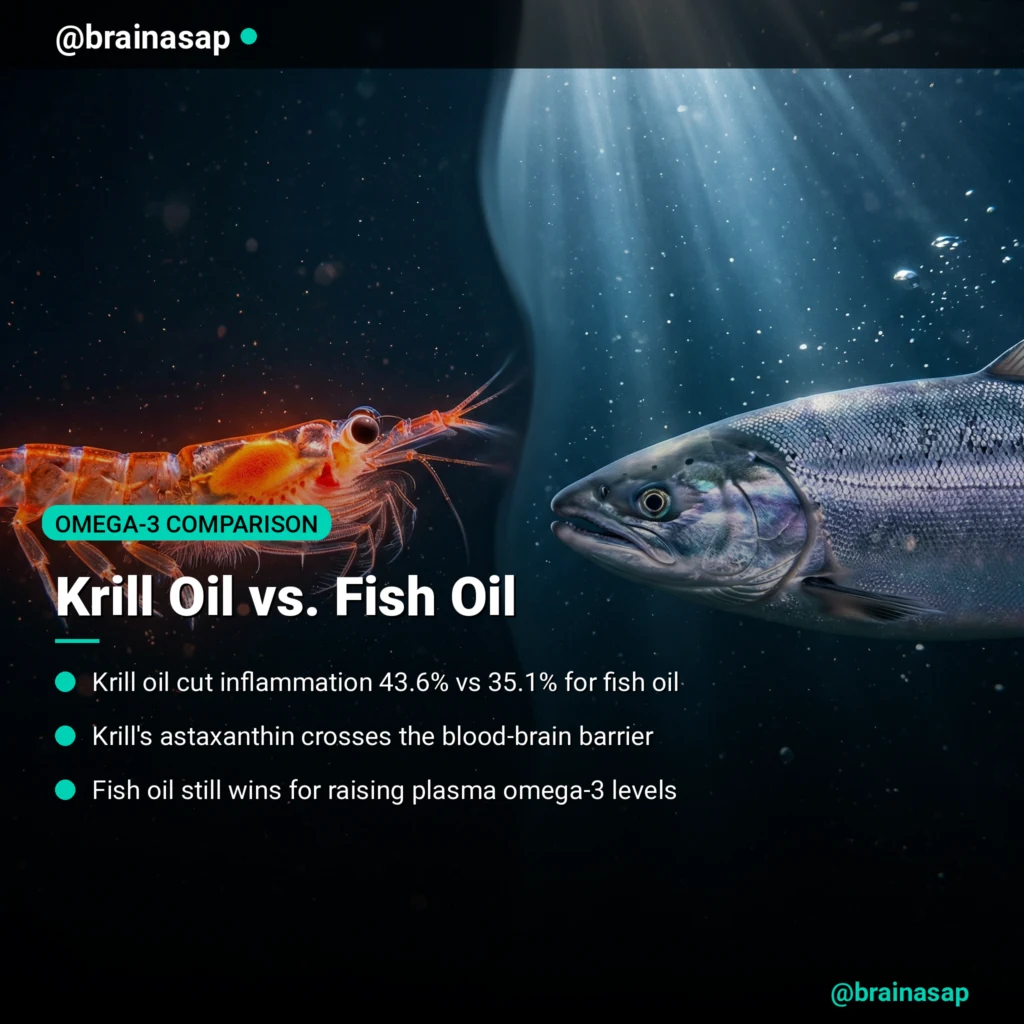
Krill Oil vs Fish Oil: Which Omega-3 Source Wins Against Inflammation and Oxidative Stress? TL;DR: Krill oil has a slight edge for inflammation due to astaxanthin, but fish oil wins for raising blood omega-3 levels and long-term cardiovascular outcomes. Fish o…
Read article ↗
Probiotics and prebiotics show potential benefits in improving symptoms and quality of life in children with ADHD, but more extensive studies are needed to confirm these effects. Highlights: Positive Impact on Functioning: Lactobacillus rhamnosus GG (LGG) supp…
Read article ↗