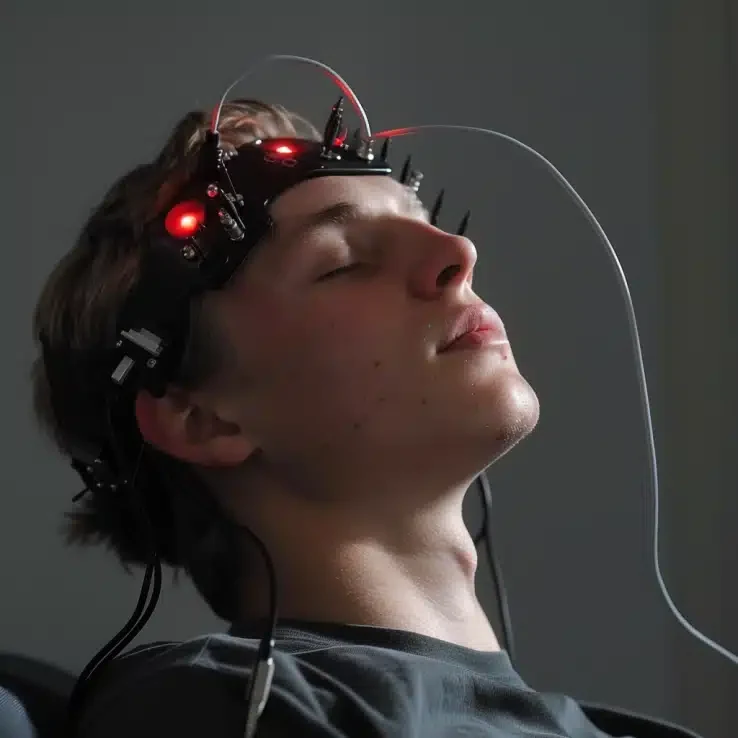
Transcranial direct current stimulation (tDCS) targeting the left dorsolateral prefrontal cortex (DLPFC) at 2-mA intensity effectively alleviates depressive symptoms and shows promise in reducing anxiety symptoms across various clinical conditions. Highlights:…
Read article ↗
TLDR: GLP-1 agonists were found to significantly reduce the risk of dementia in older individuals with type 2 diabetes mellitus (T2DM) compared to DPP-4 inhibitors and sulfonylureas. Highlights: A sequential trial emulation was conducted using data from Swedis…
Read article ↗
TLDR: Quercetin-based alginate nanogels loaded with brain-derived neurotrophic factor (BDNF) can effectively cross the blood-brain barrier via intranasal delivery, providing a promising treatment for depressive disorders. Highlights: Nanogels: Quercetin nanoge…
Read article ↗
Current antidepressants can take weeks to improve symptoms of depression. New research explores reasons for this delay and provides clues to develop more rapid-acting drugs. Key Facts: Most antidepressants increase brain serotonin and norepinephrine, but their…
Read article ↗
Anti-cancer peptides (ACPs) offer a potentially more targeted way to detect and treat cancer compared to conventional therapies like chemotherapy. ACPs can discriminate between cancerous and healthy cells, resulting in fewer side effects. Key Facts: ACPs can a…
Read article ↗
The naturally occurring peptide BPC 157 shows potential to treat stroke, schizophrenia symptoms, and spinal cord injury in animal models. Key facts: BPC 157 rapidly counteracted stroke damage and led to full recovery of memory, coordination and movement in rat…
Read article ↗
Depression affects over 300 million people globally. Current antidepressants have limited efficacy and slow onset of action. New research shows promise for compounds targeting metabotropic glutamate receptors 2 and 3 (mGluR2/3) as fast-acting antidepressants w…
Read article ↗
Synthetic cathinones like MDPV emerged as drugs of abuse in the early 2010s, gaining notoriety for their powerful stimulant effects and association with bizarre intoxication and death. Despite legislation banning MDPV and its analogs, these substances continue…
Read article ↗
Transcranial alternating current stimulation (TACS) is an emerging non-invasive brain stimulation technique that shows promise for enhancing cognition and treating psychiatric conditions like depression and schizophrenia. Recent research indicates TACS may imp…
Read article ↗
Depression affects over 270 million people worldwide. New research is investigating whether manipulating gut bacteria with probiotics, prebiotics or synbiotics can help treat depression symptoms. Key Facts: Probiotics are live microorganisms that provide healt…
Read article ↗