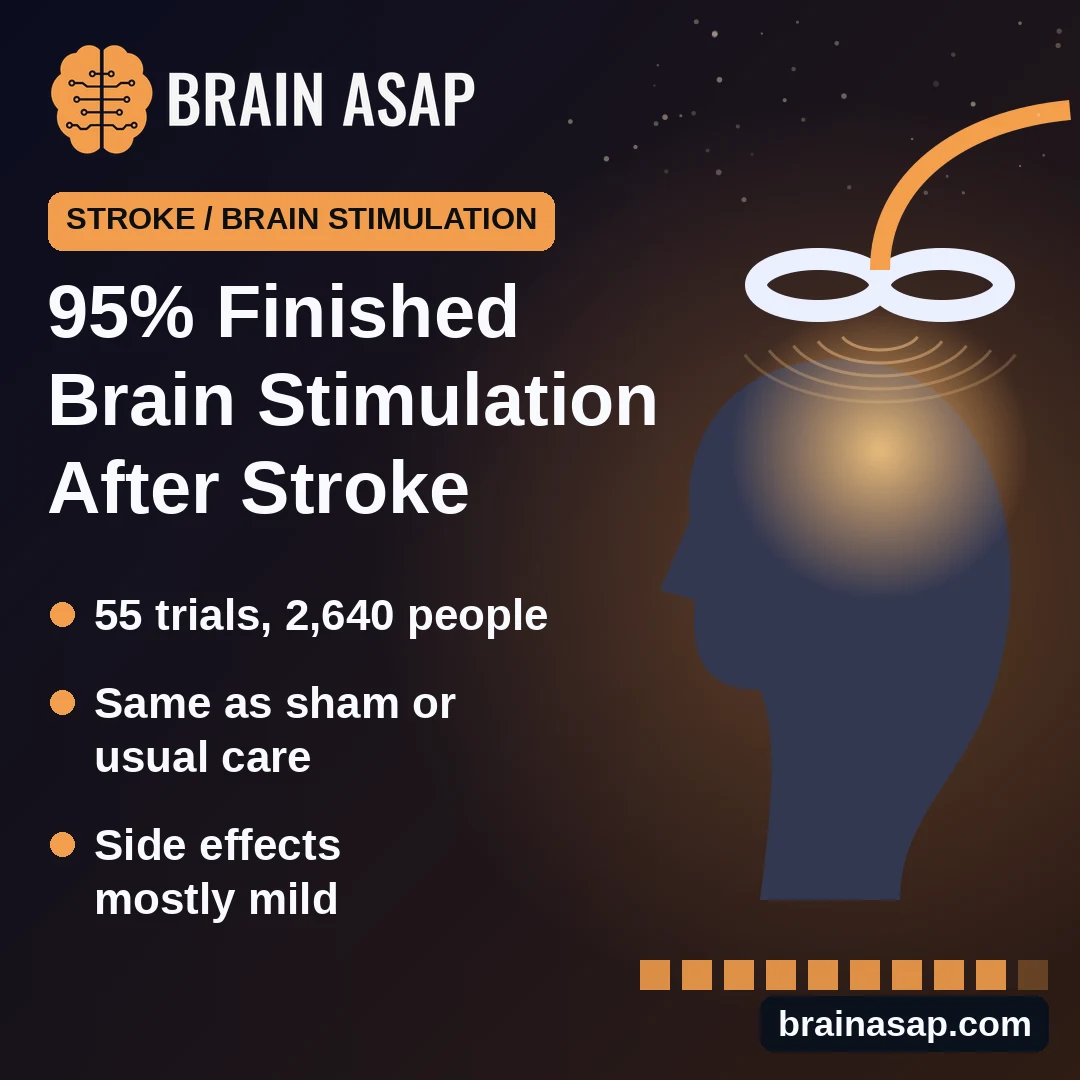
TL;DR: Across 55 trials of brain stimulation for arm recovery after stroke, about 95% of people finished treatment, the same share as those given fake stimulation or usual care. Side effects were mostly mild headaches and skin tingling. Key Findings 55 trials,…
Read article ↗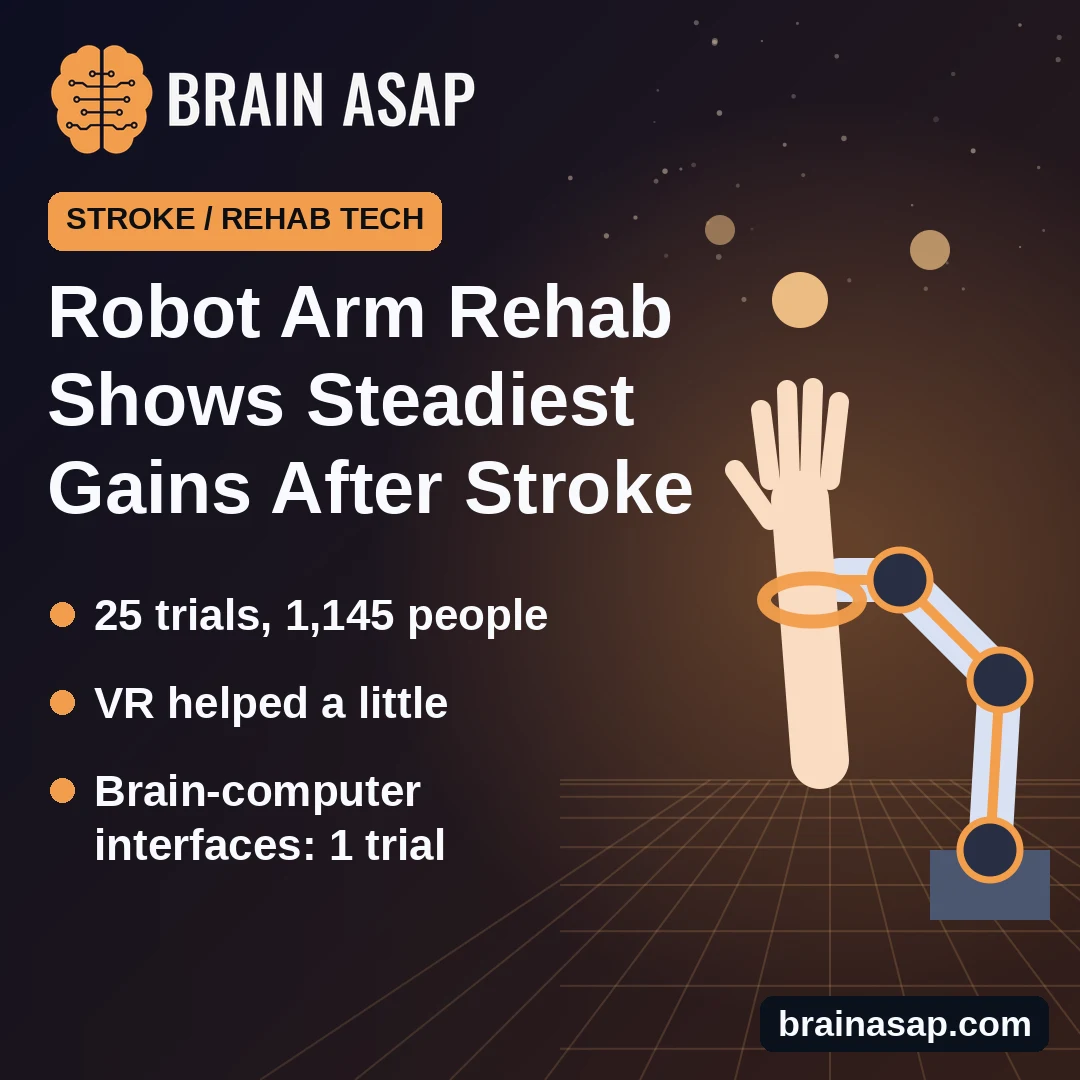
TL;DR: In a review of 25 trials on arm recovery after stroke, robot-assisted training had the most consistent evidence of beating standard physical therapy. Virtual reality helped a little, and brain-computer interfaces had too little data to judge. Key Findin…
Read article ↗
TL;DR: A 2026 preprint on medRxiv found that in-person cognitive behavioral therapy for insomnia and several shorter behavioral versions were linked with higher post-treatment insomnia remission than sleep hygiene or other control conditions, but the evidence…
Read article ↗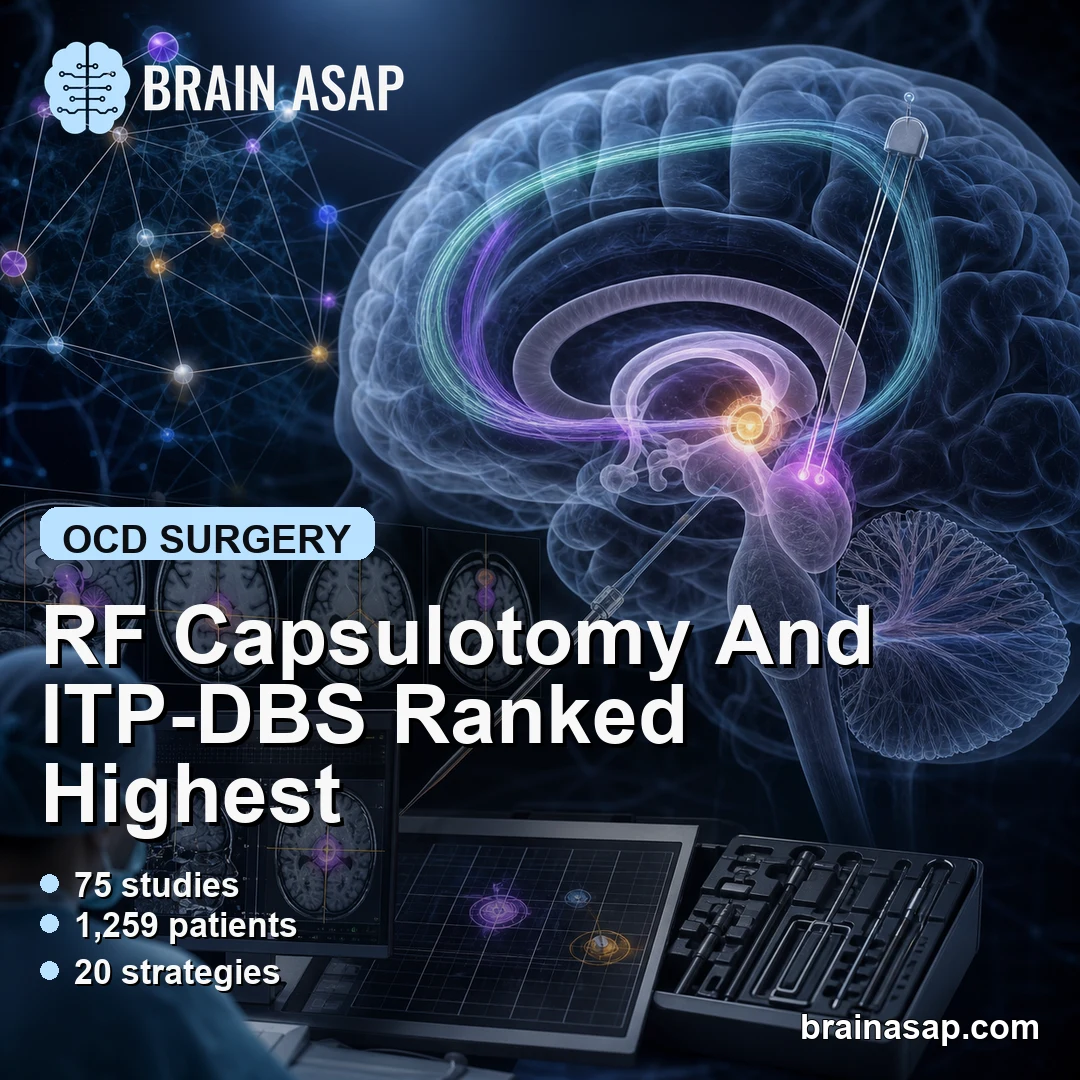
TL;DR: A 2026 study in Molecular Psychiatry found that radiofrequency capsulotomy and inferior thalamic peduncle deep brain stimulation were associated with the largest symptom improvements among surgical strategies for refractory obsessive-compulsive disorder…
Read article ↗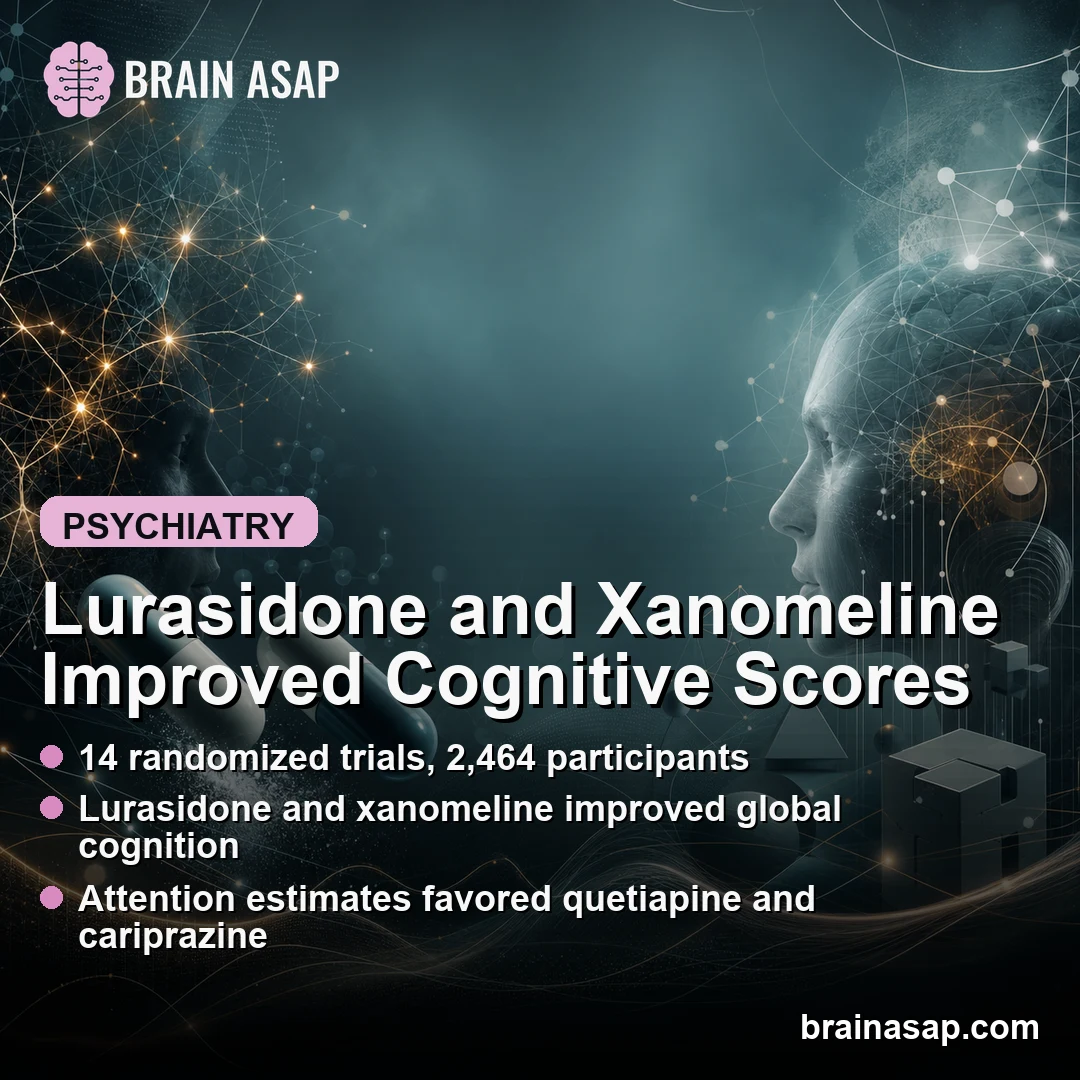
TL;DR: A 2026 network meta-analysis in International Clinical Psychopharmacology found that lurasidone and xanomeline-trospium improved global cognitive scores in schizophrenia-spectrum randomized trials, while quetiapine and cariprazine ranked best for attent…
Read article ↗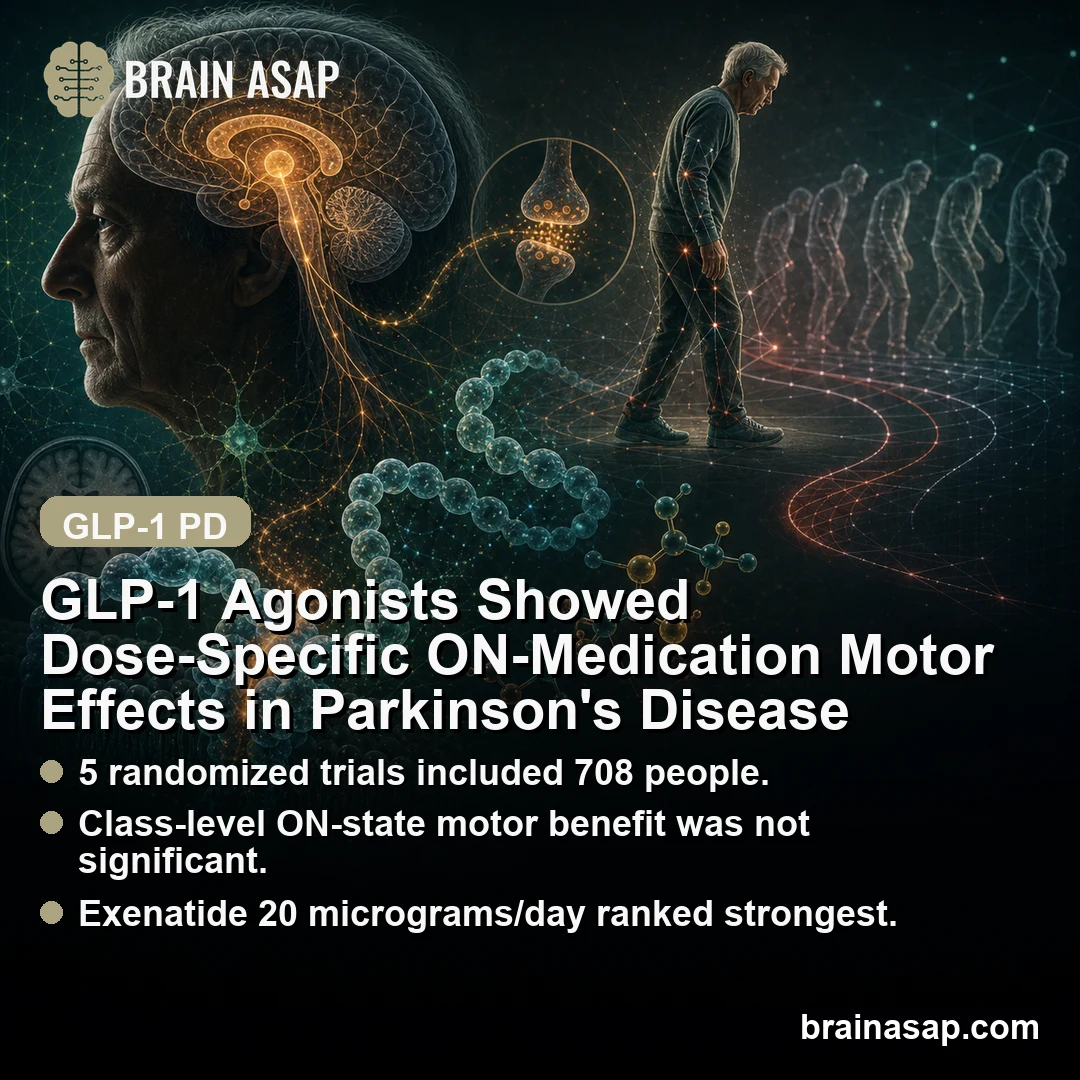
TL;DR: A 2026 systematic review and exploratory network meta-analysis of 5 randomized trials in Neurological Sciences found dose-specific ON-medication motor improvements, measured while usual Parkinson’s drugs were active, for some GLP-1 receptor agonists, gl…
Read article ↗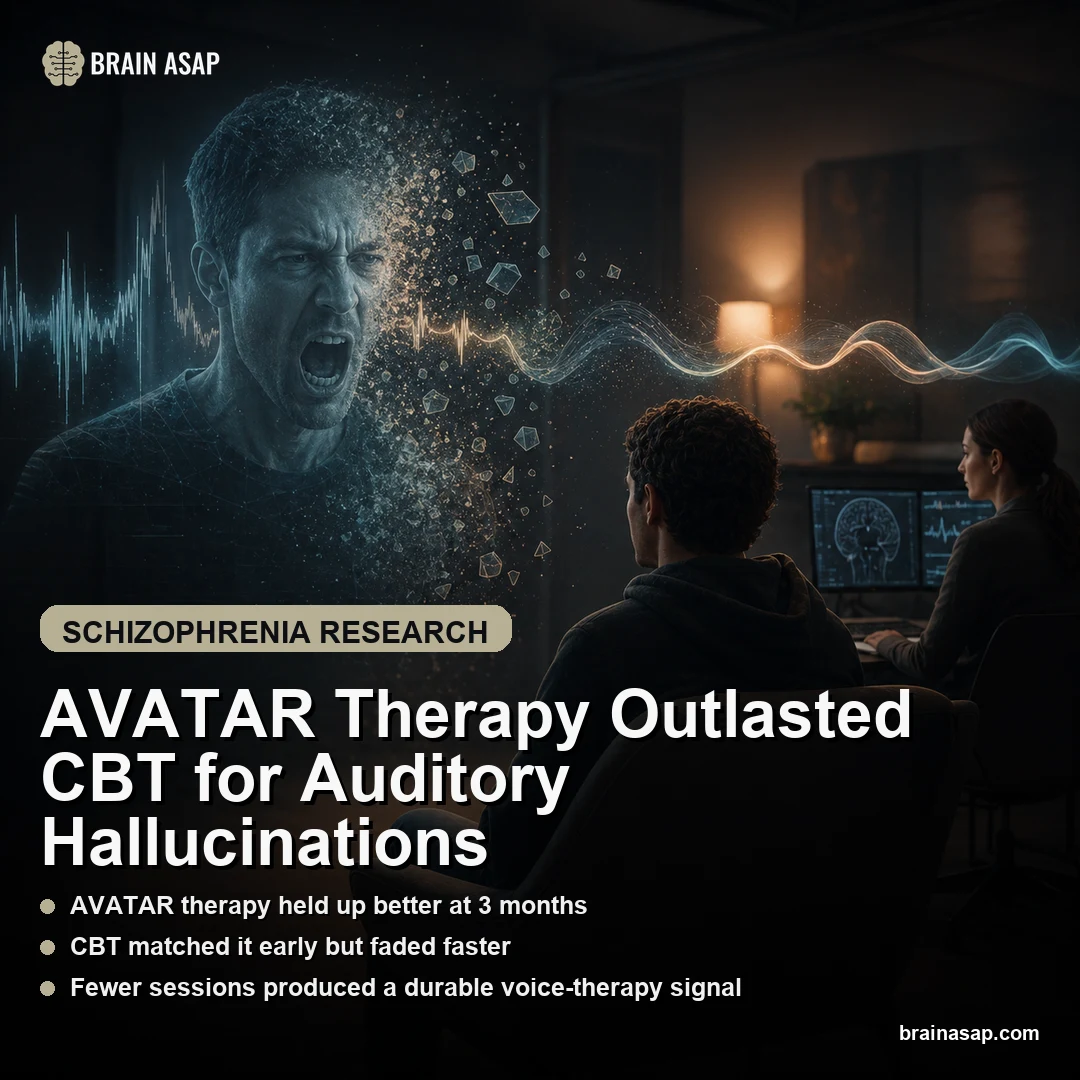
AVATAR Therapy Outlasted CBT for Auditory Hallucinations TL;DR: AVATAR therapy matched CBT on voice severity right after treatment, then pulled ahead at 3 months — with roughly half the sessions. A 26-trial meta-analysis, 2,273 patients. Key Findings No clear…
Read article ↗