
TL;DR: A 2026 randomized trial in Journal of the International Society of Sports Nutrition found that 12 weeks of combined interval resistance and aerobic training increased Maresin-1, an inflammation-resolving lipid mediator, in men with obesity, with the lar…
Read article ↗
TL;DR: A 2026 real-world study in Journal of Clinical Sleep Medicine found that glucagon-like peptide-1 receptor agonist use was associated with lower 3-year cardiovascular-event risk in adults with obesity and obstructive sleep apnea. Key Findings 18,523 matc…
Read article ↗
TL;DR: A 2026 study in Biochemistry and Biophysics Reports found that cannabinoid receptor 1 (CB1R) undergoes autophagy-linked degradation in mouse cortical neurons, but p62 deficiency did not make CB1R the main driver of obesity and low activity in p62 knocko…
Read article ↗
TL;DR: A 2026 human laboratory study in Drug and Alcohol Dependence Reports found that naltrexone/bupropion did not change whether people with binge-eating disorder started eating preferred snacks, but it reduced how many calories they ate once they began. Key…
Read article ↗
TL;DR: A 2026 mouse study in Nature found that small-molecule glucagon-like peptide 1 receptor agonists (GLP-1RAs), obesity and diabetes drugs built around a glucose-linked hormone pathway, suppressed palatable-food intake through central amygdala neurons that…
Read article ↗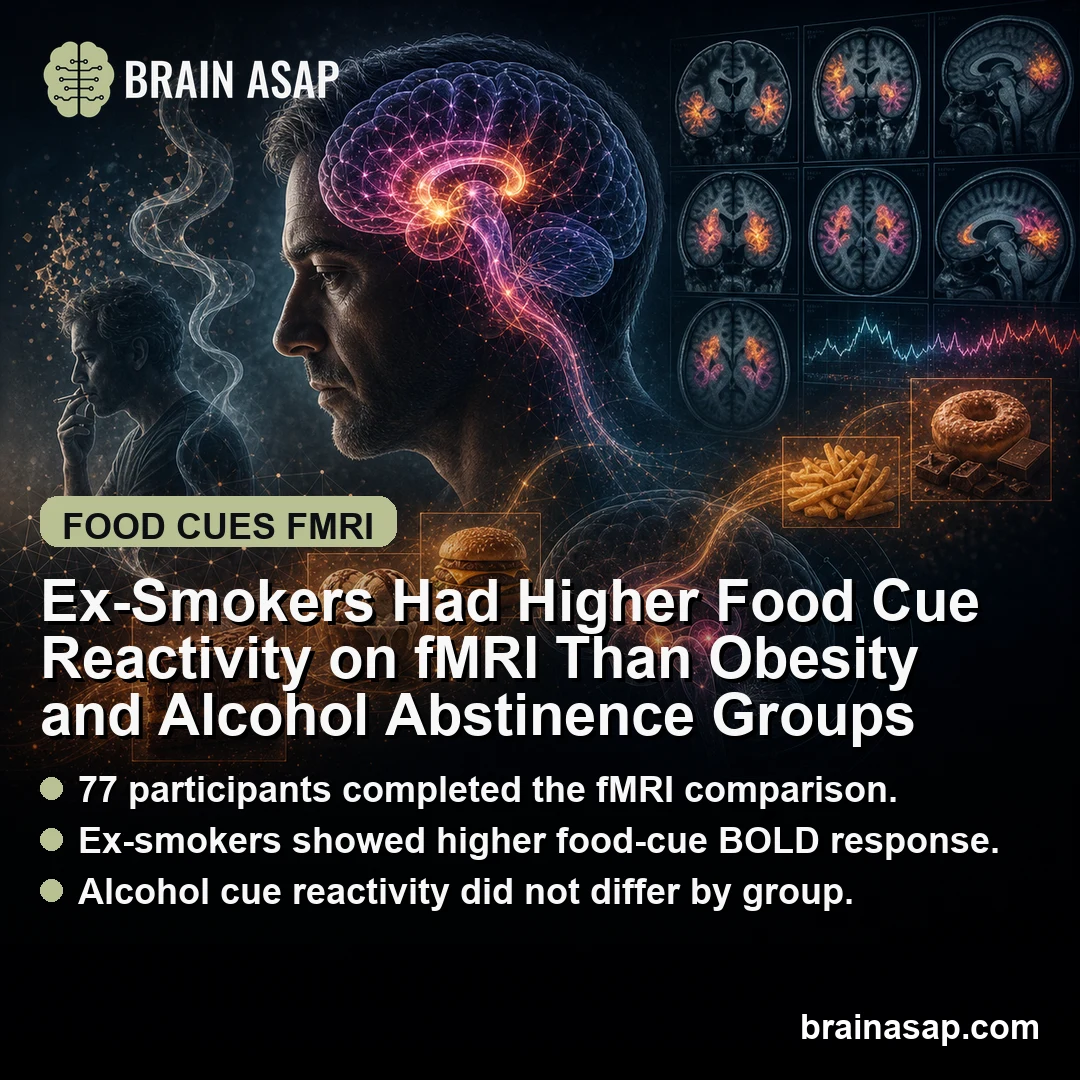
TL;DR: A 2026 medRxiv preprint found that ex-smokers had higher fMRI blood oxygen level dependent (BOLD) responses to high-energy food pictures than adults with obesity or abstinent alcohol dependence, suggesting a brain reward route for post-quitting weight g…
Read article ↗
Body Roundness Index Flagged Depression Risk in Dementia TL;DR: Body roundness index, not BMI, flagged a dementia subgroup with more than threefold higher odds of depressive symptoms. Key Findings Highest BRI tripled odds: Among people with dementia, those in…
Read article ↗
Obesity and Depression Share Five Converging Biological Pathways Obesity and depression represent two of the world’s fastest-growing epidemics. By 2030, over 1 billion people will have obesity, while depression will affect more than 350 million. Yet they are r…
Read article ↗
A new study examined whether metabolic biomarkers assessed through a high-throughput method are associated with future depressive symptoms. The results suggest the metabolites may not play a direct role in depression development. Key Facts: Researchers investi…
Read article ↗
Medications are meant to treat medical conditions and improve health, but some can have the unintended consequence of weight gain, which can then worsen other health risks. Understanding which medications tend to cause weight gain and the mechanisms behind thi…
Read article ↗