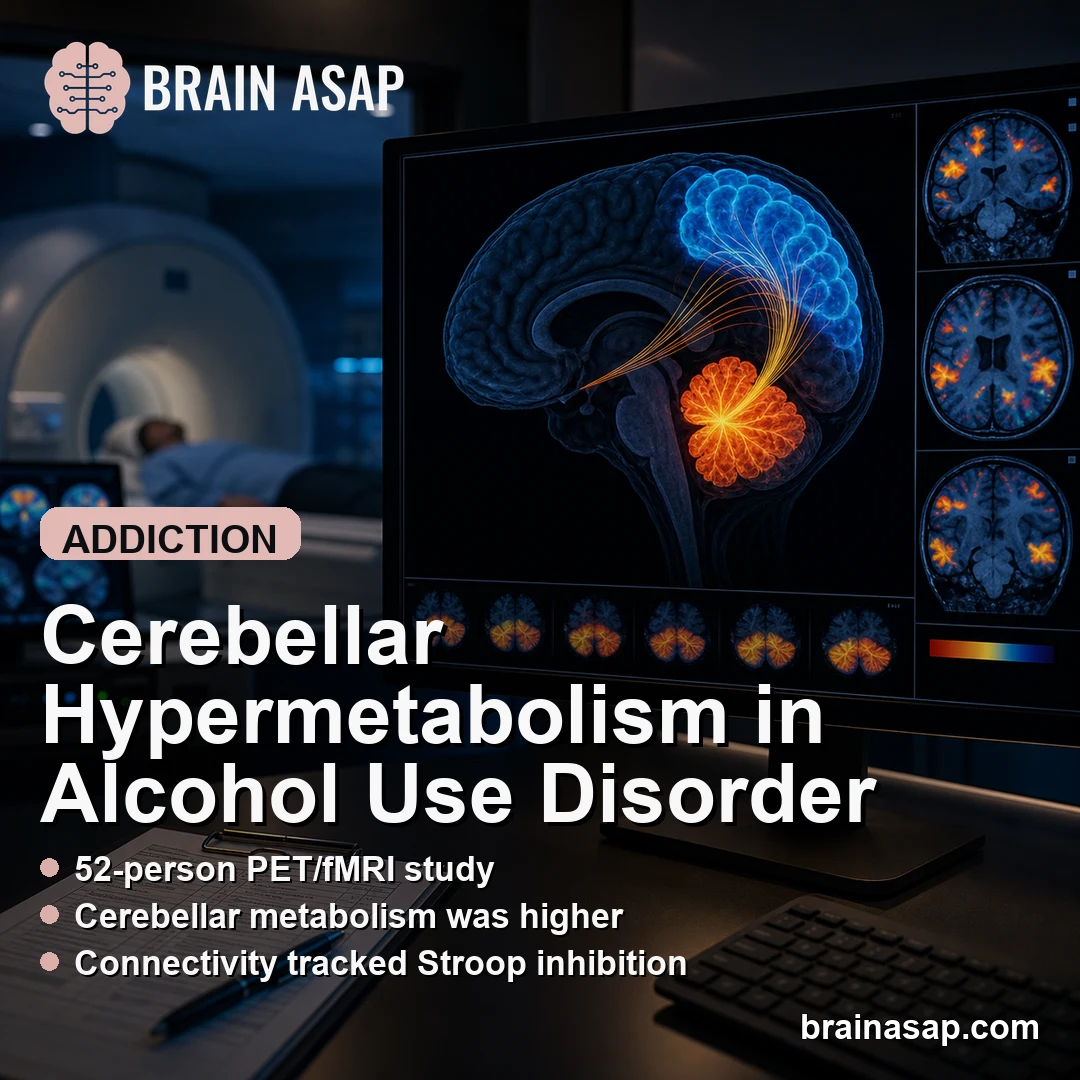
TL;DR: A 2026 study in Translational Psychiatry combined positron emission tomography (PET) and functional MRI (fMRI) in alcohol use disorder and linked cerebellar hypermetabolism to disrupted fronto-cerebellar connectivity and poorer inhibition performance. K…
Read article ↗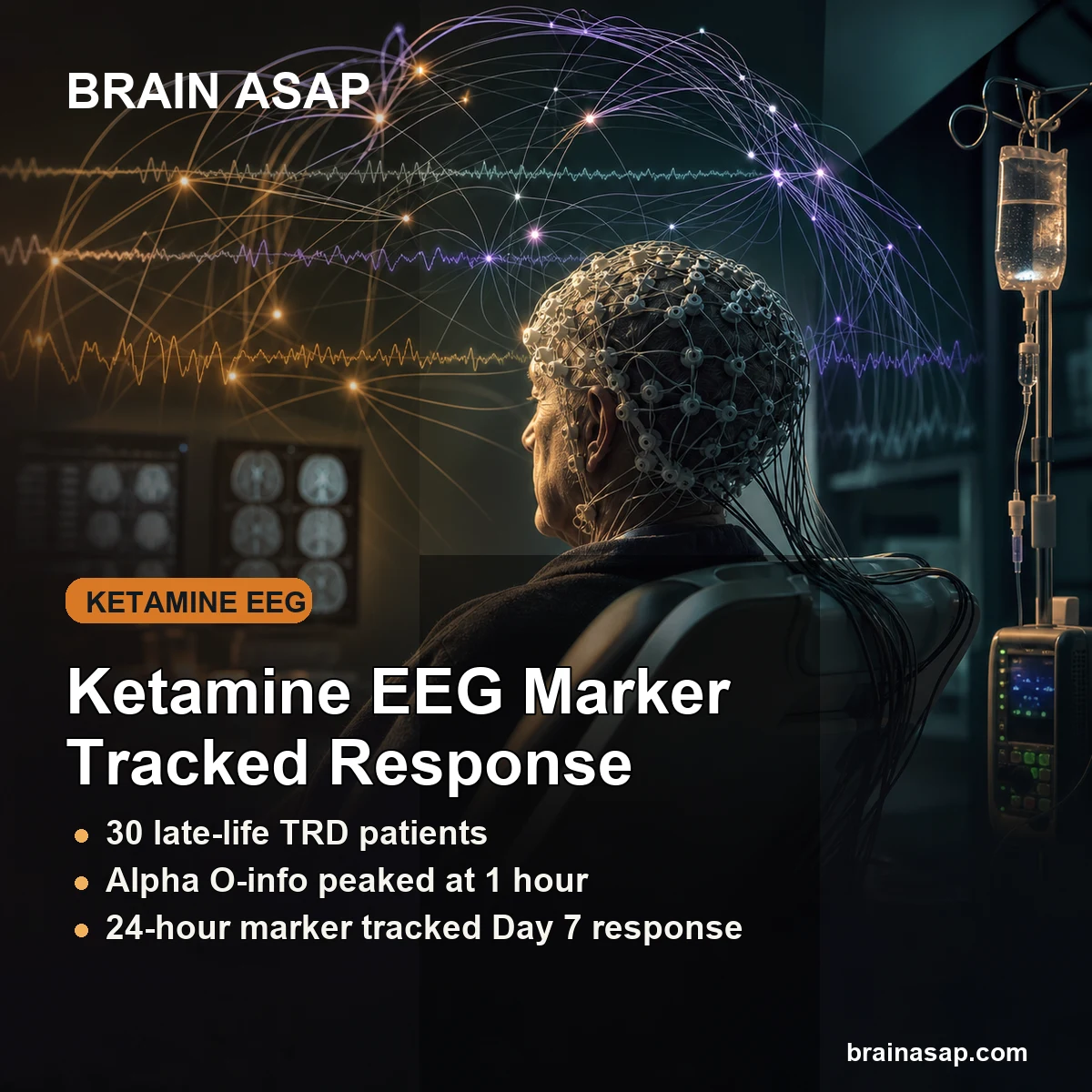
TL;DR: A 2026 study in Translational Psychiatry found that ketamine changed EEG-derived high-order brain interactions in late-life treatment-resistant depression, and a 24-hour increase in alpha-band redundancy tracked greater depression improvement by Day 7.…
Read article ↗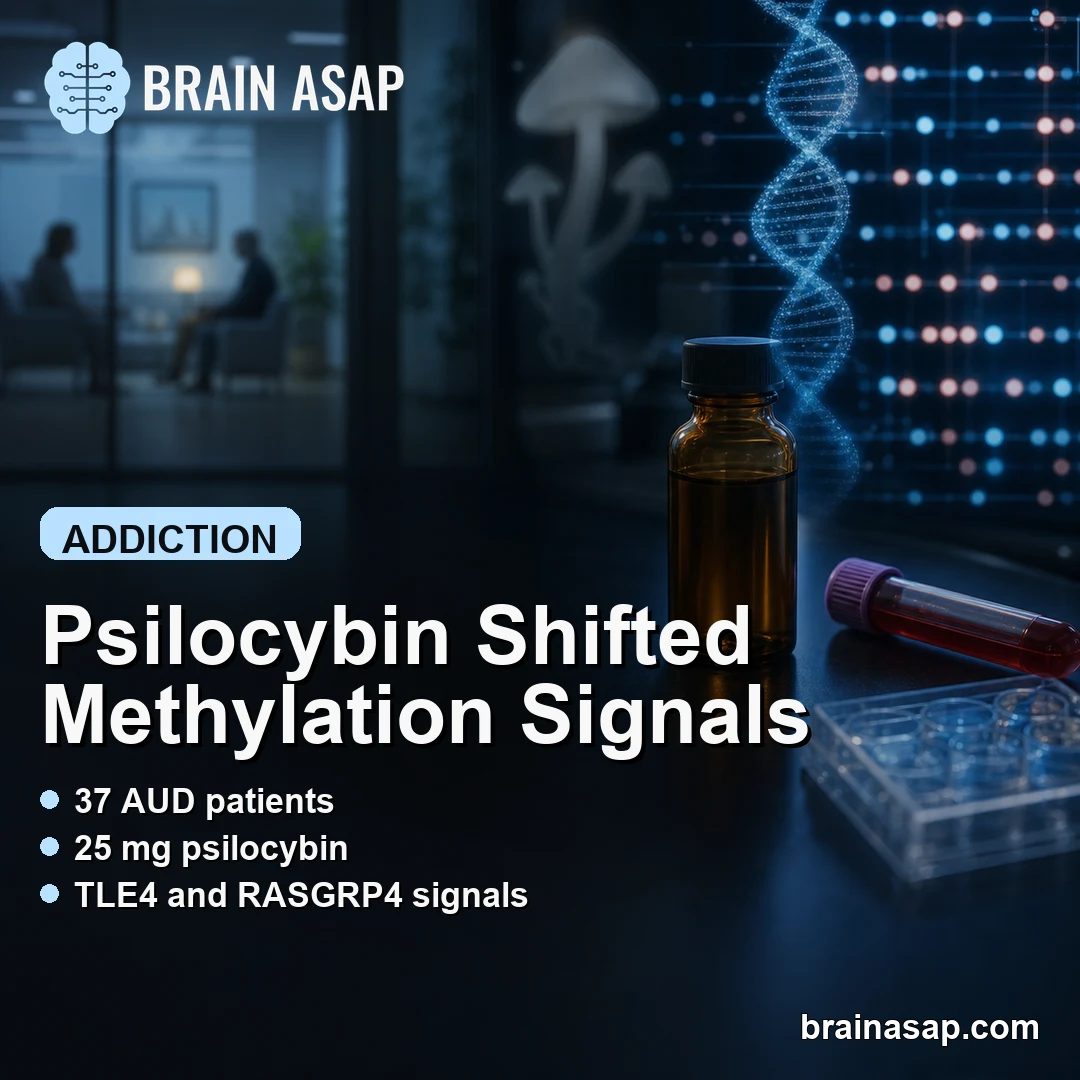
TL;DR: A 2026 exploratory study in Translational Psychiatry found blood DNA methylation changes after 25 mg psilocybin in detoxified alcohol use disorder patients, including findings near TLE4 and RASGRP4, but the small trial did not establish a definitive AUD…
Read article ↗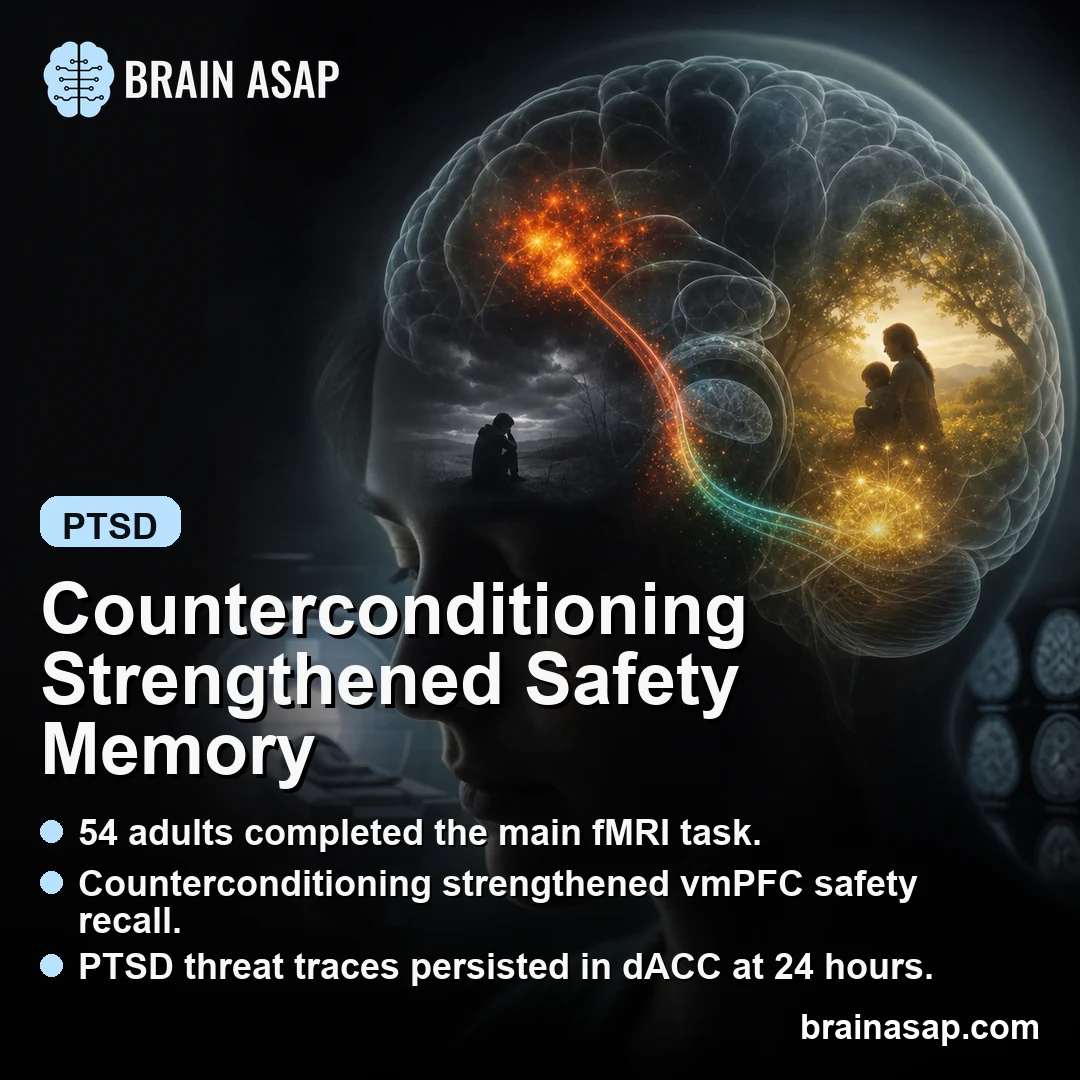
TL;DR: A 2026 functional MRI (fMRI) study in Translational Psychiatry found that counterconditioning, a form of exposure learning that replaces a threat cue with a positive outcome, strengthened safety-memory signals in adults with PTSD more than standard exti…
Read article ↗
TL;DR: A 2026 case-series study in Translational Psychiatry tested delayed-release oral acetate from apple cider vinegar capsules in 11 young adults taking psychotropic medications and found high adherence, no product-related adverse events, microbiome shifts,…
Read article ↗
TL;DR: A 2026 study in Translational Psychiatry found that three different plasma p-tau217 assays separated Alzheimer’s dementia from controls and frontotemporal degeneration with excellent accuracy, shifting the test from whether the marker works to which pla…
Read article ↗
TL;DR: A 2025 systematic review in Translational Psychiatry found that substance use disorder was associated with recurring resting-state functional MRI (rs-fMRI), a scan of spontaneous brain-network communication, abnormalities in reward and self-control circ…
Read article ↗
Ketamine Restored Reward Bias Across Species TL;DR: Ketamine restored reward-learning bias in both treatment-resistant depression and chronically stressed rats while leaving basic discrimination unchanged. Key Findings Reward bias increased: Ketamine significa…
Read article ↗