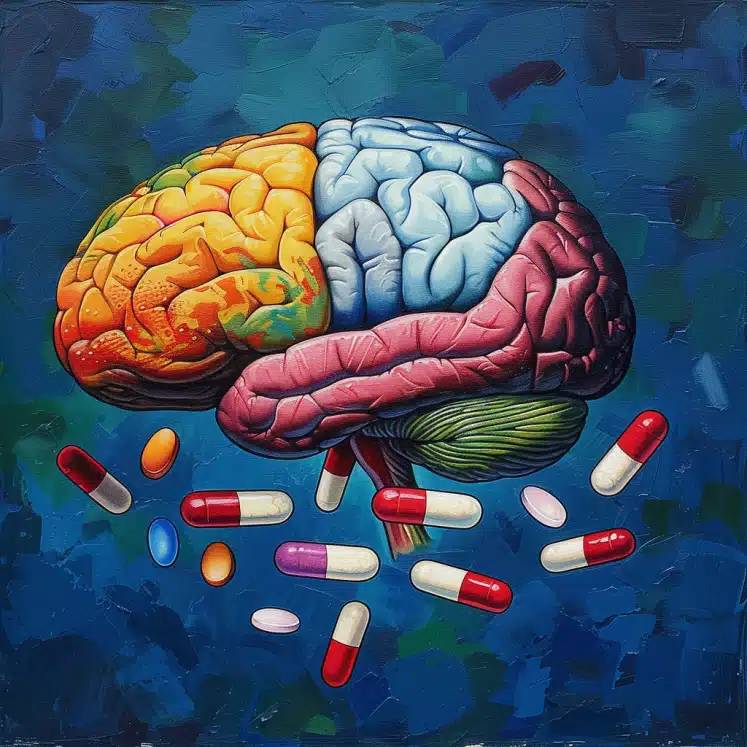
High Intensity Interval Training (HIIT) Exercise Changes Brain Activity: Effects on Dopamine D2 Receptors & Mu Opioid Receptors (2024 Study)

High-intensity exercise (HIIE) leads to significant changes in brain activity, specifically in regions linked to dopaminergic and μ-opioidergic neurotransmission, which are associated with a mood boost. Highlights: Positive Mood Effects: Both low- and high-intensity exercise increased positive affect, as measured by the PANAS Positive Affect scale. Brain Activity Changes: HIIE resulted in significant decreases in …

Read more

Necrostatin-1: A Necroptosis Inhibitor to Treat Neurological Disorders (2024 Research)

Necrostatin-1, an inhibitor of necroptosis, exhibits significant neuroprotective effects and potential therapeutic applications in various neurological disorders by modulating cell death pathways, inflammation, and reactive oxygen species. Highlights: Mechanism of Action: Necrostatin-1 specifically inhibits receptor-interacting protein 1 (RIP1), preventing necroptosis and other cell death pathways, including apoptosis and ferroptosis. Neuroprotective Role: It shows promise in …

Read more

Targeting the Gut Microbiome to Treat Epilepsy & Seizures: Future Potential (2024 Research)

Gut microbiota may influence epilepsy, but the exact mechanisms and involved microbiota are unclear, with potential treatments including ketogenic diets, probiotics, and fecal microbiota transplants being explored. Highlights: Approximately 33% of epilepsy patients are resistant to all antiseizure medications, with the role of gut microbiota in epilepsy being increasingly evident. The gut-brain axis, involving neuroendocrine, …

Read more

The Glymphatic System vs. Brain Health & Impact of Exercise & Sleep (2024 Research)

Researchers reviewed the potential impacts of physical exercise on the glymphatic system and its implications for neurodegenerative diseases, focusing on the mechanisms involved and the interplay between exercise and sleep quality. Highlights: The glymphatic system, a brain cleansing mechanism, may play a critical role in the development of neurodegenerative diseases by clearing metabolic waste, including …

Read more

White & Black Americans Exhibit Differences in Brain Structure, Volume, Cortical Thickness (2023 Study)

This study reveals significant differences in brain morphology between neurotypical young adults identified as White or African American, highlighting the impact of racial identity on brain structure. Highlights: Brain Volume Differences: Significant volumetric differences were found in white matter, subcortical regions, and the choroid plexus between White and African American participants. Cortical Thickness Variability: Differences …

Read more

Nanoparticle Enhanced Radiotherapy (NERT) for Brain Tumor Treatment (2024 Research)

Nanoparticle-enhanced radiotherapy (NERT) is a promising approach to improving brain tumor treatment by enhancing radiotherapy efficacy through targeted delivery and radiosensitization while overcoming challenges posed by the blood-brain barrier. Highlights: Mechanisms of Action: NERT utilizes nanoparticles (NPs) as radiosensitizers, enhancing radiation-induced damage through physical dose enhancement and biological/chemical sensitization. Types of Nanoparticles: Various NP types, …

Read more

Cocaine Addiction Linked to Brain Shrinkage & Grey Matter Deficits (2024 Study)

Cocaine Use Disorder (CUD) patients exhibit widespread gray matter atrophy, with specific brain volume deficits associated with crack-cocaine use and relapse outcomes. Highlights: Widespread Gray Matter Atrophy: CUD patients show significant gray matter volume reductions in frontal and temporal cortices, cerebellum, and subcortical structures compared to healthy controls. Route of Use: Crack-cocaine use is linked …

Read more

Social Anxiety Disorder & Brain Structure Abnormalities: Cortical Thickness Analysis (2024 Study)

The study found that patients with social anxiety disorder (SAD) exhibit distinct structural brain alterations, including cortical thickening and thinning in specific regions, which fit into existing neurocircuitry models of the disorder. Highlights: Cortical Thickness Alterations: Patients with SAD showed increased cortical thickness in the left insula, superior parietal lobule, superior temporal gyrus, and frontopolar …

Read more

OCD Treatment with Antidepressants (SSRIs) Alters Brain Structure & Functions (2024 Study)

Antidepressant treatment in OCD is linked to structural and functional brain changes, particularly in corticosubcortical areas, but these findings need further validation in larger, more homogeneous samples. Highlights: Antidepressant Use: Antidepressants, especially SSRIs, are a primary treatment for OCD, resulting in significant brain changes. Brain Structure Changes: Studies show volume alterations in the thalamus, amygdala, …

Read more

Fidgeting May Enhance Attention in Adults with ADHD During Cognitively Demanding Tasks (2024 Study)

Fidgeting in adults with ADHD may serve as a compensatory mechanism to sustain attention during cognitively demanding tasks, particularly during correct task performance and when reaction time variability is low. Highlights: Fidgeting was significantly higher during correct trials compared to incorrect trials, suggesting it may aid in task performance. Increased fidgeting was observed in later …

Read more