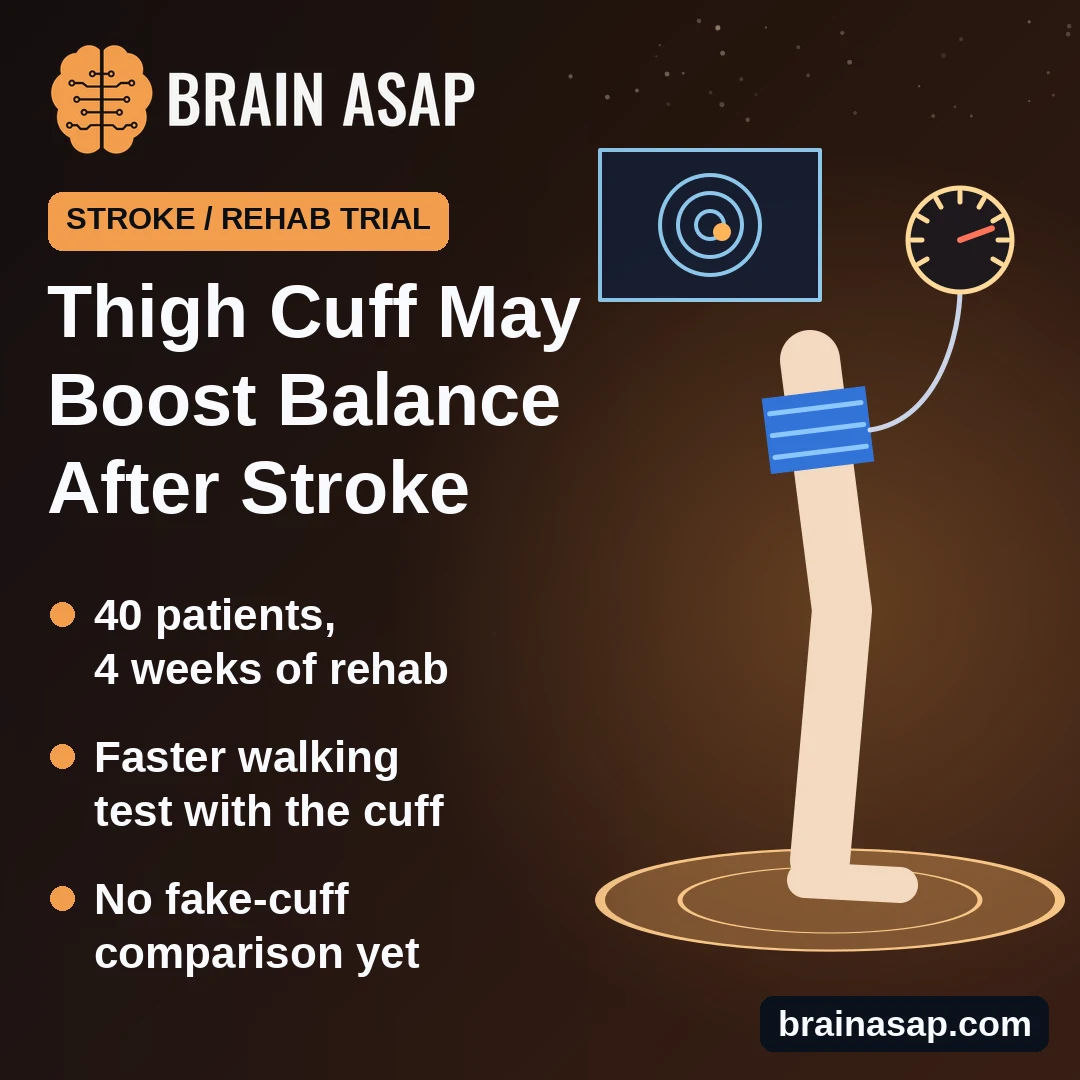
TL;DR: In a 40-person stroke rehab trial, people who did video-game balance training with a tight cuff on the weak thigh improved balance, walking and leg strength more over 4 weeks than people doing the same training without the cuff. The trial was small, sho…
Read article ↗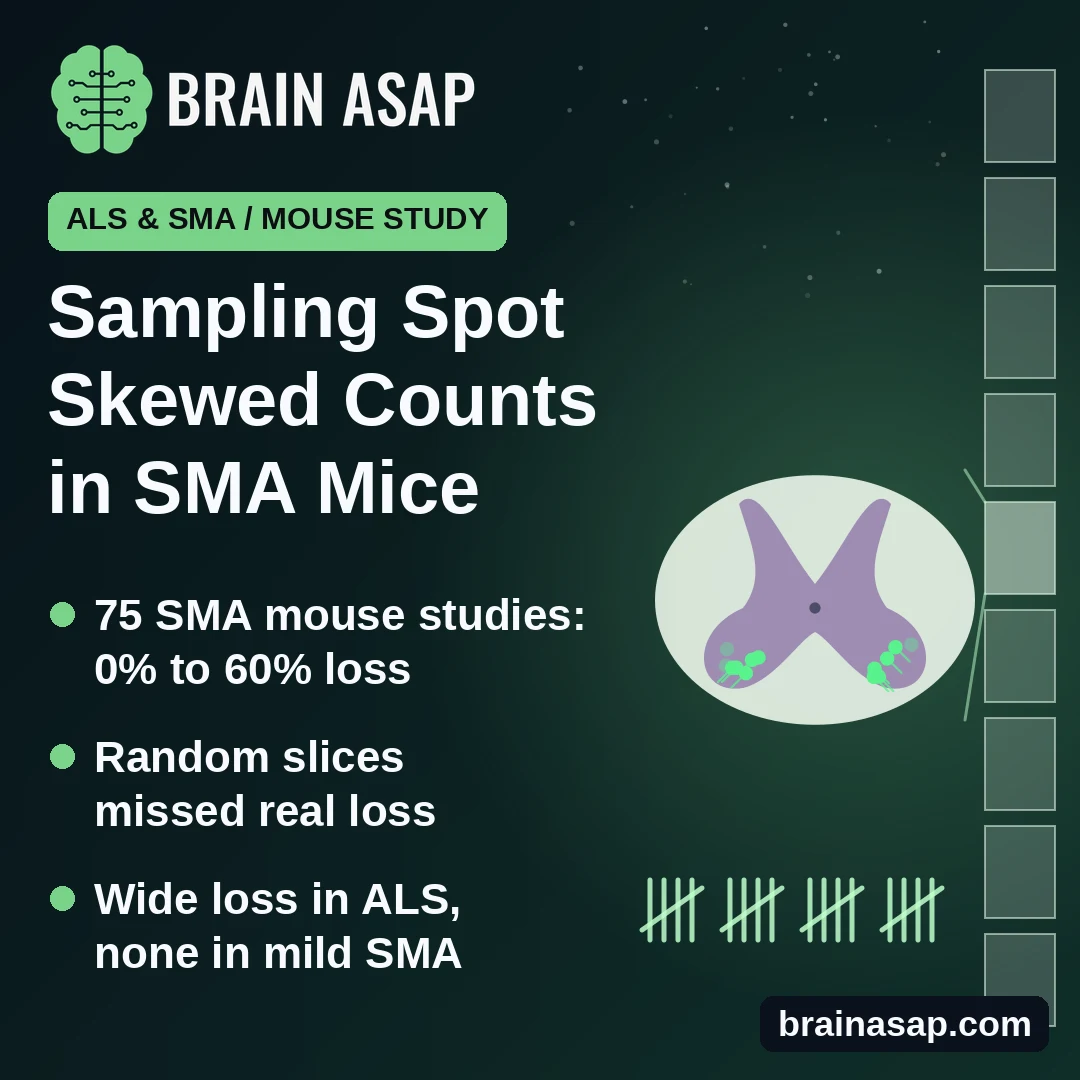
TL;DR: Mouse studies of spinal muscular atrophy have reported anywhere from no loss to 60% loss of motor neurons, and a German-American team found that which slice of spinal cord gets counted explains much of that spread. Counting the right segments with a rel…
Read article ↗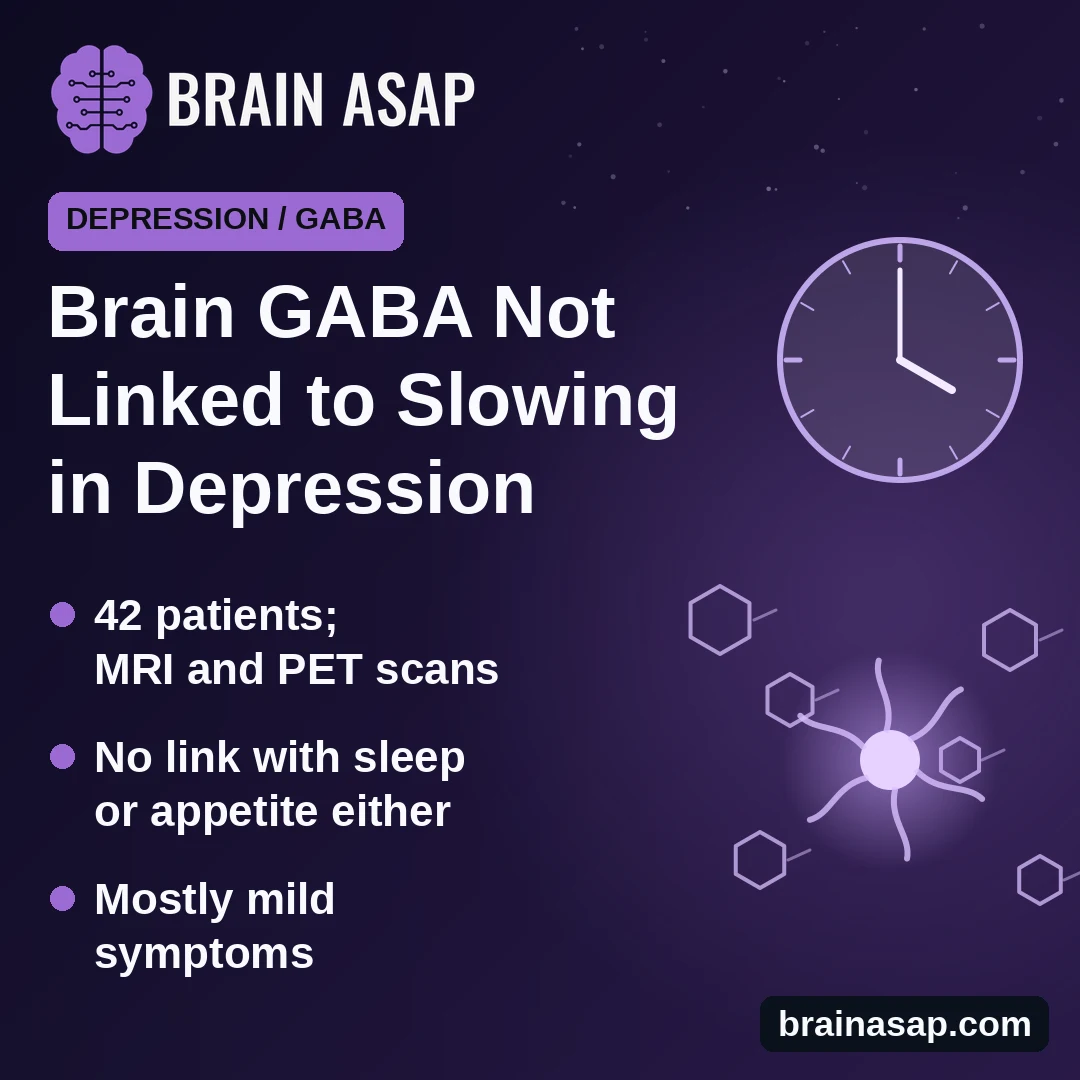
TL;DR: A Swedish study of 42 people with depression found no link between the brain’s main calming chemical, GABA, and slowed movement, early waking or poor appetite. The researchers measured GABA with two kinds of scans, but most patients had fairly mild vers…
Read article ↗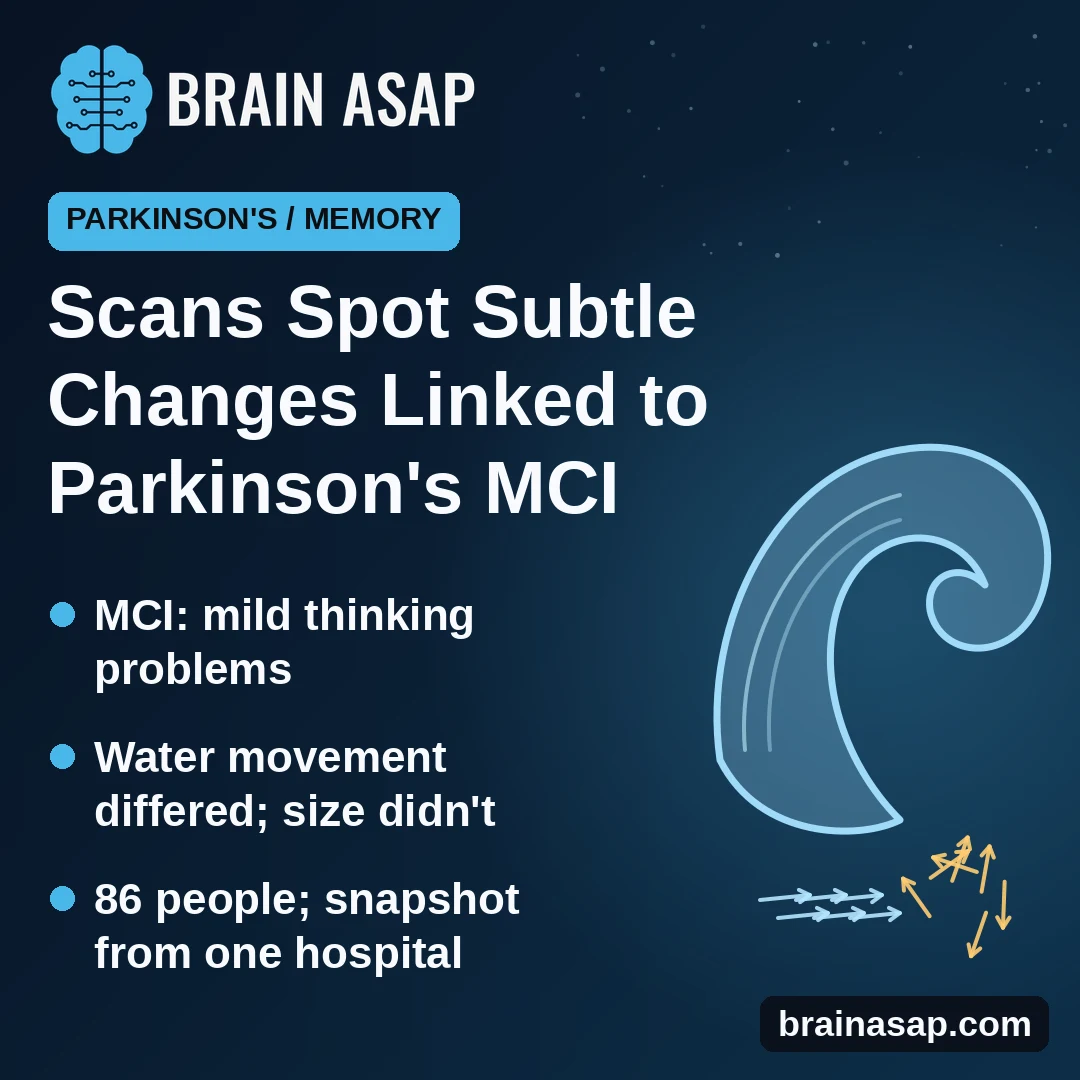
TL;DR: In 86 people from one hospital in China, those with Parkinson’s and mild thinking problems showed changes in how water moves through parts of the hippocampus, a memory center. The hippocampus was not measurably smaller, suggesting a diffusion scan may p…
Read article ↗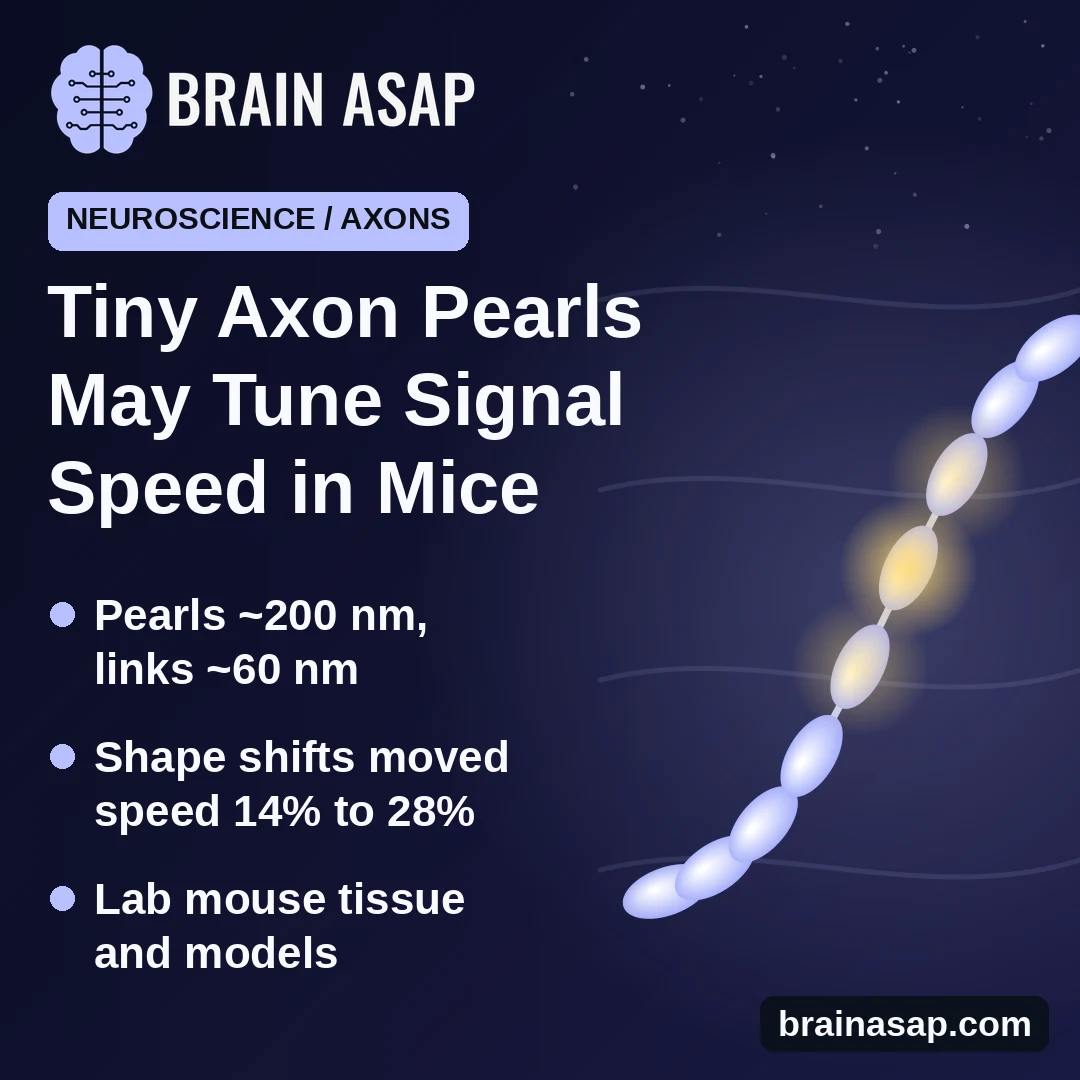
TL;DR: Thin nerve fibers in the mouse brain are not smooth tubes but look like strings of tiny pearls, a shape set by the physics of their outer membrane. Changing that shape with drugs or heavy activity sped up or slowed down nerve signals by roughly 14% to 2…
Read article ↗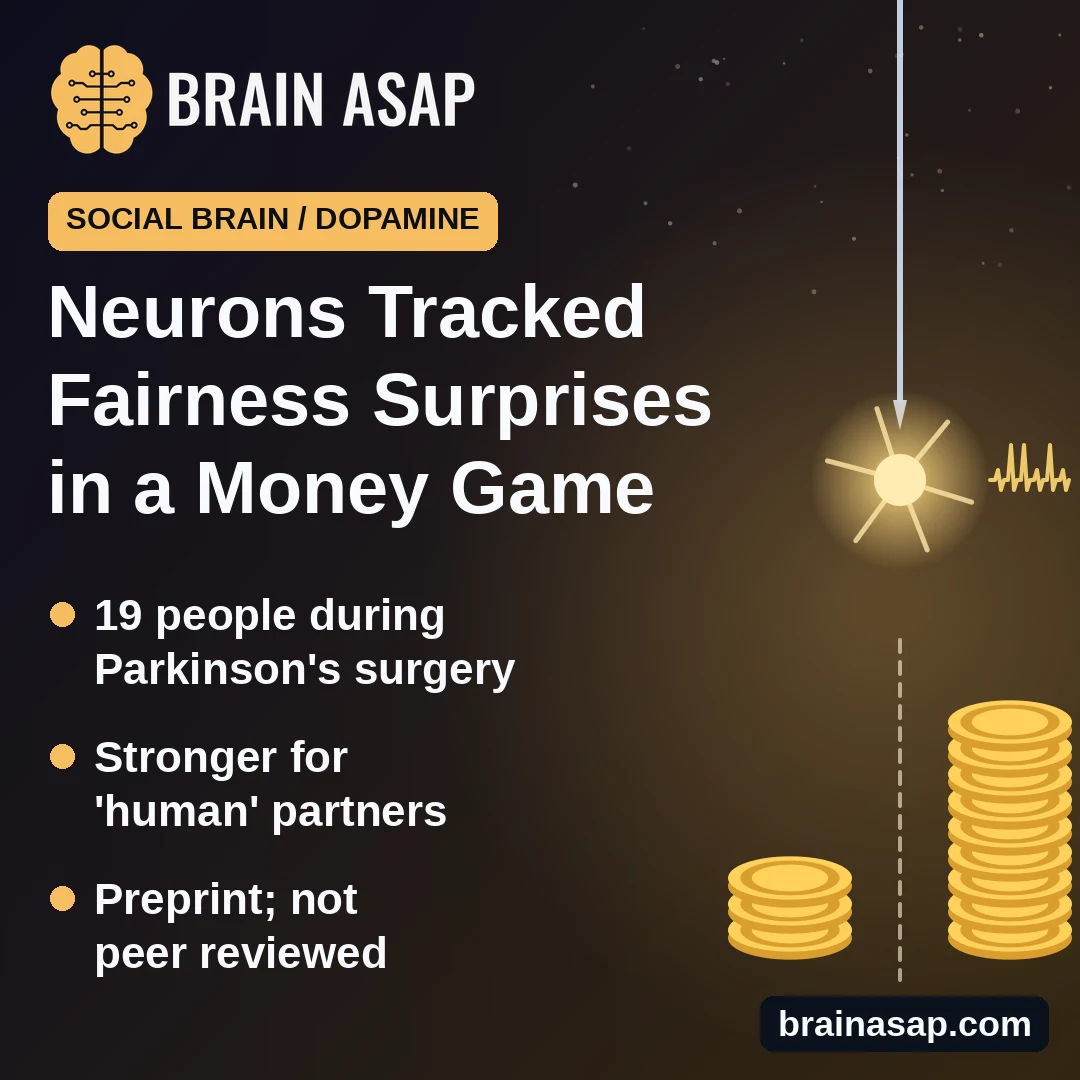
TL;DR: During Parkinson’s surgery, 19 people played a game where they accepted or rejected money splits. Dopamine-like neurons deep in their brains fired more when an offer beat what the person expected, and this signal was stronger when the offer seemed to co…
Read article ↗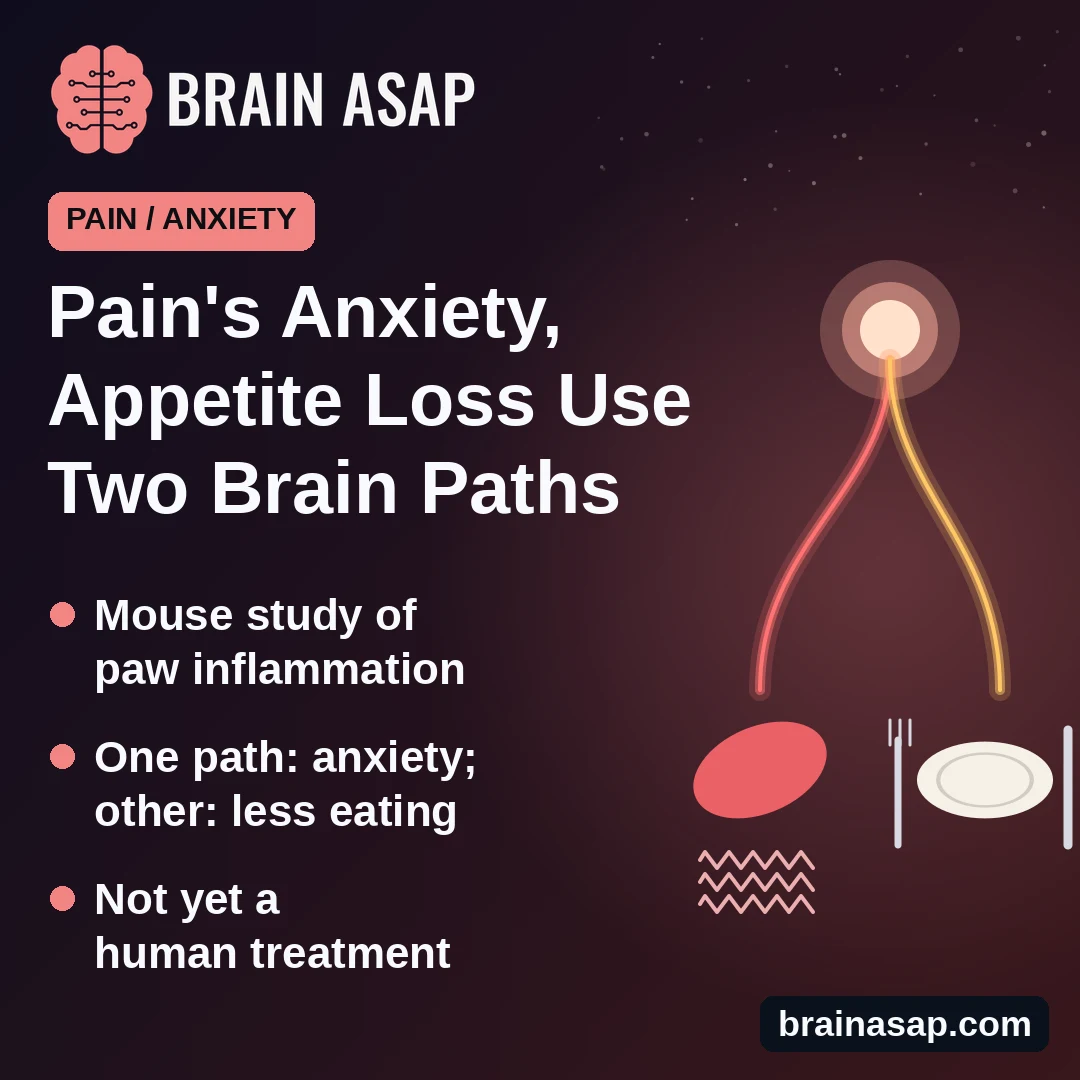
TL;DR: In mice with a painful, inflamed paw, two separate sets of neurons in a pain-and-emotion brain area seemed to drive different side effects. One set, wired to the amygdala, controlled anxiety-like behavior, while the other, wired to a reward hub, control…
Read article ↗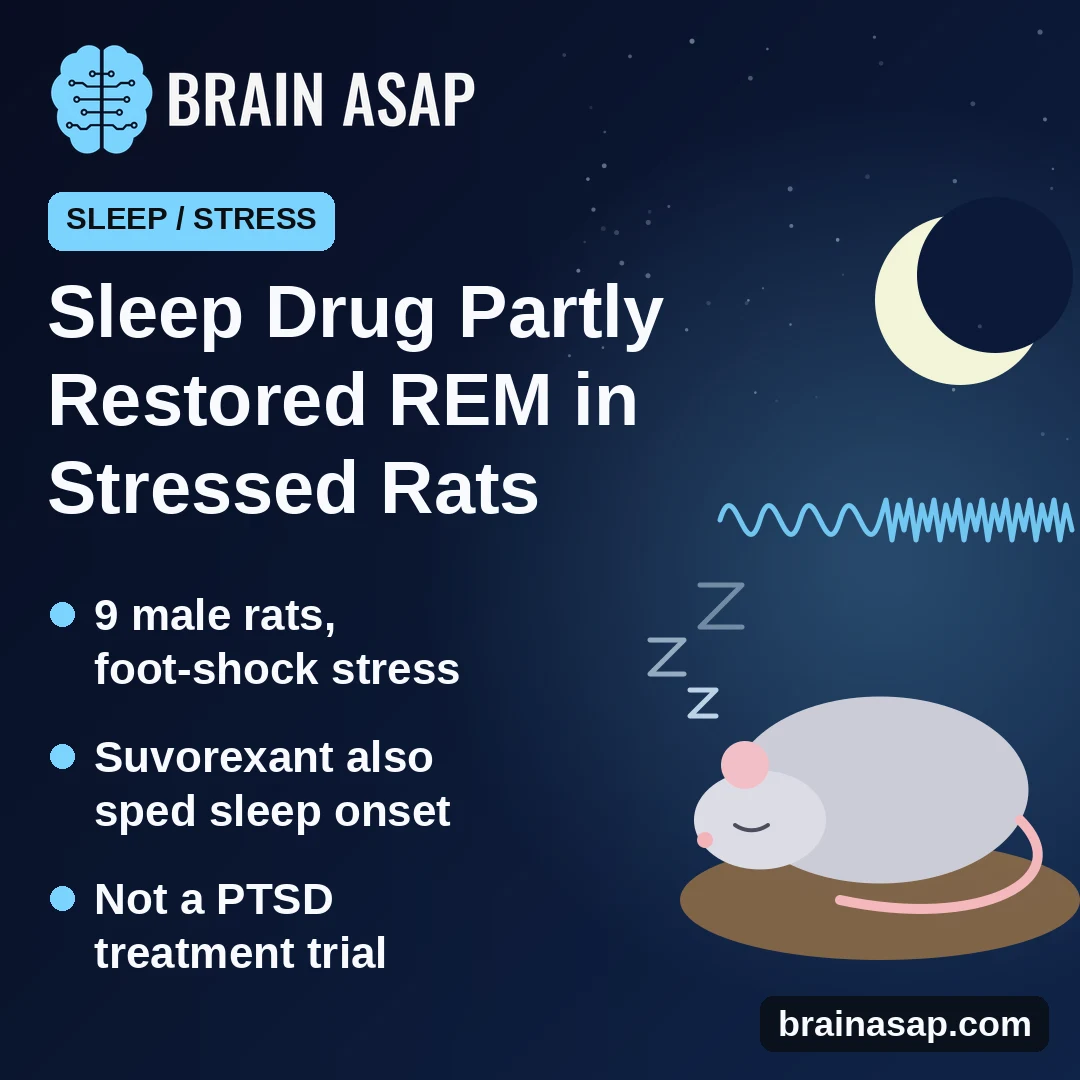
TL;DR: In rats stressed with mild foot shocks, REM sleep, the dream stage, dropped. The insomnia drug suvorexant and two related experimental drugs partly brought it back, and suvorexant also helped the rats fall asleep faster, but this was a small study in 9…
Read article ↗
TL;DR: Old mice given nicotine in their drinking water for 3 months had more cells carrying two key markers of brake-like neurons in the hearing part of the brain, reaching young-adult levels. The study did not test hearing, and it is no reason for anyone to t…
Read article ↗
TL;DR: Two research teams used different methods to map the brain’s wiring in the same 1,065 young adults, then checked for differences between men and women. They almost always agreed on the fiber-quality measures, clashing just once in 343 comparisons, but d…
Read article ↗