IGF1R Inhibitors Improved Mouse Healthspan but Raised Safety Concerns

IGF1R Inhibitors Improved Mouse Healthspan but Raised Safety Concerns

TL;DR: A 2026 mouse preprint in bioRxiv reported that small-molecule IGF1R inhibitors, drugs that block insulin-like growth factor 1 receptor signaling, protected several healthspan measures in aging mice, but the tested compounds also carried major safety and drug-development problems. Key Findings 150 aging mice: Researchers assigned 55-week-old C57BL/6 mice to control diet, PPP, or NVP-ADW742, …

Read more

Hippocampal CA3 Connectivity Transformed From Dense-Random to Sparse-Structured Across Postnatal Development

Hippocampal CA3 Connectivity Transformed From Dense-Random to Sparse-Structured Across Postnatal Development

TL;DR: A 2026 Nature Communications study found that mouse hippocampal CA3 connectivity shifts from dense-random early wiring to sparse-structured adult wiring, with weaker single synapses that make memory-network output depend on coordinated input rather than one strong connection. Key Findings CA3 connectivity transforms from random to structured during postnatal development: Early in life (P7-8 mice) …

Read more

Generational Memory Gains May Help Explain Declining Dementia Incidence

Generational Memory Gains May Help Explain Declining Dementia Incidence

TL;DR: A 2026 preprint longitudinal cohort analysis in medRxiv found that later-born cohorts showed higher memory levels entering old age and slower rates of memory decline, while the projected 20-year cohort advantage at age 80 was large enough in the model to account for a reported 13% per-decade decline in dementia incidence. Key Findings Birth-cohort …

Read more

New-Onset Loneliness Accelerated Cognitive Decline in 635 Older Adults: ELSA Longitudinal Analysis

New-Onset Loneliness Accelerated Cognitive Decline in 635 Older Adults: ELSA Longitudinal Analysis

TL;DR: A 2026 longitudinal analysis in the Journal of Affective Disorders tracked 635 older adults with new-onset loneliness and found that cognitive decline matched controls before loneliness began, then accelerated after onset, especially when loneliness persisted. Key Findings Pre-loneliness cognitive trajectories were identical: Before the first reported episode of loneliness, cognitive scores in 635 future-lonely …

Read more

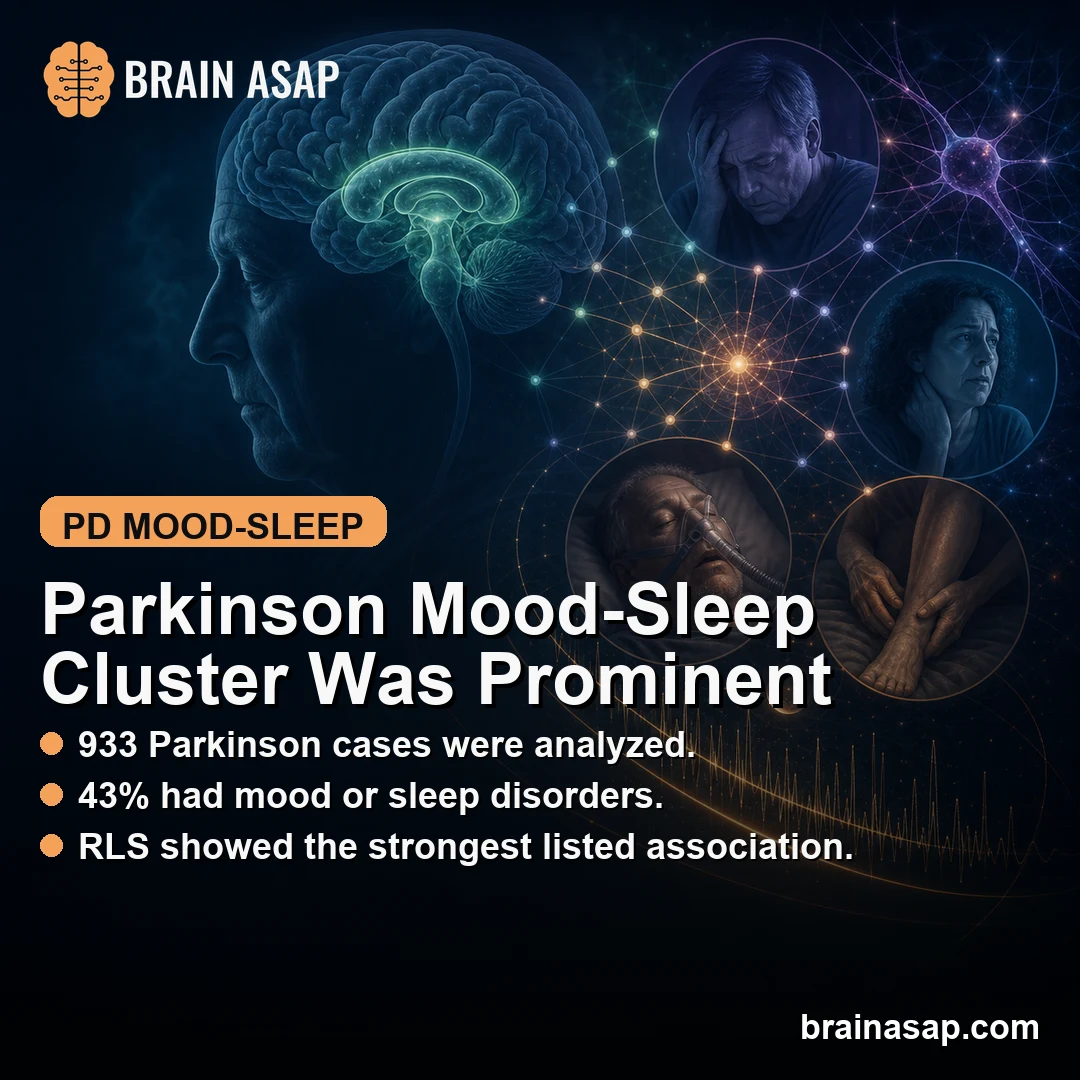
Parkinson’s Patients Had a Prominent Mood-Sleep Cluster

Parkinson's Patients Had a Prominent Mood-Sleep Cluster

TL;DR: A 2026 preprint on medRxiv using the Harvard Biomarkers Study found that 43% of Parkinson’s disease patients had depression, anxiety, sleep apnea, or restless legs syndrome, compared with 21% of controls. Key Findings 1,224-person cohort: Researchers analyzed 933 Parkinson’s disease cases and 291 controls in the Harvard Biomarkers Study. 43% mood-sleep burden: At least …

Read more

AT(N) Blood Biomarkers Were Often Abnormal in Older Adults With Epilepsy

AT(N) Blood Biomarkers Were Often Abnormal in Older Adults With Epilepsy

TL;DR: A 2026 medRxiv preprint applied the AT(N) framework, an Alzheimer’s disease biomarker system for amyloid, tau, and neurodegeneration, to 84 older adults with focal epilepsy and found that only 32.1% had normal blood biomarkers, while early-onset epilepsy carried higher odds of biomarker abnormality. Key Findings Epilepsy cohort: Researchers analyzed focal epilepsy participants from the …

Read more

Cannabis After First Pregnancy Was Not Linked to Hypertension in nuMoM2b Study

Cannabis After First Pregnancy Was Not Linked to Hypertension in nuMoM2b Study

TL;DR: A 2026 study in O&G Open found that cannabis exposure 2–7 years after a first pregnancy was not associated with incident hypertension after adjustment in the nuMoM2b Heart Health Study. Key Findings No adjusted hypertension association: Cannabis exposure was not associated with incident hypertension after adjustment (AOR 1.05; 95% CI, 0.63-1.76). 4,079-person analysis: Researchers …

Read more

Childhood and Adult Adversity Linked to Biological Aging Markers

Childhood and Adult Adversity Linked to Biological Aging Markers

TL;DR: A 2026 BMC Medicine study of UK Biobank adults linked adversity in both childhood and adulthood to higher frailty, older metabolomic age profiles, lower grip strength, and some telomere differences, with the clearest associations in people reporting multiple adverse events. Key Findings Large cohort: The study analyzed up to 153,557 middle-aged and older UK …

Read more

Alzheimer’s Capillary Blood Biomarkers Correlated With Cognition

Alzheimer's Capillary Blood Biomarkers Correlated With Cognition

TL;DR: A 2026 study in Nature Communications found that self-administered finger-prick blood tests for phosphorylated tau 217 (p-tau217), an Alzheimer’s tau marker, and glial fibrillary acidic protein (GFAP), an astrocyte-injury marker, correlated with cognition and function in older adults. Key Findings Remote sampling: Participants used capillary finger-prick blood collection rather than standard clinic-based venous blood …

Read more

Olfactory MRI Radiomics Linked pTau217 to Alzheimer’s Cognition

Olfactory MRI Radiomics Linked pTau217 to Alzheimer's Cognition

TL;DR: A 2026 article-in-press study in Alzheimer’s Research & Therapy found that olfactory-region MRI radiomics, a method that turns brain scans into quantitative texture and shape features, linked blood pTau217, a tau-related Alzheimer’s disease biomarker, with cognitive impairment across three cohorts. Key Findings Three Alzheimer’s cohorts were matched: Researchers matched 122 Alzheimer’s disease (AD) patients …

Read more