TL;DR: A 2026 rat study in Hippocampus found that the dentate gyrus (DG), a hippocampal memory region, gained about 385,000 granule neurons from 2 to 18 months of age even though older development-born neurons were also being lost. Key Findings 385,000-cell ne…
Read article ↗
TL;DR: A 2026 study in Epigenetics found that DNA methylation clocks, which estimate biological aging from chemical marks on DNA, gave substantially older age estimates in saliva than in two blood-derived samples from 91 early-to-mid-adult participants. Key Fi…
Read article ↗
TL;DR: A 2026 narrative review in the Japanese Journal of Radiology reported that Alzheimer’s brain positron emission tomography (PET) imaging has shifted from supportive diagnosis toward treatment selection because amyloid PET is now central to confirming eli…
Read article ↗
TL;DR: A 2026 study in Aging Cell found that fasting and caloric restriction activated ADIOL, a steroid hormone, through an NHR-91-kynurenic acid pathway that improved several healthspan measures in worms without extending lifespan. Key Findings ADIOL was the…
Read article ↗
TL;DR: A 2026 medRxiv preprint found that older adults with Montreal Cognitive Assessment (MoCA)-defined mild cognitive impairment had less coordinated pulse-wave responses during a cognitive challenge than cognitively intact older adults. Key Findings Communi…
Read article ↗
TL;DR: A 2026 Nature Communications study in aging mouse and killifish brains found that deubiquitylases (DUBs), enzymes that help edit protein-cleanup tags, lost about 40% of their catalytic activity with age even when many of the same enzymes were still pres…
Read article ↗
TL;DR: A 2026 medRxiv preprint found that a composite cerebral small vessel disease (cCSVD) score from routine T1 MRI predicted 3-month cognitive recovery after stroke better than any single small-vessel marker in a 65-person cohort. Key Findings Recovery wind…
Read article ↗
TL;DR: A 2026 mouse and cell study in Signal Transduction and Targeted Therapy linked ATP11B, a phospholipid-flipping transport protein, to hippocampal iron handling, mitochondrial failure, ferroptosis, and age-related cognitive decline. Key Findings ATP11B fe…
Read article ↗
TL;DR: A 2026 medRxiv preprint linked higher blood inflammatory markers with diffusion MRI signs of altered white-matter microstructure in 457 dementia-free middle-aged and older adults, especially for a combined cytokine score and orientation dispersion index…
Read article ↗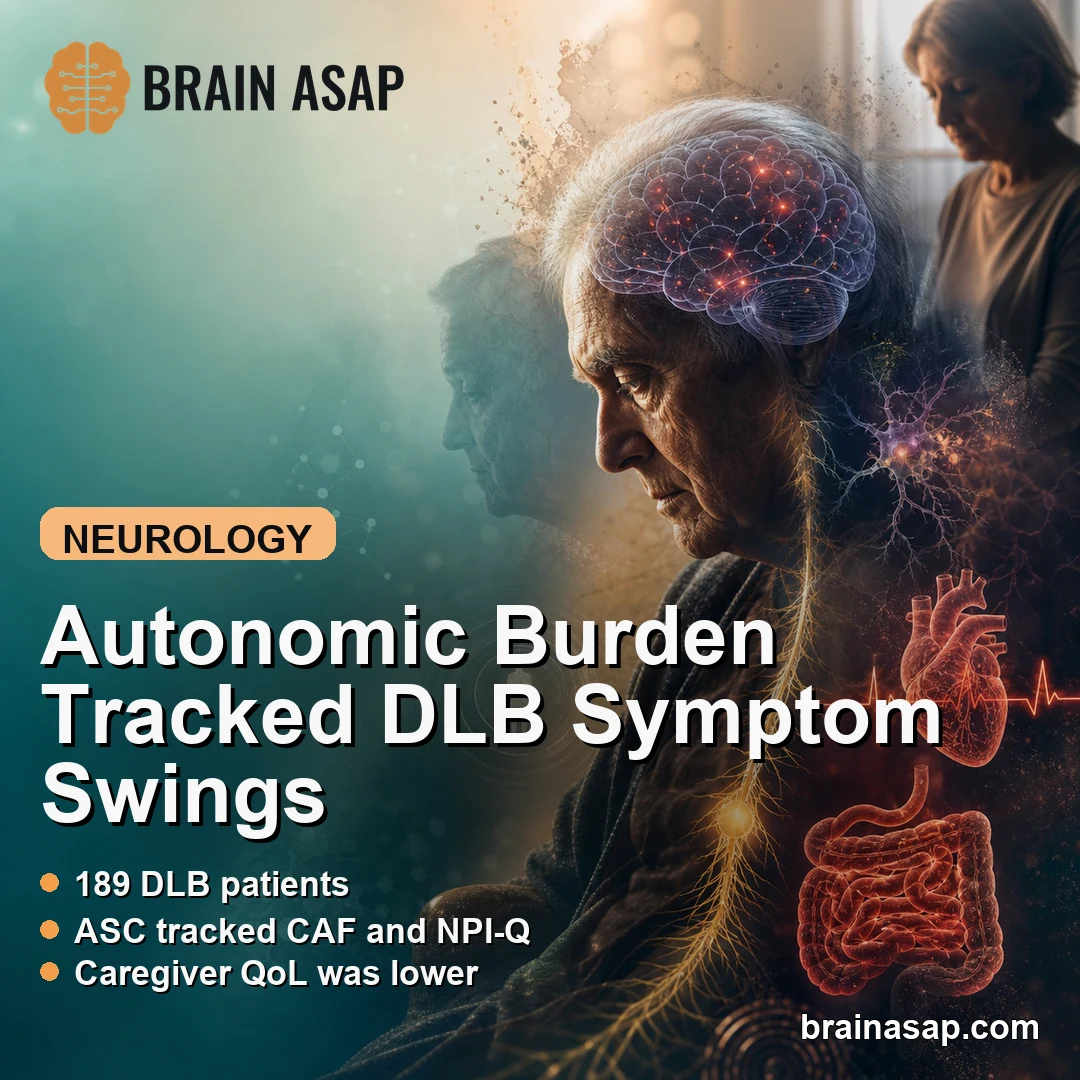
TL;DR: A 2026 study in Neurology found that higher autonomic symptom burden in moderate-advanced dementia with Lewy bodies was linked to worse cognitive fluctuations, higher neuropsychiatric burden, and lower caregiver quality of life over time. Key Findings A…
Read article ↗