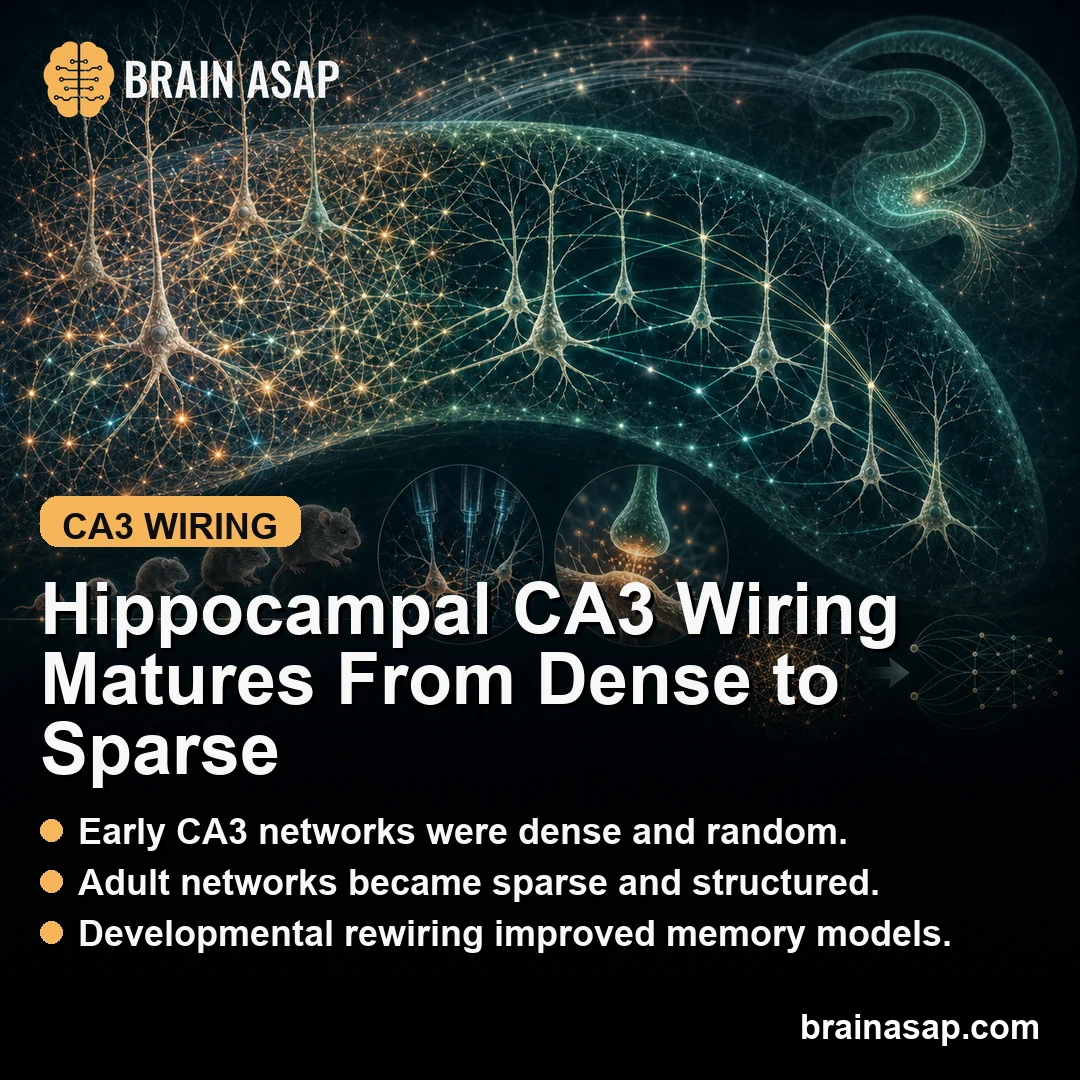
TL;DR: A 2026 Nature Communications study found that mouse hippocampal CA3 connectivity shifts from dense-random early wiring to sparse-structured adult wiring, with weaker single synapses that make memory-network output depend on coordinated input rather than…
Read article ↗
TL;DR: A 2026 preprint longitudinal cohort analysis in medRxiv found that later-born cohorts showed higher memory levels entering old age and slower rates of memory decline, while the projected 20-year cohort advantage at age 80 was large enough in the model t…
Read article ↗
TL;DR: A 2026 longitudinal analysis in the Journal of Affective Disorders tracked 635 older adults with new-onset loneliness and found that cognitive decline matched controls before loneliness began, then accelerated after onset, especially when loneliness per…
Read article ↗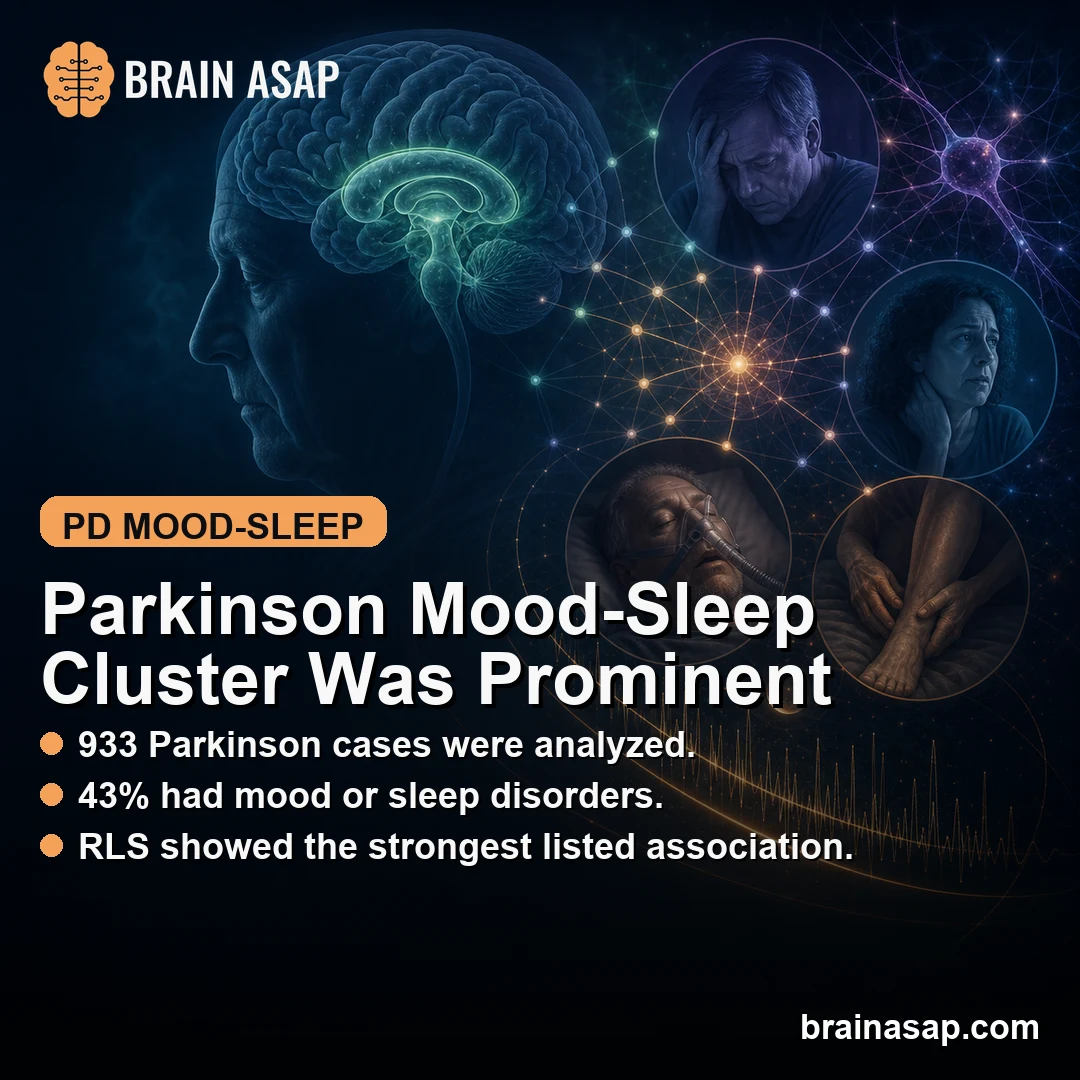
TL;DR: A 2026 preprint on medRxiv using the Harvard Biomarkers Study found that 43% of Parkinson’s disease patients had depression, anxiety, sleep apnea, or restless legs syndrome, compared with 21% of controls. Key Findings 1,224-person cohort: Researchers an…
Read article ↗
TL;DR: A 2026 medRxiv preprint applied the AT(N) framework, an Alzheimer’s disease biomarker system for amyloid, tau, and neurodegeneration, to 84 older adults with focal epilepsy and found that only 32.1% had normal blood biomarkers, while early-onset epileps…
Read article ↗
TL;DR: A 2026 study in O&G Open found that cannabis exposure 2–7 years after a first pregnancy was not associated with incident hypertension after adjustment in the nuMoM2b Heart Health Study. Key Findings No adjusted hypertension association: Cannabis exposur…
Read article ↗
TL;DR: A 2026 BMC Medicine study of UK Biobank adults linked adversity in both childhood and adulthood to higher frailty, older metabolomic age profiles, lower grip strength, and some telomere differences, with the clearest associations in people reporting mul…
Read article ↗
TL;DR: A 2026 study in Nature Communications found that self-administered finger-prick blood tests for phosphorylated tau 217 (p-tau217), an Alzheimer’s tau marker, and glial fibrillary acidic protein (GFAP), an astrocyte-injury marker, correlated with cogniti…
Read article ↗
TL;DR: A 2026 article-in-press study in Alzheimer’s Research & Therapy found that olfactory-region MRI radiomics, a method that turns brain scans into quantitative texture and shape features, linked blood pTau217, a tau-related Alzheimer’s disease biomarker, w…
Read article ↗
TL;DR: A 2026 study in the Journal of the American Heart Association followed 1,882 stroke-free women from the Framingham Heart Study for a median of 18 years and found that having three or more live births was associated with a reduced risk of clinical stroke…
Read article ↗