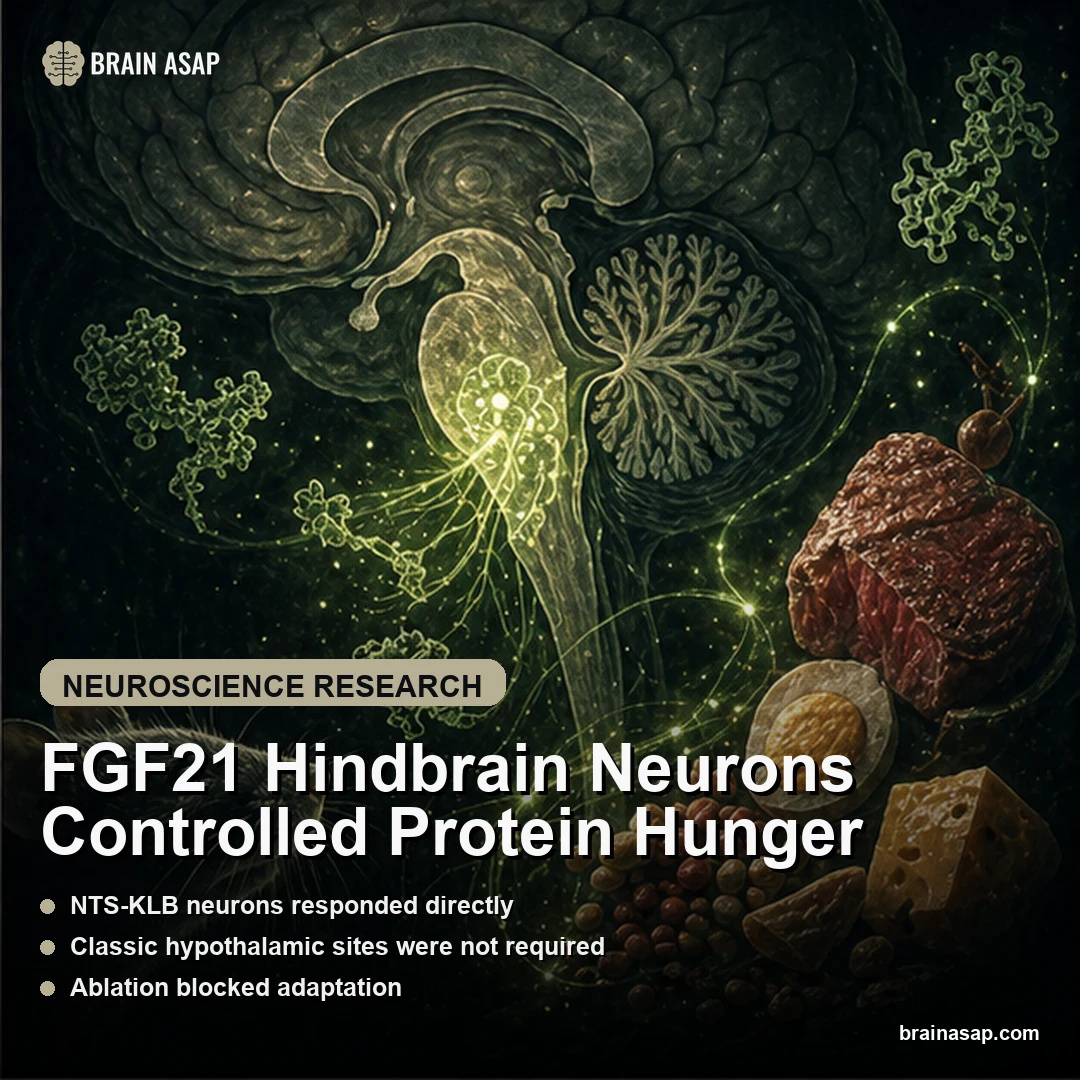
FGF21 Hindbrain Neurons Controlled Protein Hunger TL;DR: During protein restriction, liver-derived FGF21 acted through glutamatergic beta-klotho neurons in the nucleus of the solitary tract to change food intake, food choice, and energy expenditure in mice. Ke…
Read article ↗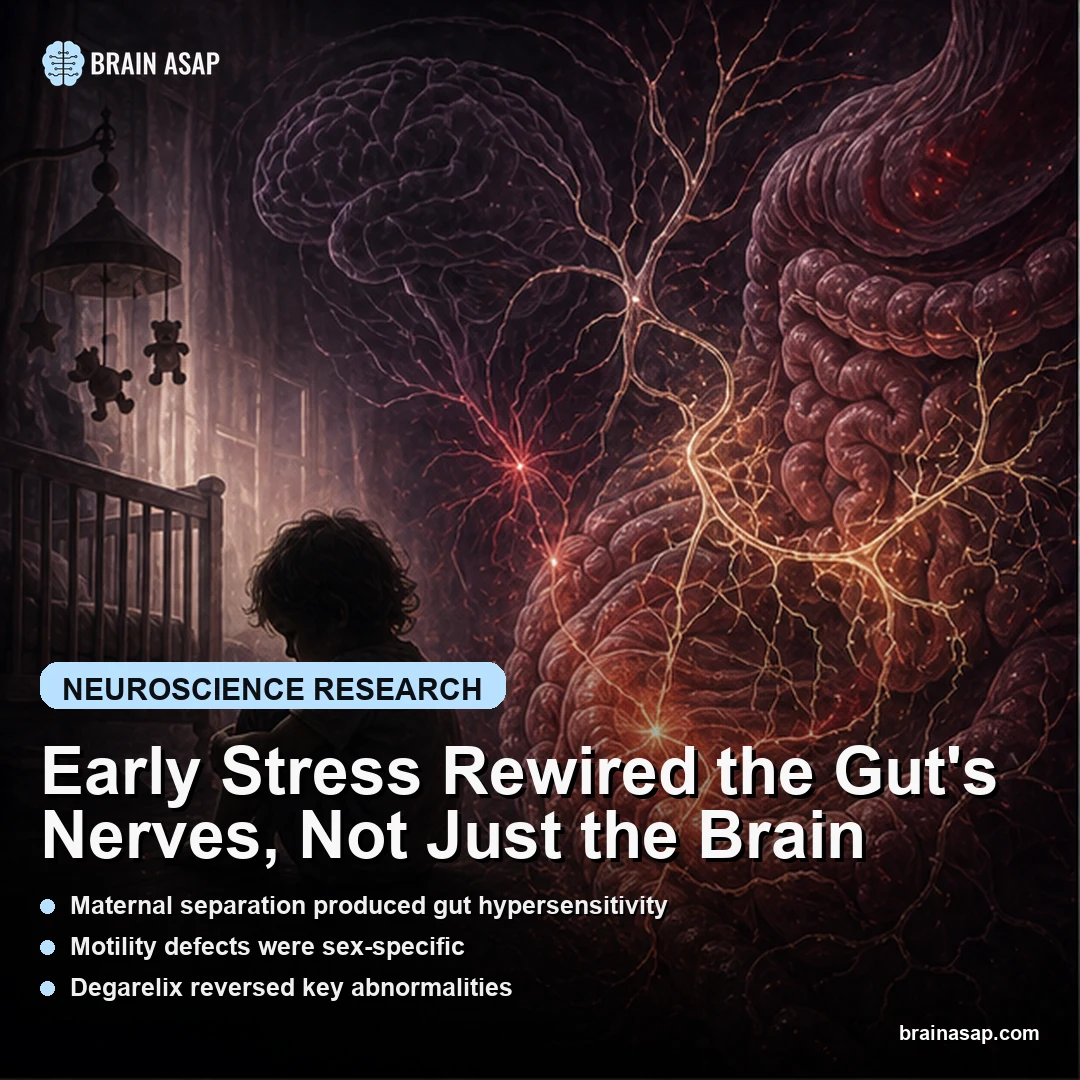
Early Stress Rewired the Gut’s Nerves, Not Just the Brain TL;DR: Early life stress produced lasting gut pain and motility changes through enteric and sympathetic nerve pathways, with pediatric cohort data pointing in the same direction. Key Findings Maternal s…
Read article ↗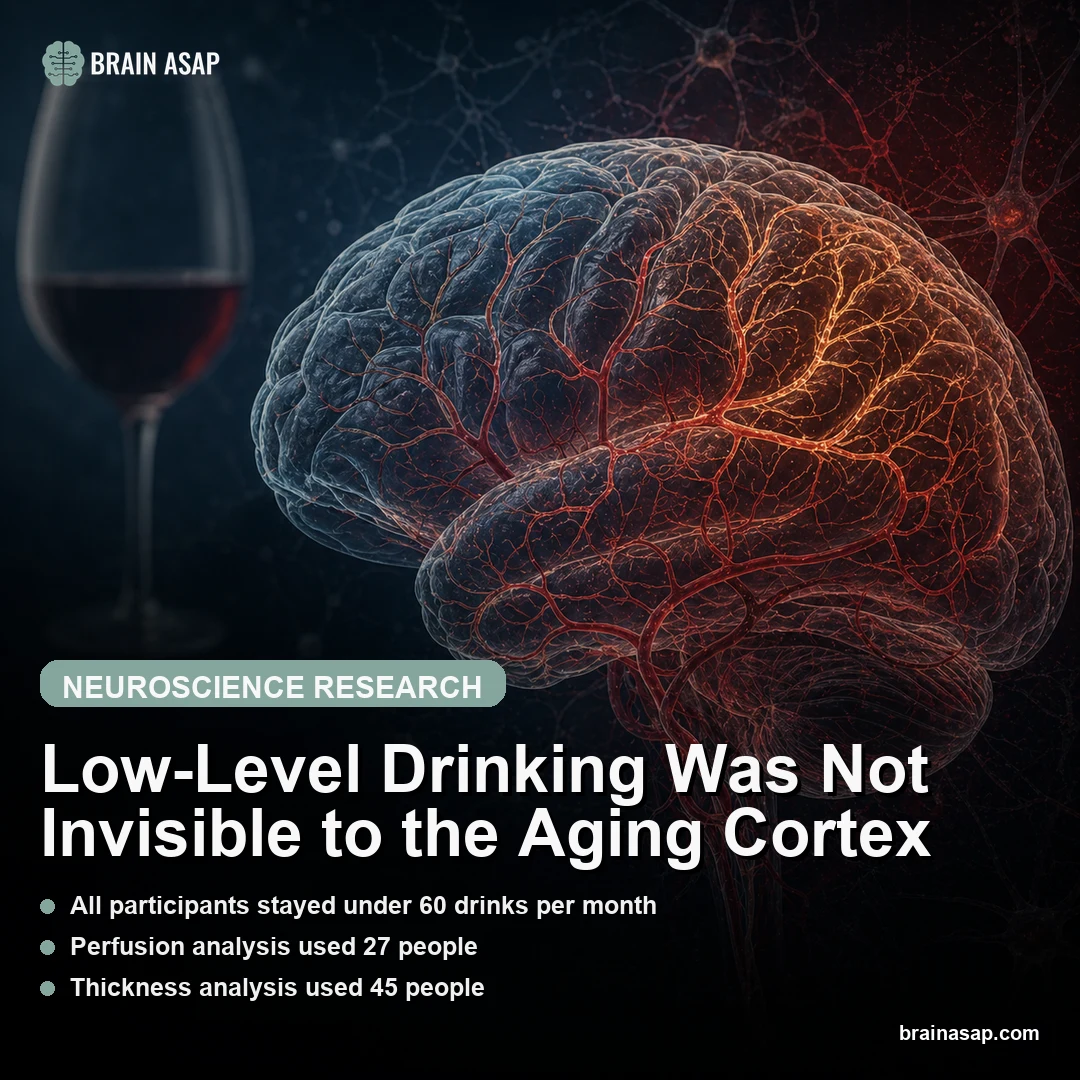
Low-Level Drinking Was Not Invisible to the Aging Cortex TL;DR: Even drinking within low-risk guidelines was linked to lower cortical blood flow and thinner cortex when lifetime exposure met advancing age. Key Findings All participants stayed under 60 drinks p…
Read article ↗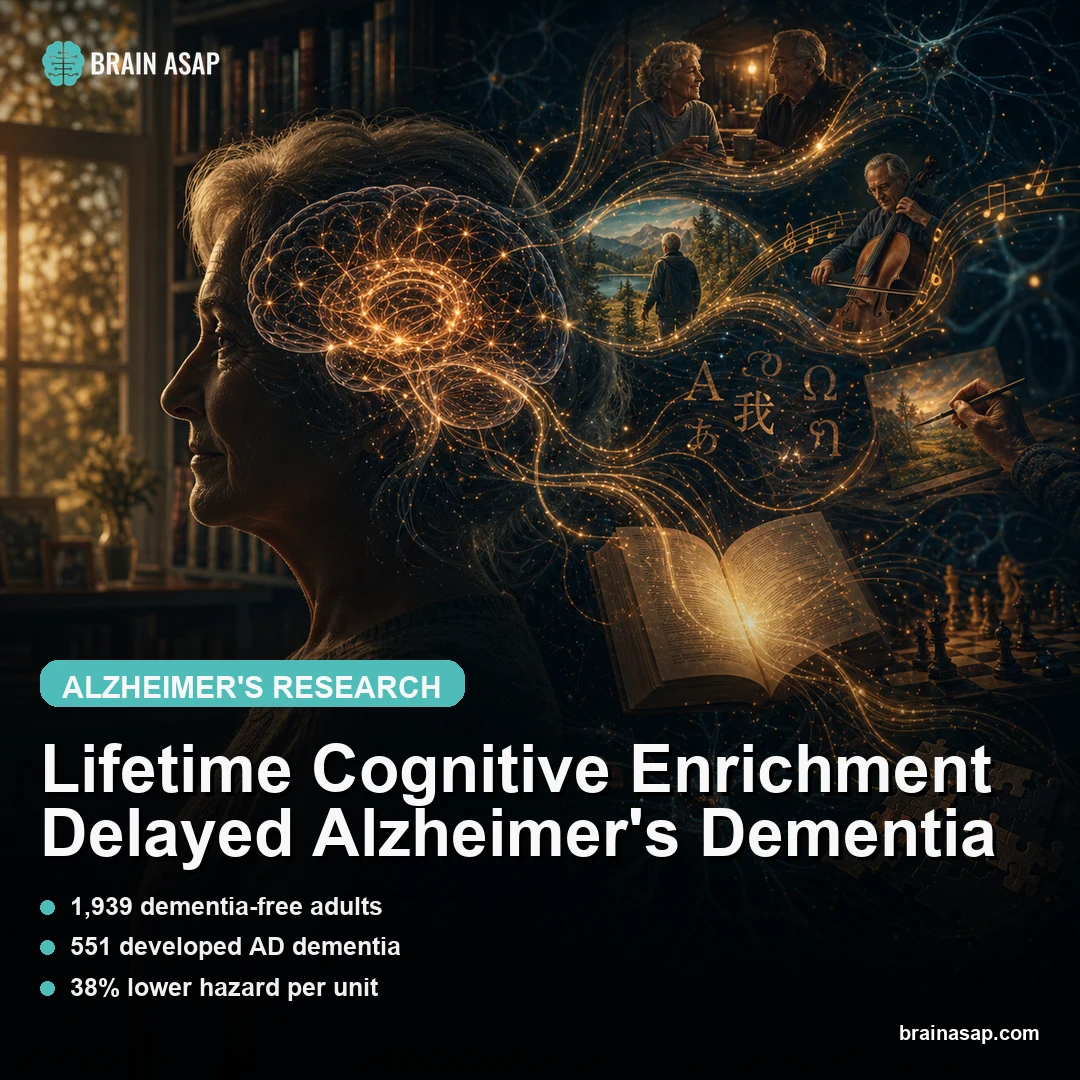
Lifetime Cognitive Enrichment Delayed Alzheimer’s Dementia TL;DR: In 1,939 Rush Memory and Aging Project participants, higher lifetime cognitive enrichment was linked to 38% lower Alzheimer’s dementia hazard and about 5 years later dementia onset. Key Findings…
Read article ↗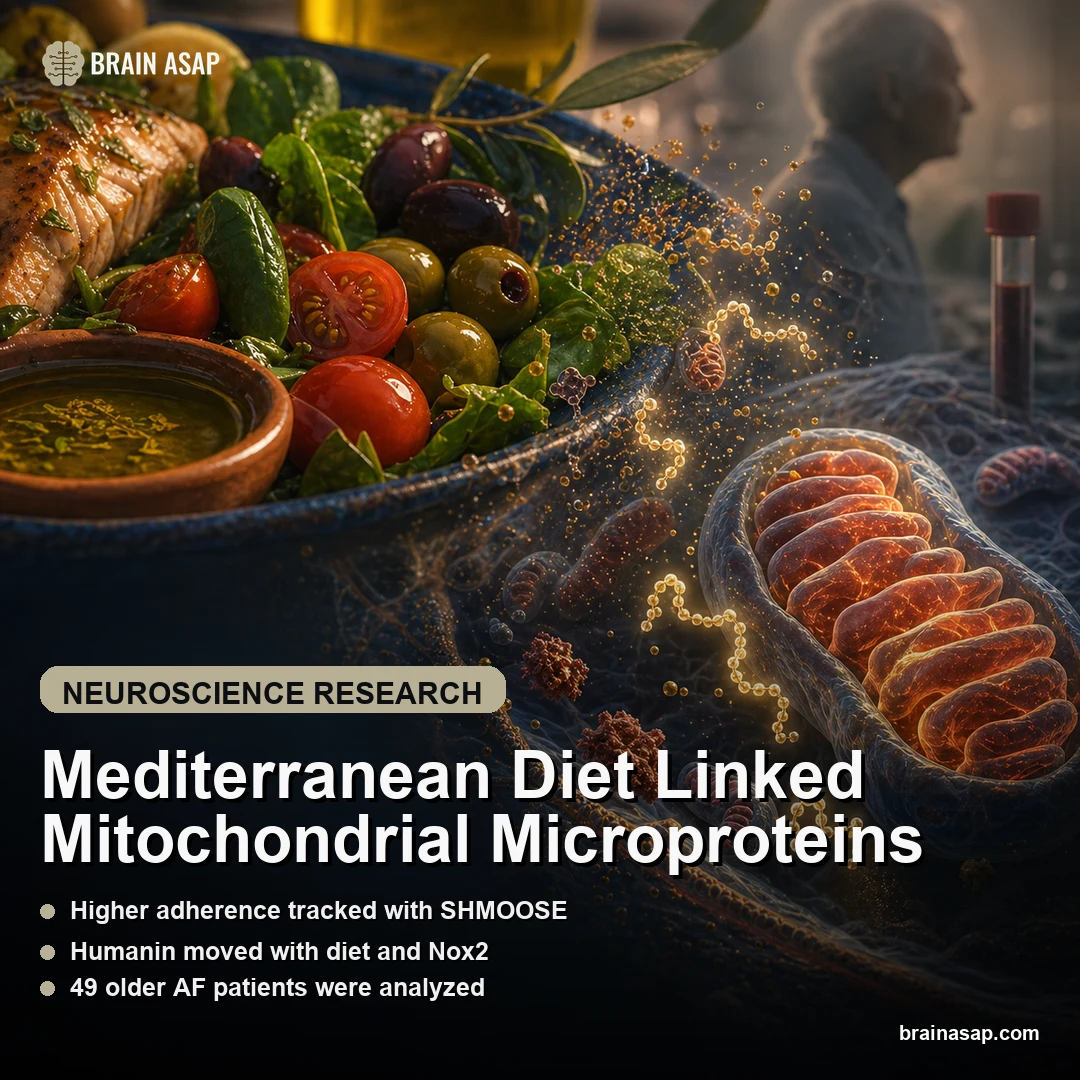
Mediterranean Diet Linked Mitochondrial Microproteins TL;DR: Mediterranean diet adherence tracked with higher mitochondrial microproteins Humanin and SHMOOSE in older adults, pointing to a possible mitochondrial route for healthy-aging benefits. Key Findings H…
Read article ↗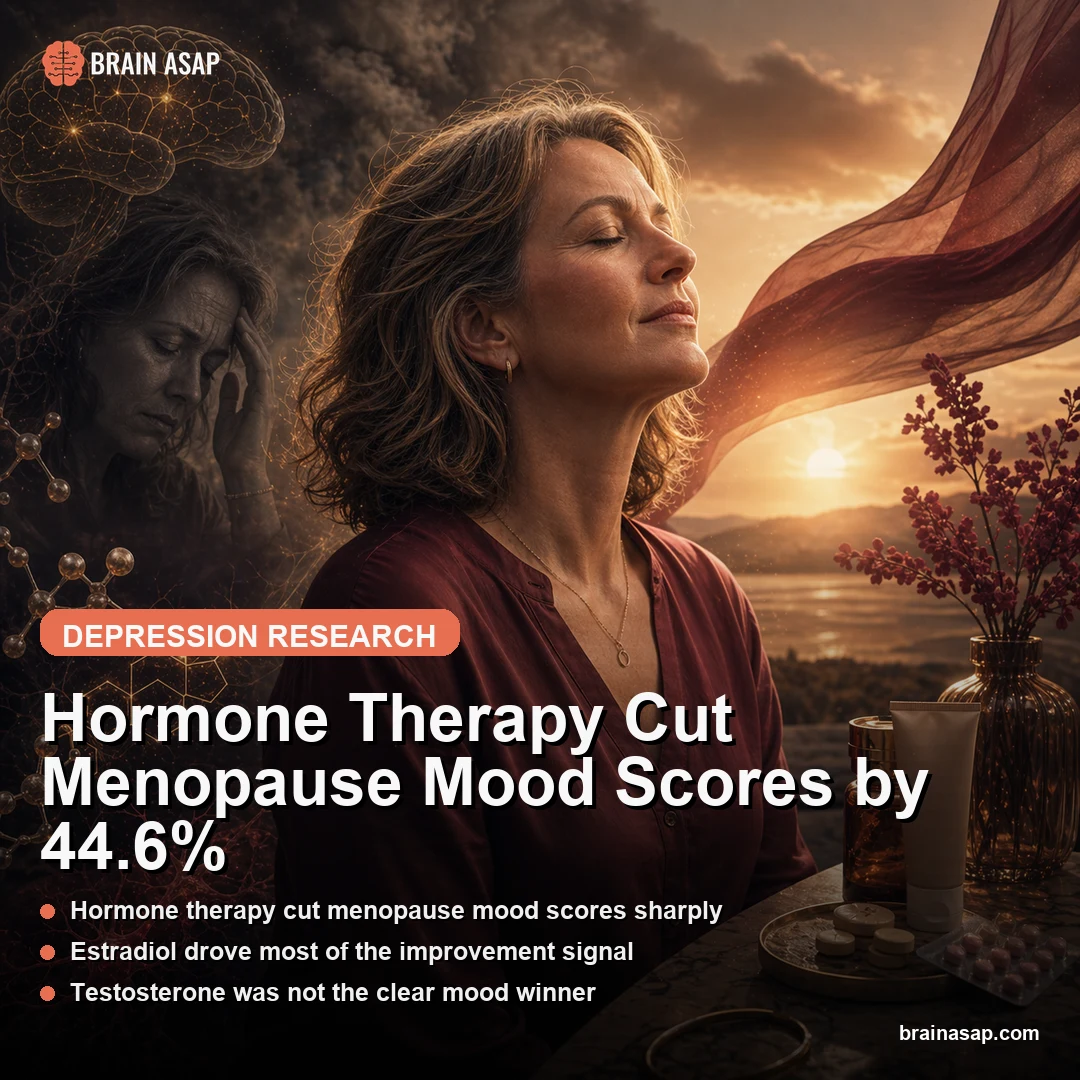
Hormone Therapy Linked to 44% Improvement in Menopause Mood Symptoms TL;DR: Menopausal hormone therapy tracked with a 44.59% improvement in mood-symptom scores after about 107 days, across both peri- and postmenopausal women — and the gains were broadly simila…
Read article ↗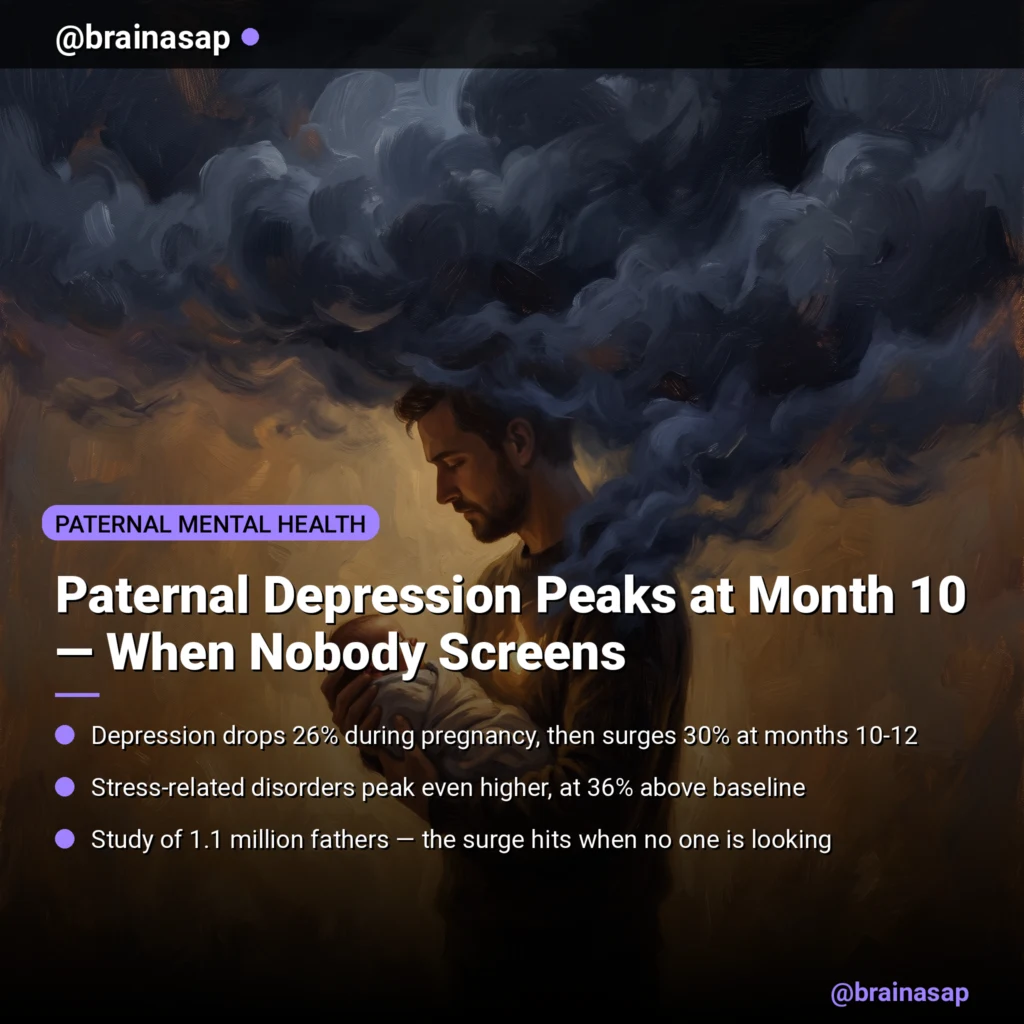
The Hidden Postpartum Crisis Nobody Screens For: Paternal Depression Peaks at 10-12 Months TL;DR: Fathers experience a protective period early postpartum (depression drops by 26%), but depression and stress surge at months 10-11, creating a 30-36% elevated ris…
Read article ↗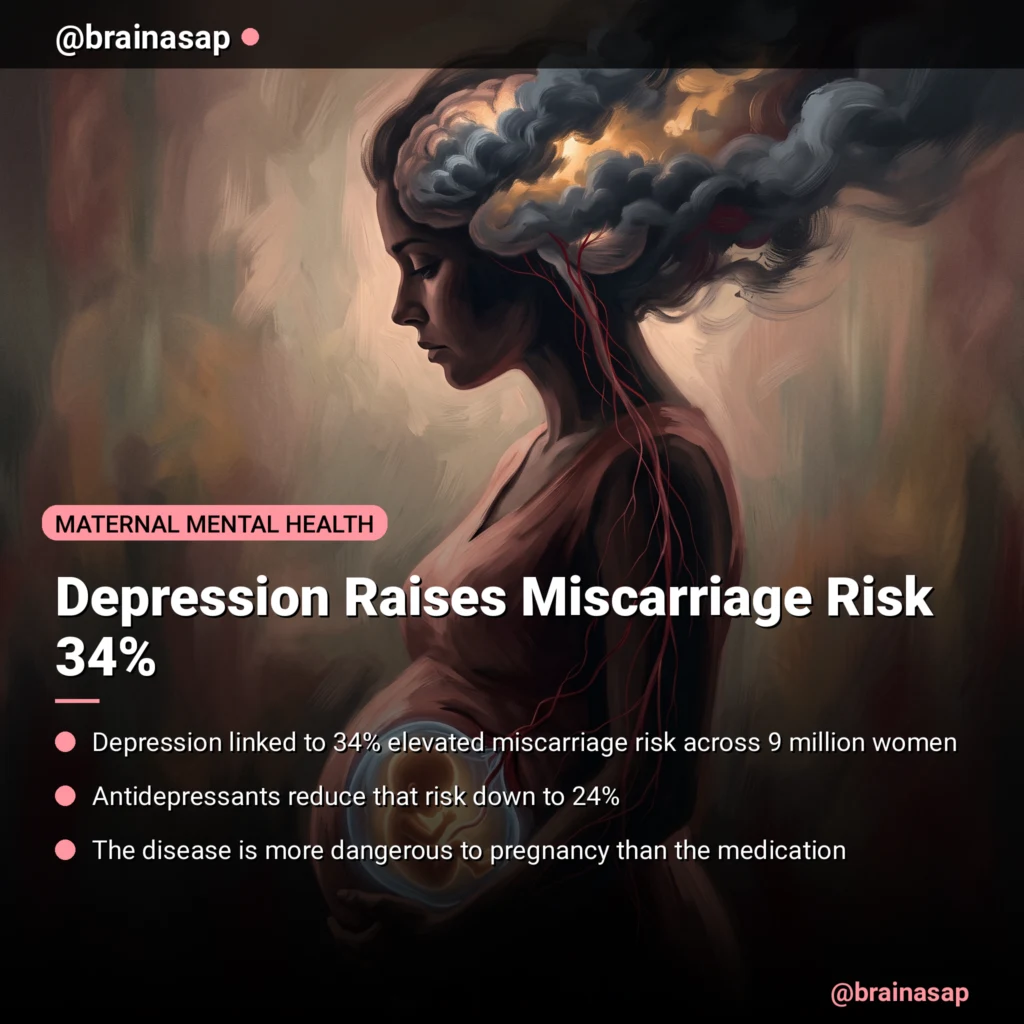
When Depression Threatens Pregnancy: A 34% Elevated Miscarriage Risk TL;DR: Untreated depression increases miscarriage risk by 34% across nearly 9 million women, but antidepressants reduce that risk to 24%—meaning the medication is safer than the disease durin…
Read article ↗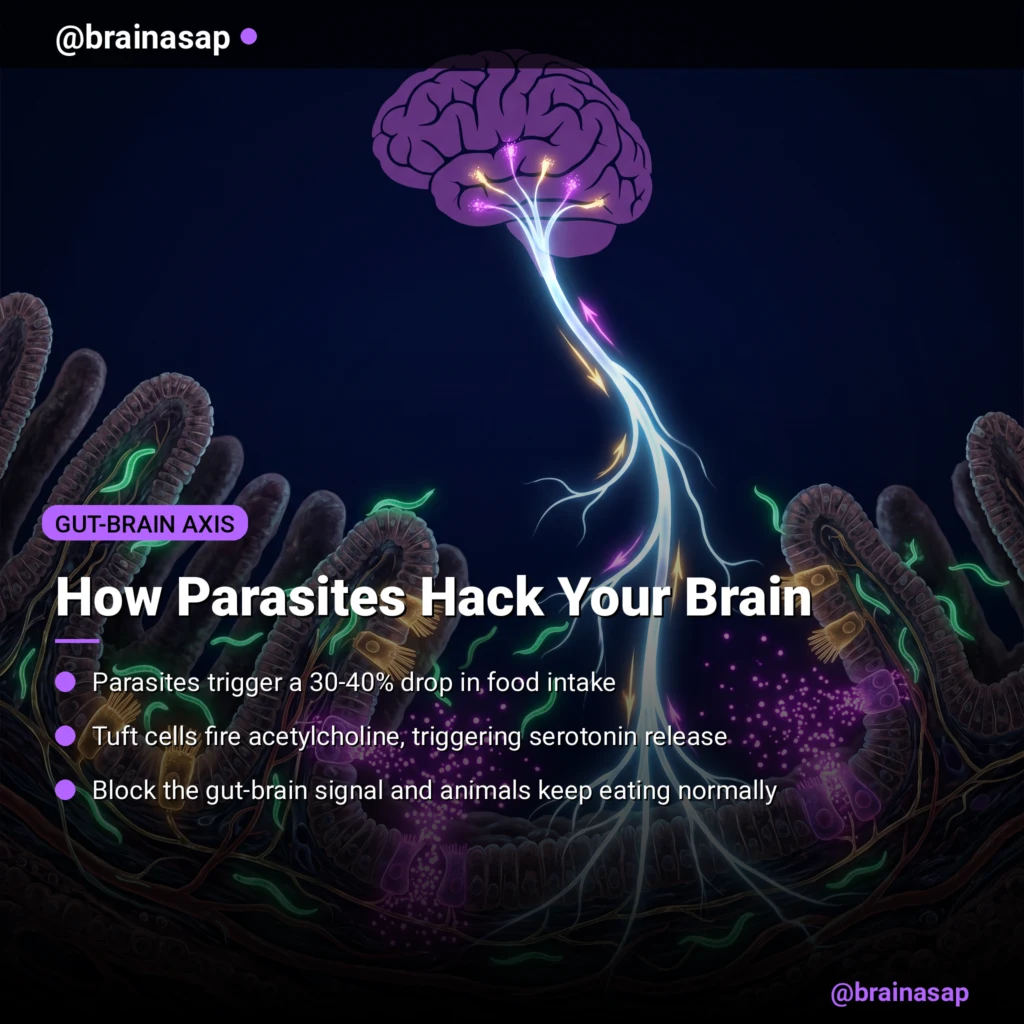
How Parasites Hack Your Gut-Brain Connection TL;DR: Parasitic infections trigger a sophisticated cellular conversation in the gut that signals the brain to stop eating—a protective response that reveals how infection hijacks the gut-brain axis through epitheli…
Read article ↗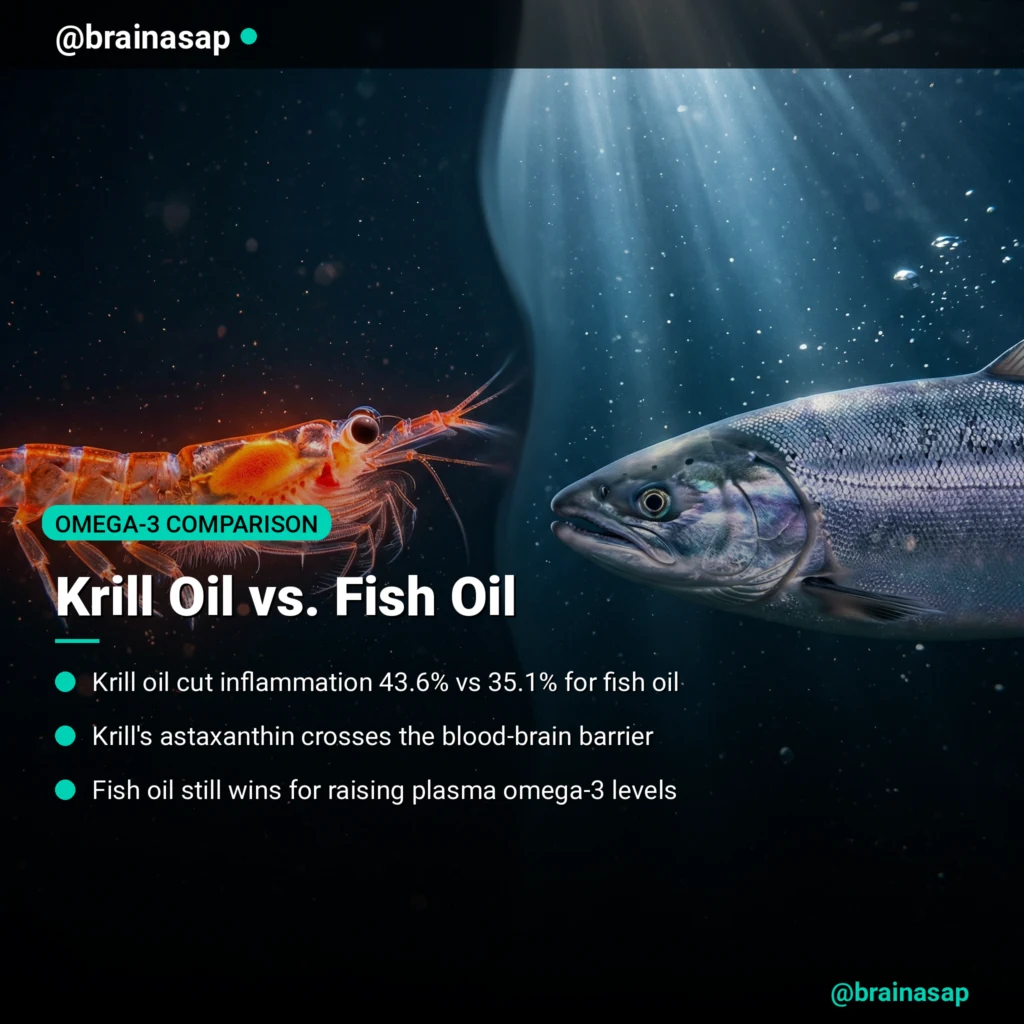
Krill Oil vs Fish Oil: Which Omega-3 Source Wins Against Inflammation and Oxidative Stress? TL;DR: Krill oil has a slight edge for inflammation due to astaxanthin, but fish oil wins for raising blood omega-3 levels and long-term cardiovascular outcomes. Fish o…
Read article ↗