TL;DR: Old mice given nicotine in their drinking water for 3 months had more cells carrying two key markers of brake-like neurons in the hearing part of the brain, reaching young-adult levels. The study did not test hearing, and it is no reason for anyone to t…
Read article ↗
TL;DR: A 2026 preprint longitudinal cohort analysis in medRxiv found that later-born cohorts showed higher memory levels entering old age and slower rates of memory decline, while the projected 20-year cohort advantage at age 80 was large enough in the model t…
Read article ↗
TL;DR: A 2026 study in Microbiome found that in older adults at metabolic risk, virgin olive oil was linked to better cognitive preservation and richer gut microbiota, while common refined olive oil pointed the other way. Key Findings Metabolic-risk cohort tra…
Read article ↗
TL;DR: A 2026 study in Nature Communications found that in mice, stress from inflammation, forced cell division, cancer-like pressure, and aging activated MLKL in blood-forming stem cells without causing widespread cell death. Instead, active MLKL built up in…
Read article ↗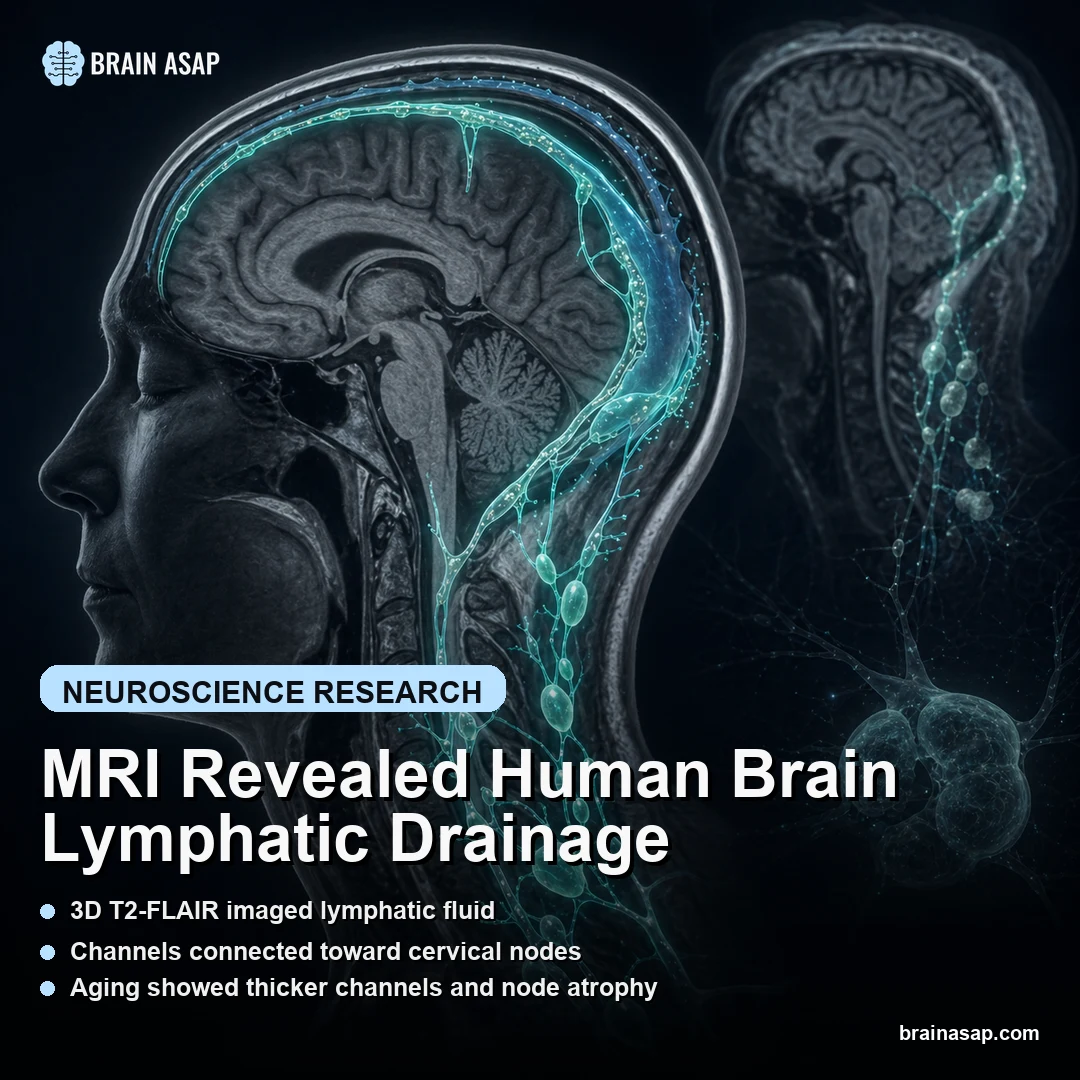
TL;DR: A 2022 study in Nature Communications used non-contrast 3D T2-FLAIR MRI, a scan that suppresses ordinary cerebrospinal-fluid brightness, to map possible brain-border drainage routes toward cervical lymph nodes, but FLAIR brightness alone does not prove…
Read article ↗
Adversity accelerates biological aging through health-compromising behaviors like smoking and possibly social disconnection, and future research needs to focus on causal methodologies to better understand these processes and develop effective interventions. Hi…
Read article ↗
Researchers have uncovered an important new mechanism that causes inflammation and damage to the brain’s white matter in Alzheimer’s disease. This discovery about how brain cells called microglia die could lead to new Alzheimer’s treatments. Key Facts: The stu…
Read article ↗