TL;DR: A 2026 cross-sectional study in Scientific Reports found that attention-deficit/hyperactivity disorder (ADHD) symptom screening was linked to extremely severe chronic pain in 958 adults at Japanese pain centers, while autism spectrum disorder (ASD) scre…
Read article ↗
TL;DR: A 2026 Neurological Sciences study followed 216 early Parkinson’s patients for 2 years after levodopa started and found that several non-motor symptom differences between men and women persisted or emerged despite adjustment for baseline scores and levo…
Read article ↗
TL;DR: A 2026 retrospective ICU study in the International Journal of General Medicine found that 24-hour open visiting was associated with lower delirium incidence and lower anxiety/depression scores than 1-hour restricted visiting in chronic critically ill p…
Read article ↗
TL;DR: A pilot cohort study in JMIR Rehabilitation and Assistive Technologies found that online emotional training after facial palsy surgery improved facial movement, social well-being, and anxiety about as much as in-person therapy in 16 adults. Key Findings…
Read article ↗
TL;DR: A 2026 study in The British Journal of Psychiatry found that social anxiety disorder was linked to altered communication inside prefrontal control circuits during a functional MRI emotion-regulation task. Key Findings 102-person fMRI sample: The study a…
Read article ↗
TL;DR: A 2026 protocol in PLOS One describes a 90-person pilot randomized controlled trial that will test whether virtual reality mindfulness can reduce depression, anxiety, stress, and caregiver burden in family caregivers of people with dementia. Key Finding…
Read article ↗
TL;DR: A 2026 population-based study in The Canadian Journal of Psychiatry found that early-life adversity scores were linked to higher group-level mental health risk but performed poorly for identifying which Canadian adults had anxiety, mood disorders, subst…
Read article ↗
TL;DR: A 2026 study in Personality and Individual Differences found that people higher in neuroticism reported more problem- and uncertainty-focused thoughts during blank-screen rest periods, which tracked with more unpleasant feelings. Key Findings Neuroticis…
Read article ↗
TL;DR: A 2026 Frontiers in Behavioral Neuroscience study reported that inaudible infrasound shifted mood toward unease and raised stress-hormone markers under controlled conditions, offering a physiological explanation for some room-specific fear sensations wi…
Read article ↗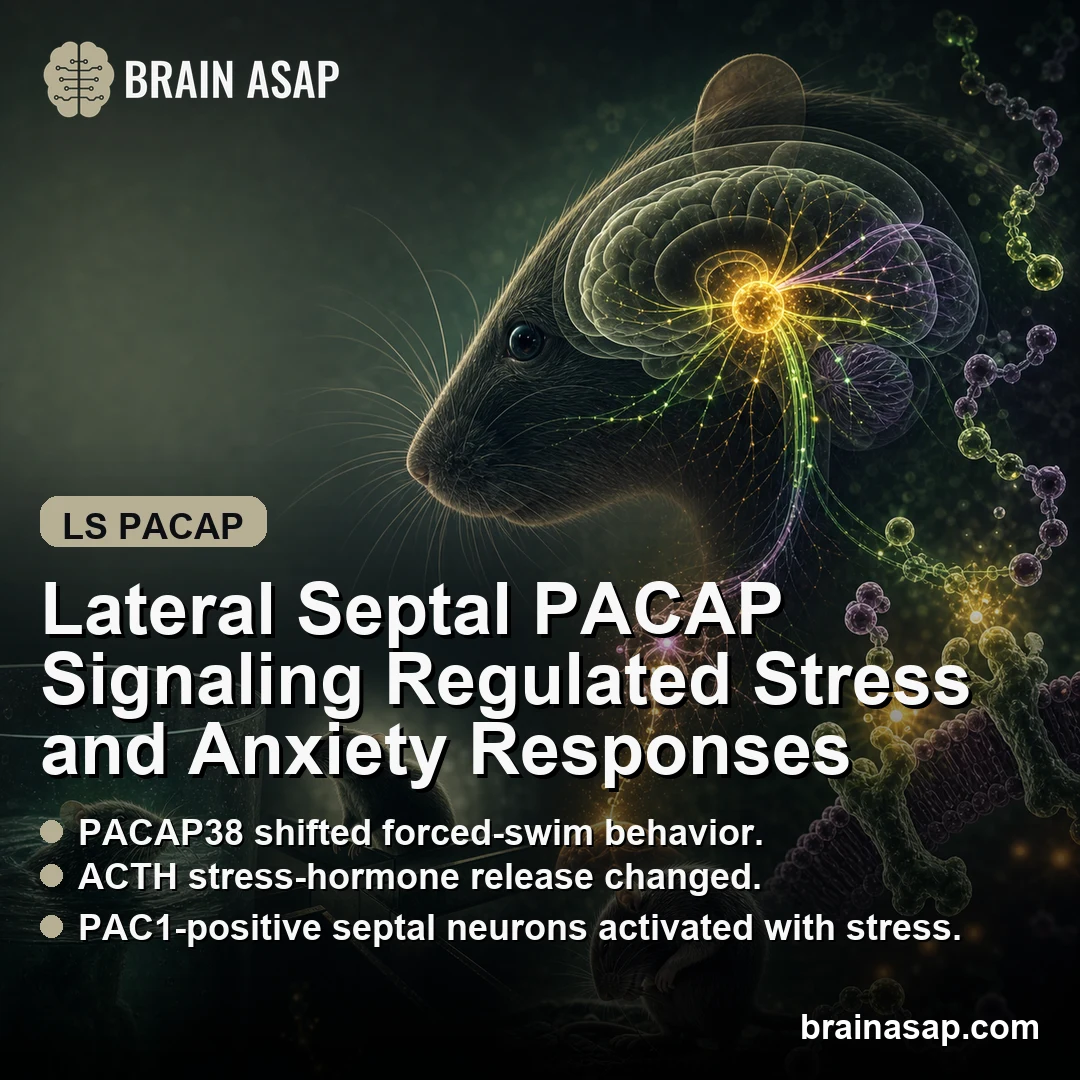
TL;DR: A 2026 rat study in Neuropsychopharmacology found that PACAP/PAC1 signaling in the lateral septum changed forced-swim coping, ACTH stress-hormone release, open-arm exploration, and grooming behavior. Key Findings Stress changed PACAP signals by brain re…
Read article ↗