TL;DR: A 2026 preprint UK Biobank neuroimaging study in medRxiv found that the comorbidity group showed widespread lower cortical volume, subcortical differences, and white matter microstructure alterations, while several alterations appeared unique to the chr…
Read article ↗
TL;DR: A 2026 cohort study in BJPsych Open found that childhood attention-deficit/hyperactivity disorder (ADHD) and autism spectrum disorder (ASD) difficulties predicted poorer young-adult outcomes, but rare copy number variants (CNVs), which are deleted or du…
Read article ↗
TL;DR: A 2026 BJPsych Open study found clinically significant anxiety in about 18% of non-demented ALS patients for state anxiety and 14% for trait anxiety, with anxiety scores driven mainly by cognitive-affective depression symptoms rather than motor severity…
Read article ↗
TL;DR: A 2026 systematic review in Translational Psychiatry found that depression brain-stimulation studies repeatedly linked treatment response to subcallosal cingulate connectivity, but inconsistent methods still limit its use as a treatment-selection biomar…
Read article ↗
TL;DR: A 2026 review in BMC Psychiatry found 441 primary MRI and electroencephalogram (EEG), a scalp recording of brain electrical activity, mental-health biomarker studies, but most were small, cross-sectional, and concentrated in depression, making routine c…
Read article ↗
TL;DR: A 2026 study in Brain, Behavior, & Immunity – Health found that depression symptoms, alcohol use, and alcohol use disorder (AUD) symptoms were not associated with C-reactive protein (CRP), a blood inflammation marker, or a pro-inflammatory cytokine inde…
Read article ↗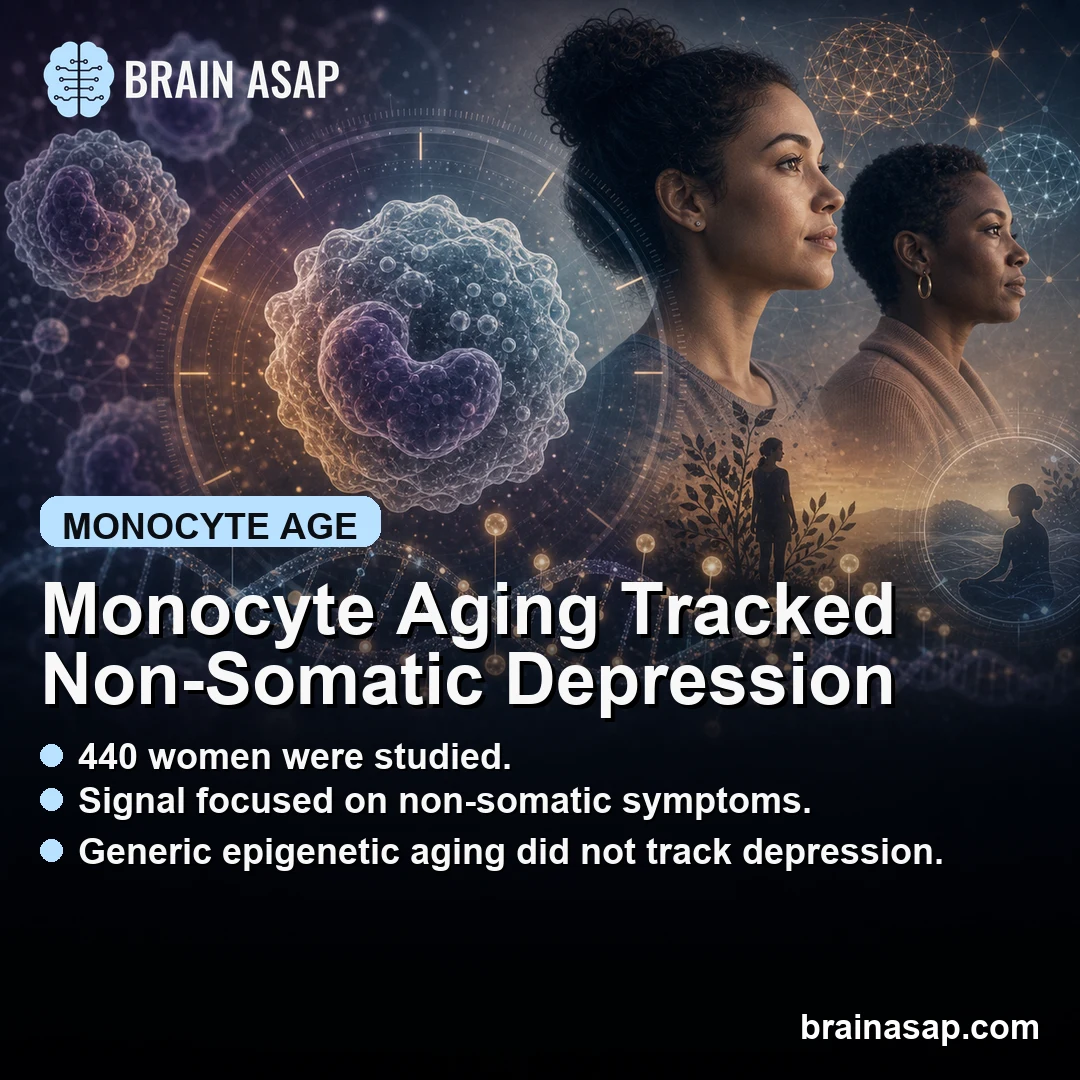
TL;DR: A 2026 study in The Journals of Gerontology, Series A: Biological Sciences and Medical Sciences measured a monocyte-specific DNA methylation clock (MonoDNAmAge) in 440 women with and without HIV, and found that accelerated monocyte epigenetic aging was…
Read article ↗
ECT Looks Safer in the Long Run Than Its Reputation TL;DR: A British Journal of Psychiatry review argues that modern population-level studies do not support a long-term increase in dementia or major cardiovascular risk after electroconvulsive therapy and inste…
Read article ↗
Body Roundness Index Flagged Depression Risk in Dementia TL;DR: Body roundness index, not BMI, flagged a dementia subgroup with more than threefold higher odds of depressive symptoms. Key Findings Highest BRI tripled odds: Among people with dementia, those in…
Read article ↗
Semaglutide Linked to 42% Fewer Psychiatric Hospital Episodes TL;DR: In Swedish registry data covering nearly 100,000 people with depression or anxiety, psychiatric hospital visits and sickness absence were 42% lower during semaglutide treatment periods — with…
Read article ↗