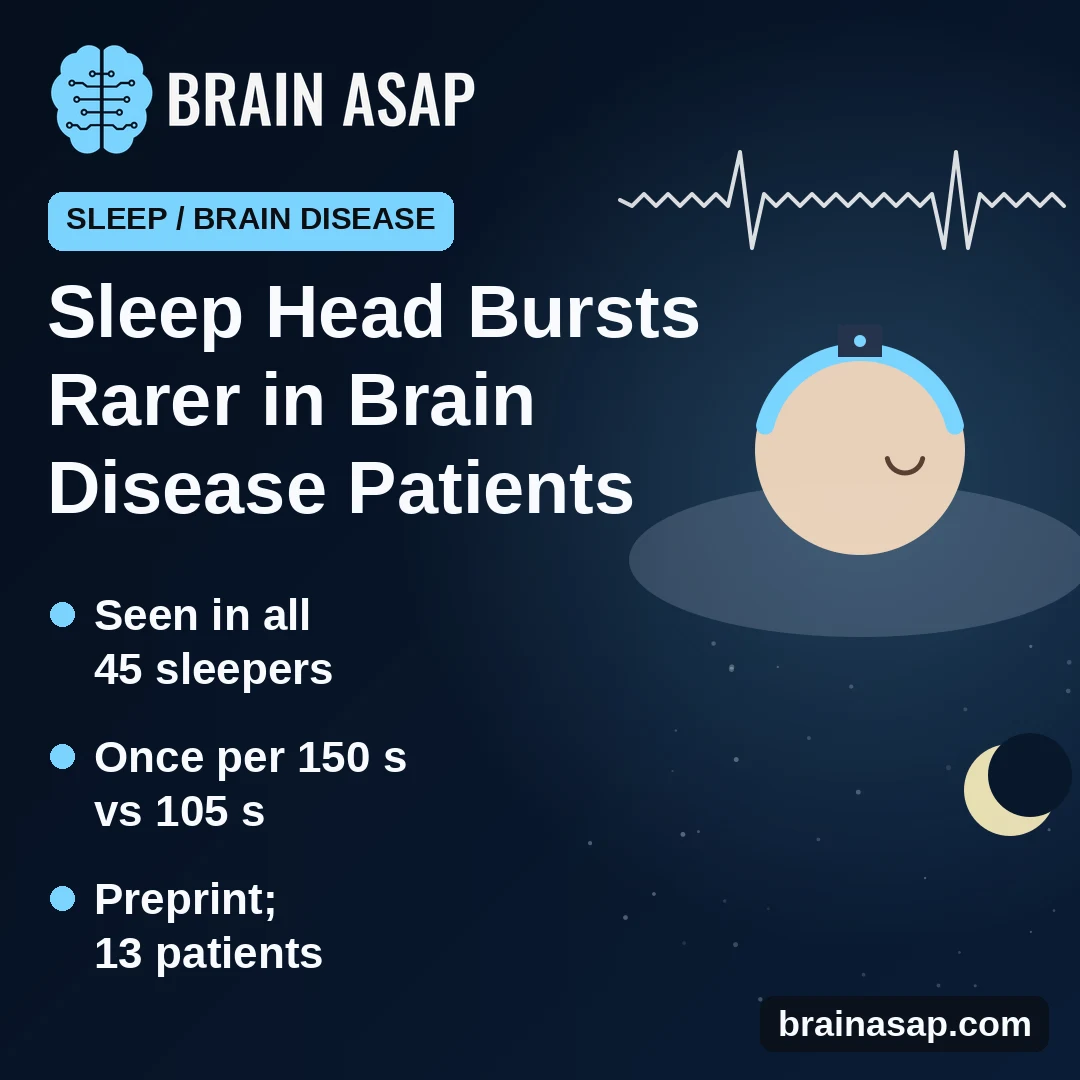
TL;DR: A headband sensor picked up brief bursts of force inside the head during sleep in all 45 people tested. People with neurodegenerative diseases had fewer bursts per minute than healthy volunteers, in an early, not yet peer-reviewed study. Key Findings A…
Read article ↗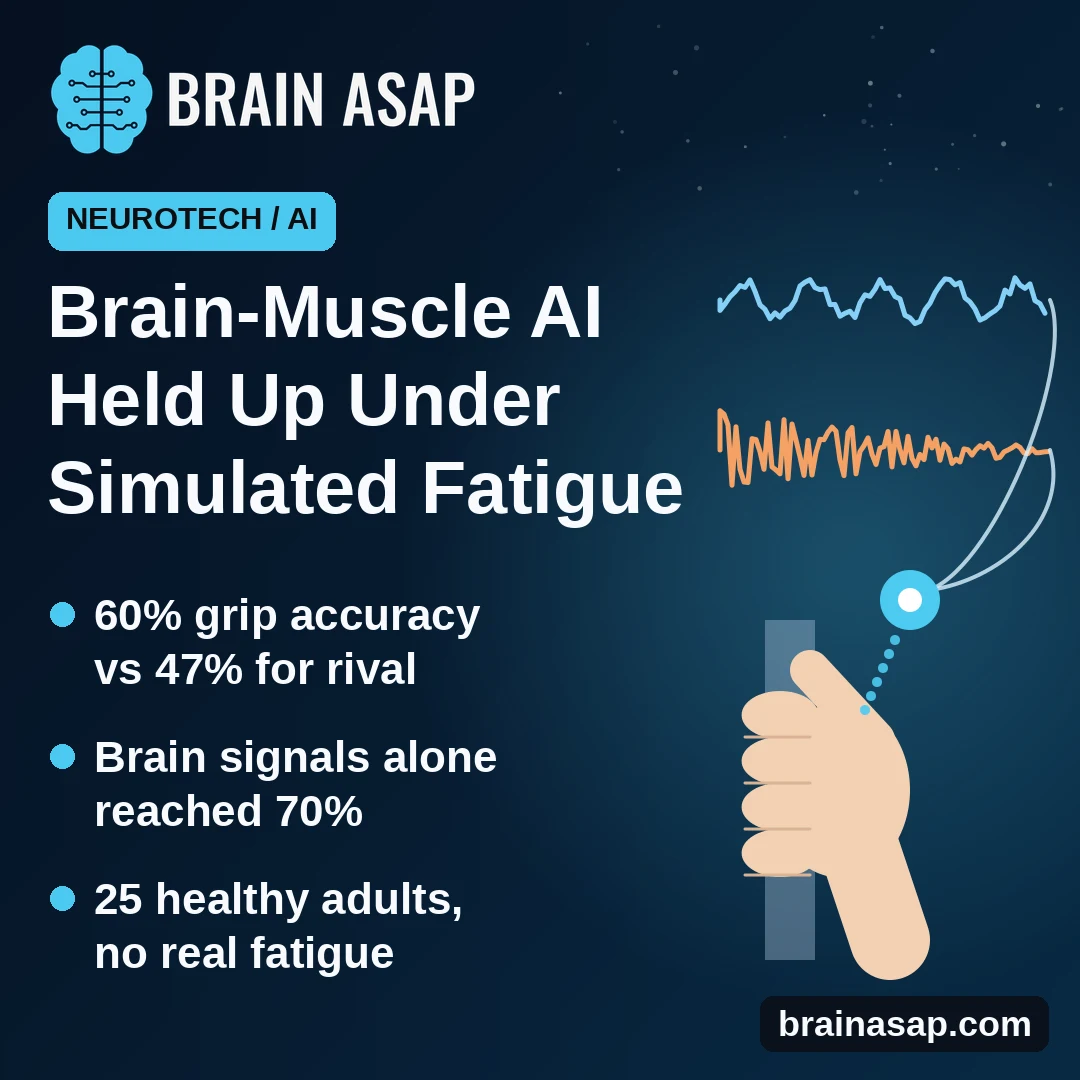
TL;DR: A new AI model that combines brain and muscle signals kept recognizing hand grips better than rival models when the muscle signals were artificially weakened to mimic fatigue. At the heaviest weakening, though, brain signals alone did better than any co…
Read article ↗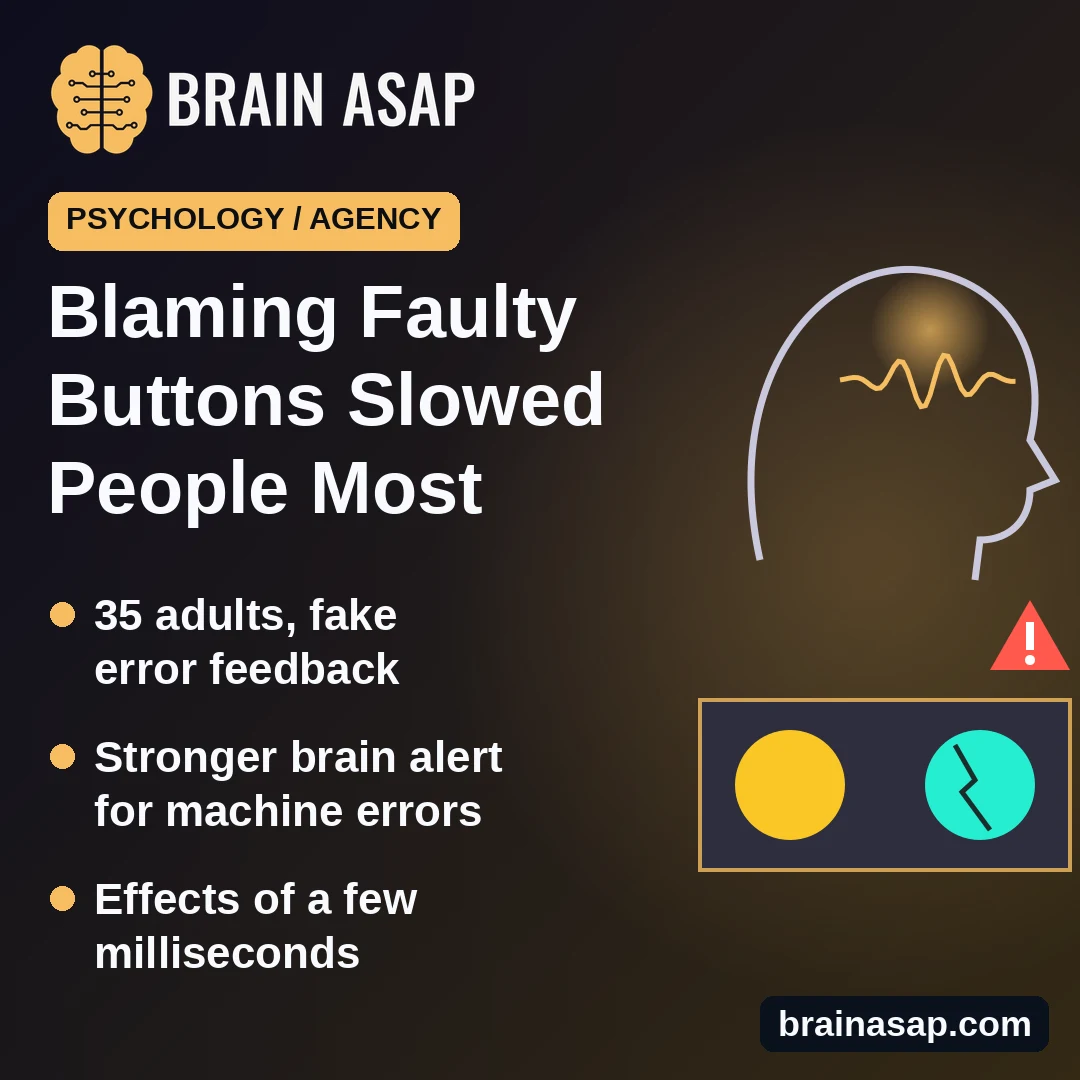
TL;DR: When 35 adults got fake feedback saying they were making more mistakes, they slowed down slightly, and they slowed most when told the buttons were faulty. Errors blamed on the machine also triggered a stronger brain “alert” signal than errors blamed on…
Read article ↗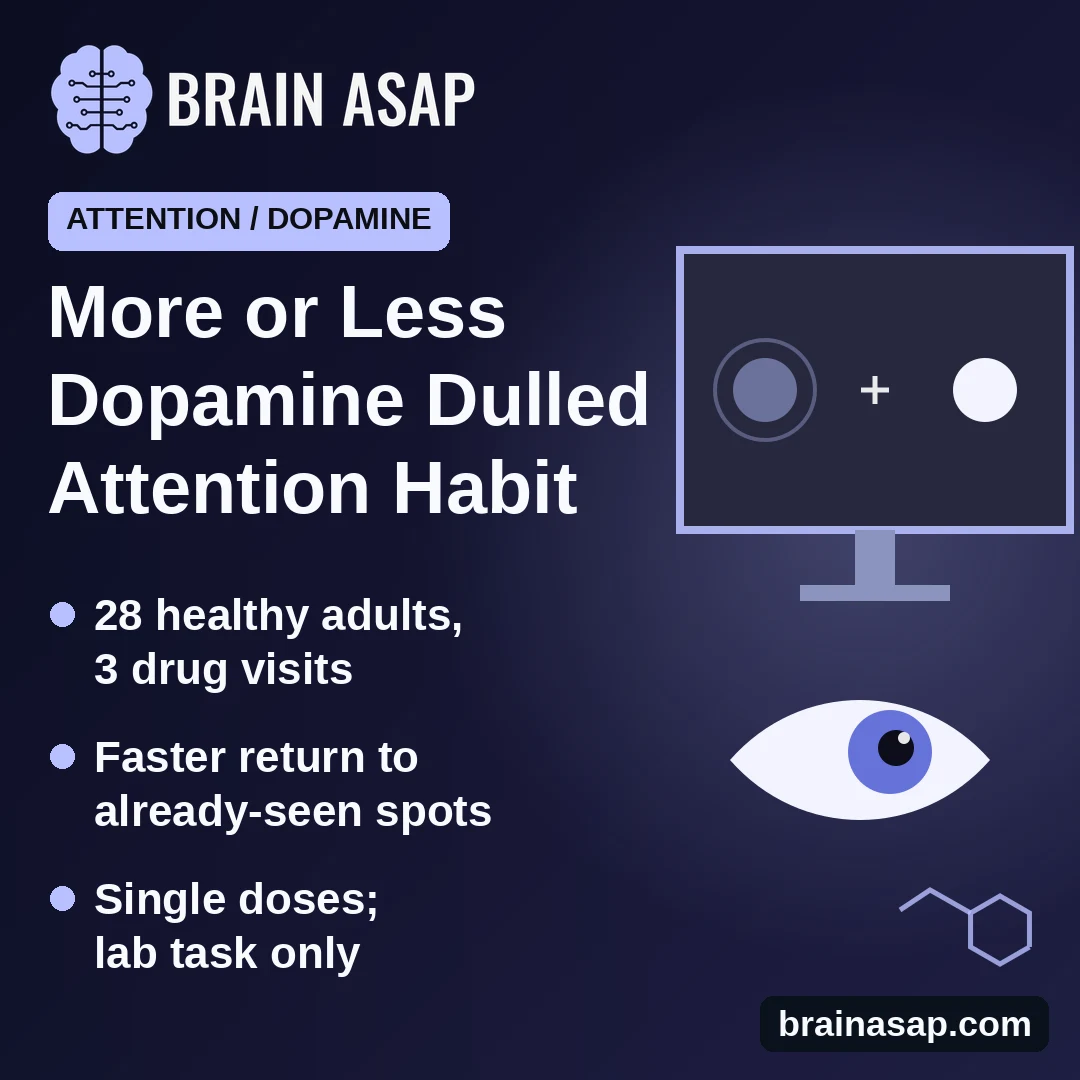
TL;DR: Healthy adults normally react a bit slower to a spot that recently caught their attention, a habit that helps attention move on. A single dose of a drug that boosts dopamine, and another that blocks it, both weakened this habit compared with placebo. Ke…
Read article ↗
TL;DR: A 2026 study in Journal of Neural Engineering reported that adding passive recordings from bidirectional deep brain stimulation (DBS) electrodes to scalp electroencephalography (EEG) improved simulated deep-brain source localization, especially near the…
Read article ↗
TL;DR: A 2026 preprint in medRxiv found that stroke survivors doing motor imagery showed changing brain-heart coupling across rehabilitation sessions, especially between cardiac sympathetic activity and electroencephalography (EEG) beta-band network clustering…
Read article ↗
TL;DR: A 2026 preprint posted on medRxiv reported that resting-state electroencephalography (EEG) neural slowing after stroke tracked secondary thalamic degeneration measured on structural MRI, even though the sampled patients did not have direct thalamic lesi…
Read article ↗
TL;DR: A 2026 study in Translational Psychiatry found that ketamine changed EEG-derived high-order brain interactions in late-life treatment-resistant depression, and a 24-hour increase in alpha-band redundancy tracked greater depression improvement by Day 7.…
Read article ↗
TL;DR: A 2026 randomized pilot study in JMIR Formative Research found that one brief yoga session did not significantly change salivary cortisol compared with quiet sitting, but it did raise heart rate during the active movement phase. Key Findings Yoga pilot…
Read article ↗
TL;DR: A 2026 preprint in medRxiv reported that one session of left central thalamus focused ultrasound increased behavioral responsiveness scores in 16 adults with chronic disorders of consciousness, with no severe adverse events reported. Key Findings 16 chr…
Read article ↗