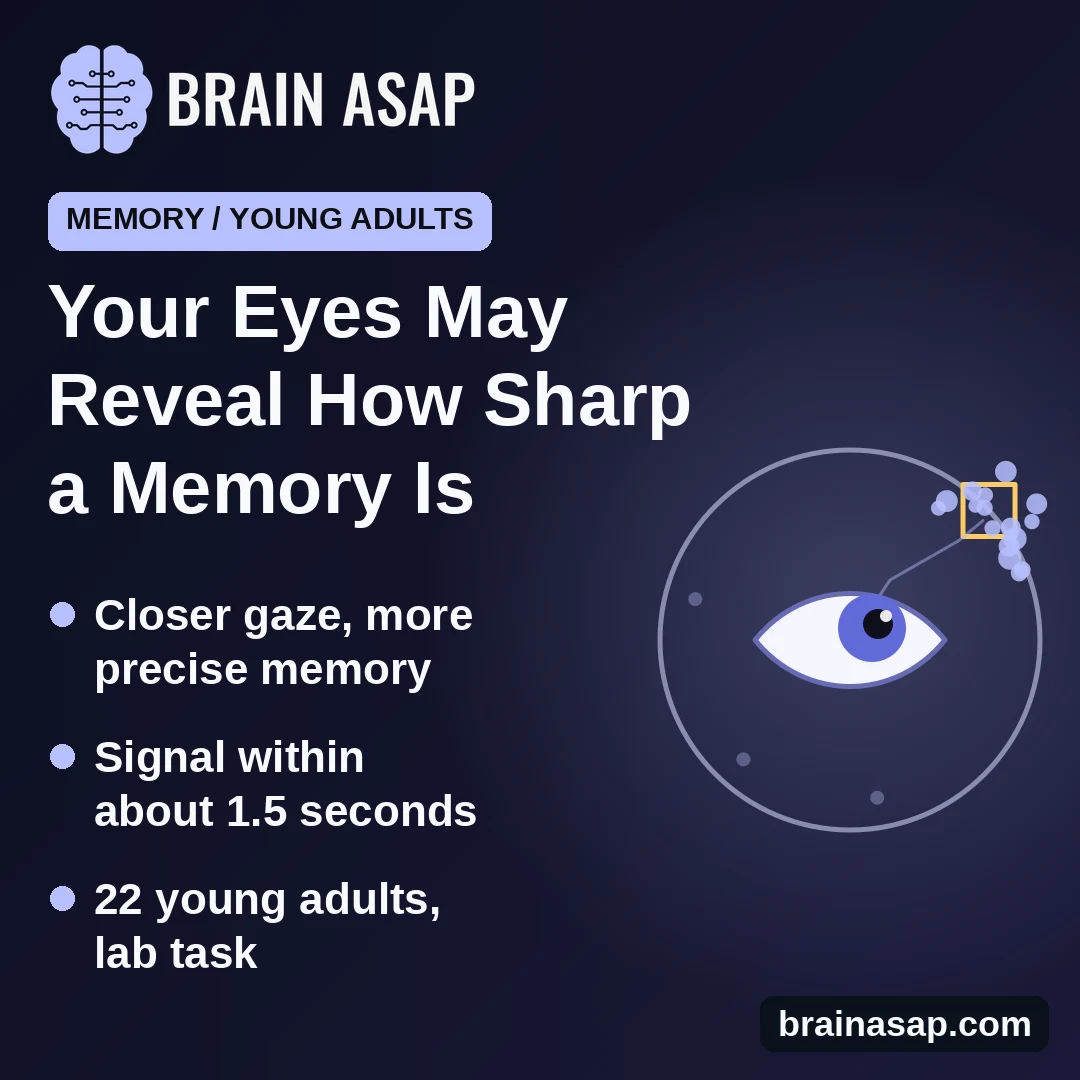
TL;DR: When 22 young adults tried to recall where they had seen everyday objects, their eyes drifted toward the right spot before they answered. The closer their gaze, the more precise their memory turned out to be. Key Findings Eyes found the spot: Gaze lande…
Read article ↗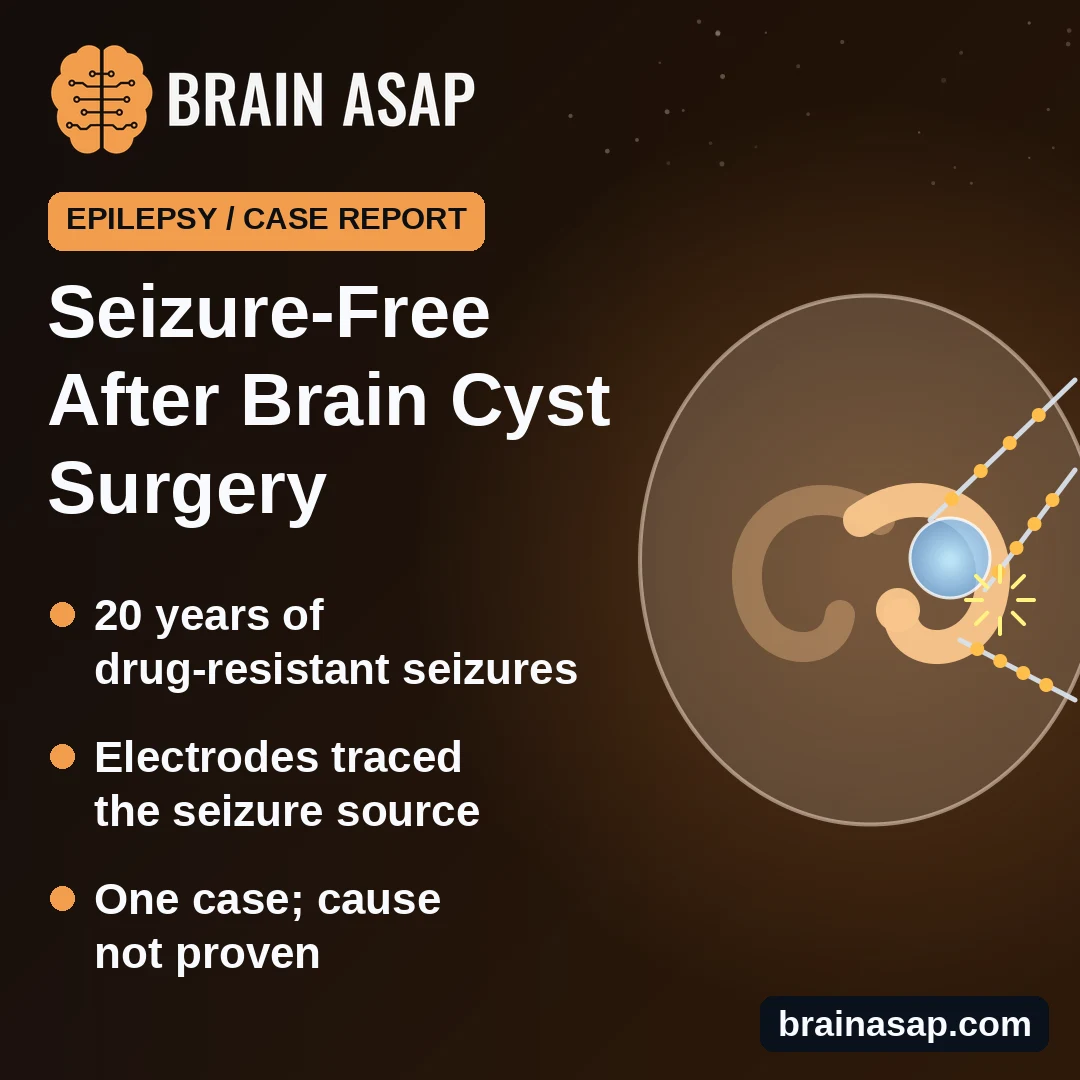
TL;DR: A 35-year-old woman with 20 years of seizures that medicines could not control became seizure-free after surgery removed a small fluid-filled cyst and the nearby part of her brain where seizures started. It is one case, so it cannot prove the cyst cause…
Read article ↗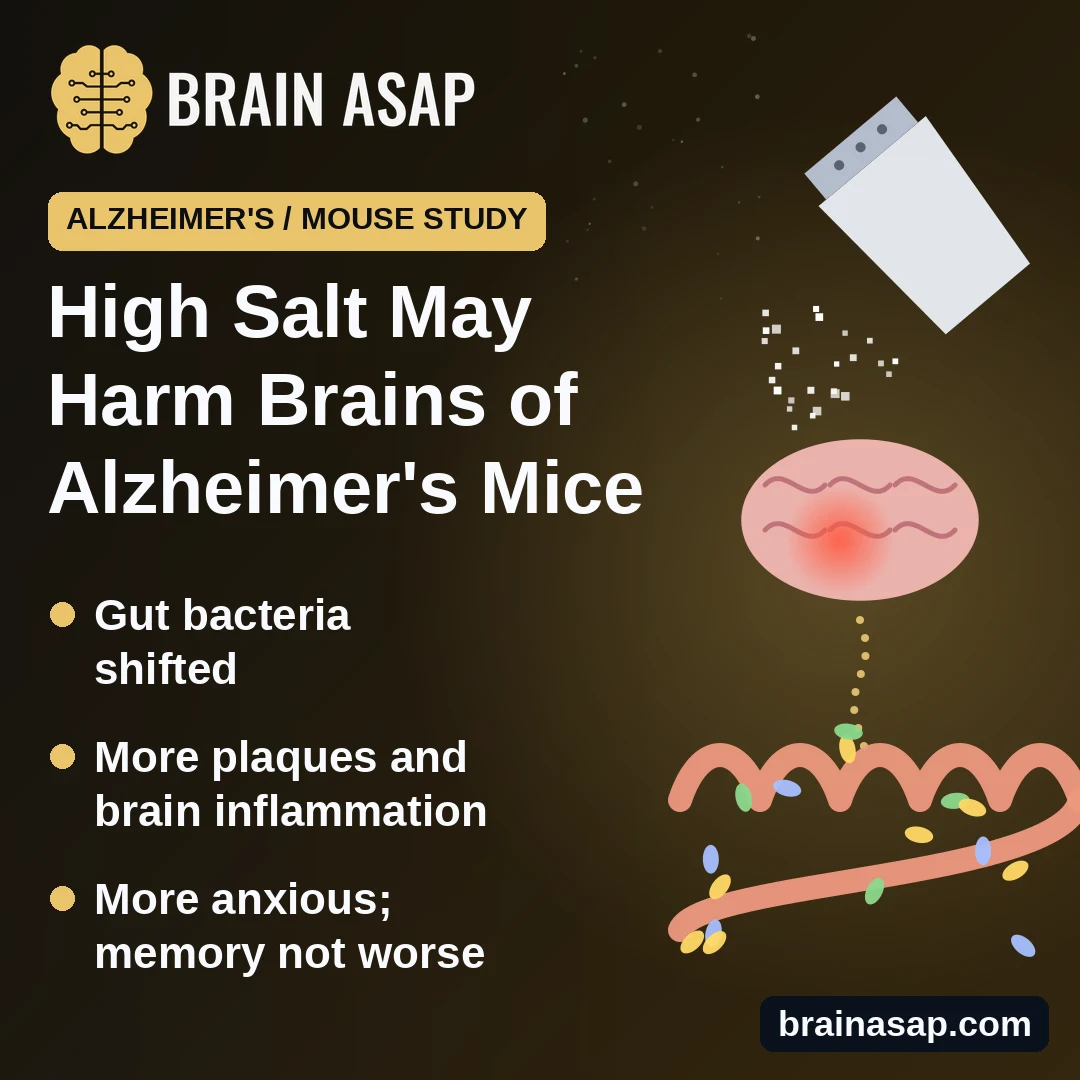
TL;DR: Alzheimer’s-model mice fed very salty chow for 6 months had altered gut bacteria, more brain inflammation and plaques, and more anxious behavior than mice on normal chow. It’s a mouse study, and the gut-to-brain link was not proven. Key Findings 8% vs 0…
Read article ↗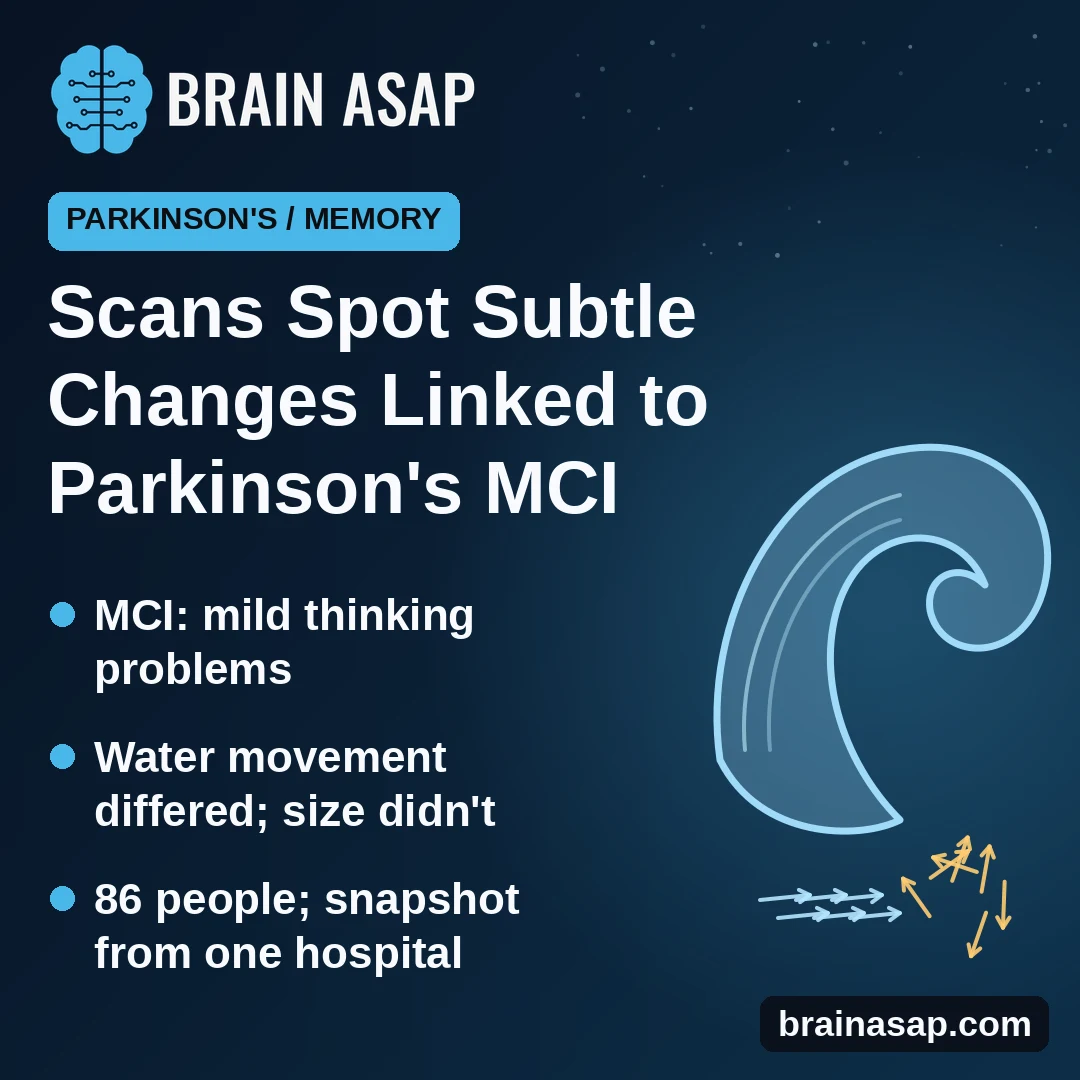
TL;DR: In 86 people from one hospital in China, those with Parkinson’s and mild thinking problems showed changes in how water moves through parts of the hippocampus, a memory center. The hippocampus was not measurably smaller, suggesting a diffusion scan may p…
Read article ↗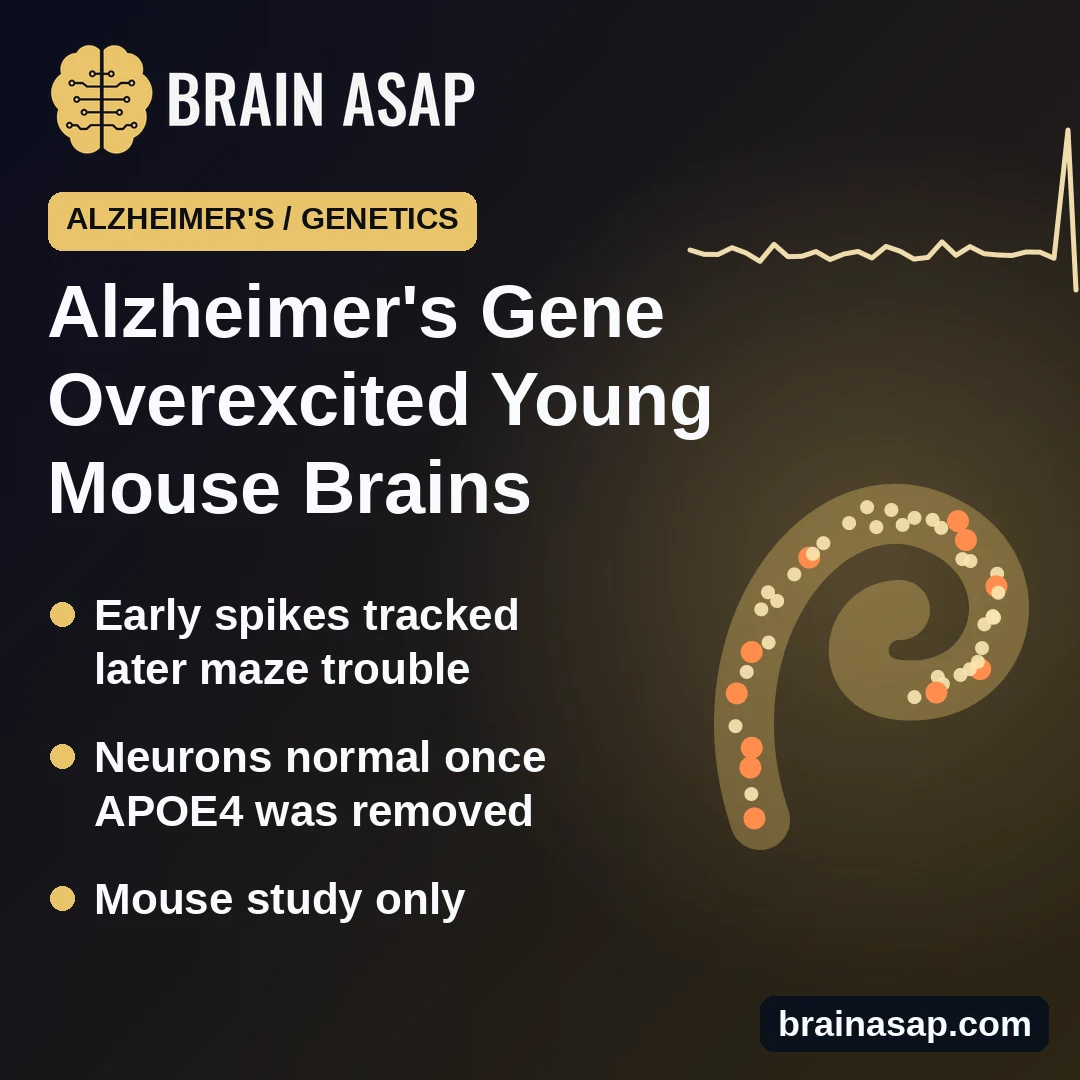
TL;DR: Young mice carrying the human APOE4 gene, the biggest genetic risk factor for Alzheimer’s, had overexcited memory circuits months before any memory trouble showed up. Removing APOE4 from their neurons returned those cells to normal. Key Findings Early w…
Read article ↗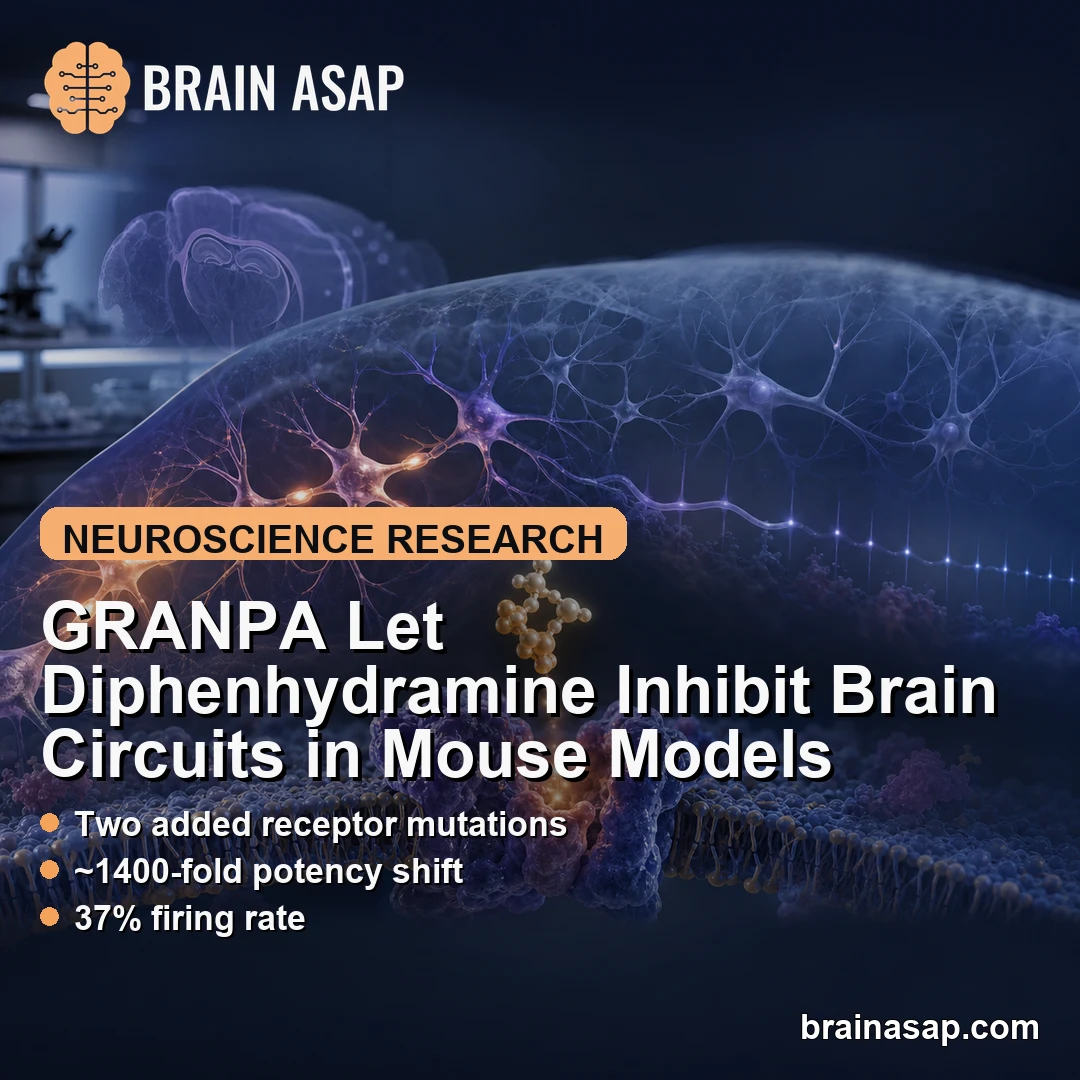
TL;DR: A 2026 study in Signal Transduction and Targeted Therapy engineered a modified inhibitory DREADD receptor called GRANPA so the over-the-counter antihistamine diphenhydramine could switch off targeted brain circuits and reduce seizure activity in mouse m…
Read article ↗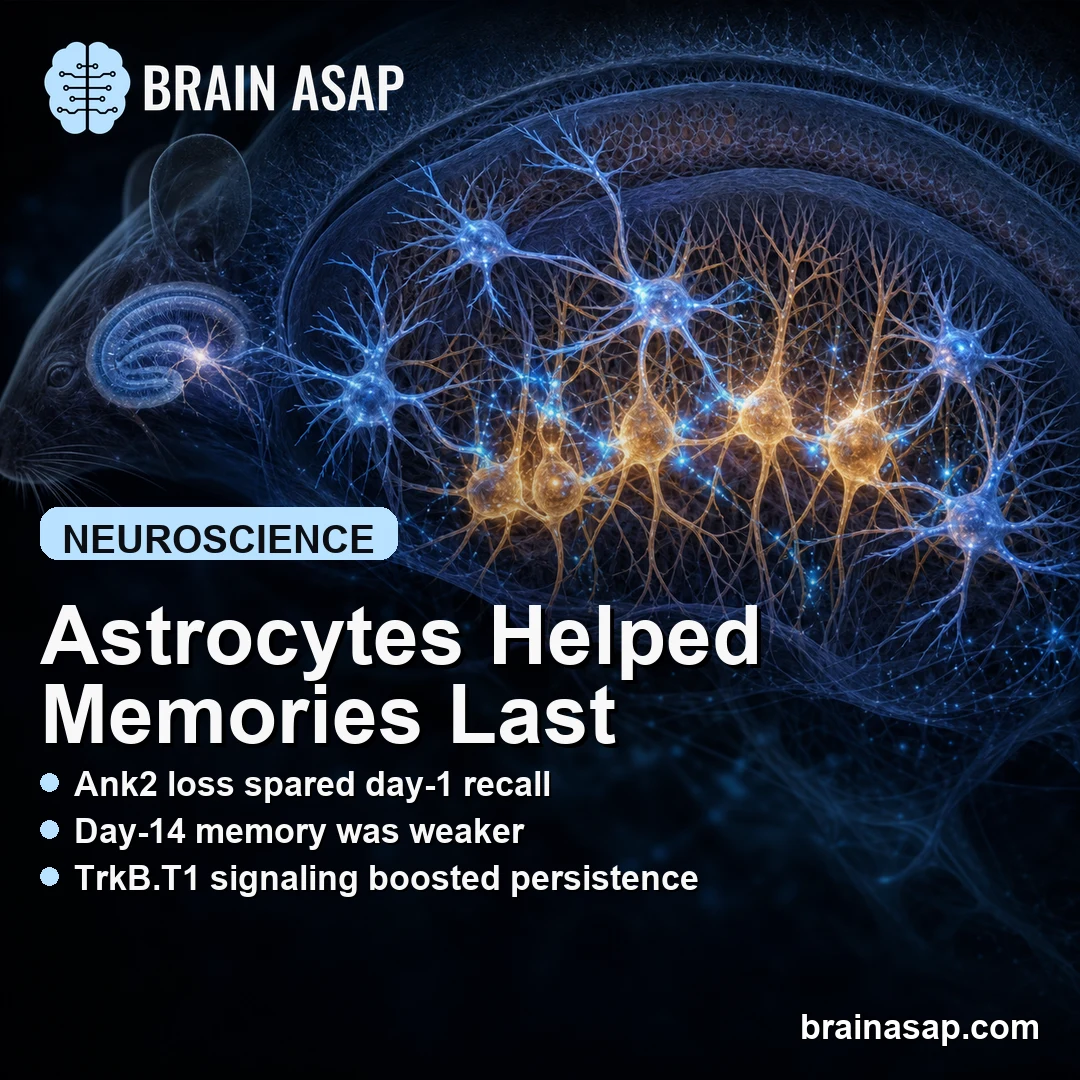
TL;DR: A 2026 mouse study in Nature Communications found that deleting ankyrin-2 (Ank2) from hippocampal astrocytes left recent memory intact but weakened remote memory, pointing to astrocyte structure as part of how memories stay stable over time. Key Finding…
Read article ↗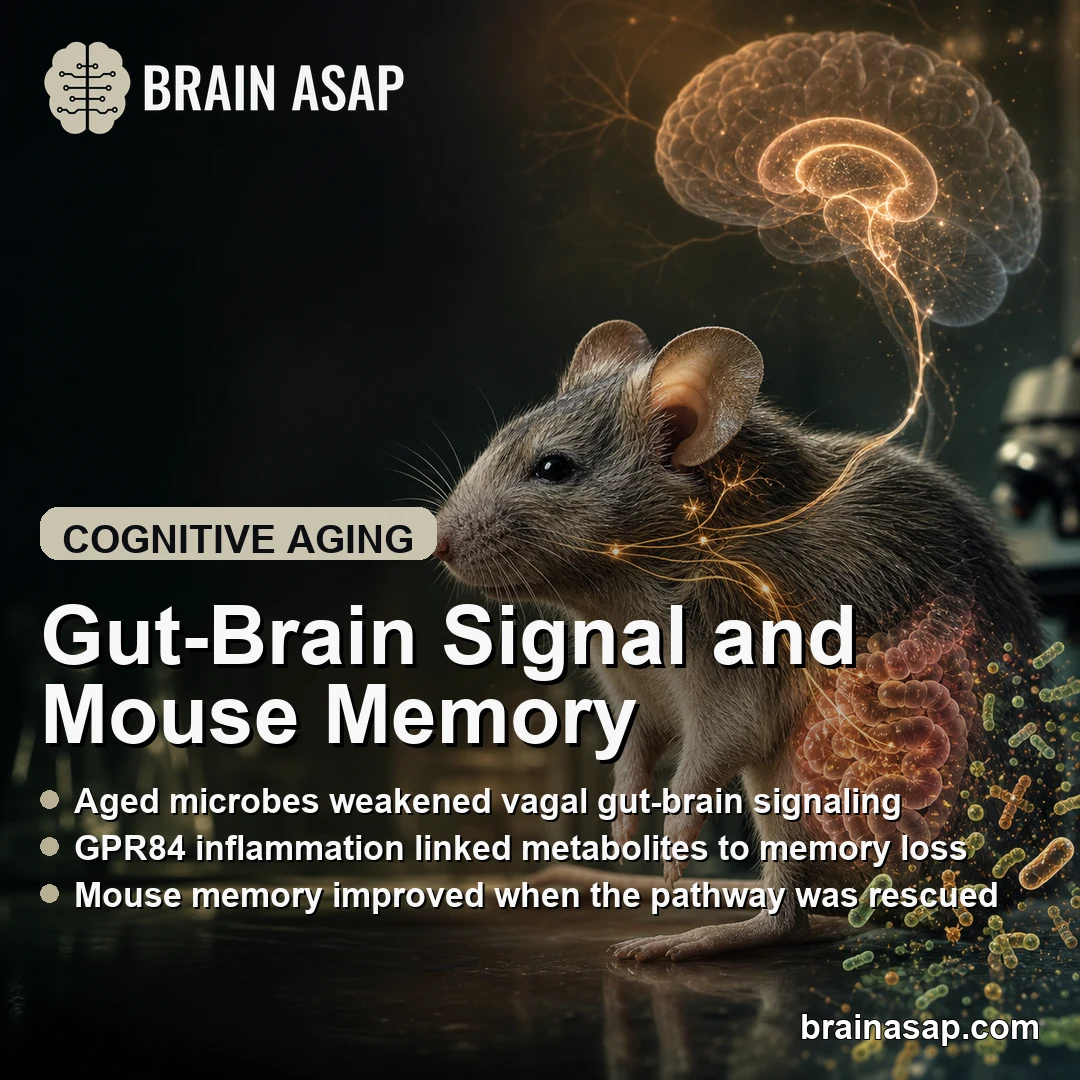
TL;DR: A 2026 mouse study in Nature found that age-related gut microbiome changes impaired vagal gut-brain signaling and hippocampal memory encoding, while several interventions restored memory performance in aged or microbiome-aged mice. Key Findings Aged mic…
Read article ↗
TL;DR: A 2026 fMRI study in Molecular Psychiatry linked abuse before age 13 to stronger hippocampal responses during non-conscious negative emotion processing, while abuse during adolescence was linked to stronger amygdala responses during conscious emotion vi…
Read article ↗
TL;DR: A 2026 mouse study in Journal of Extracellular Vesicles found that two intranasal doses of hiPSC-NSC-EVs reduced inflammatory pathway markers in the aged hippocampus and were associated with better memory performance. Key Findings Two-dose nasal treatme…
Read article ↗