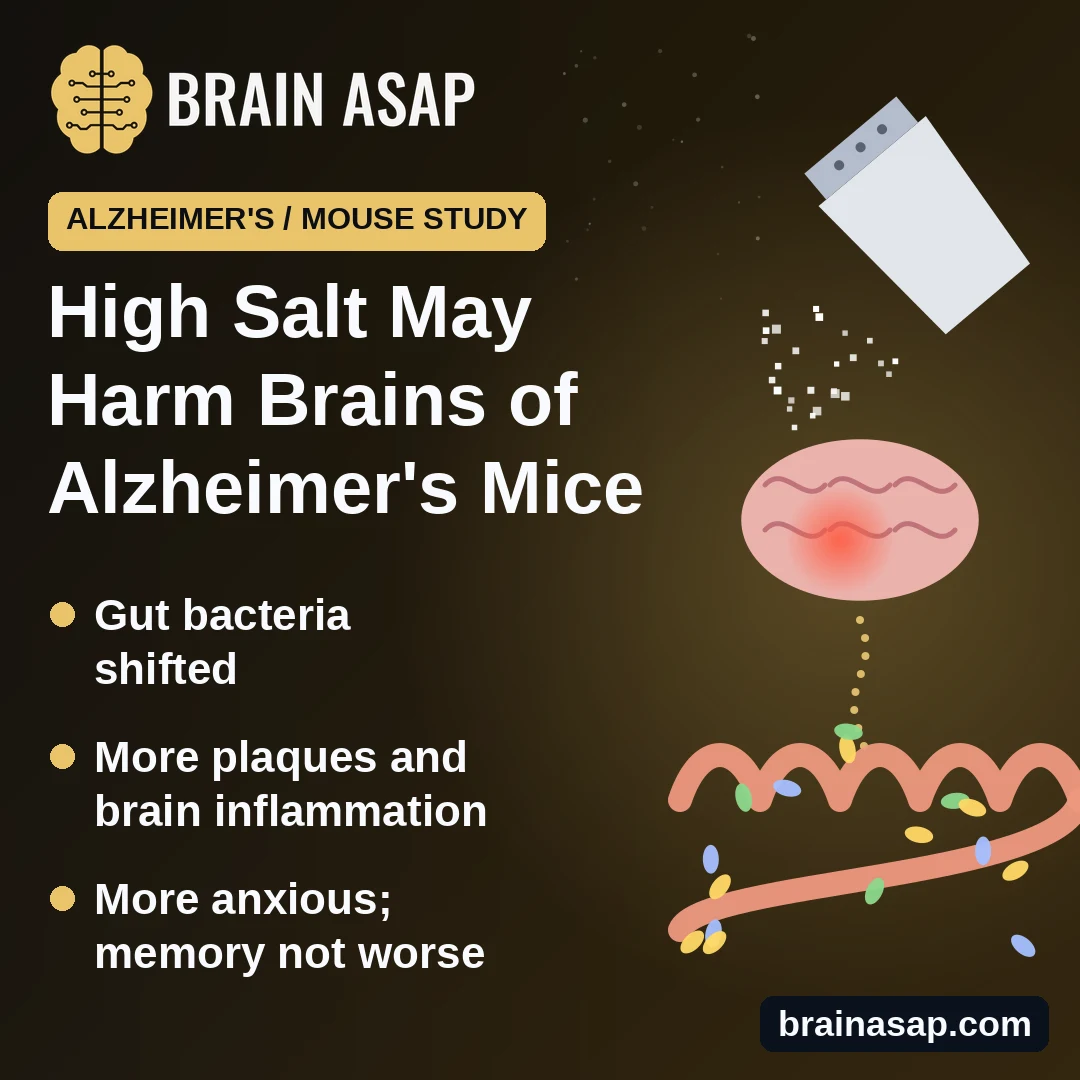
TL;DR: Alzheimer’s-model mice fed very salty chow for 6 months had altered gut bacteria, more brain inflammation and plaques, and more anxious behavior than mice on normal chow. It’s a mouse study, and the gut-to-brain link was not proven. Key Findings 8% vs 0…
Read article ↗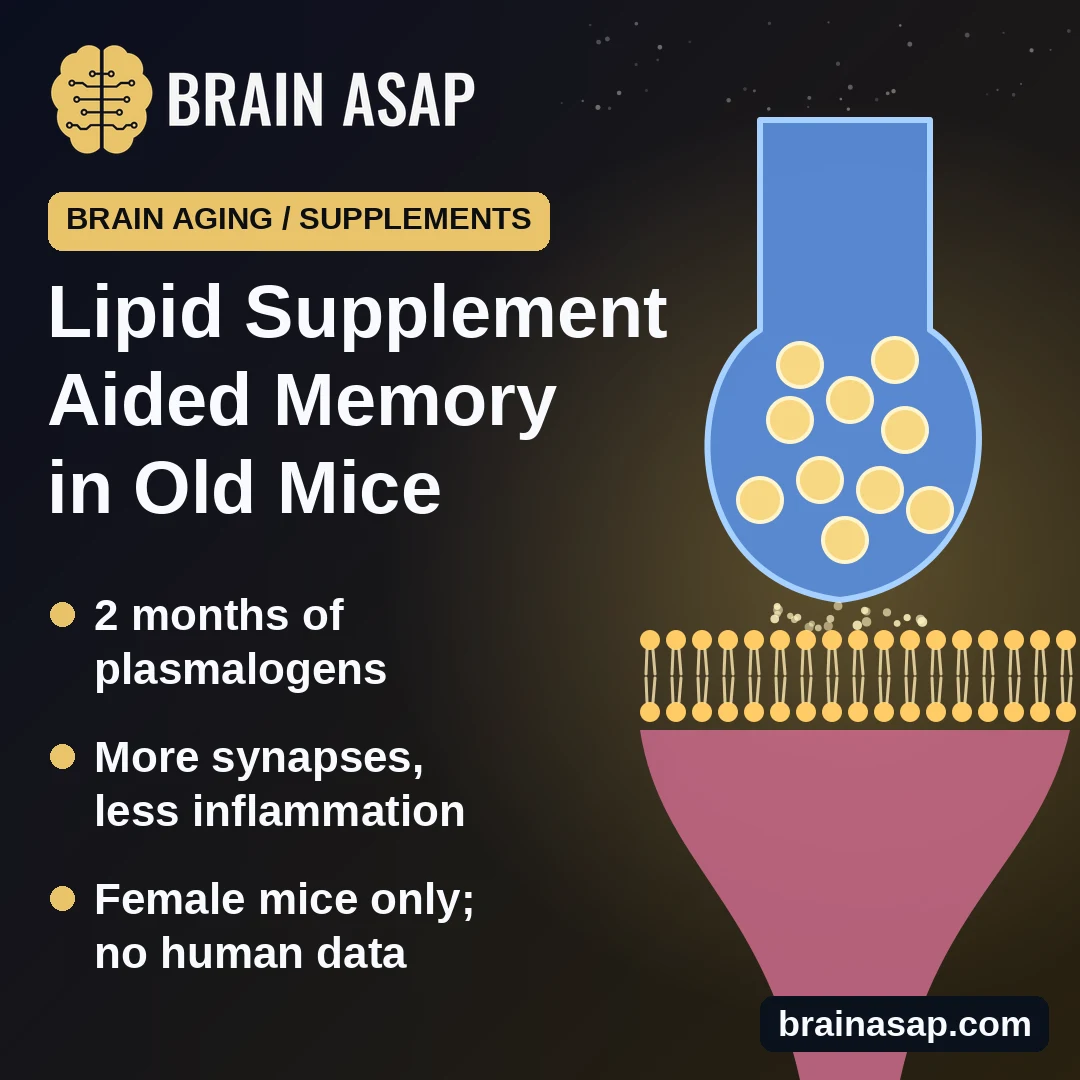
TL;DR: Old female mice given plasmalogens, a fat found in brain cell membranes, 5 days a week for 2 months did better on a memory maze than old mice given water. Their brains also showed more synapses and less inflammation, but this is a mouse study, not a hum…
Read article ↗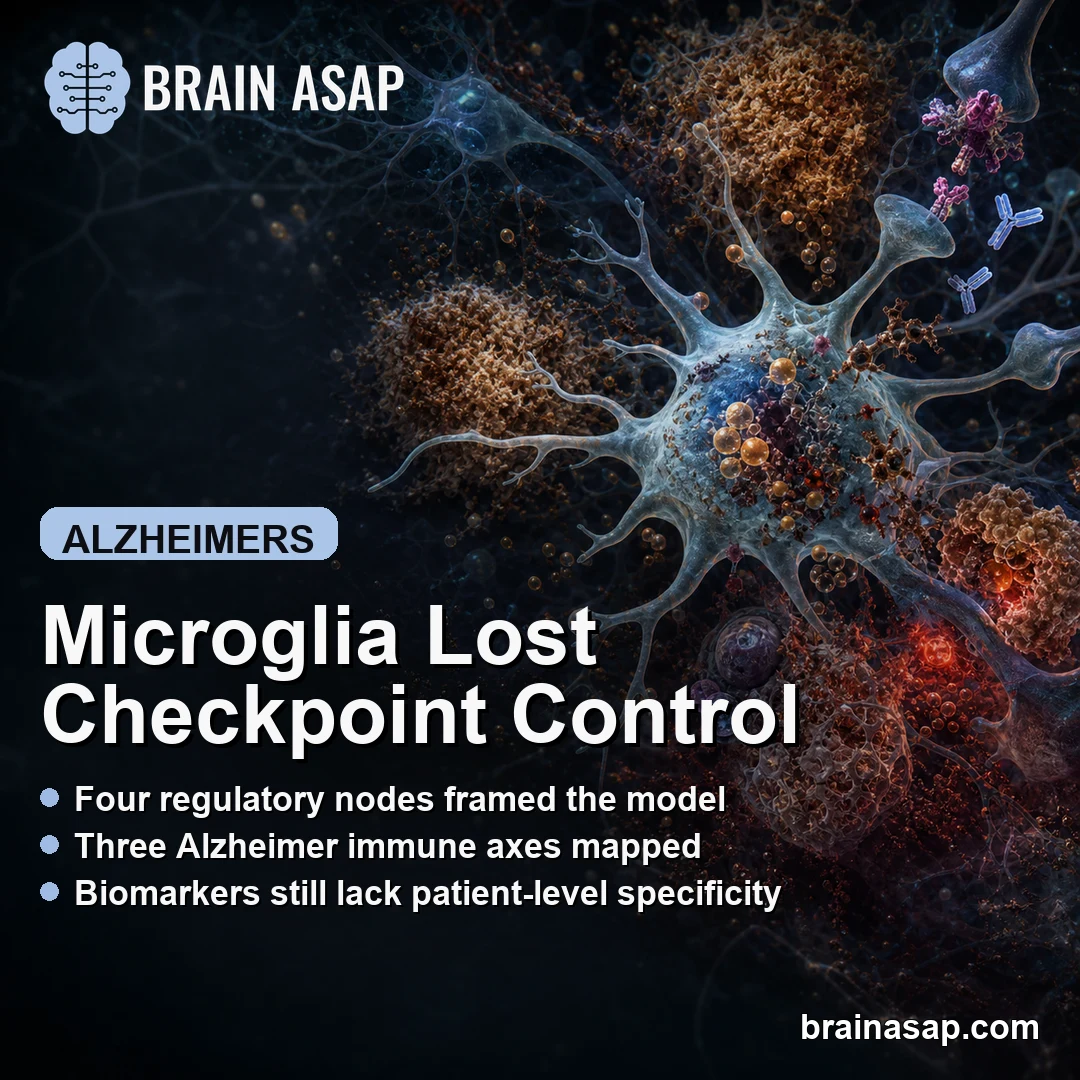
TL;DR: A 2026 review in Journal of Neuroinflammation proposed that Alzheimer microglial dysfunction can be understood as checkpoint collapse, where failed regulatory controls feed three interacting lipid, iron/ferroptosis, and inflammation/complement axes. Key…
Read article ↗
TL;DR: A 2026 review in International Journal of Molecular Medicine mapped how exercise and fluoxetine overlap in Alzheimer’s disease mechanisms such as mitochondrial quality control, oxidative stress, inflammation, and neuroplasticity, but clinical combinatio…
Read article ↗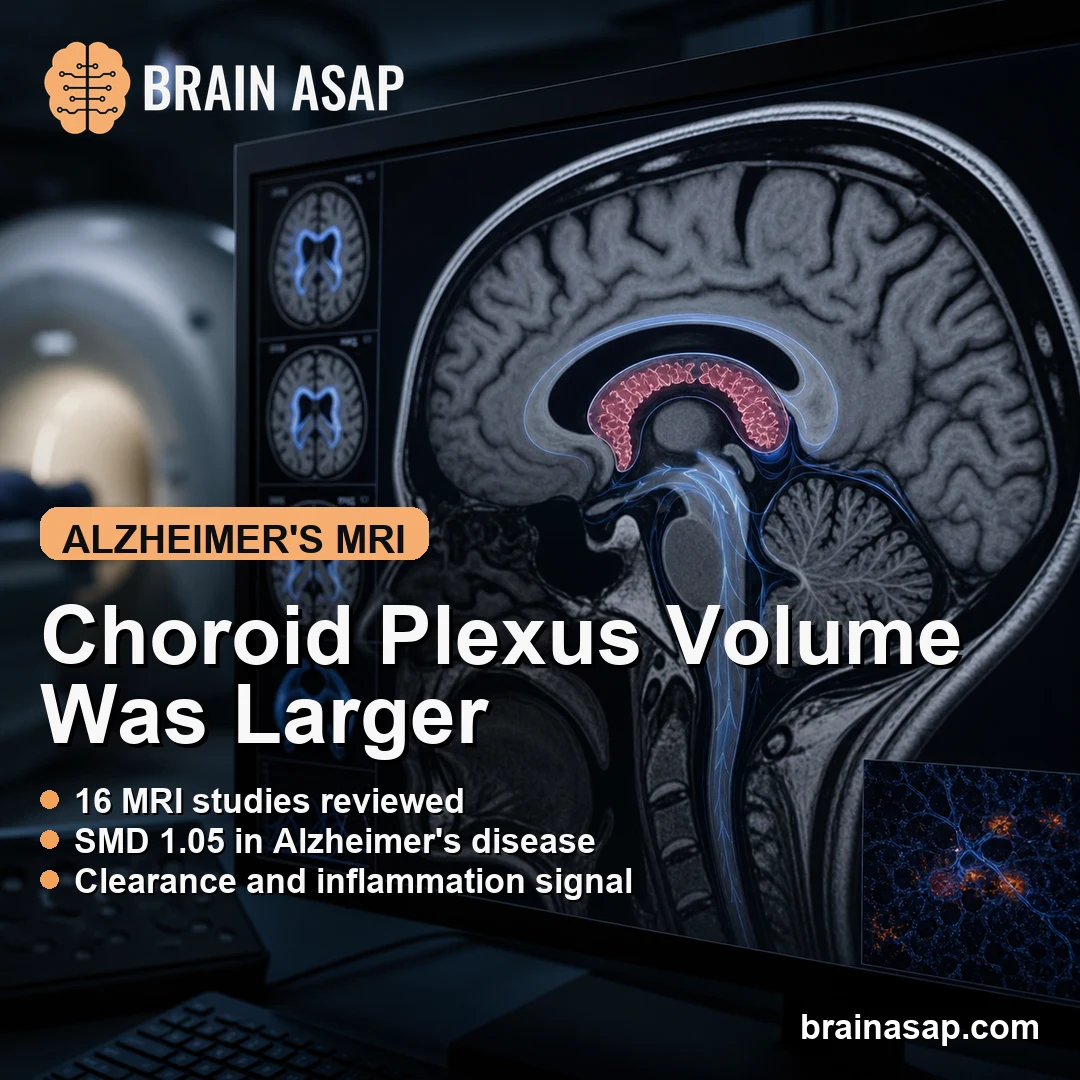
TL;DR: A 2026 systematic review and meta-analysis in Journal of Alzheimer’s Disease found that choroid plexus volume, an MRI-visible structure involved in cerebrospinal-fluid regulation and immune signaling, was larger in Alzheimer’s disease than in healthy co…
Read article ↗
TL;DR: A 2026 review in International Journal of Nanomedicine argued that depression nanomedicine should move beyond blood-brain-barrier delivery alone and be judged by target engagement, neuroimmune-barrier-plasticity effects, safety, manufacturability, and p…
Read article ↗
TL;DR: A 2026 retrospective analysis posted to medRxiv linked diclofenac and naproxen use in the NACC cohort to lower dementia and Alzheimer disease prevalence, while diclofenac use was also associated with slower Montreal Cognitive Assessment (MoCA) cognitive…
Read article ↗
TL;DR: A 2026 study in Open Medicine used network pharmacology, Alzheimer’s disease transcriptomic datasets, machine learning, Mendelian randomization, and molecular docking to link 6PPD-quinone, a tire-wear chemical transformation product, with inflammation,…
Read article ↗
TL;DR: A 2026 Nature Neuroscience study found that multiple sclerosis lesions rich in lipid-filled foamy microglia had a molecular profile tied to faster disability progression, cerebrospinal-fluid oxylipins, and a druggable lipid enzyme called MAGL. Key Findi…
Read article ↗
TL;DR: A 2026 review in Translational Psychiatry argues for a biologically meaningful inflammatory depression subgroup, with CRP, IL-6, TNF-alpha, glial activation, kynurenine metabolism, and synaptic plasticity linking immune signaling to symptoms and treatme…
Read article ↗