TL;DR: A 2026 mouse study in Psychopharmacology found that repeated dexamethasone, a synthetic glucocorticoid steroid, disrupted light-phase sleep and increased orexin-neuron activity, a wake-promoting hypothalamic signal, during sleep-to-wake transitions. Key…
Read article ↗
TL;DR: A 2026 systematic review in Journal of Clinical Sleep Medicine found that cognitive behavioral therapy for insomnia (CBT-I), a structured behavioral sleep treatment, plus sleep medication improved chronic insomnia more than medication alone, but adding…
Read article ↗
TL;DR: A 2026 randomized phase 2 trial in Nature Medicine found that three targeted drugs added to radiotherapy did not improve overall survival for children with diffuse intrinsic pontine glioma (DIPG), a lethal brainstem tumor, although everolimus caused few…
Read article ↗
TL;DR: A 2026 article-in-press study in Alzheimer’s Research & Therapy found that olfactory-region MRI radiomics, a method that turns brain scans into quantitative texture and shape features, linked blood pTau217, a tau-related Alzheimer’s disease biomarker, w…
Read article ↗
TL;DR: A 2026 machine-learning study found that the final SNP-NF model in PLOS One reported mAUC 0.965, recall 0.929, and precision 0.929, while the study reported gains of about 3% in mAUC, 1% in precision, and 0.7% in recall versus their previous neural-proc…
Read article ↗
TL;DR: A 2025 systematic review and meta-analysis in Scientific Reports pooled 10 social media abstinence experiments (N = 4,674 adults; abstinence 1–28 days) and found no significant effect on positive affect, negative affect, or life satisfaction. Key Findin…
Read article ↗
TL;DR: A 2025 study in Neurochemistry International from Kindai University showed that oral arginine, a naturally occurring amino acid, blocked the formation of toxic amyloid-beta aggregates in lab tests and reduced amyloid pathology in two well-established mo…
Read article ↗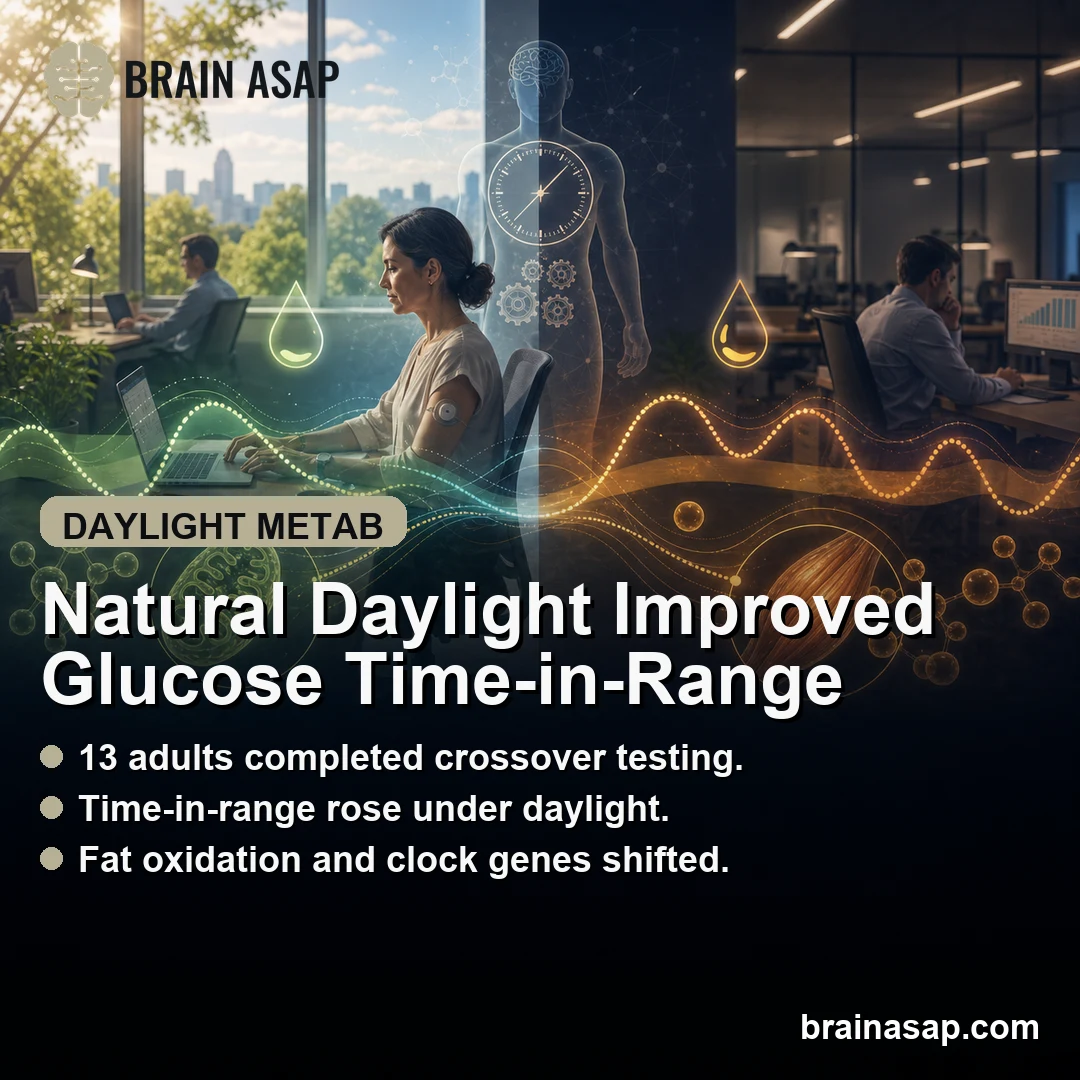
TL;DR: A 2026 randomized crossover trial in Cell Metabolism compared natural daylight against standard artificial office lighting in 13 older adults with well-controlled type 2 diabetes and found that natural-daylight days produced more time in a healthy blood…
Read article ↗
TL;DR: A 2026 study in the Journal of the American Heart Association followed 1,882 stroke-free women from the Framingham Heart Study for a median of 18 years and found that having three or more live births was associated with a reduced risk of clinical stroke…
Read article ↗
TL;DR: A 2025 study in BMC Biology found that people judged female body size about as accurately from lower-body images as from whole-body images, but isolated thigh regions alone were not enough. Key Findings Two body-perception experiments: Researchers teste…
Read article ↗