TL;DR: A 2026 modeling study in Journal of Mathematical Biology found that delayed unfolded protein response (UPR), a cellular stress program that slows protein production, could make toxic prion protein either die out, persist, or oscillate as it spreads thro…
Read article ↗
TL;DR: A 2026 medRxiv preprint found psychomotor retardation, meaning slowed movement, speech, and thinking during depression, was linked to higher later Parkinson’s diagnosis risk in 6,327 London mental-health records. Key Findings Psychomotor retardation was…
Read article ↗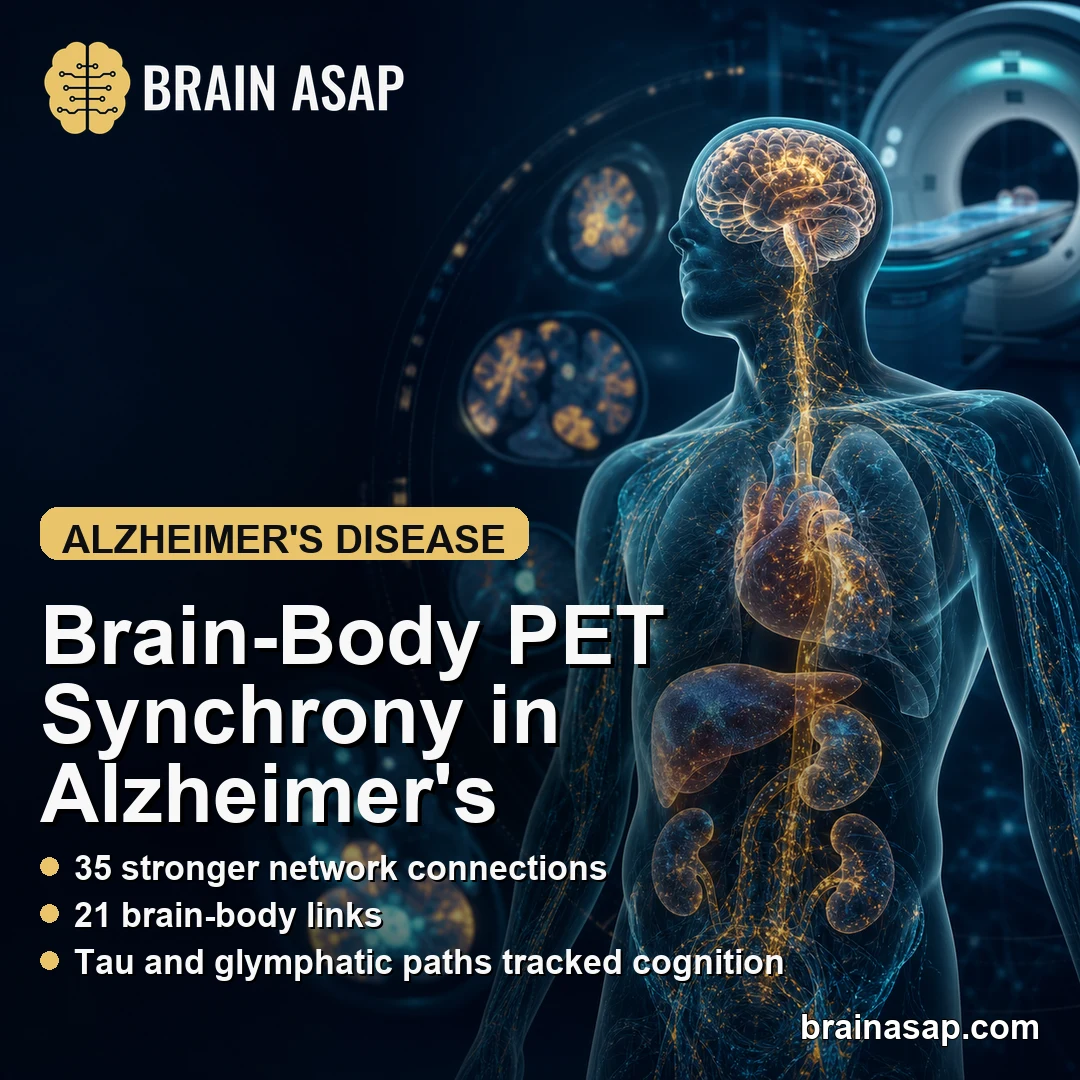
TL;DR: A 2026 medRxiv preprint used total-body tau PET in Alzheimer’s disease and found stronger brain-organ network synchrony, a pattern that tracked cognitive impairment through cortical tau burden and MRI markers of glymphatic dysfunction. Key Findings Smal…
Read article ↗
TL;DR: A 2026 Nature Communications paper found that late-stage amyloid beta plaques in APP23 mice recruited CD8 T cells with a type I interferon program, linking Alzheimer-like amyloid pathology to a more adaptive immune response around plaques. Key Findings…
Read article ↗
TL;DR: A 2026 study in Molecular Neurobiology found that Antrodia cinnamomea, a medicinal fungus extract, worked best when carried on citrate-stabilized silver nanoparticles in cell and rat models of Parkinson’s-like dopamine injury. Key Findings 6-OHDA create…
Read article ↗
TL;DR: A 2026 protocol in PLOS One describes a 90-person pilot randomized controlled trial that will test whether virtual reality mindfulness can reduce depression, anxiety, stress, and caregiver burden in family caregivers of people with dementia. Key Finding…
Read article ↗
TL;DR: A 2026 npj Parkinson’s Disease study used brain transcriptome data and genome-scale metabolic modeling to predict Parkinson’s metabolite biomarkers, including dopamine-related changes, and separated 104 postmortem samples into three metabolic clusters.…
Read article ↗
TL;DR: A 2026 mouse study in Proceedings of the National Academy of Sciences found that deleting or inhibiting PTP1B improved memory behavior, reduced amyloid-beta burden, and pushed microglia toward an amyloid-clearing state. Key Findings Memory behavior impr…
Read article ↗
TL;DR: A 2025 study in The Journal of Prevention of Alzheimer’s Disease found that stress internalization, not acculturation or activity engagement, predicted memory decline across three waves in 1,528 older Chinese Americans. Key Findings Stress internalizati…
Read article ↗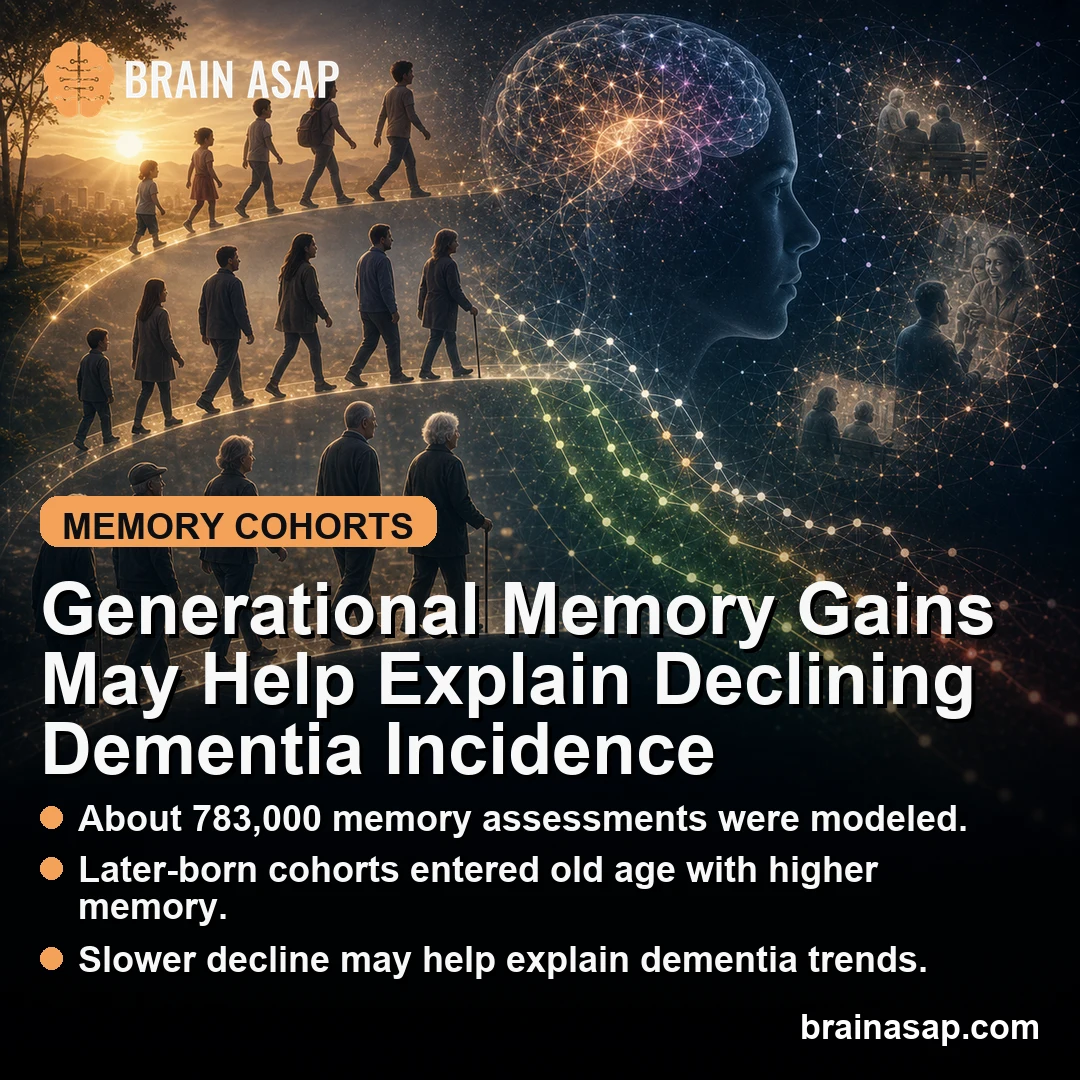
TL;DR: A 2026 preprint longitudinal cohort analysis in medRxiv found that later-born cohorts showed higher memory levels entering old age and slower rates of memory decline, while the projected 20-year cohort advantage at age 80 was large enough in the model t…
Read article ↗