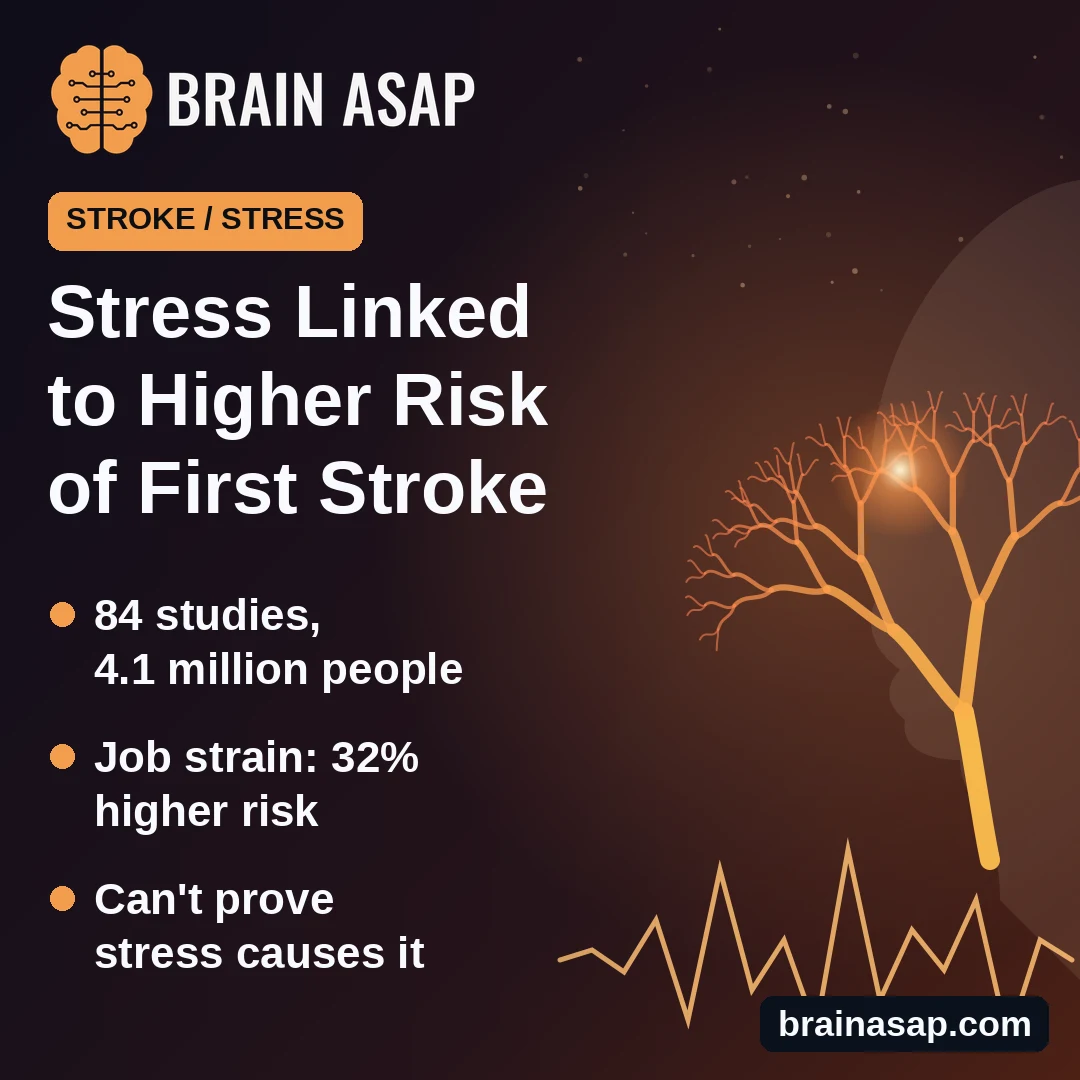
TL;DR: In a review of 84 studies covering 4.1 million people, those with psychological distress or job strain had roughly 30% higher risk of a first stroke. The studies were observational, so they cannot show that stress itself causes strokes. Key Findings 84…
Read article ↗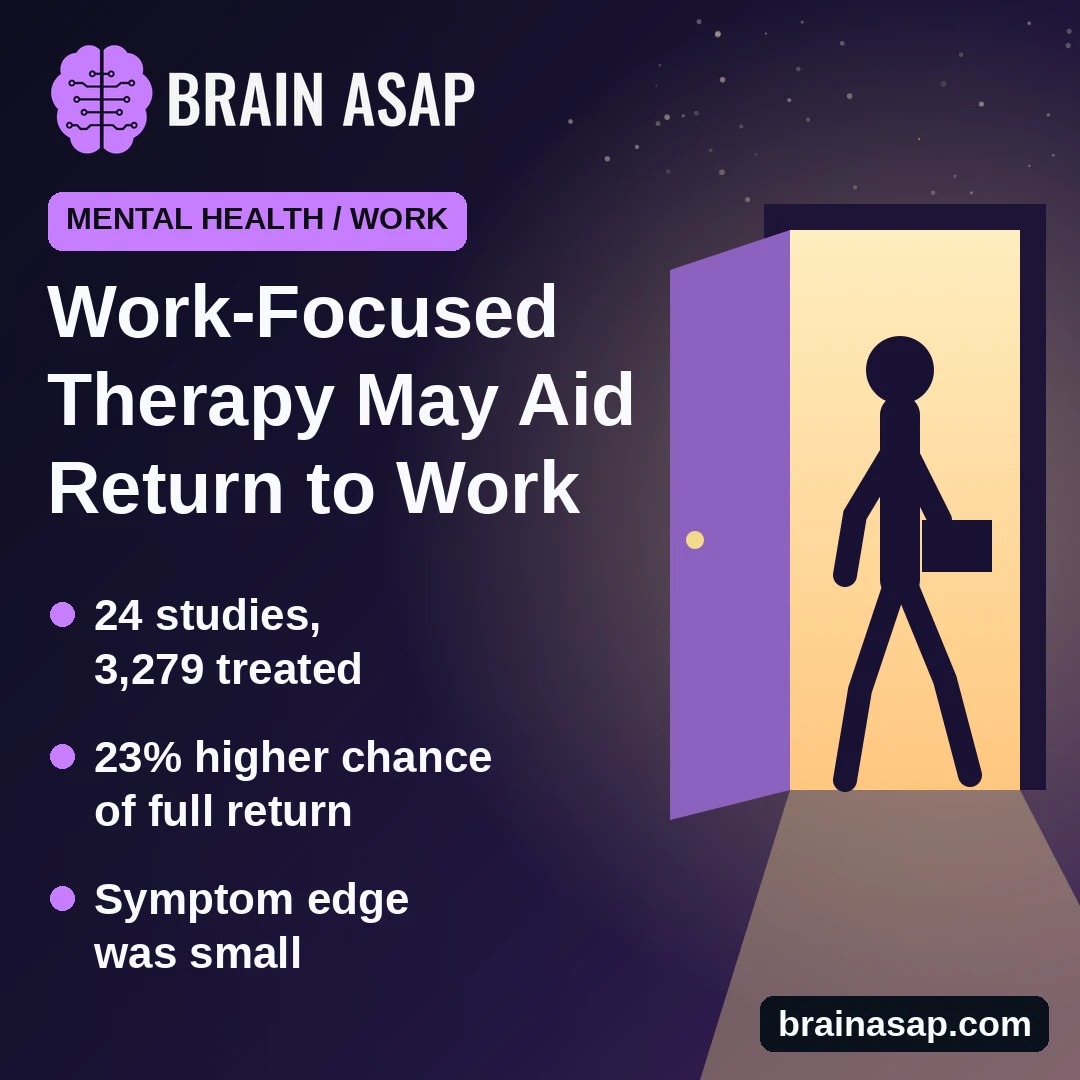
TL;DR: Across 24 studies of adults with depression, anxiety or stress, talk therapy built around getting back to work was linked to a modestly higher chance of fully returning. Its edge over other care for symptoms was small and faded by later follow-up. Key F…
Read article ↗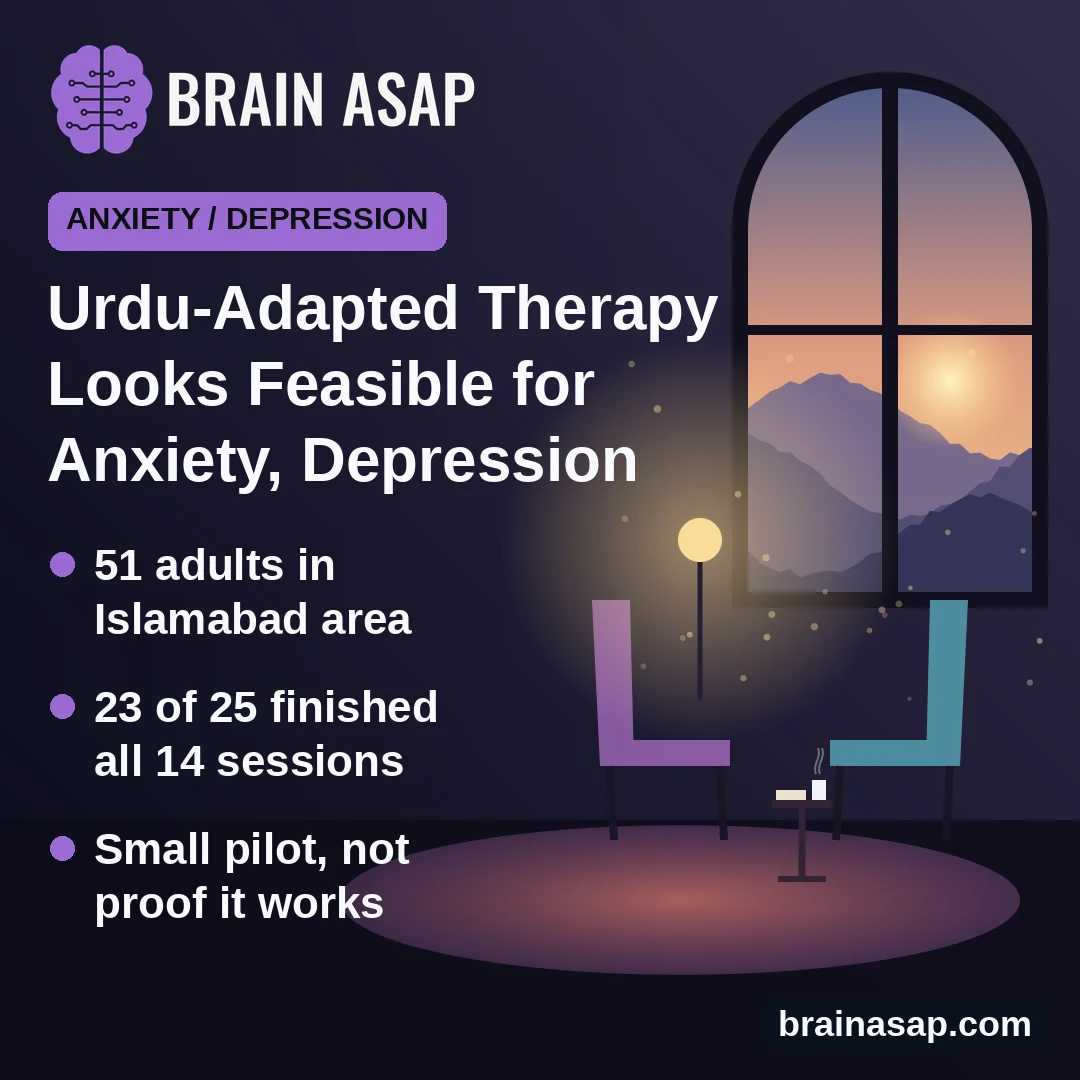
TL;DR: In a small Pakistan pilot, 23 of 25 adults given an Urdu version of a talk therapy for anxiety and depression finished all 14 weeks. The trial was too small to show the therapy works. Key Findings Signed up and stayed: 51 adults were randomly assigned t…
Read article ↗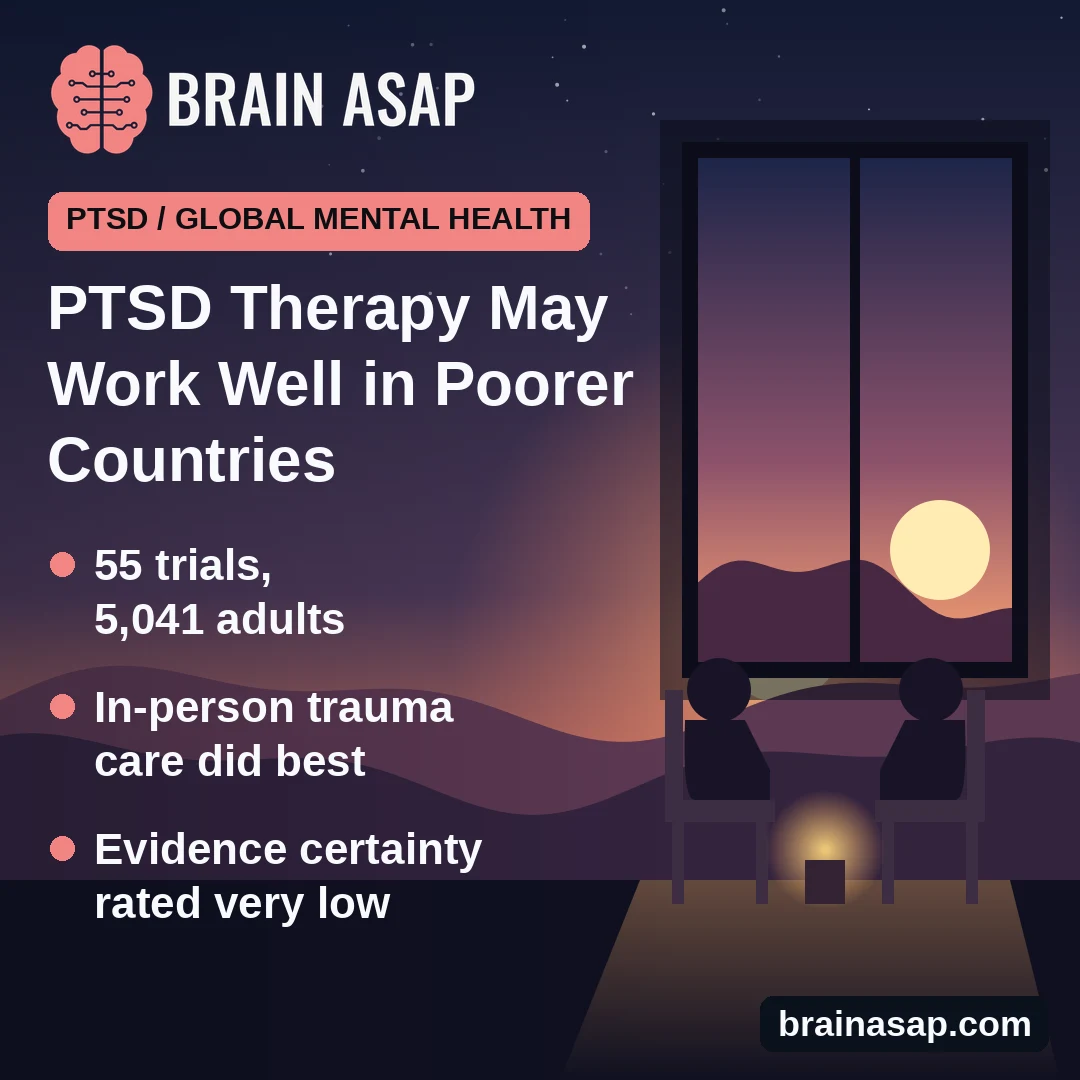
TL;DR: Across 55 trials in low- and middle-income countries (5,041 adults), people who got therapy had much lower PTSD symptoms than people on a wait-list or other comparison. The evidence was very low certainty because many trials were weakly run. Key Finding…
Read article ↗
TL;DR: A therapy app did not reduce depression scores more than a look-alike education app in a trial of adults with past concussions. Insomnia scores improved more with the therapy app, but only 42 of 113 participants completed the main 12-week check-in. Key…
Read article ↗
TL;DR: A 2026 meta-analysis in Neurological Sciences pooled 10 studies that gave people with Parkinson’s disease, tested while on their dopamine medication, and healthy adults the same “think of as many ideas as you can” tasks. On average, the two groups score…
Read article ↗
TL;DR: A meta-analysis pooling 63 studies and 265,079 people found that cannabis users had about twice the odds of committing violence as non-users (2.05 times in the general population, 2.49 times among psychiatric patients). The gap shrank to 1.17 times in s…
Read article ↗
TL;DR: In an online survey of 126 mothers of toddlers in Taiwan, mothers who reported more depressive symptoms also tended to describe their toddler’s sleep as more of a problem and to report longer times to fall asleep. The link with perceived sleep problems…
Read article ↗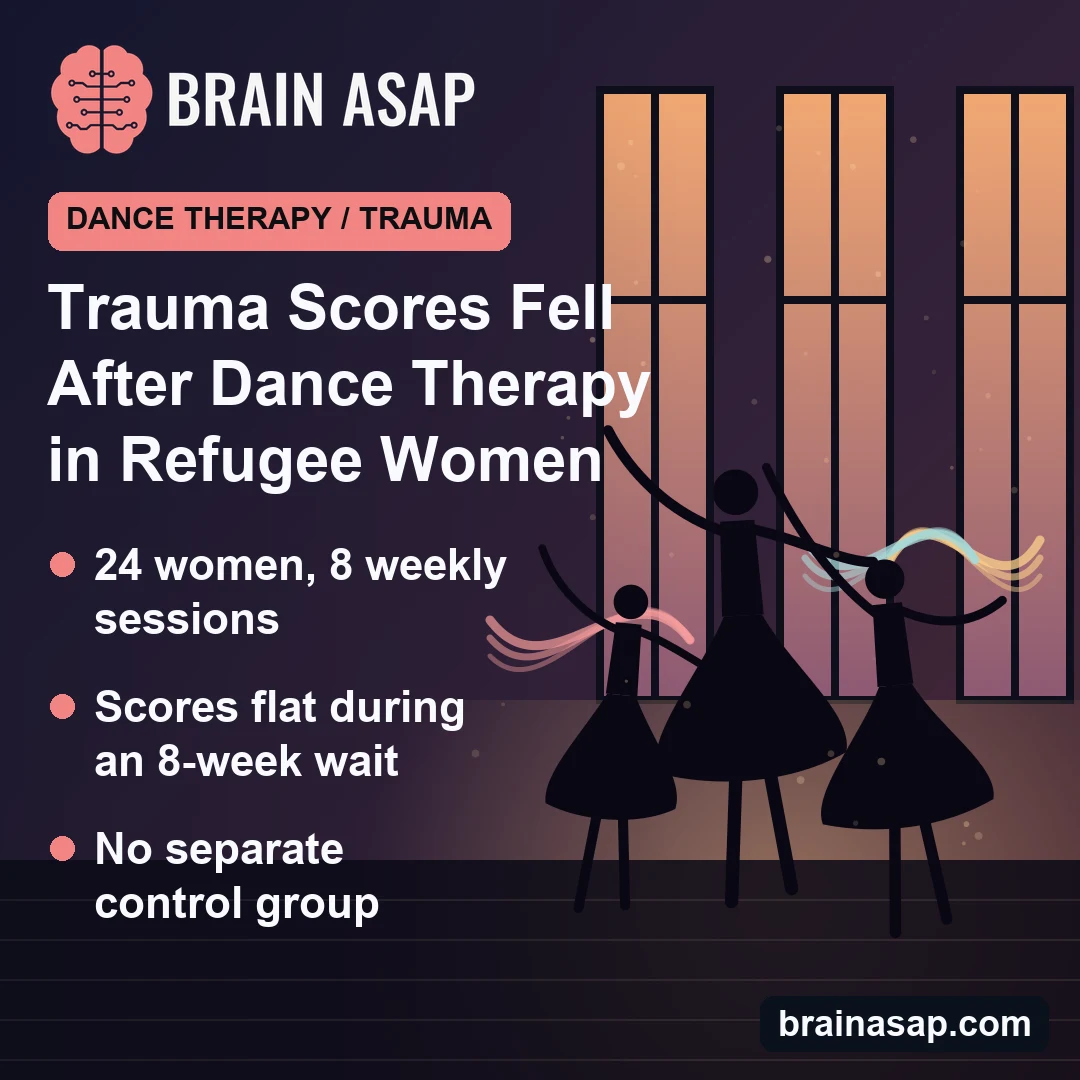
TL;DR: In a small German study of 24 refugee women with trauma symptoms, scores on three symptom questionnaires stayed flat during an 8-week wait, then dropped after 8 weekly dance movement therapy sessions. The group’s average PTSD checklist score slipped jus…
Read article ↗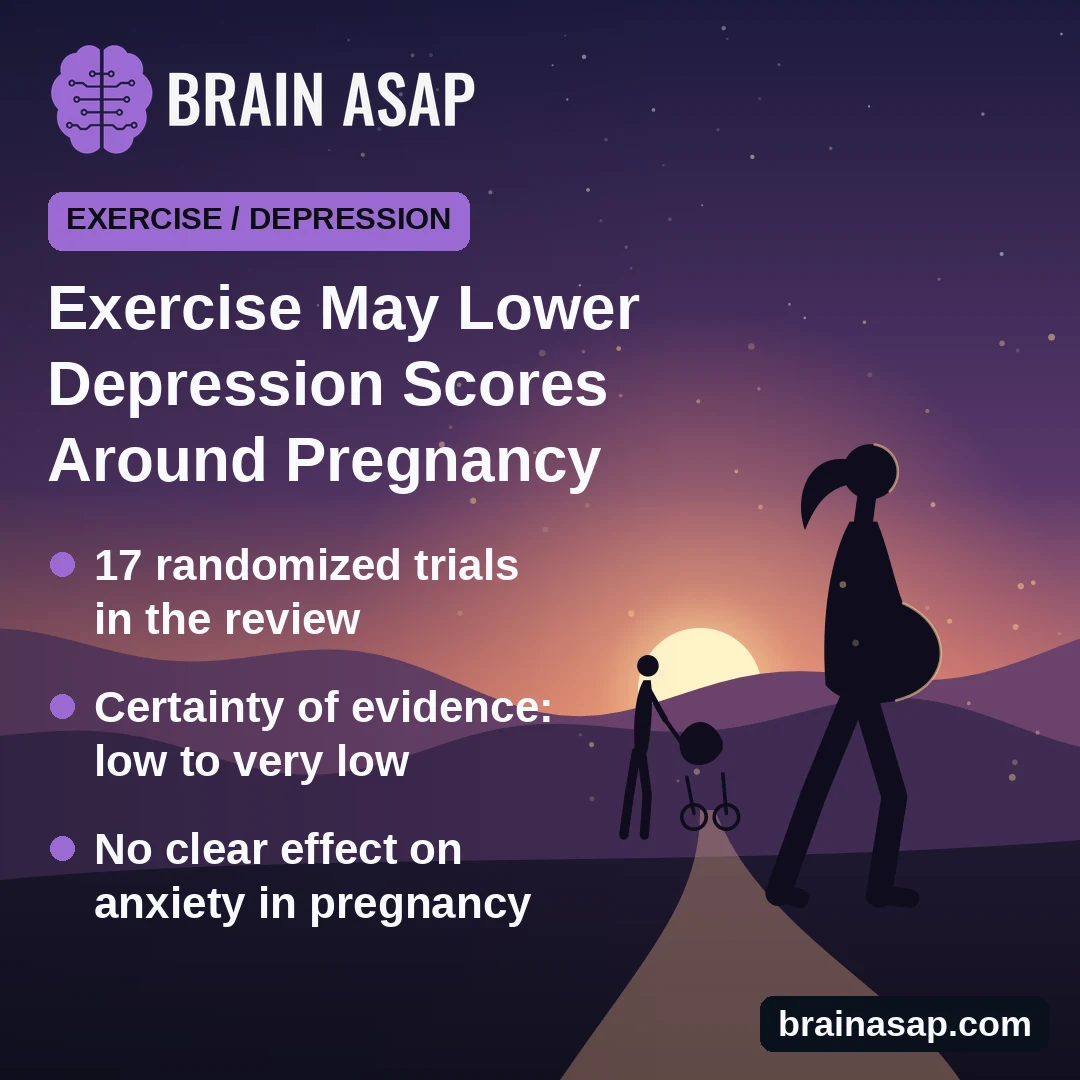
TL;DR: A review of 17 randomized trials found that women who exercised had lower depression scores than women given usual care, both during pregnancy and after birth. The evidence is rated low to very low certainty, and the studies varied a lot. For anxiety du…
Read article ↗