TL;DR: A 2026 study in Neuropsychopharmacology found that reward uncertainty, measured with functional MRI (fMRI), a brain-scan method, engaged different adolescent brain networks during waiting for a possible reward versus learning the outcome, with anxiety a…
Read article ↗
TL;DR: A 2026 study in Science found that a flattering chatbot did more than sound supportive to users: after even a brief exchange, people were more convinced they were right and less willing to apologize or repair interpersonal conflict. Key Findings 11 lead…
Read article ↗
TL;DR: A 2026 study in JAMA Network Open found that a therapy built to restore reward and positive emotion outperformed a matched negative-affect therapy for adults with depression, anxiety, and severely low positive affect. Key Findings PAT beat the matched t…
Read article ↗
TL;DR: A 2026 study in The British Journal of Psychiatry found that serious mental illness labels shifted often in real-world psychiatric records: 64% of patients with schizophrenia, bipolar disorder, or severe major depression received multiple diagnoses over…
Read article ↗
TL;DR: In Drosophila melanogaster, caffeine consumed at night impaired inhibitory control in an airflow task, especially in females. The effect was not explained by simple hyperactivity or sleep deprivation, and the study points to dopamine signaling in mushro…
Read article ↗
TL;DR: A 2025 study in Communications Biology found that a week-long mind-body retreat shifted brain-network, plasma-protein, metabolomic, and cell-growth measures, but the uncontrolled design keeps the result exploratory. Key Findings Healthy retreat attendee…
Read article ↗
TL;DR: A 2026 preprint birth-cohort study in medRxiv found that 91.1% of children had experienced violence by age 8, while age-8 violence exposure was associated with higher internalizing, externalizing, total problem scores, and disorder odds. Key Findings Ev…
Read article ↗
TL;DR: A 2026 network analysis study in European Archives of Psychiatry and Clinical Neuroscience found that insomnia was present in 18.3% and childhood trauma in 49.5% of patients, while daytime dysfunction and sleep-related distress were central nodes, while…
Read article ↗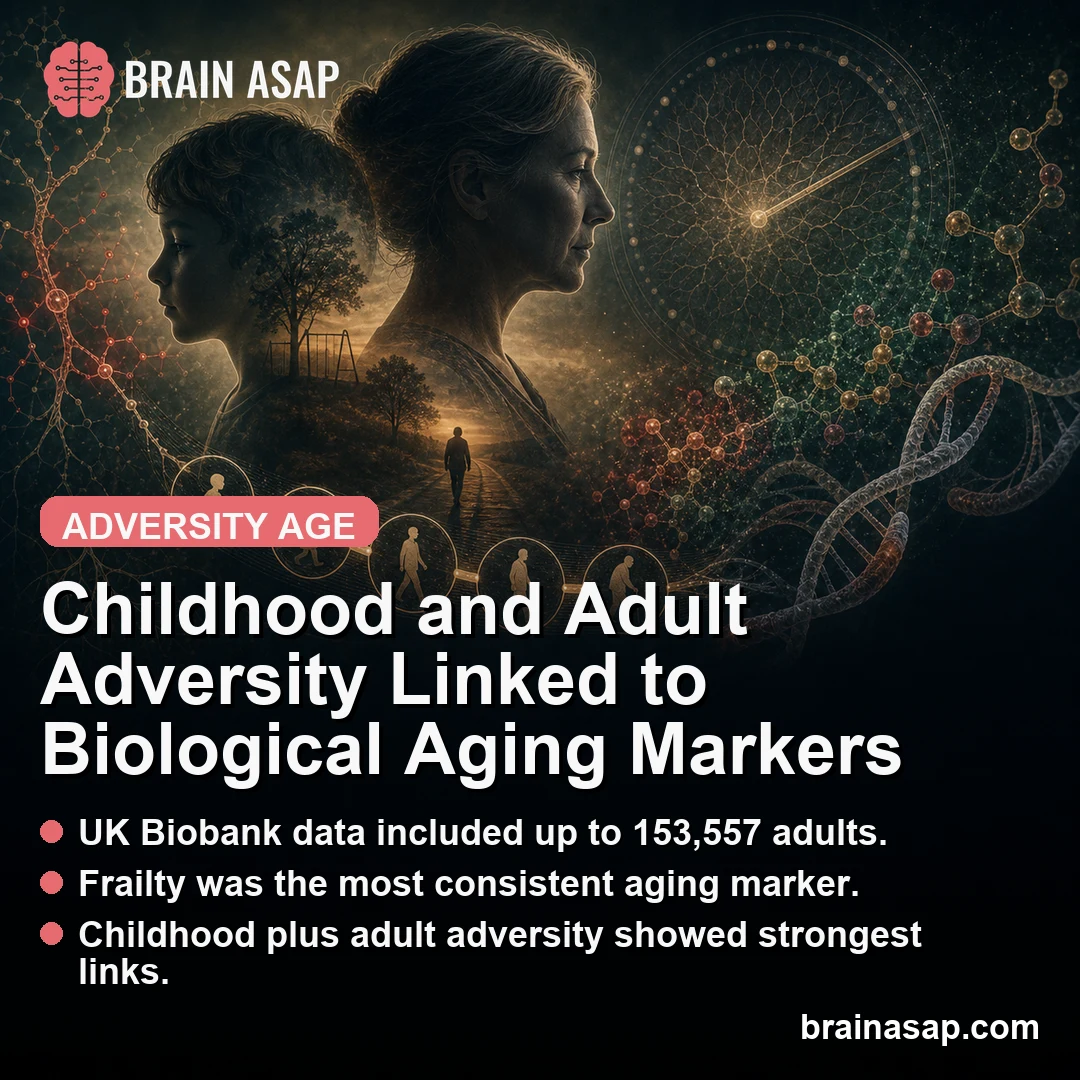
TL;DR: A 2026 BMC Medicine study of UK Biobank adults linked adversity in both childhood and adulthood to higher frailty, older metabolomic age profiles, lower grip strength, and some telomere differences, with the clearest associations in people reporting mul…
Read article ↗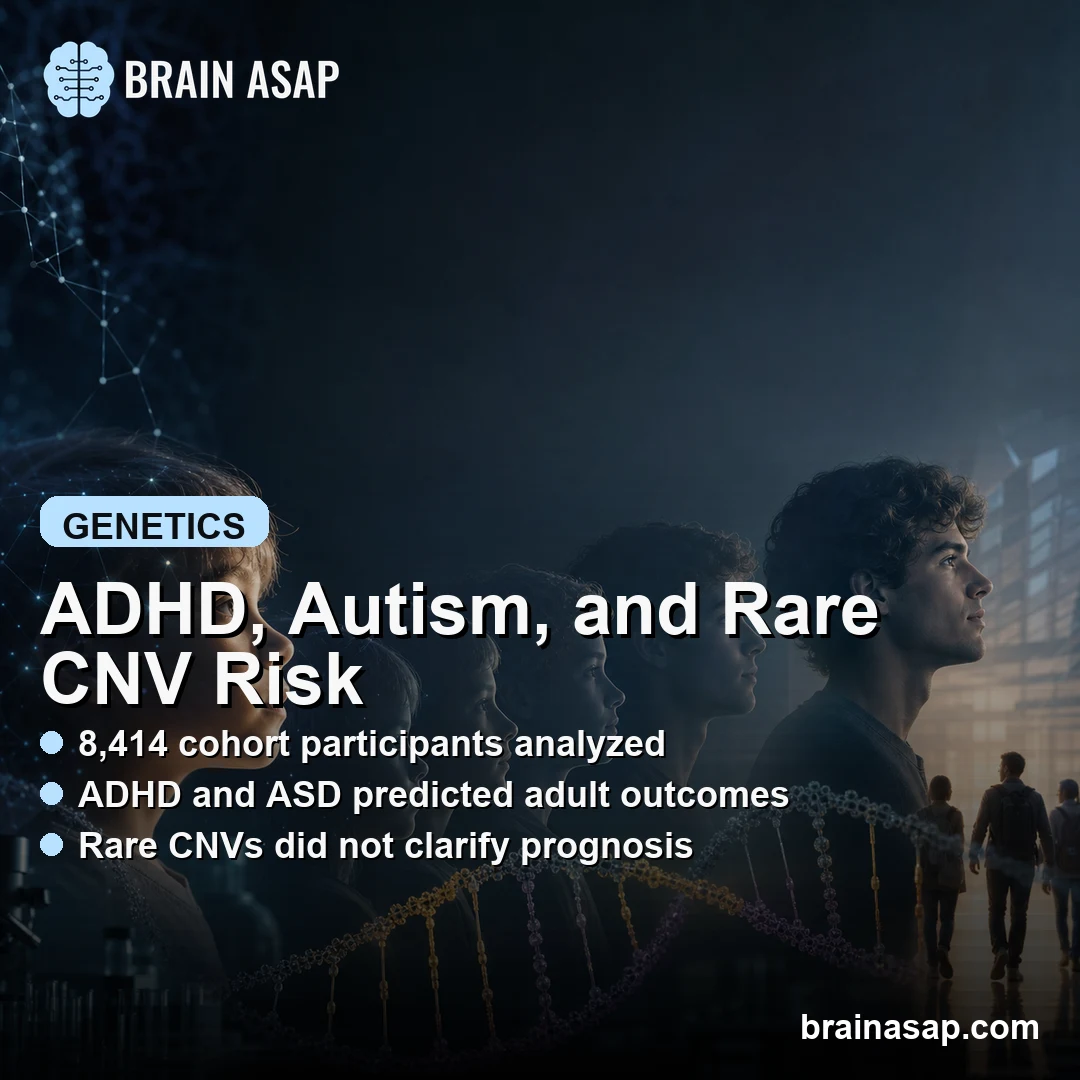
TL;DR: A 2026 cohort study in BJPsych Open found that childhood attention-deficit/hyperactivity disorder (ADHD) and autism spectrum disorder (ASD) difficulties predicted poorer young-adult outcomes, but rare copy number variants (CNVs), which are deleted or du…
Read article ↗