TL;DR: A 2026 randomized study in The Journal of Strength and Conditioning Research found that coherent breathing, a slow 6-breaths-per-minute breathing routine, improved several recovery markers in highly trained 400-meter athletes under repeated race stress…
Read article ↗
TL;DR: A 2026 scoping review in Sleep Science linked seasonal timing, daylight exposure, daylight saving time (DST), sleep-wake rhythm disruption, and driver drowsiness to traffic-crash risk, but found that few studies directly integrate seasonality with chron…
Read article ↗
TL;DR: A 2026 HomePAP secondary analysis in Journal of Clinical Sleep Medicine found that higher PAP mask leak predicted lower obstructive sleep apnea treatment adherence, but a new Real Leak measure, unintentional leak after subtracting expected mask leak, di…
Read article ↗
TL;DR: A 2026 qualitative analysis in PLOS One used 505 ME/CFS memorial entries to map how systemic neglect, clinical dismissal, social isolation, and personal burden appeared in accounts of illness and death. Key Findings 505 memorial entries: The analysis us…
Read article ↗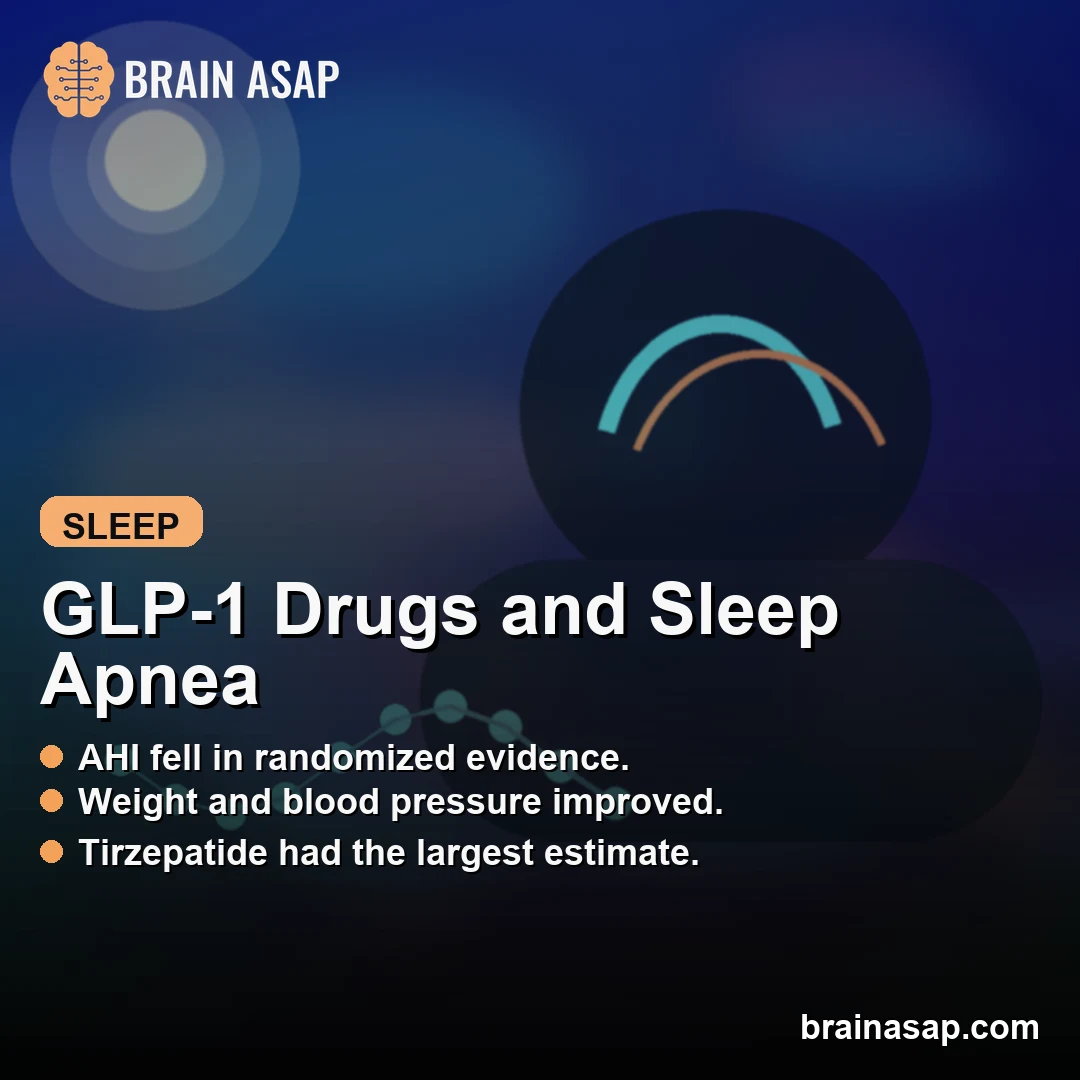
TL;DR: A 2026 meta-analysis in Sleep and Breathing found that GLP-1 drugs, metabolic hormone medications involved in glucose, appetite, and weight regulation, were linked to fewer obstructive sleep apnea breathing events in adults with obesity. Key Findings Sl…
Read article ↗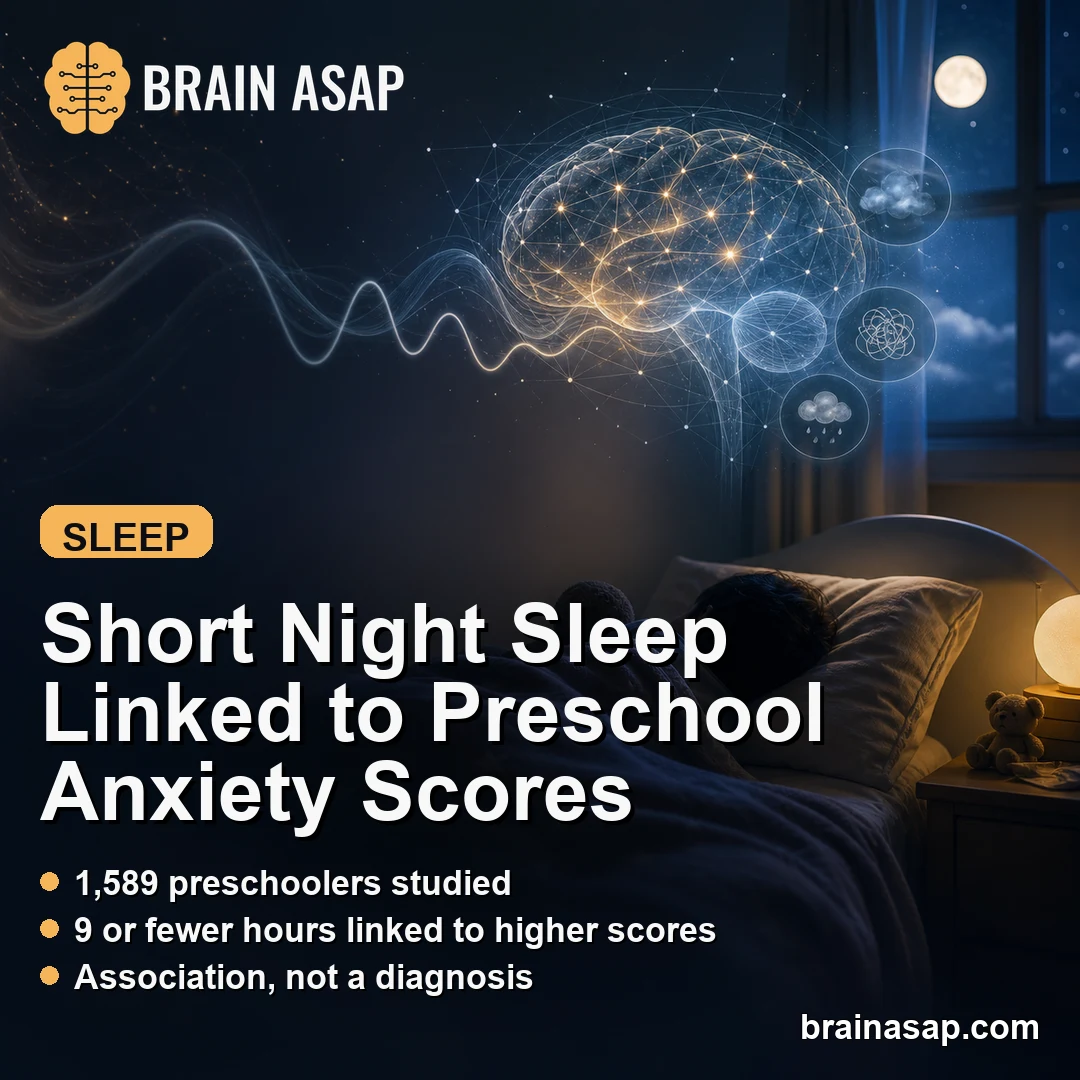
TL;DR: A 2026 cross-sectional study in Nature and Science of Sleep linked 9 hours or less of nighttime sleep with higher parent-rated anxiety scores in 1,589 preschool children in China, but the design can show association rather than prove that shorter sleep…
Read article ↗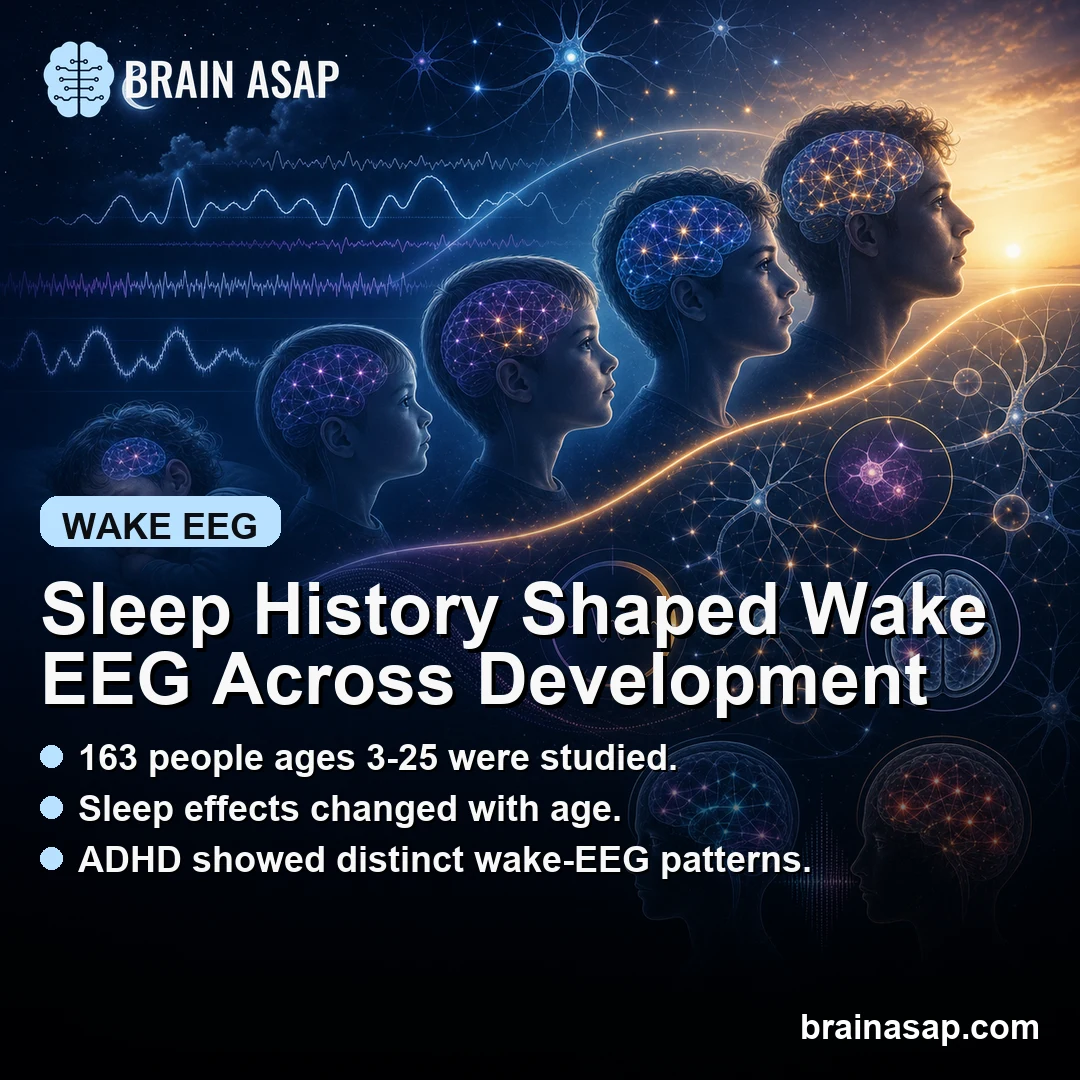
TL;DR: A 2026 eNeuro study of 163 people ages 3-25 found that sleep history and age shaped waking electroencephalography (EEG) oscillations, while children with ADHD showed distinct sleep-wake EEG patterns. Key Findings Sleep and development interact to shape…
Read article ↗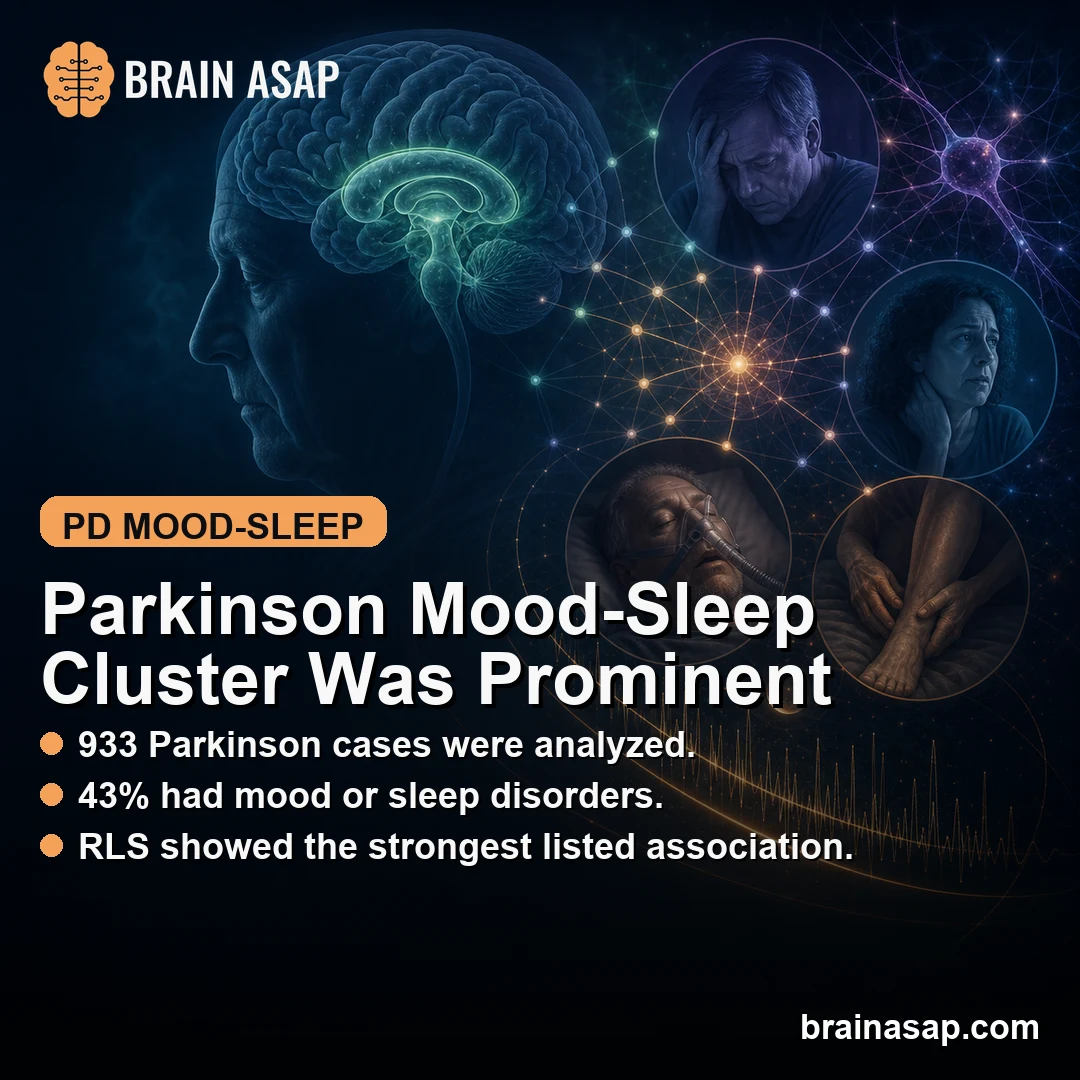
TL;DR: A 2026 preprint on medRxiv using the Harvard Biomarkers Study found that 43% of Parkinson’s disease patients had depression, anxiety, sleep apnea, or restless legs syndrome, compared with 21% of controls. Key Findings 1,224-person cohort: Researchers an…
Read article ↗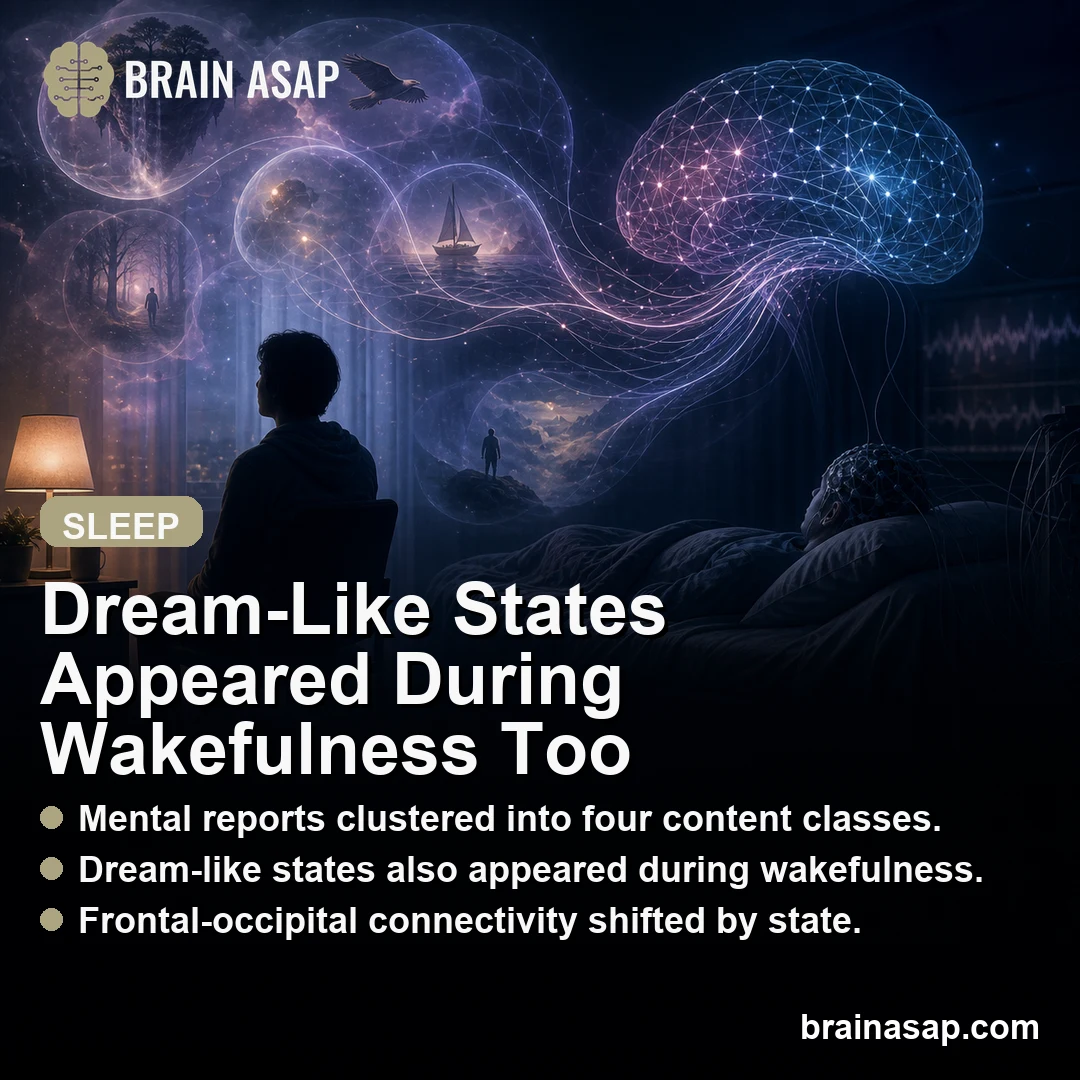
TL;DR: A 2026 study in Cell Reports used electroencephalography (EEG), a brain-wave recording method, in 92 nappers to identify four mental states across wakefulness, sleep onset, and light sleep, including a bizarre dream-like state with reduced frontal-occip…
Read article ↗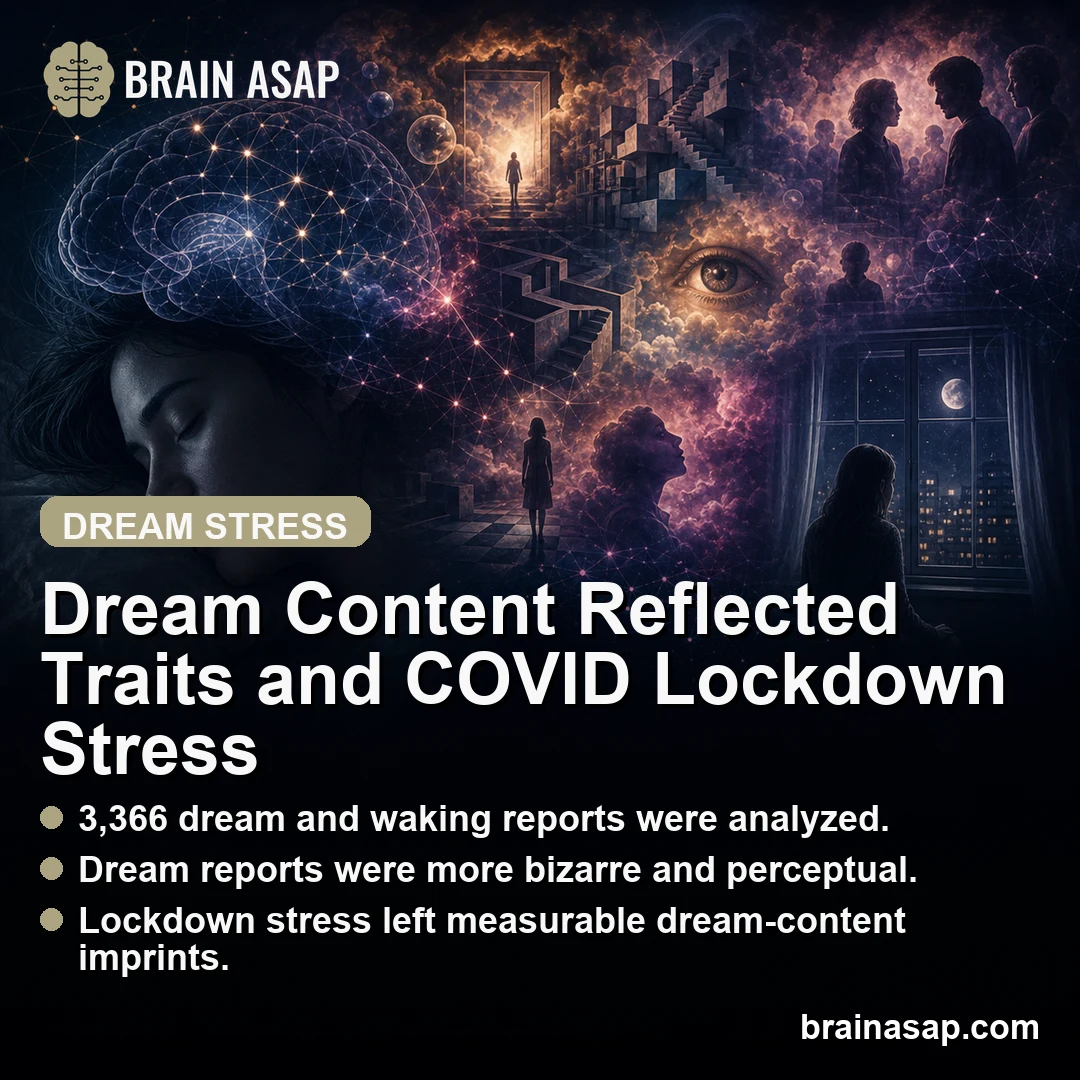
TL;DR: A 2026 study in Communications Psychology analyzed 1,687 dream reports and 1,679 waking reports, finding that dreams were more visual, spatial, social, bizarre, and emotionally negative than waking experiences. Key Findings 3,366 reports analyzed: the m…
Read article ↗