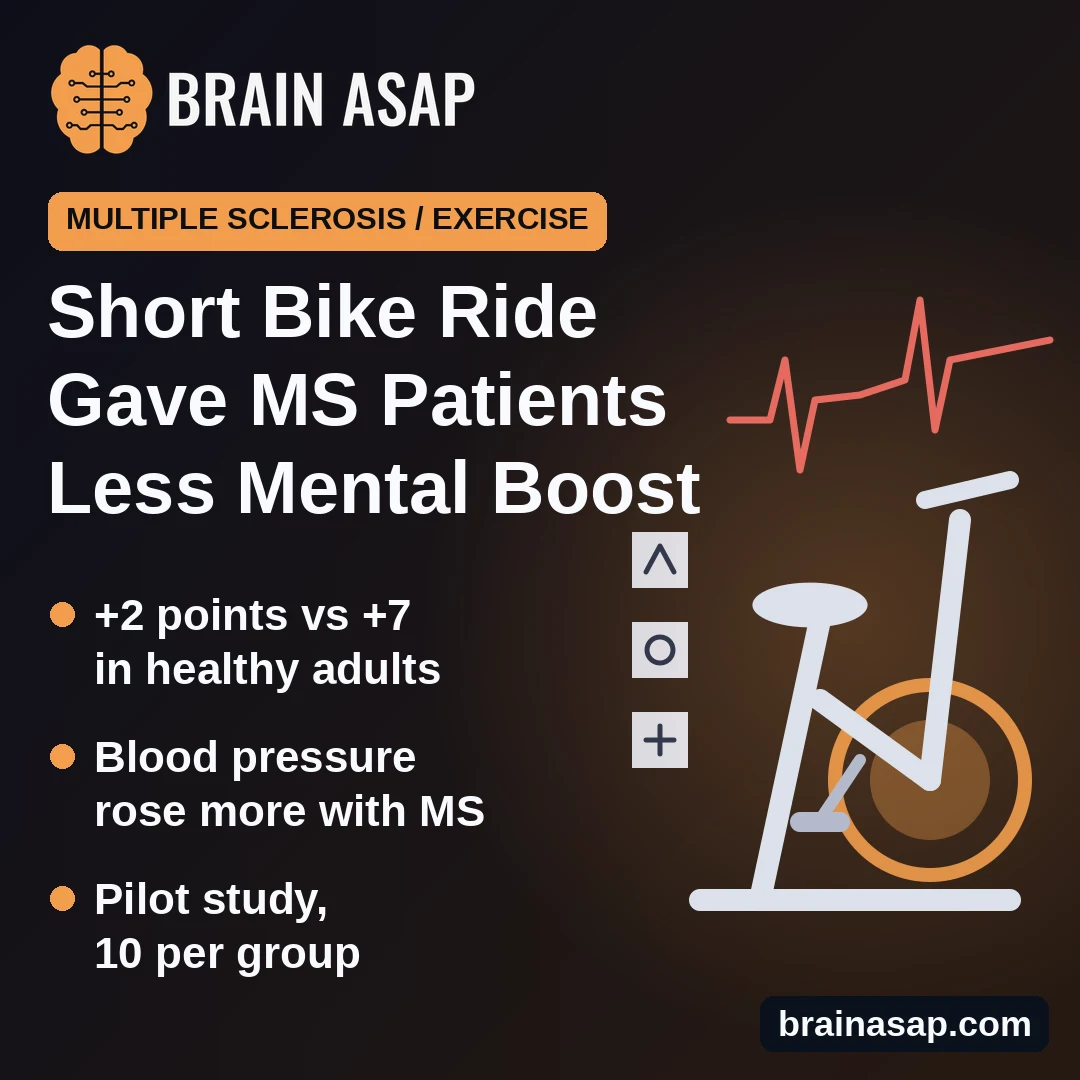
TL;DR: In a tiny pilot study, a few minutes on an exercise bike boosted thinking speed scores by about 7 points in healthy adults but only about 2 points in people with relapsing-remitting multiple sclerosis. With 10 people per group, it is an early clue, not…
Read article ↗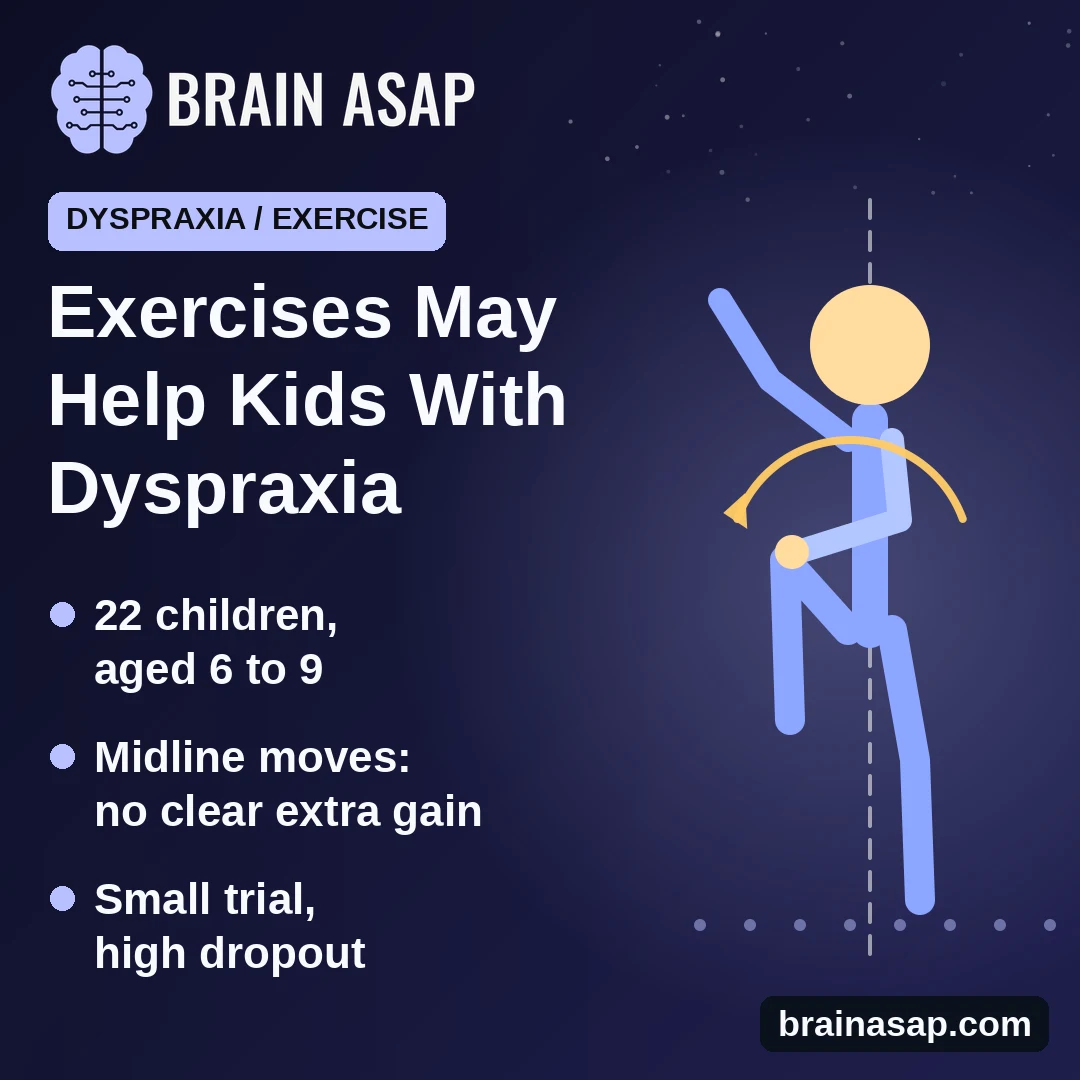
TL;DR: In a small Polish trial of 22 children aged 6 to 9 with coordination problems, coordination exercises with and without moves that cross the body’s center line both improved movement planning and two-sided coordination. Final scores were about the same i…
Read article ↗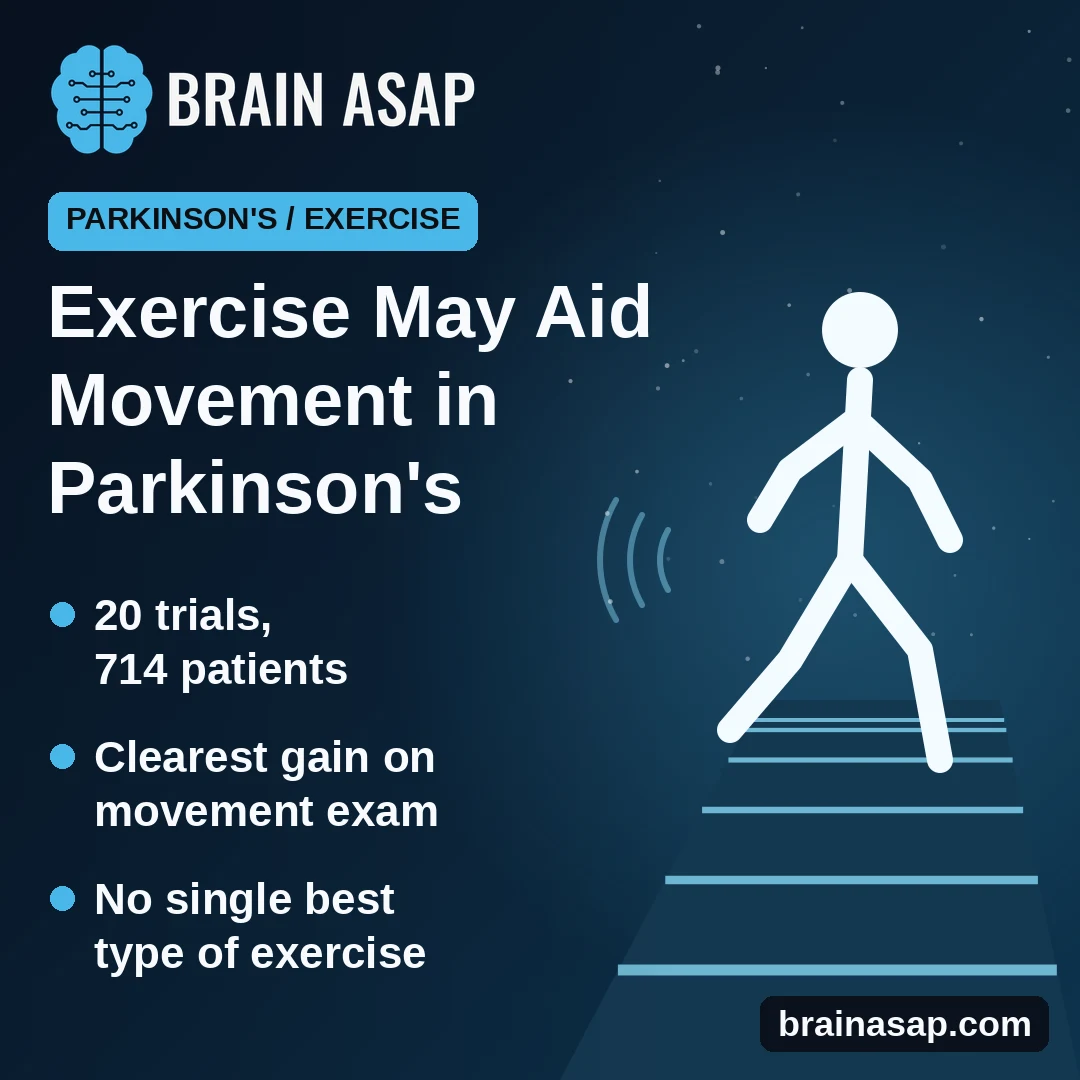
TL;DR: Pooling 20 small trials in Parkinson’s disease, structured exercise improved movement-exam scores, freezing while walking and one balance test compared with usual care. The strongest evidence was for the movement exam, and no one type of exercise stood…
Read article ↗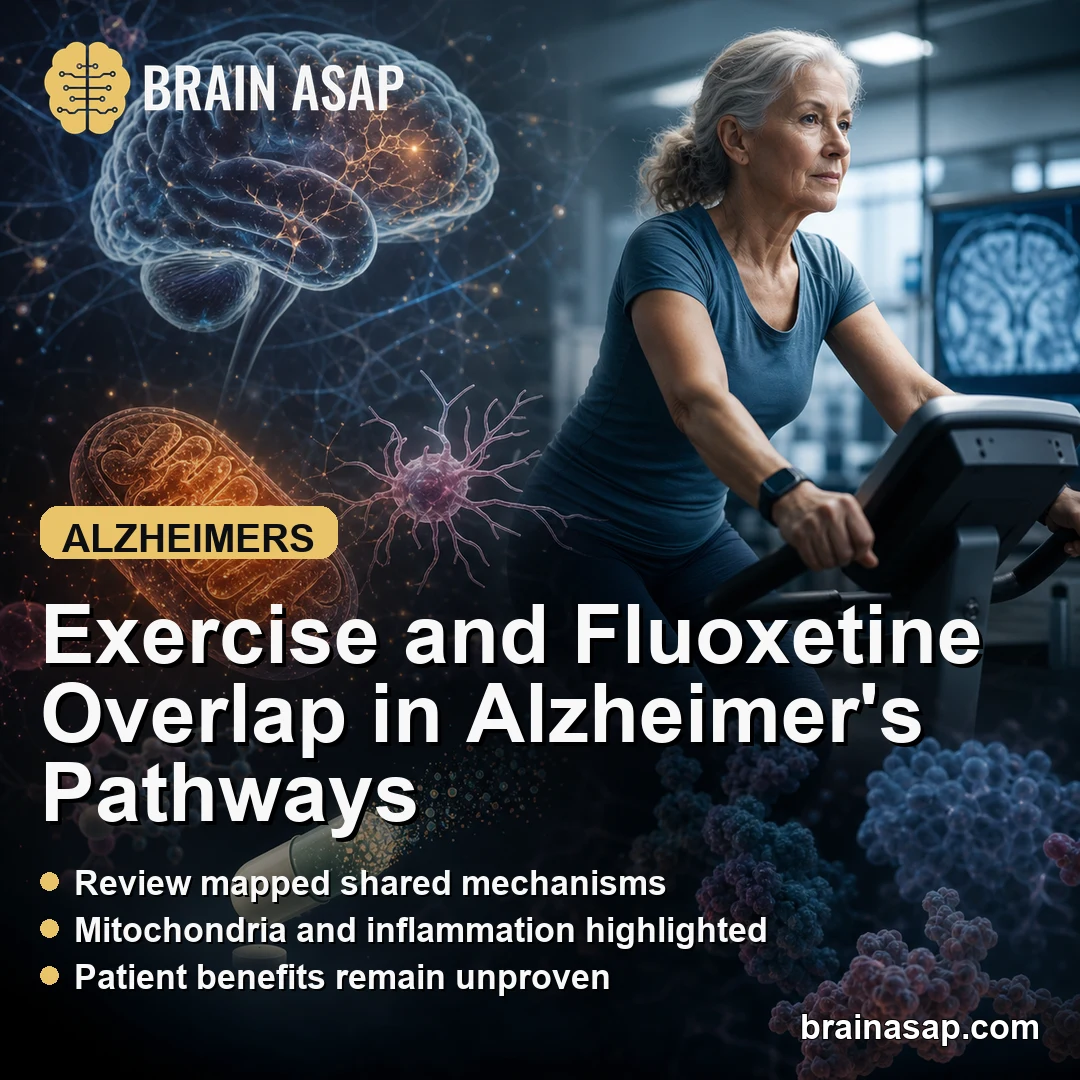
TL;DR: A 2026 review in International Journal of Molecular Medicine mapped how exercise and fluoxetine overlap in Alzheimer’s disease mechanisms such as mitochondrial quality control, oxidative stress, inflammation, and neuroplasticity, but clinical combinatio…
Read article ↗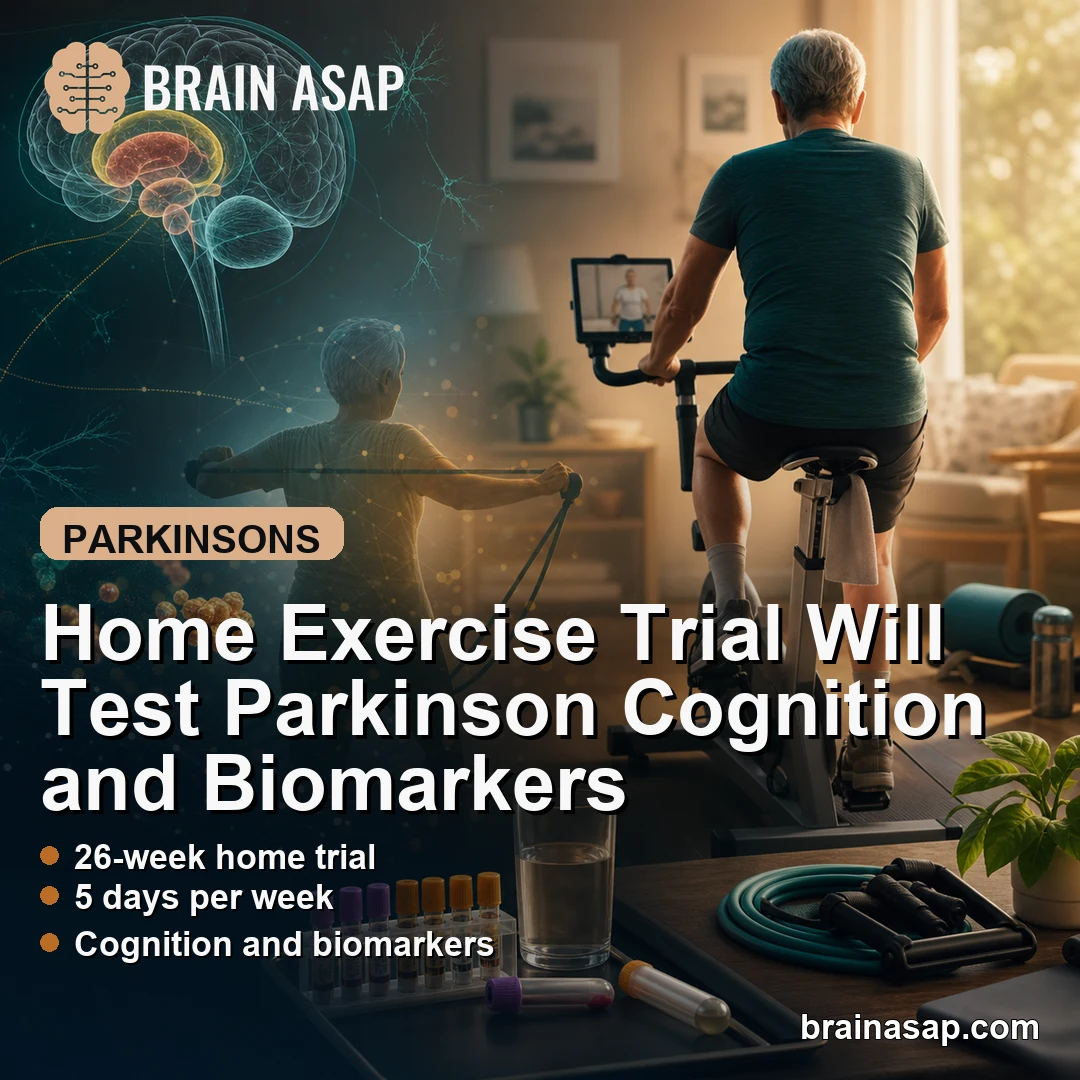
TL;DR: A 2026 protocol in JMIR Research Protocols describes EXCEL-PD, a randomized trial testing whether 26 weeks of virtually supervised home endurance and resistance exercise is feasible, safe, and biologically informative for people with Parkinson disease.…
Read article ↗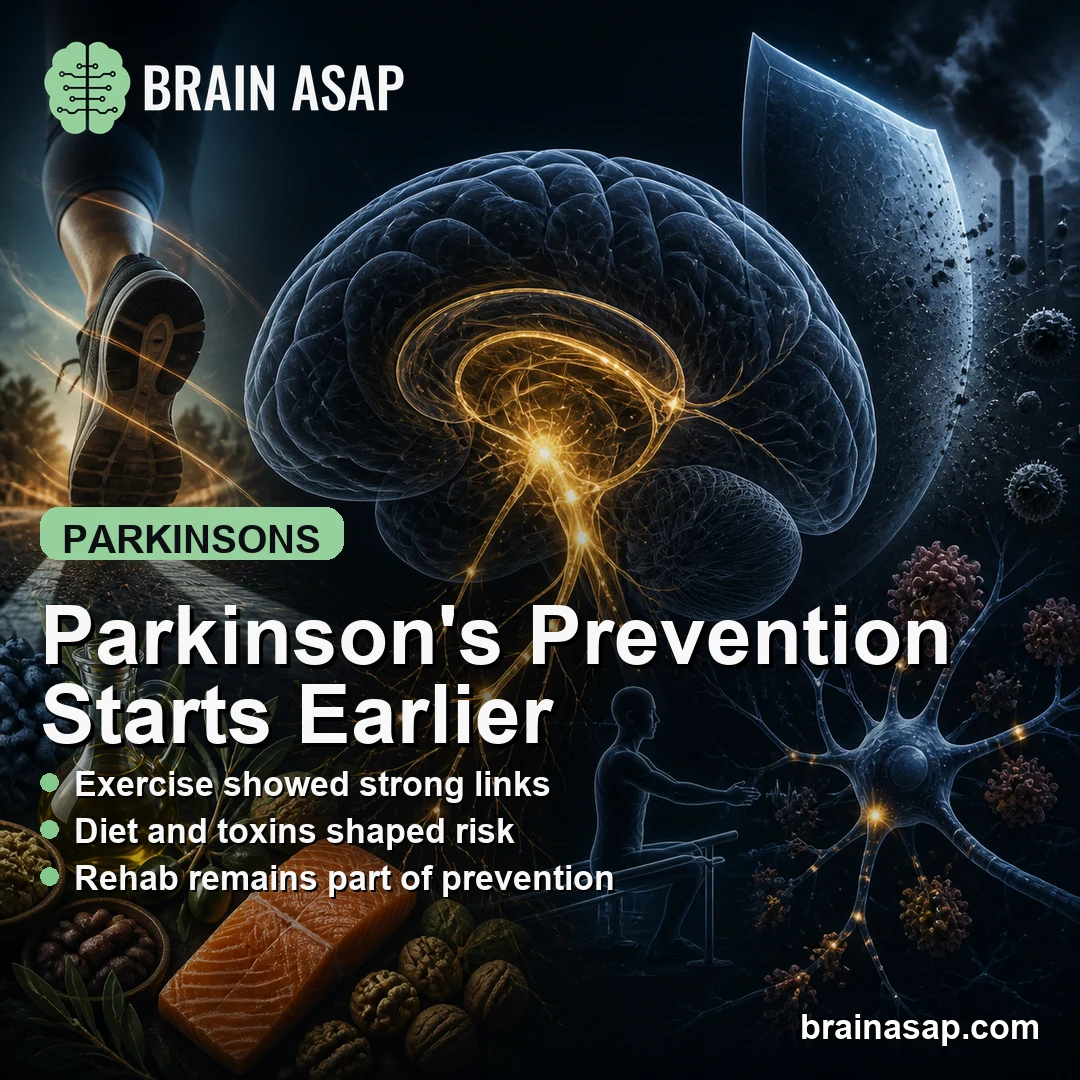
TL;DR: A 2026 narrative review in Neurological Research and Practice argued that Parkinson’s prevention is most actionable through physical activity, Mediterranean-style diet patterns, toxin reduction, earlier prodromal detection, and better rehabilitation aft…
Read article ↗
How Five-Animal Play Matched Probiotics in Prediabetes TL;DR: 4 weeks of Huatuo Five-Animal Play improved glucose control and insulin resistance about as much as bifidobacterium capsules, outperforming low-intensity cycling on several metabolic markers, includ…
Read article ↗
High-intensity exercise (HIIE) leads to significant changes in brain activity, specifically in regions linked to dopaminergic and μ-opioidergic neurotransmission, which are associated with a mood boost. Highlights: Positive Mood Effects: Both low- and high-int…
Read article ↗
Aerobic exercise reduces depressive symptoms by decreasing inflammation, boosting dopamine transmission, and enhancing motivation and cognitive control. Highlights: Depression & Dopamine: Depression is linked to disrupted dopamine transmission, affecting rewar…
Read article ↗
Depression is one of the most common mental health issues, affecting over 320 million people globally. Research shows that exercise may be an effective treatment option for many battling this disabling condition. Key Facts: Exercise has comparable antidepressa…
Read article ↗