Aged Gut Microbiome Impaired Mouse Memory via Vagal Gut-Brain Signaling
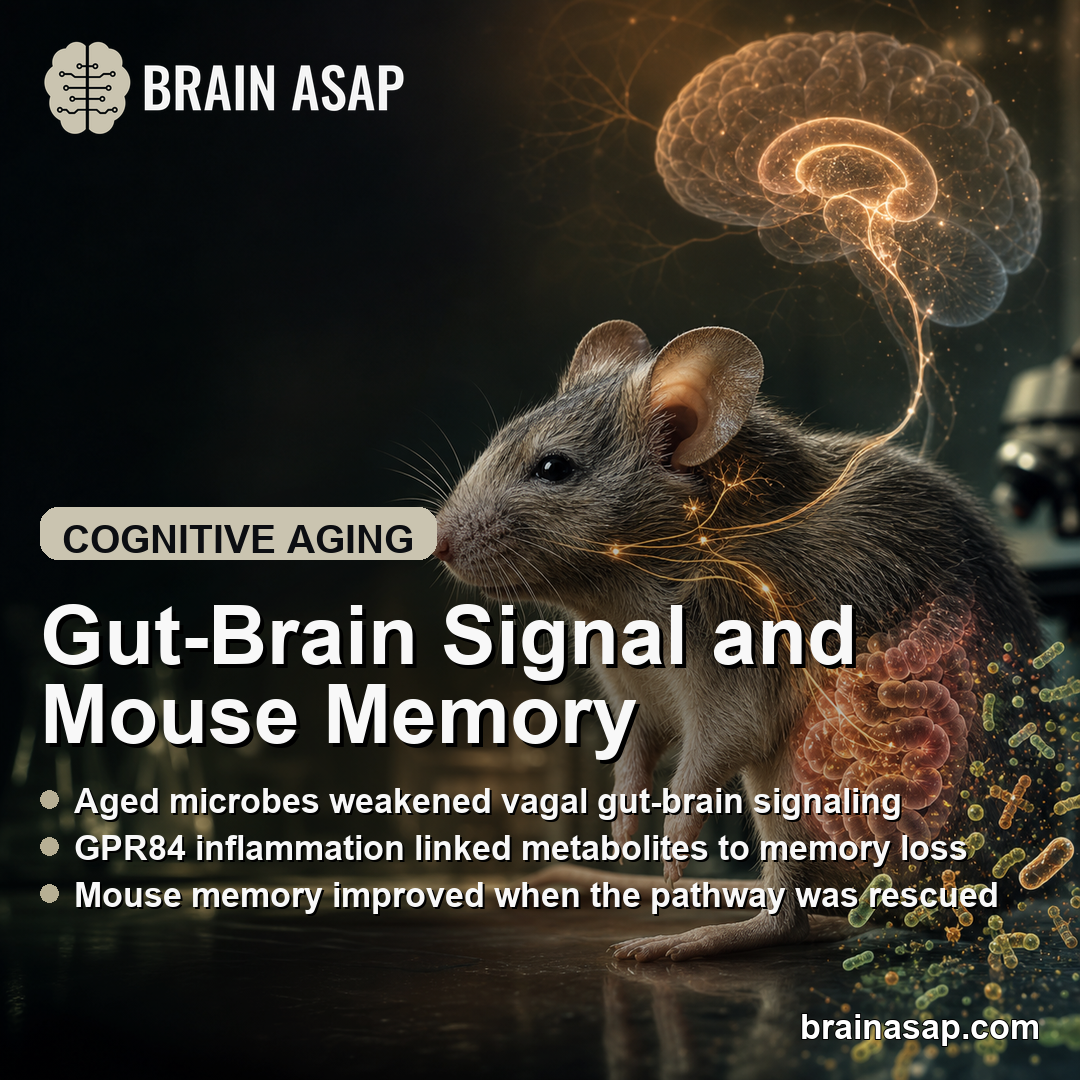
Aged Gut Microbiome Impaired Mouse Memory via Vagal Gut-Brain Signaling

TL;DR: A 2026 mouse study in Nature found that age-related gut microbiome changes impaired vagal gut-brain signaling and hippocampal memory encoding, while several interventions restored memory performance in aged or microbiome-aged mice. Key Findings Aged microbiome transfer impaired memory: Young mice exposed to aged gut microbes showed worse novel object recognition and Barnes maze performance …
Read more

Hypothalamic SF1 Neurons Help Drive Exercise Endurance Gains

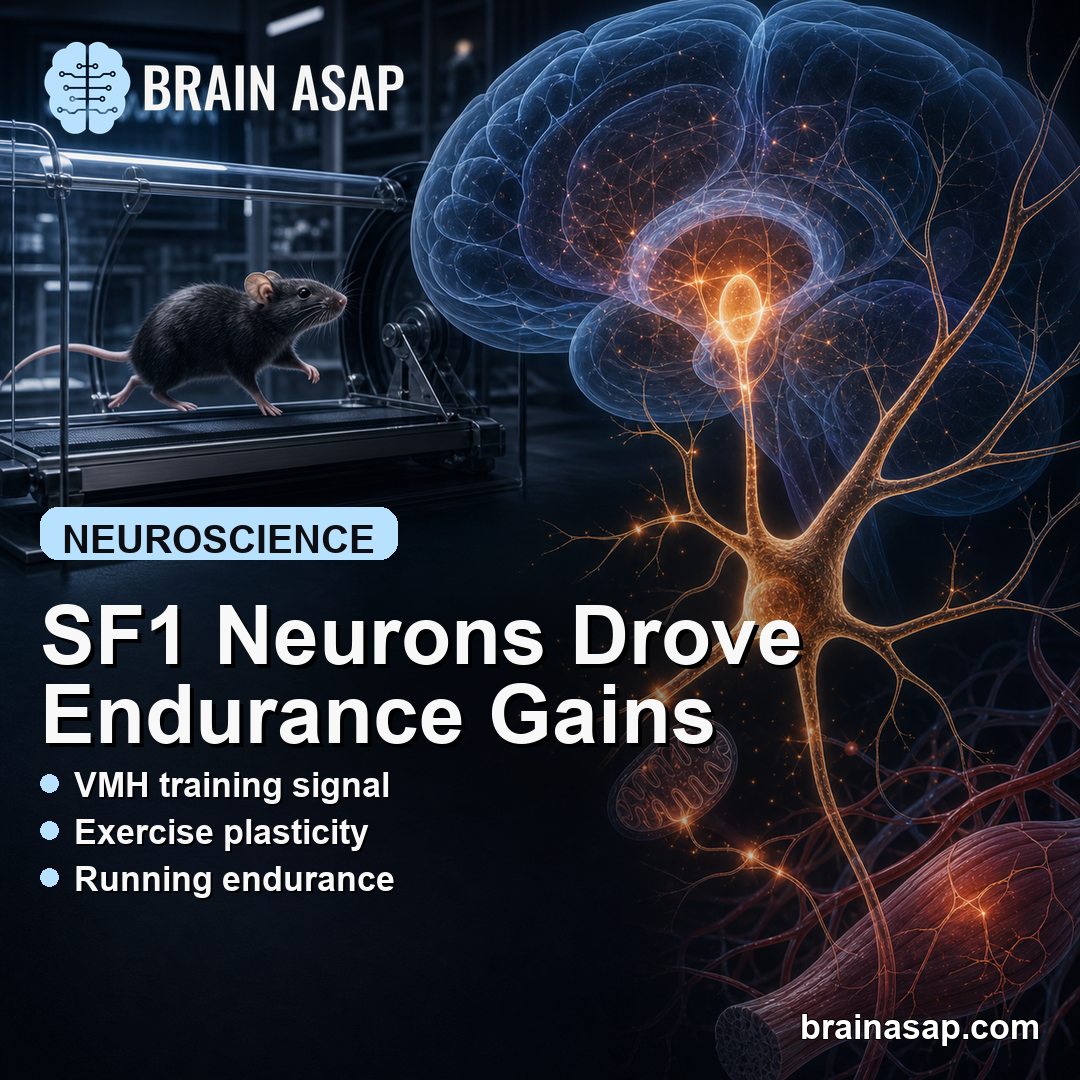
Hypothalamic SF1 Neurons Help Drive Exercise Endurance Gains

TL;DR: A 2026 mouse study in Neuron found that exercise activates ventromedial hypothalamic SF1 neurons, and that this brain response is required for normal endurance gains after training. Key Findings VMH SF1 neurons: Exercise increased activity-linked Bdnf expression in steroidogenic factor-1 neurons in the ventromedial hypothalamus. Training plasticity: Repeated exercise increased both intrinsic excitability and …

Read more

Brain Iron Deficiency Sensitized a Dopamine-Opioid Restless Legs Pathway

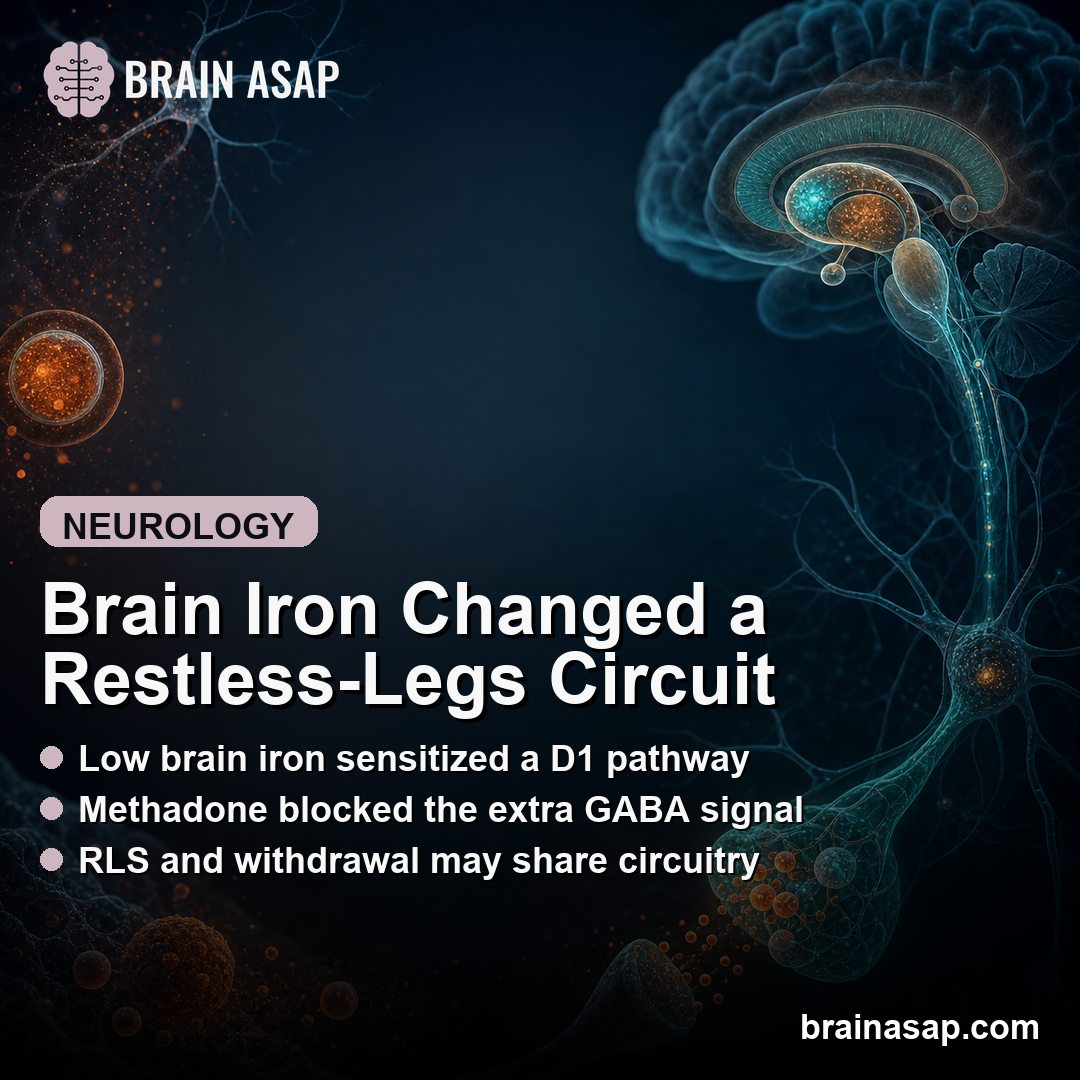
Brain Iron Deficiency Sensitized a Dopamine-Opioid Restless Legs Pathway

TL;DR: A 2026 mouse study in Neuropsychopharmacology found that brain iron deficiency made an opioid-responsive striatal pathway unusually sensitive to D1 dopamine receptor stimulation, pointing to a possible circuit mechanism for restless legs syndrome and opioid-withdrawal restlessness. Key Findings Iron-deficient mouse model: Researchers used a low-iron diet to create brain iron deficiency (BID), a rodent …

Read more

Mouse Smell Receptors Followed a Spatial Code Linked to Brain Maps

Mouse Smell Receptors Followed a Spatial Code Linked to Brain Maps

TL;DR: A 2026 mouse study in Cell found that olfactory receptor neurons, the smell-sensing cells in the nose, were arranged in spatial bands that lined up with matching sensory maps in the brain’s olfactory bulb. Key Findings Organized receptor bands: Researchers found that odor receptor neurons were not randomly scattered across the mouse nose; receptor …

Read more

Orbitofrontal PV Interneurons Reduced Social Behavior via DMN Connectivity

Orbitofrontal PV Interneurons Reduced Social Behavior via DMN Connectivity

TL;DR: A 2026 mouse study in Communications Biology found that activating parvalbumin (PV) interneurons, inhibitory nerve cells in the orbitofrontal cortex, reduced default mode network connectivity and decreased normal social approach and sniffing behavior. Key Findings PV interneurons were targeted: Researchers used PV-Cre mice and a chemogenetic DREADD receptor to activate inhibitory PV interneurons in …

Read more

Chronic Mild Stress Increased Dopamine D1 Binding Across Mouse Striatum

Chronic Mild Stress Increased Dopamine D1 Binding Across Mouse Striatum

TL;DR: A 2026 mouse study in Neurochemical Research found that 28 days of unpredictable chronic mild stress increased dopamine D1 receptor binding across the striatum and raised dopamine D2 receptor binding only in selected regions, regardless of fatty acid-binding protein 7 gene deletion. Key Findings Adult male mice were exposed to 28 days of unpredictable …

Read more

Psilocybin Suppressed SST Interneurons Through 5-HT1A Signaling

Psilocybin Suppressed SST Interneurons Through 5-HT1A Signaling

TL;DR: A 2026 mouse preprint in bioRxiv found that psilocybin reduced firing in somatostatin (SST) interneurons, inhibitory cortical cells that gate dendritic input, while increasing parvalbumin (PV) interneuron firing in the medial frontal cortex. Key Findings SST firing decreased: Opto-tagged SST interneurons fell from 5.5 to 3.7 Hz after psilocybin, while saline did not produce …

Read more

Allopregnanolone vs. Diazepam: Antidepressant Effects via Brain Activity Modulation (2024 Mouse Study)

Allopregnanolone shows antidepressant-like effects in mice by increasing social interaction and specific brain wave activities, unlike diazepam. Highlights: Allopregnanolone: Allopregnanolone, a neuroactive steroid, increases social interaction time in mice experiencing social defeat stress, indicating potential antidepressant-like effects. Brain Activity: This increase in social interaction is associated with heightened theta and beta oscillations in the basolateral …

Read more