TL;DR: A headband sensor picked up brief bursts of force inside the head during sleep in all 45 people tested. People with neurodegenerative diseases had fewer bursts per minute than healthy volunteers, in an early, not yet peer-reviewed study. Key Findings A…
Read article ↗
TL;DR: A 2026 study in Consciousness and Cognition found that waking mind wandering and nighttime dreaming had nearly the same density of bizarre elements, even though dreams were more likely to be rated as bizarre whole reports. Key Findings 379 experience re…
Read article ↗
TL;DR: A 2026 study protocol in Trials describes COSTS, a randomized trial that will compare cognitive behavioral therapy for insomnia (CBT-I) with standard cognitive behavioral therapy (CBT) in 60 people with treatment-resistant schizophrenia and persistent s…
Read article ↗
TL;DR: A 2026 study in Communications Psychology analyzed 1,687 dream reports and 1,679 waking reports, finding that dreams were more visual, spatial, social, bizarre, and emotionally negative than waking experiences. Key Findings 3,366 reports analyzed: the m…
Read article ↗
TL;DR: A 2026 study in The Journal of Neuroscience found that adults with ADHD showed more sleep-like brain waves, known as slow waves, while awake, and those brief local sleep states helped explain lapses in attention and vigilance. Key Findings 32 ADHD adult…
Read article ↗
TL;DR: A 2026 study in Journal of Clinical Sleep Medicine found that in 65 continuous positive airway pressure (CPAP) adherent patients with obstructive sleep apnea, those who still showed objective daytime sleepiness on a psychomotor vigilance task scored wor…
Read article ↗
TL;DR: A 2026 network analysis study in European Archives of Psychiatry and Clinical Neuroscience found that insomnia was present in 18.3% and childhood trauma in 49.5% of patients, while daytime dysfunction and sleep-related distress were central nodes, while…
Read article ↗
TL;DR: A 2026 medRxiv preprint found that targeted memory reactivation (TMR), replaying learned sounds during non-REM sleep, changed spindle and slow-wave density during a nap but did not improve motor memory retention in Parkinson’s disease or healthy older a…
Read article ↗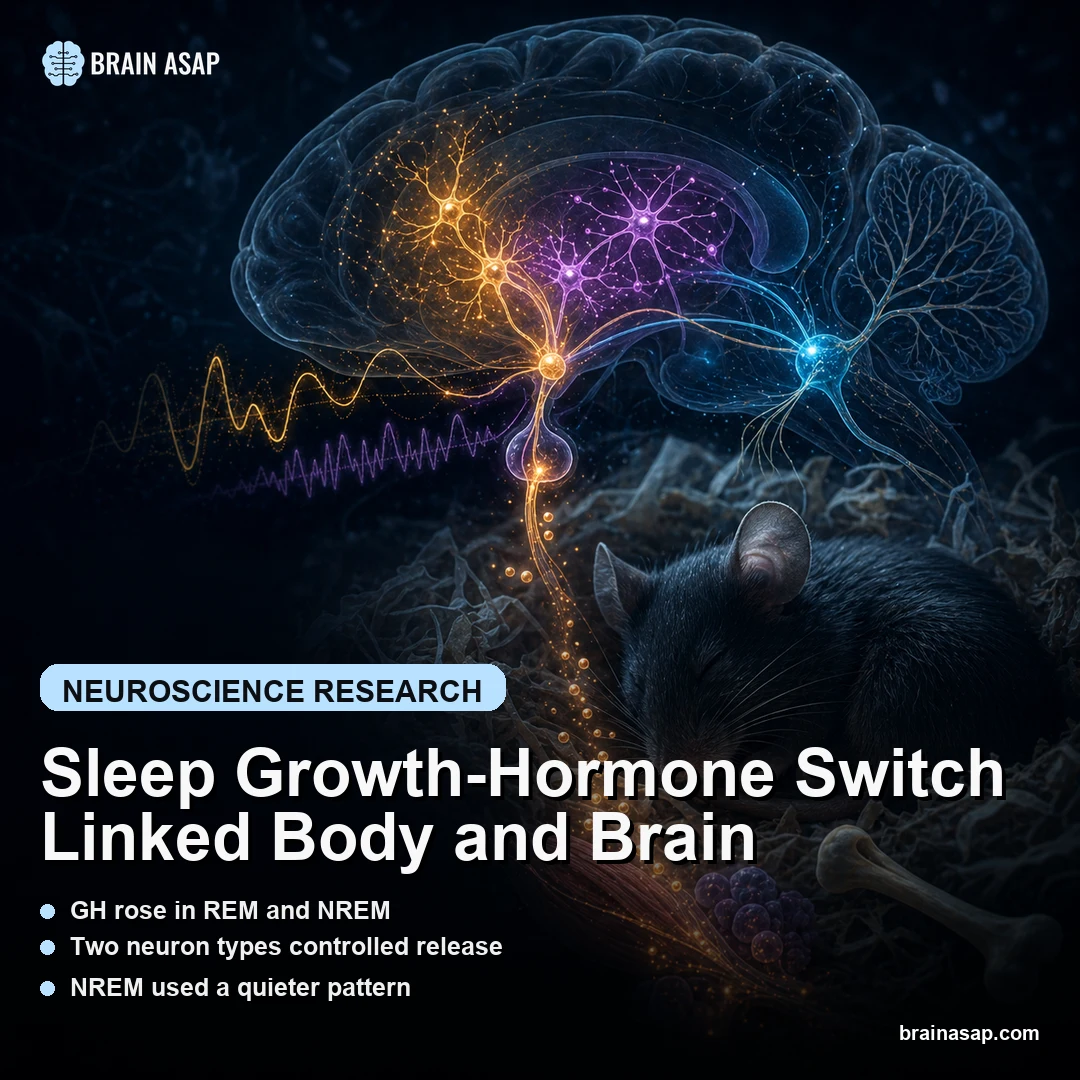
TL;DR: A 2025 mouse study in Cell mapped a sleep-growth hormone circuit, showing how hypothalamic GHRH and somatostatin neurons coordinate hormone pulses and then feed back onto wakefulness. Key Findings GH rose in REM and NREM: Growth hormone release was enha…
Read article ↗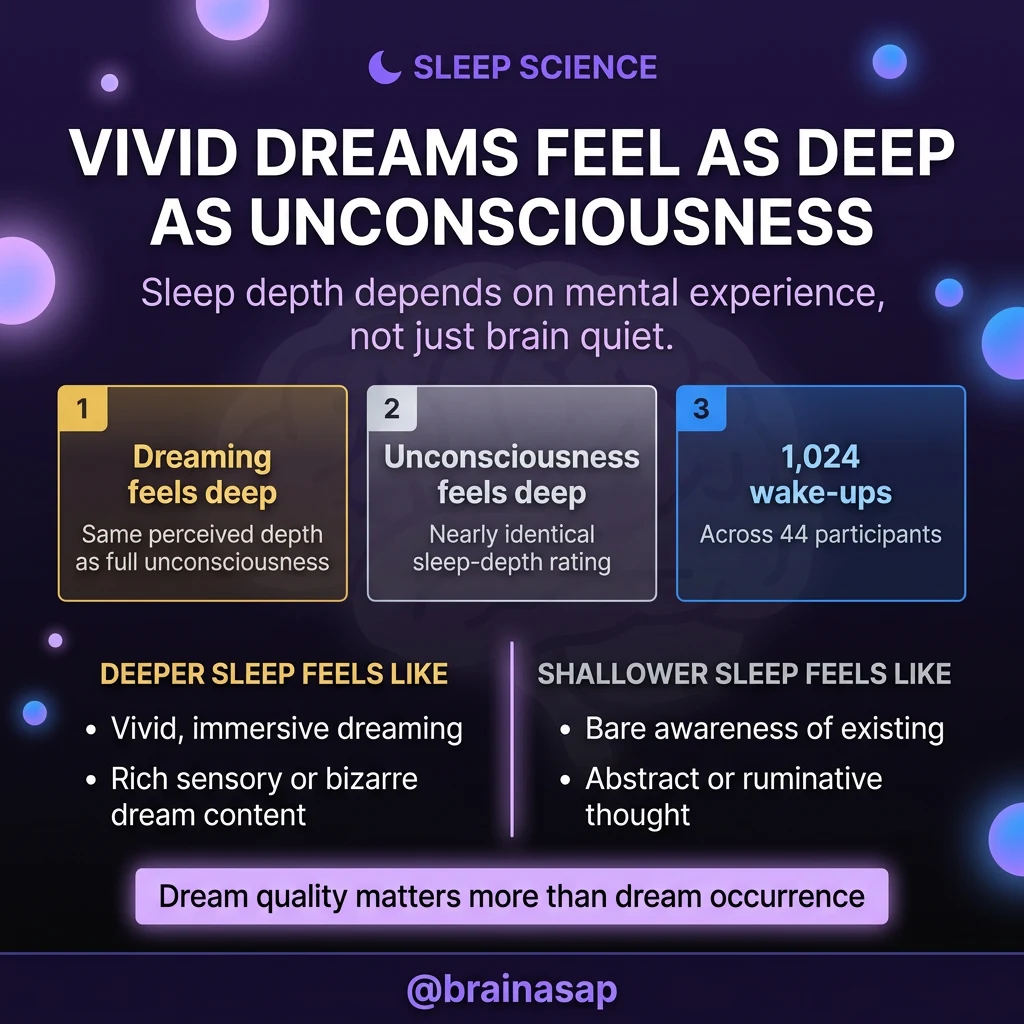
Your Brain Gets Louder as You Sleep — So Why Does Sleep Feel Deeper? The Answer Is Dreams. TL;DR: Vivid, immersive dreaming makes sleep feel just as deep as complete unconsciousness—both rate identically—while the dim awareness of merely existing feels the sha…
Read article ↗