
TL;DR: A 2026 medRxiv review found that mental-health AI agents are moving quickly toward large-language-model chatbots, but most systems still rely on text self-report, narrow depression/anxiety/suicide use cases, and offline tests rather than prospective cli…
Read article ↗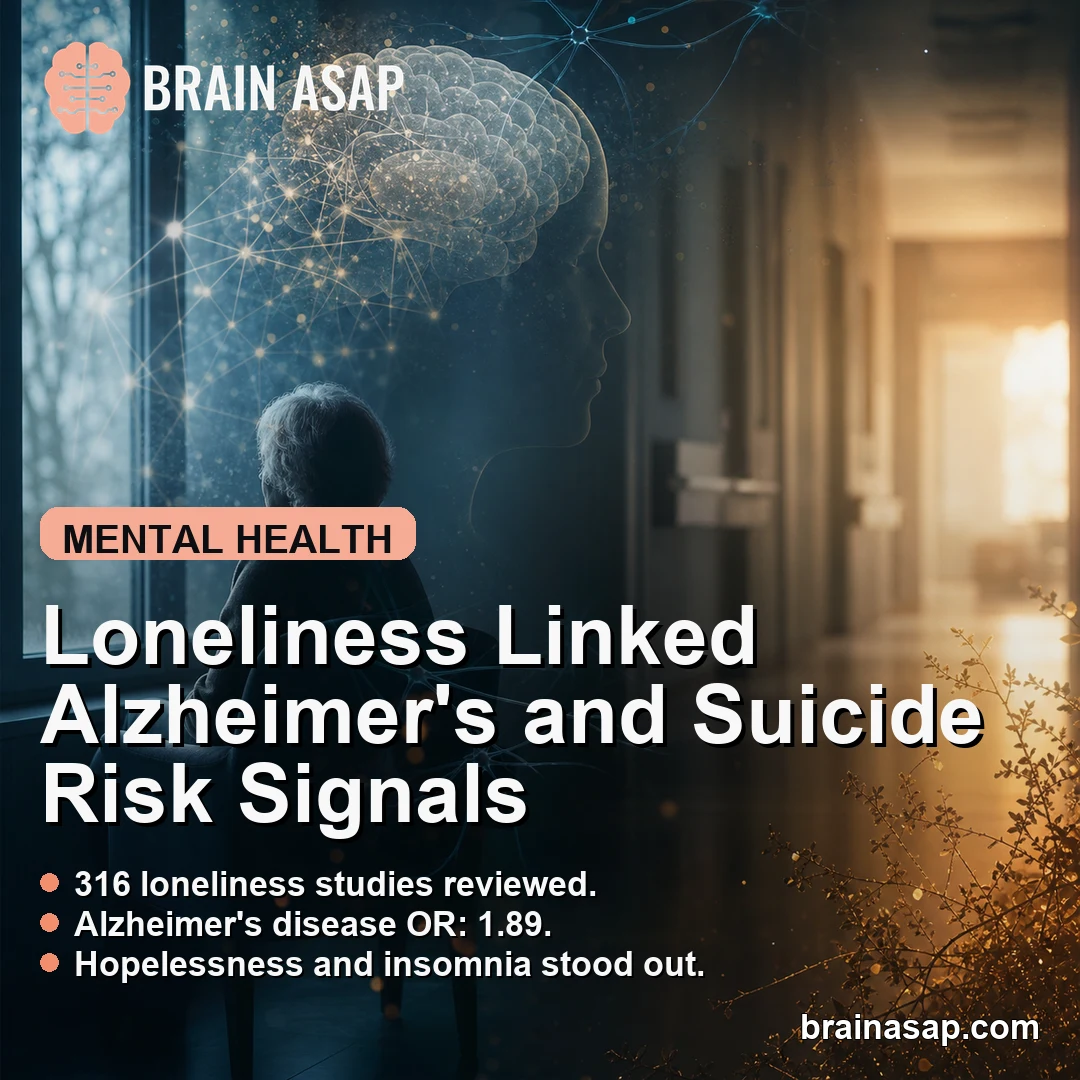
TL;DR: A 2026 systematic review and meta-analysis in Psychogeriatrics linked loneliness with Alzheimer’s disease and several forms of suicidal behavior, with especially strong shared correlations for hopelessness, insomnia, entrapment, and stress. Key Findings…
Read article ↗
TL;DR: A 2026 qualitative analysis in PLOS One used 505 ME/CFS memorial entries to map how systemic neglect, clinical dismissal, social isolation, and personal burden appeared in accounts of illness and death. Key Findings 505 memorial entries: The analysis us…
Read article ↗
Those with personality disorders face an elevated risk of suicidal thoughts, attempts, and deaths. Factors like childhood trauma and substance use issues may partially explain this vulnerability. While treatments like dialectical behavior therapy show promise…
Read article ↗
Electroretinography, a non-invasive retinal scanning technique, shows some promise for detecting suicidal behaviors based on changes in retinal cell signals. However, large scale studies are needed to determine its reliability. Key Facts: Electroretinography (…
Read article ↗
New research reveals that lower intelligence and poorer emotional control in adolescence are associated with an increased risk of suicidal thoughts and behaviors over the life course. However, while lower intelligence is linked to a consistently higher suicide…
Read article ↗
A new study published in BMC Psychiatry has found that short sleep duration is associated with increased risk of suicidal ideation and behavior among American adolescents. Findings indicate that suicide rates have been rising across all racial groups since 200…
Read article ↗
Tattoos have evolved from cultural taboo to mainstream fashion over the past century. As more individuals seek tattoos, understanding motivations and meanings is valuable for mental health providers. Key Facts: Nearly 30% of Americans have at least one tattoo,…
Read article ↗
Suicide is a leading cause of death globally, and people who use drugs are at heightened risk. Key facts: People who use opioids have 7-22 times the risk of suicide compared to the general population. Men who use drugs die by suicide more often, but women who…
Read article ↗
Suicide is a devastating public health problem, claiming hundreds of thousands of lives worldwide each year. Understanding the underlying biological and psychological factors that increase suicide risk is key for developing effective prevention and interventio…
Read article ↗