TL;DR: A 2025 study in Psychological Science found that depressive symptoms accelerated about 4 years before death in a multinational twin consortium, suggesting that late-life mood worsening can partly reflect terminal decline rather than chronological age al…
Read article ↗
TL;DR: A 2026 fly study in IBRO Neuroscience Reports found that long-term rotenone exposure produced stronger survival, climbing, oxidative-stress, and late immune-gene disruption in male Drosophila than in female flies. Key Findings 90 flies per sex were trac…
Read article ↗
TL;DR: A 2026 systematic review in Molecular Psychiatry found that microglia-related findings across major depression, bipolar disorder, and schizophrenia were better explained by biological subgroups than by one uniform diagnosis-by-diagnosis inflammation pat…
Read article ↗
TL;DR: A 2026 study in Psychiatry and Clinical Neurosciences Reports described a treatment-resistant residual-phase schizophrenia case in which valproate helped agitation but caused hypoglycemia and pancytopenia, while lithium augmentation was followed by lowe…
Read article ↗
TL;DR: A 2026 review in Journal of Pain Research argued that G protein-coupled receptor 30 (GPR30/GPER), a membrane estrogen receptor, could help connect estrogen fluctuations with migraine biology. Key Findings Female-predominant migraine: The review notes a…
Read article ↗
TL;DR: A 2026 claims analysis in Exploratory Research in Clinical and Social Pharmacy found that FDA-declared first-generation antipsychotic shortages were followed by medication switching in 9.13% of included patients with psychotic spectrum disorders, with e…
Read article ↗
TL;DR: A 2026 review in Psychonomic Bulletin & Review explained how the Diffusion Model for Conflict tasks (DMC) models attention and cognitive control in Simon, Eriksen flanker, and Stroop tasks. Key Findings 3 classic tasks: The review focused on Simon, Erik…
Read article ↗
TL;DR: A 2026 study in Psychological Medicine found that transcranial direct current stimulation (tDCS), a weak electrical brain-stimulation method, affected empathy differently depending on whether researchers targeted the right temporoparietal junction or th…
Read article ↗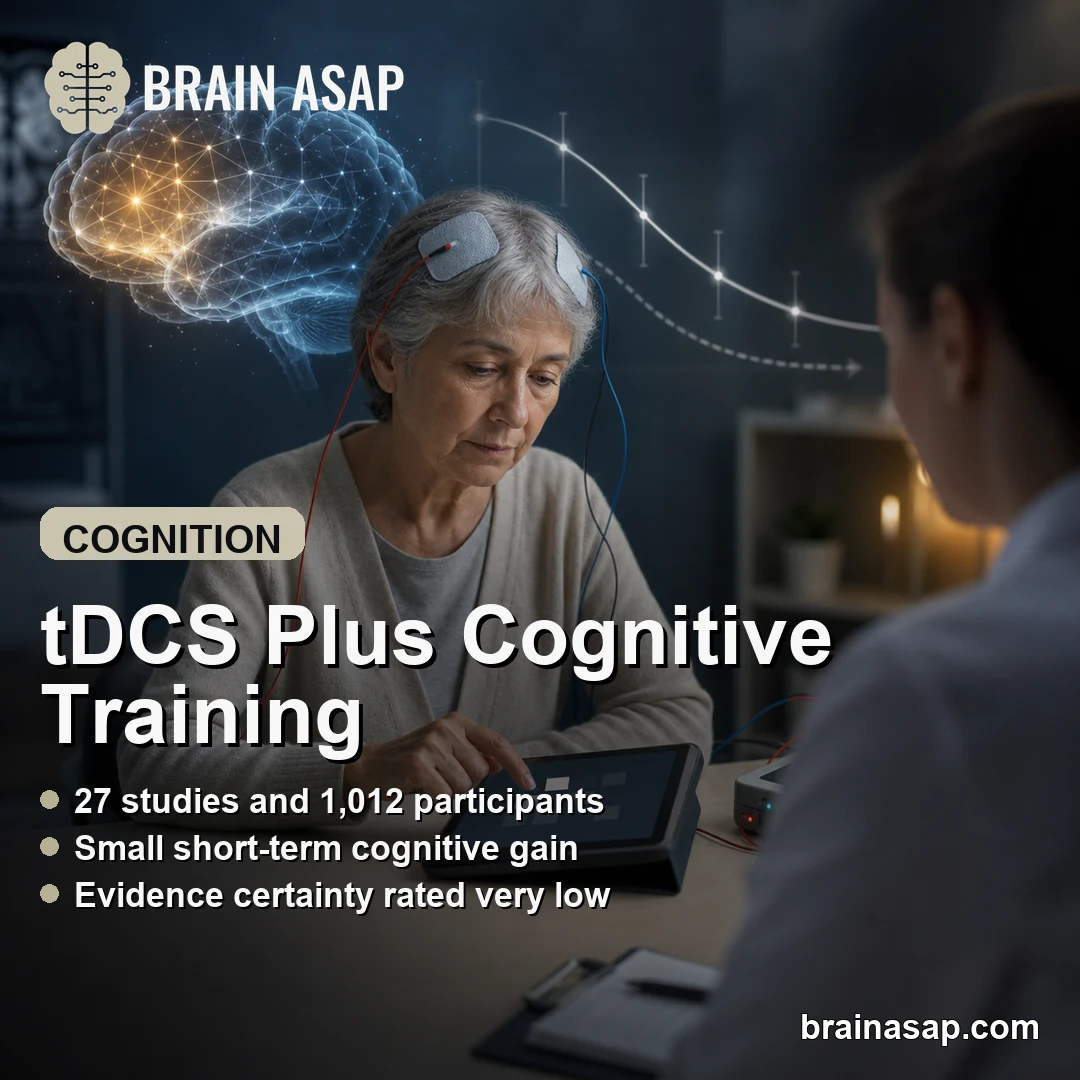
TL;DR: A 2026 systematic review posted on medRxiv found that transcranial direct current stimulation (tDCS), a weak noninvasive brain-stimulation method, added to cognitive training produced a small short-term cognitive benefit across 27 trials, but the effect…
Read article ↗
TL;DR: A 2026 study in The Pharmacogenomics Journal tested pharmacogenomic (PGx) depression care, meaning medication guidance based on drug-gene interactions; targeting Veterans already taking antidepressants with common PGx interactions raised the actionable-…
Read article ↗