TL;DR: Young mice carrying the human APOE4 gene, the biggest genetic risk factor for Alzheimer’s, had overexcited memory circuits months before any memory trouble showed up. Removing APOE4 from their neurons returned those cells to normal. Key Findings Early w…
Read article ↗
TL;DR: A single long-read DNA test covering 564 genes found 17 of 20 known disease-causing changes in 18 people with Parkinson’s or inherited repeat disorders. It missed three large or repetitive changes, so it needs more work before it could replace several s…
Read article ↗
TL;DR: In a 16-person trial, stroke survivors using a forearm stimulation sleeve during hand therapy all finished the 6-week program and rated it highly. Early arm-movement scores favored the sleeve, but the trial was too small to show that it works. Key Findi…
Read article ↗
TL;DR: Ambroxol, an old cough medicine, can boost a key brain enzyme in lab studies, but a review of 20 clinical reports found no proven benefit in Gaucher disease or GBA1-linked Parkinson’s. In a randomized trial of people with GBA1-linked Parkinson’s, ambrox…
Read article ↗
TL;DR: In regions where the pork tapeworm is common, about 1 in 4 people with seizures had signs of tapeworm cysts in the brain, based on 35 well-defined studies. That share roughly halved in studies from after 2008, though it is unclear how much of the drop i…
Read article ↗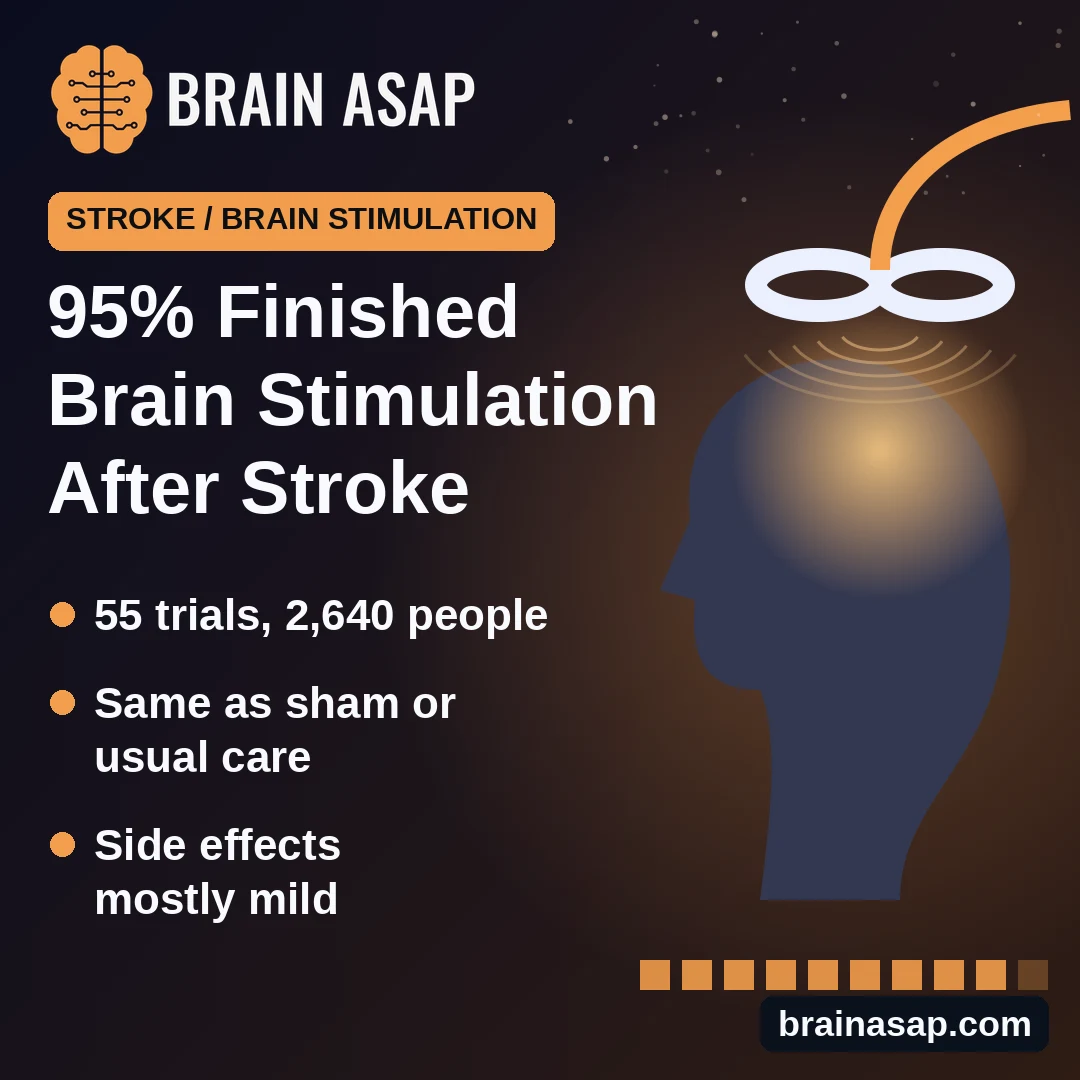
TL;DR: Across 55 trials of brain stimulation for arm recovery after stroke, about 95% of people finished treatment, the same share as those given fake stimulation or usual care. Side effects were mostly mild headaches and skin tingling. Key Findings 55 trials,…
Read article ↗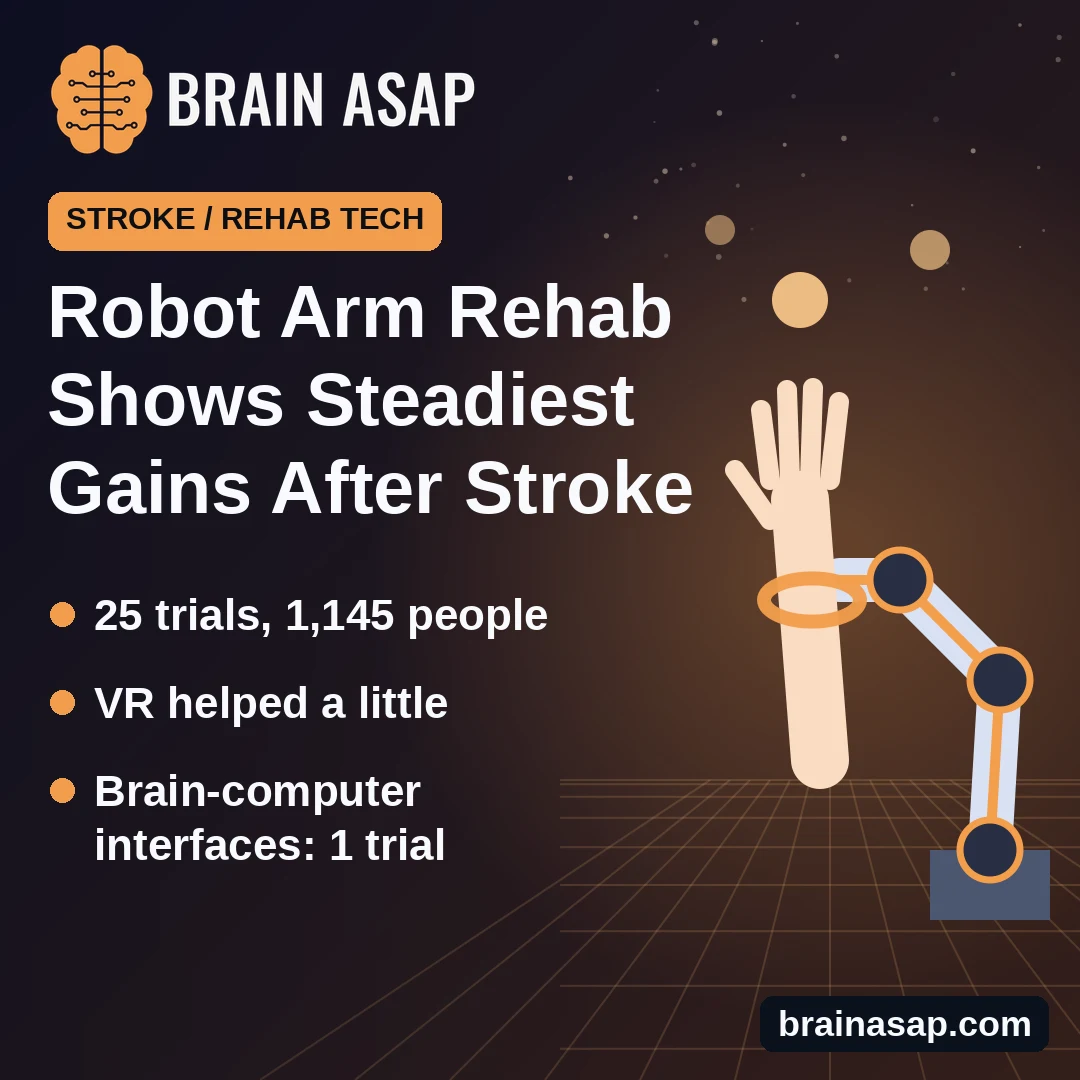
TL;DR: In a review of 25 trials on arm recovery after stroke, robot-assisted training had the most consistent evidence of beating standard physical therapy. Virtual reality helped a little, and brain-computer interfaces had too little data to judge. Key Findin…
Read article ↗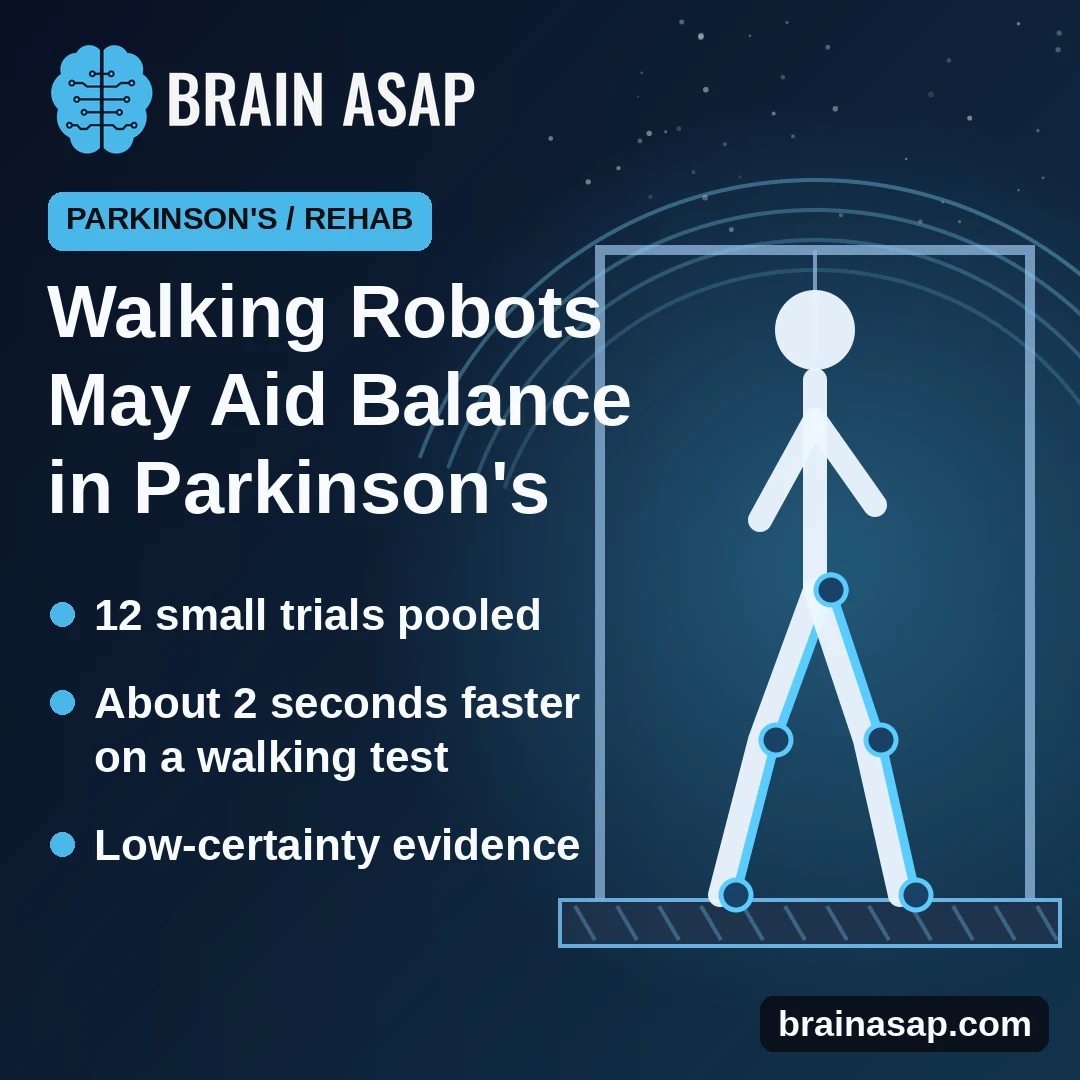
TL;DR: Across 12 small trials, people with Parkinson’s who trained on walking robots scored a bit better on balance and a timed walking test than people who got other therapy. The evidence is low quality, so the true benefit may be smaller. Key Findings 12 ran…
Read article ↗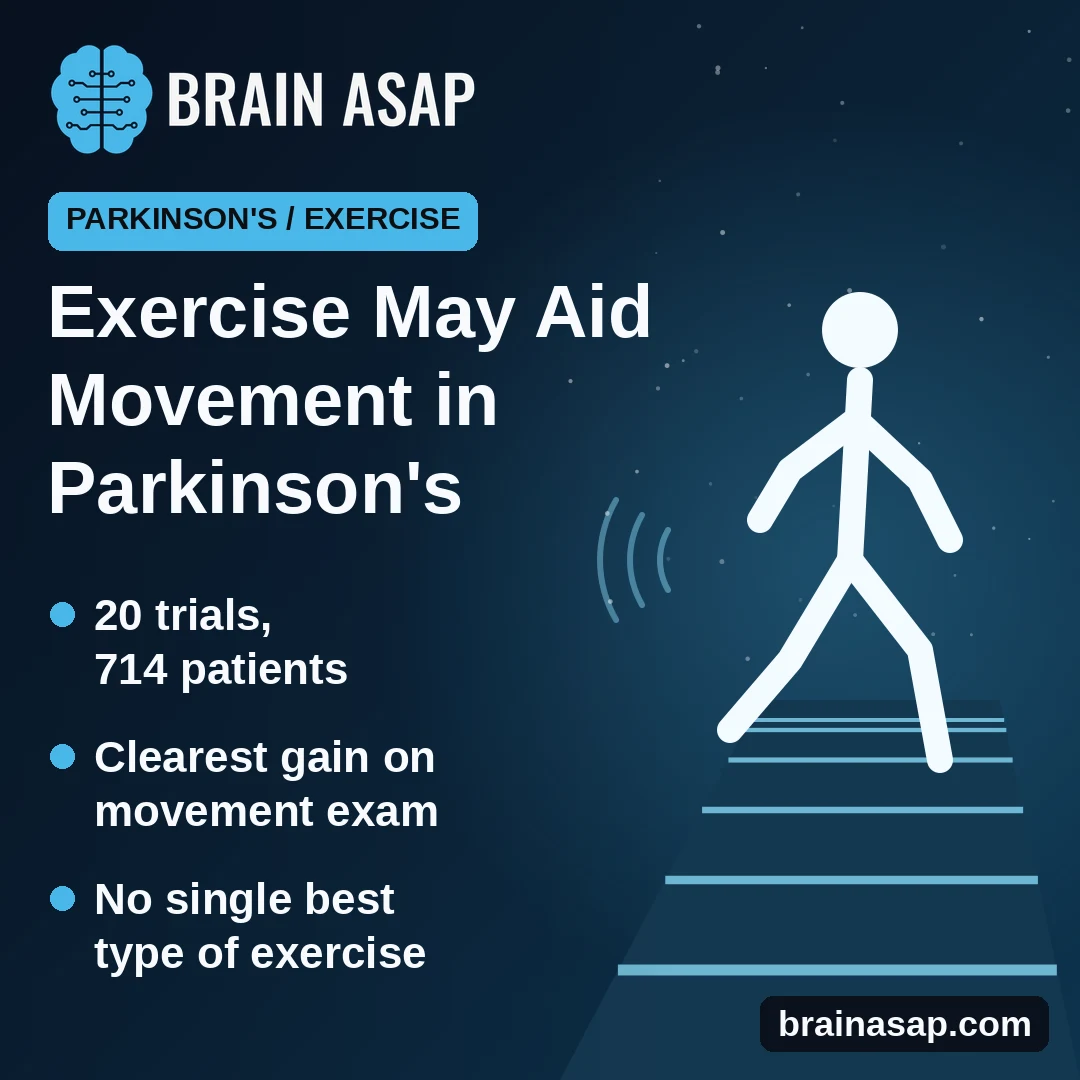
TL;DR: Pooling 20 small trials in Parkinson’s disease, structured exercise improved movement-exam scores, freezing while walking and one balance test compared with usual care. The strongest evidence was for the movement exam, and no one type of exercise stood…
Read article ↗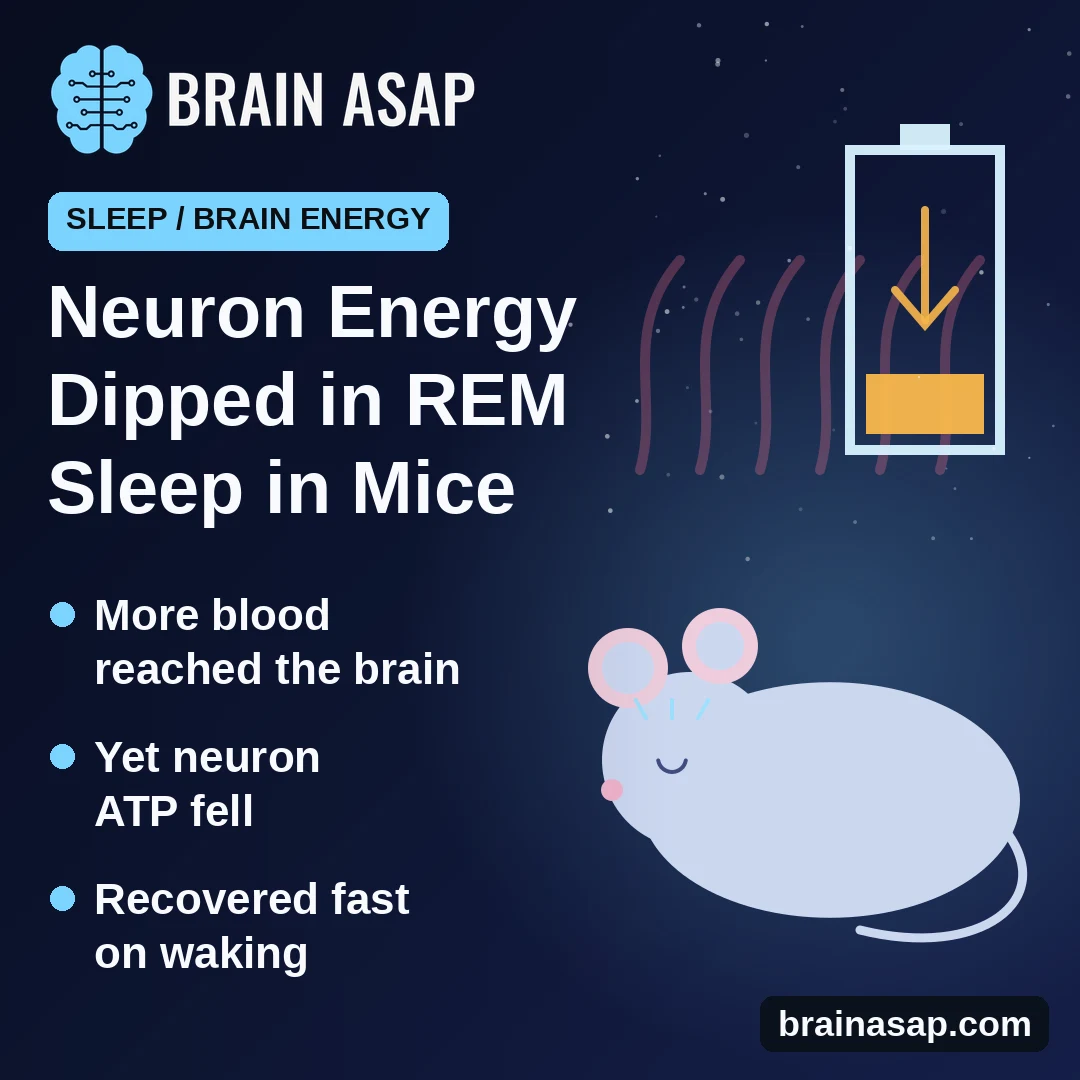
TL;DR: In sleeping mice, blood volume in the brain rose sharply during REM sleep, yet the energy molecule ATP inside neurons dropped. It bounced back as soon as the mice woke, suggesting REM sleep spends energy faster than blood supply alone can explain. Key F…
Read article ↗