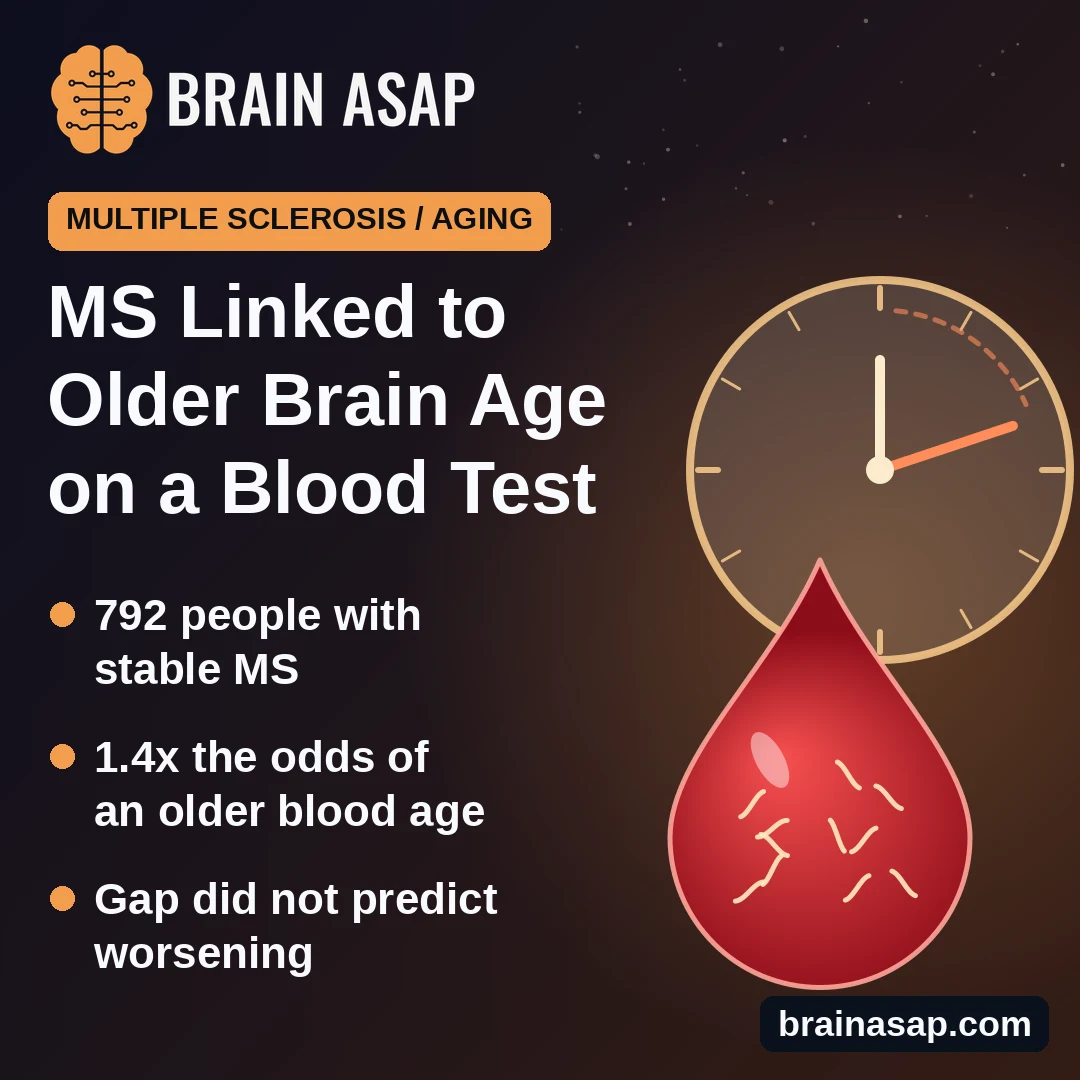
TL;DR: In 792 people with stable multiple sclerosis, a blood marker of nerve damage more often placed them in an older age band than their actual age, compared with 302 people without MS. The gap was larger in people with more disability or progressive MS, but…
Read article ↗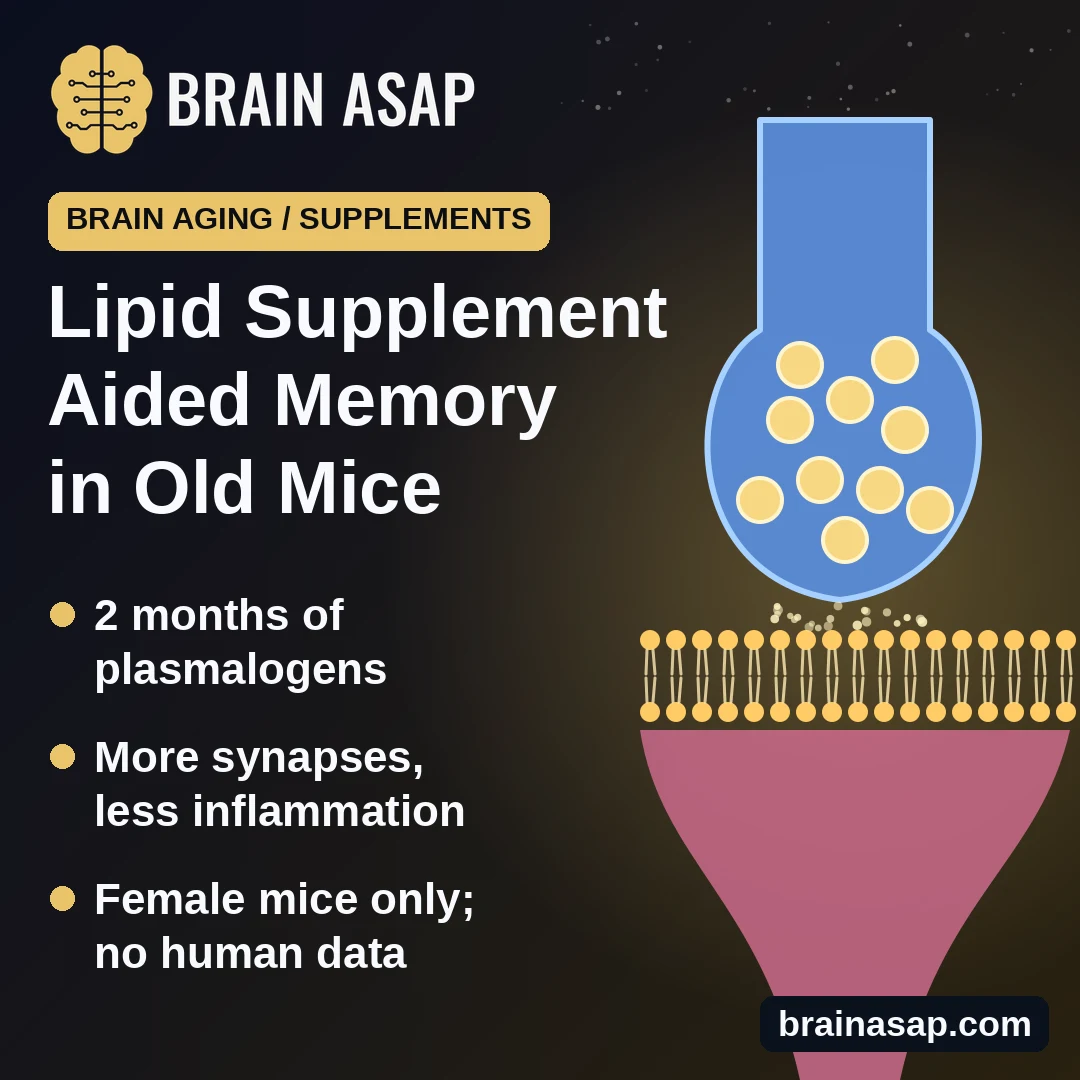
TL;DR: Old female mice given plasmalogens, a fat found in brain cell membranes, 5 days a week for 2 months did better on a memory maze than old mice given water. Their brains also showed more synapses and less inflammation, but this is a mouse study, not a hum…
Read article ↗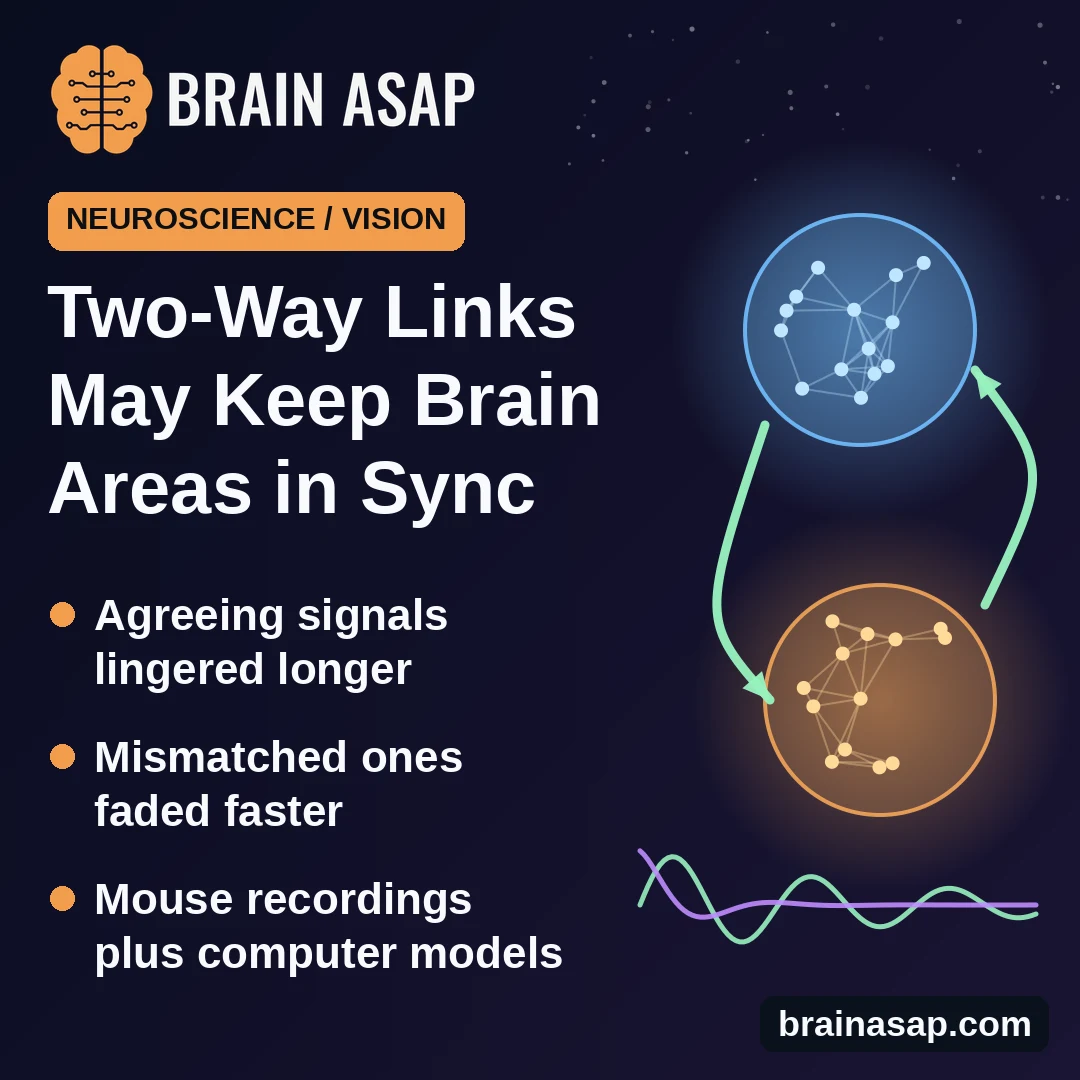
TL;DR: In mice, two visual areas of the brain kept signals they agreed on going longer and let mismatched signals fade faster. The two-way wiring between the areas appears to be what makes this happen. Key Findings Two areas recorded at once: 194 neurons in th…
Read article ↗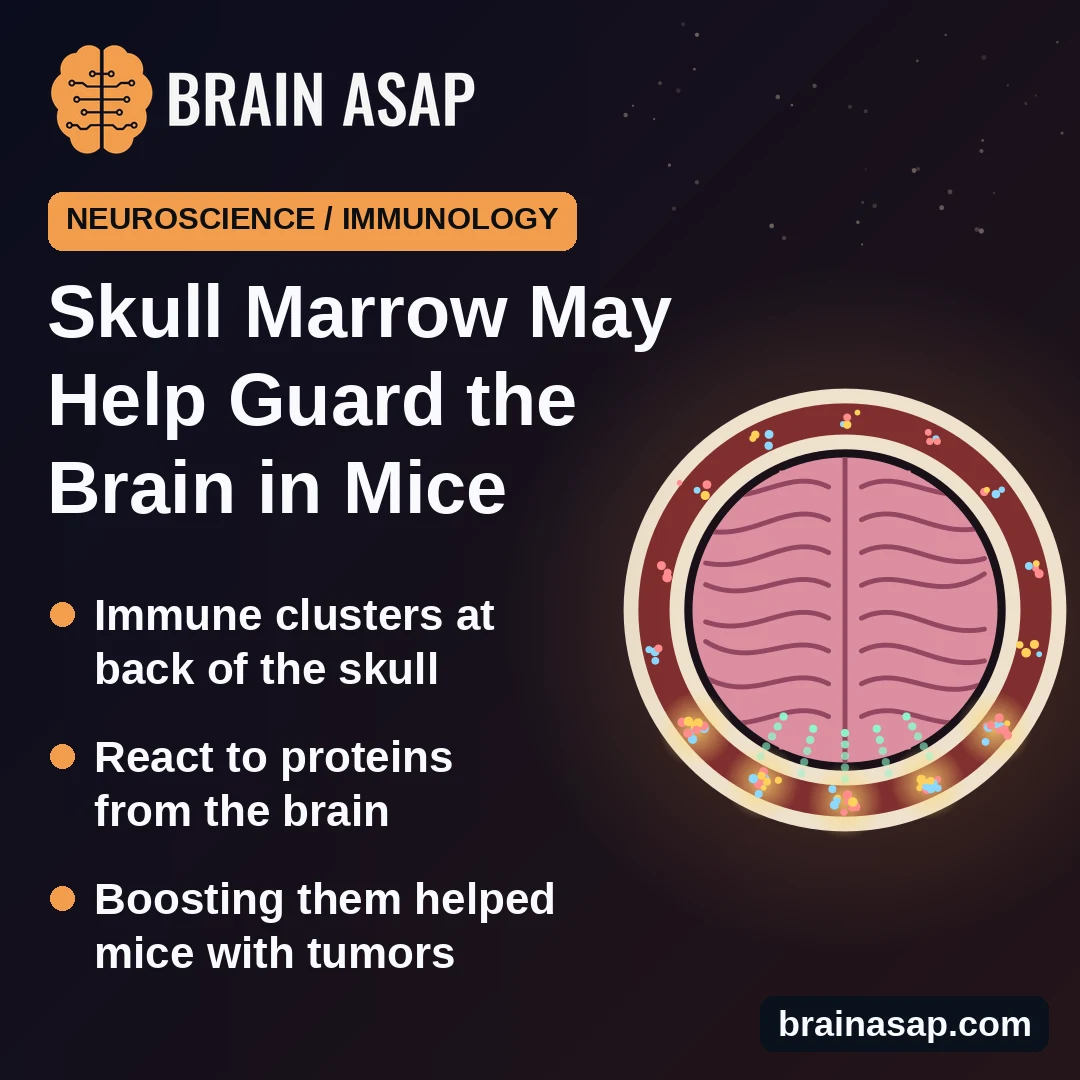
TL;DR: In mice, the bone marrow inside the skull holds small immune hubs that pick up proteins leaking out of the brain and react to them, including proteins from brain tumors. Boosting those hubs with a gel placed under the scalp helped mice with brain tumors…
Read article ↗
TL;DR: Stroke patients whose brain arteries showed tiny traveling clots on an ultrasound scan had nearly 3 times the odds of poor recovery than those without, across 13 studies. The signals may mark a more unstable stroke rather than cause the worse outcome. K…
Read article ↗
TL;DR: Readers slowed down more for surprising but sensible sentence endings than for impossible ones, and remembered those surprising words better. When people expect some nonsense, they seem to brush it off quickly. Key Findings 38 German-speaking students r…
Read article ↗
TL;DR: When 35 adults got fake feedback saying they were making more mistakes, they slowed down slightly, and they slowed most when told the buttons were faulty. Errors blamed on the machine also triggered a stronger brain “alert” signal than errors blamed on…
Read article ↗
TL;DR: When 18 healthy adults walked on a treadmill wearing a powered ankle exoskeleton, their stride lengths varied more from step to step, but their lower legs and feet moved more steadily. Their overall walking rhythm did not change. Key Findings More step-…
Read article ↗
TL;DR: Healthy adults normally react a bit slower to a spot that recently caught their attention, a habit that helps attention move on. A single dose of a drug that boosts dopamine, and another that blocks it, both weakened this habit compared with placebo. Ke…
Read article ↗
TL;DR: Six weeks of home “static hold” arm training made untrained young men about 27% stronger and increased how fast they built up force by about 60%. Brain-to-muscle signals changed too, but tests of a proposed brainstem pathway gave mixed results. Key Find…
Read article ↗