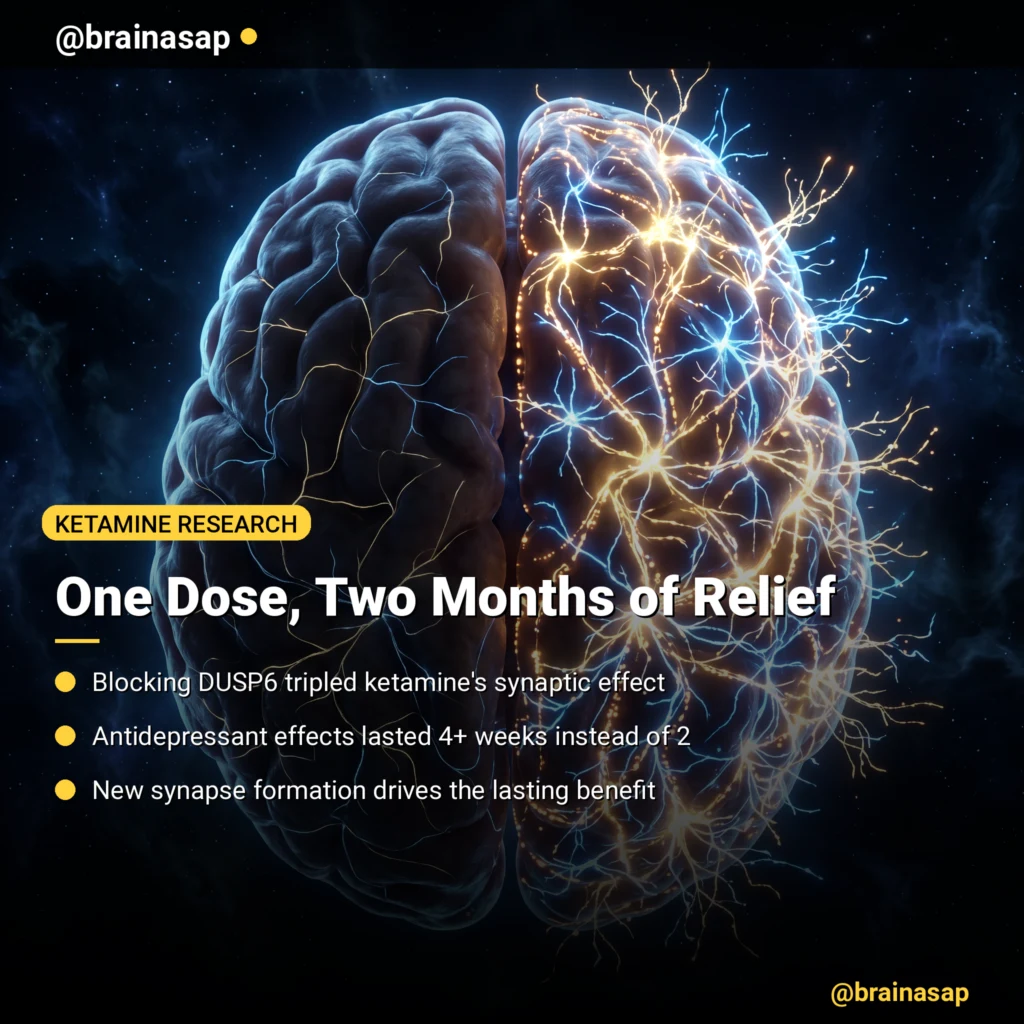
How Scientists Turned a Brief Ketamine High into a Two-Month Antidepressant Effect TL;DR: Blocking DUSP6 protein alongside ketamine extends antidepressant effects from 2 weeks to 4+ weeks in mice, potentially offering single-dose treatment instead of repeated…
Read article ↗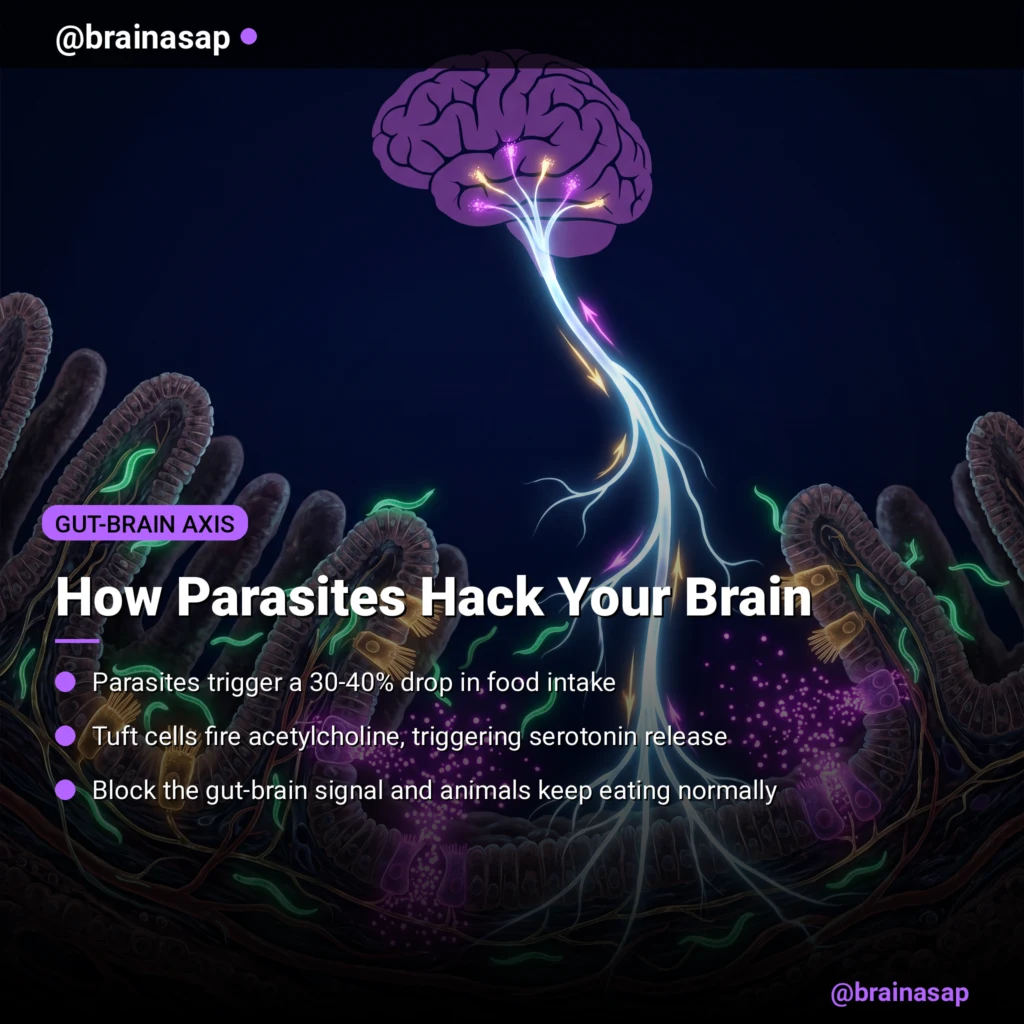
How Parasites Hack Your Gut-Brain Connection TL;DR: Parasitic infections trigger a sophisticated cellular conversation in the gut that signals the brain to stop eating—a protective response that reveals how infection hijacks the gut-brain axis through epitheli…
Read article ↗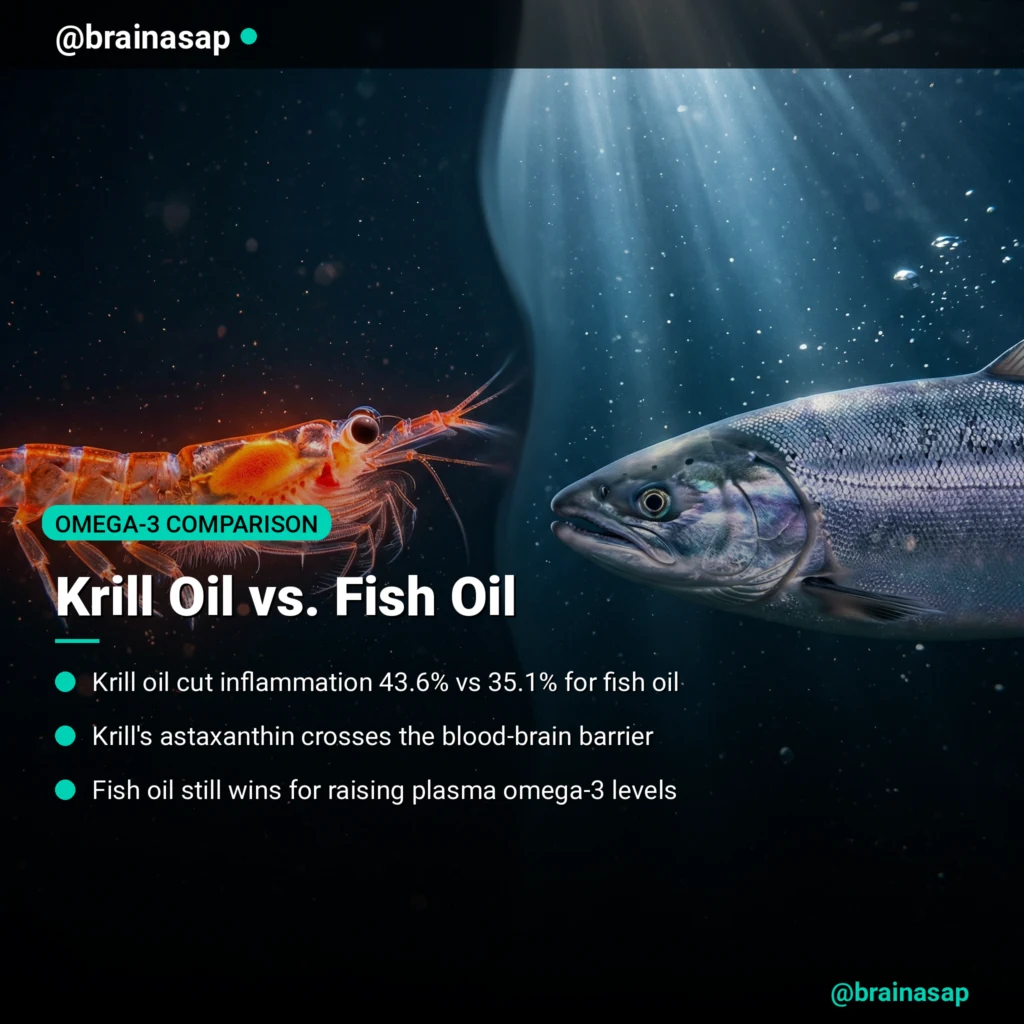
Krill Oil vs Fish Oil: Which Omega-3 Source Wins Against Inflammation and Oxidative Stress? TL;DR: Krill oil has a slight edge for inflammation due to astaxanthin, but fish oil wins for raising blood omega-3 levels and long-term cardiovascular outcomes. Fish o…
Read article ↗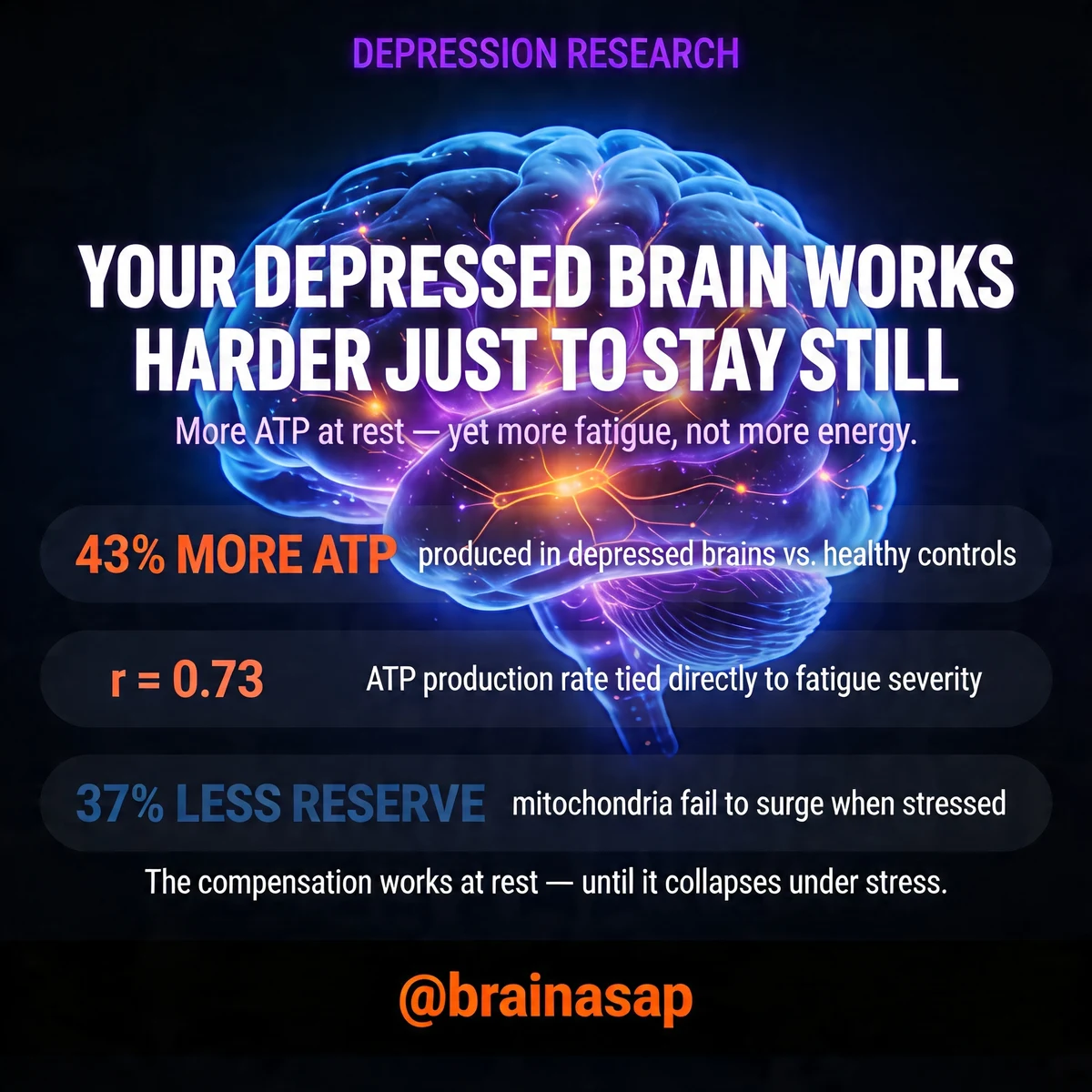
The Energy Paradox: Why Depressed Brains Burn Faster TL;DR: Young adults with depression produce ATP—the cell’s energy currency—at faster rates in both brain and blood, yet still feel more fatigued. New research reveals this is a compensatory mechanism that wo…
Read article ↗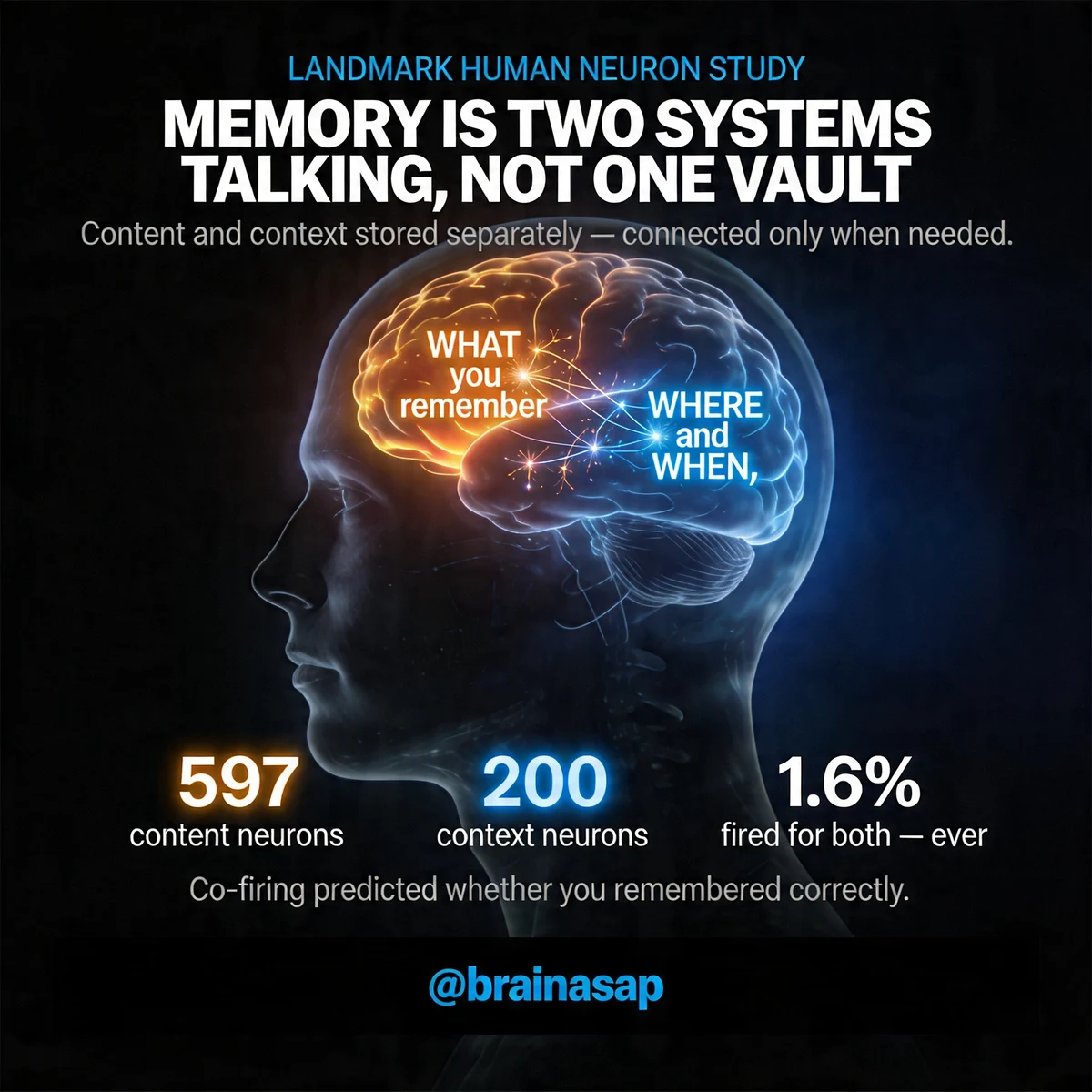
How the Brain Separates What We Remember from Why We Remember It TL;DR: The brain stores content (what you remember) and context (when/where) in separate neural populations linked by real-time coordination, not pre-wired conjunctive cells—a design that trades…
Read article ↗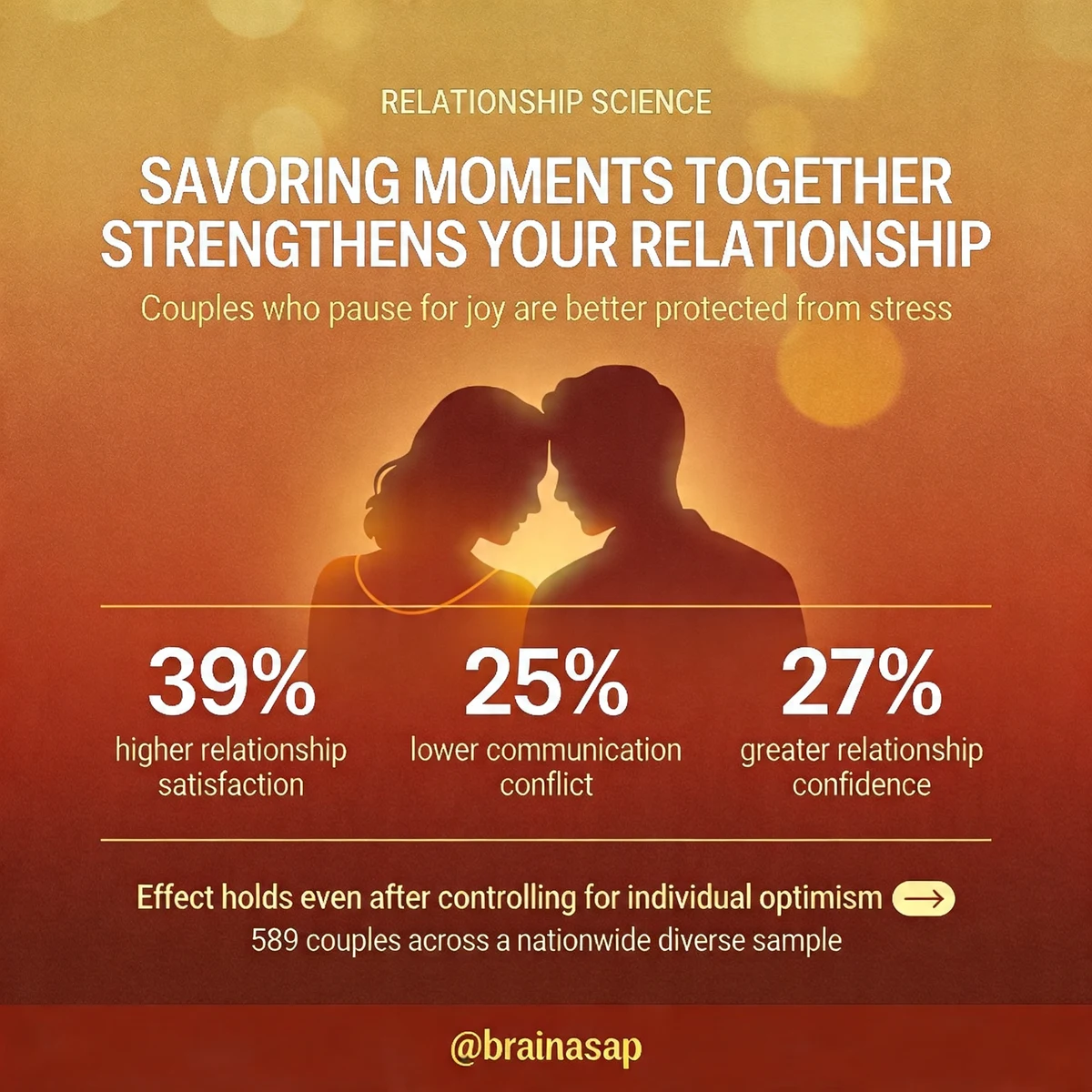
Savoring Together: The Secret Couples Overlook TL;DR: Couples who deliberately focus attention on shared positive experiences—a practice called joint savoring—report higher relationship satisfaction, greater confidence in their future together, and better prot…
Read article ↗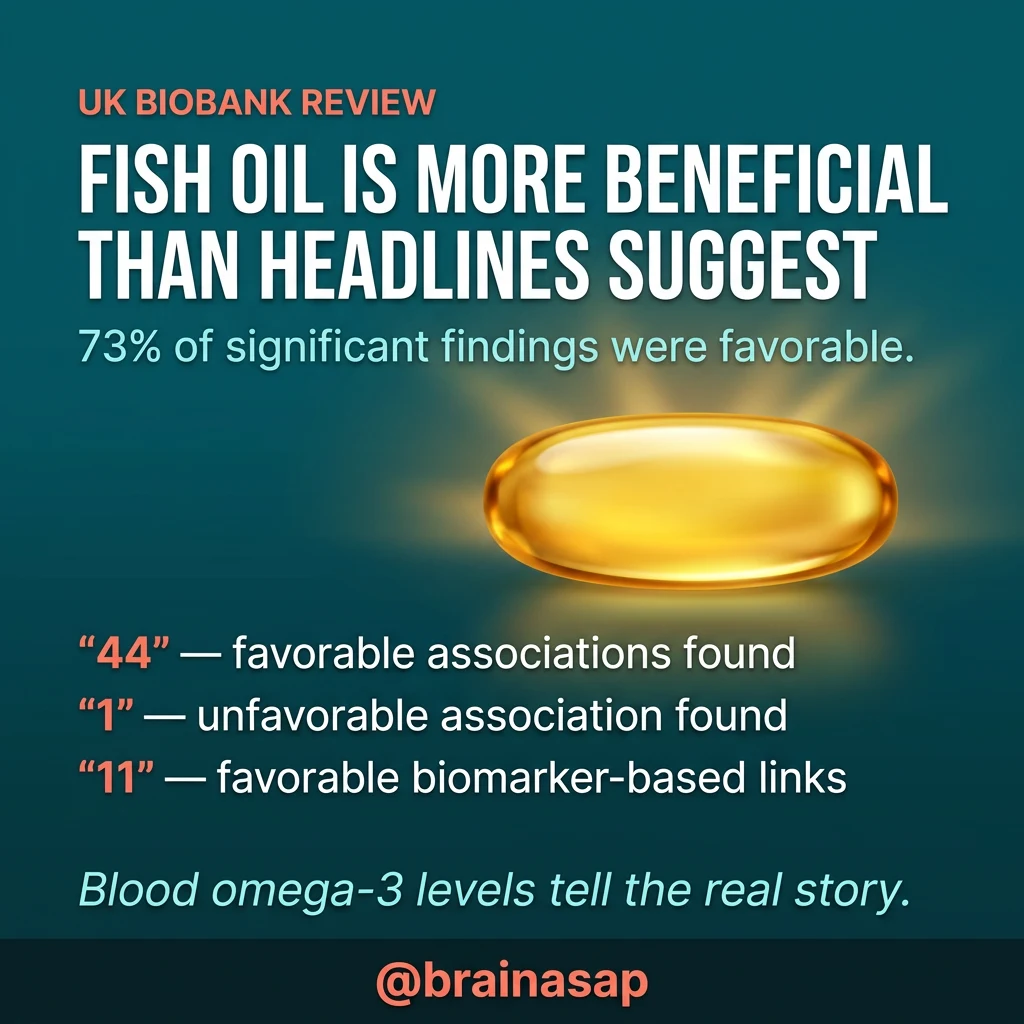
Fish Oil Supplements Aren’t the Villain TL;DR: A comprehensive review of the UK Biobank found that fish oil supplements show favorable associations with health outcomes—not harmful ones—contradicting recent alarming headlines about atrial fibrillation risk. Wh…
Read article ↗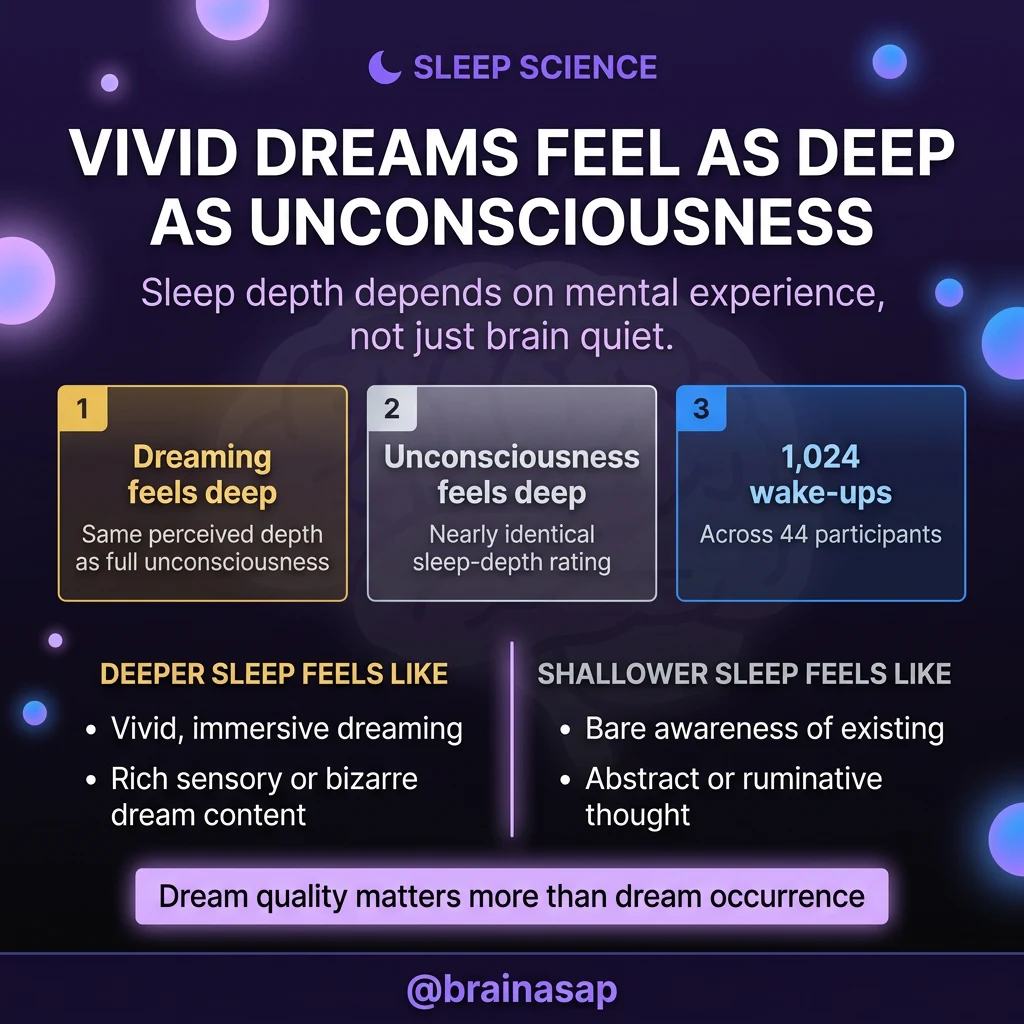
Your Brain Gets Louder as You Sleep — So Why Does Sleep Feel Deeper? The Answer Is Dreams. TL;DR: Vivid, immersive dreaming makes sleep feel just as deep as complete unconsciousness—both rate identically—while the dim awareness of merely existing feels the sha…
Read article ↗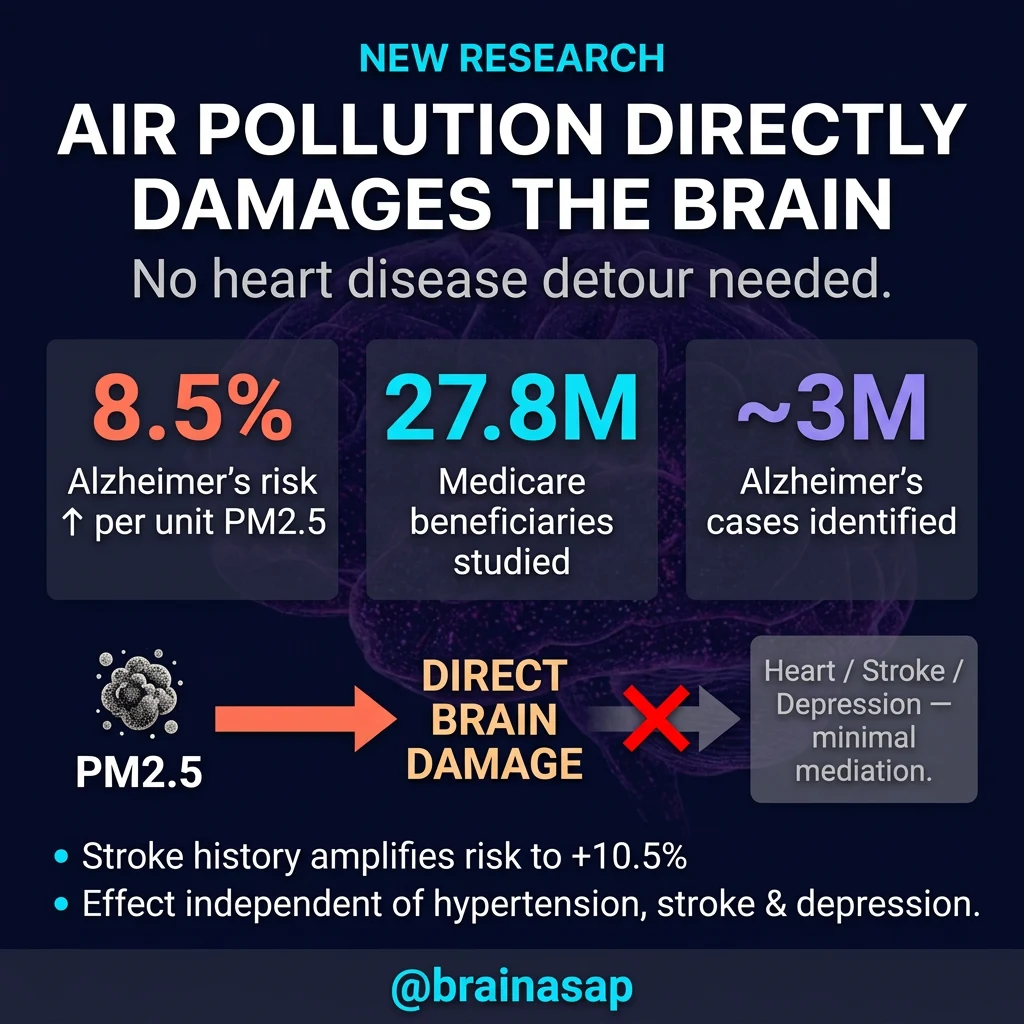
Dirty Air, Fragile Brain: PM2.5’s Direct Link to Alzheimer’s TL;DR: A massive study of 27.8 million Medicare beneficiaries found that exposure to fine air pollution (PM2.5) increases Alzheimer’s risk by 8.5% per unit increase—and this effect operates largely t…
Read article ↗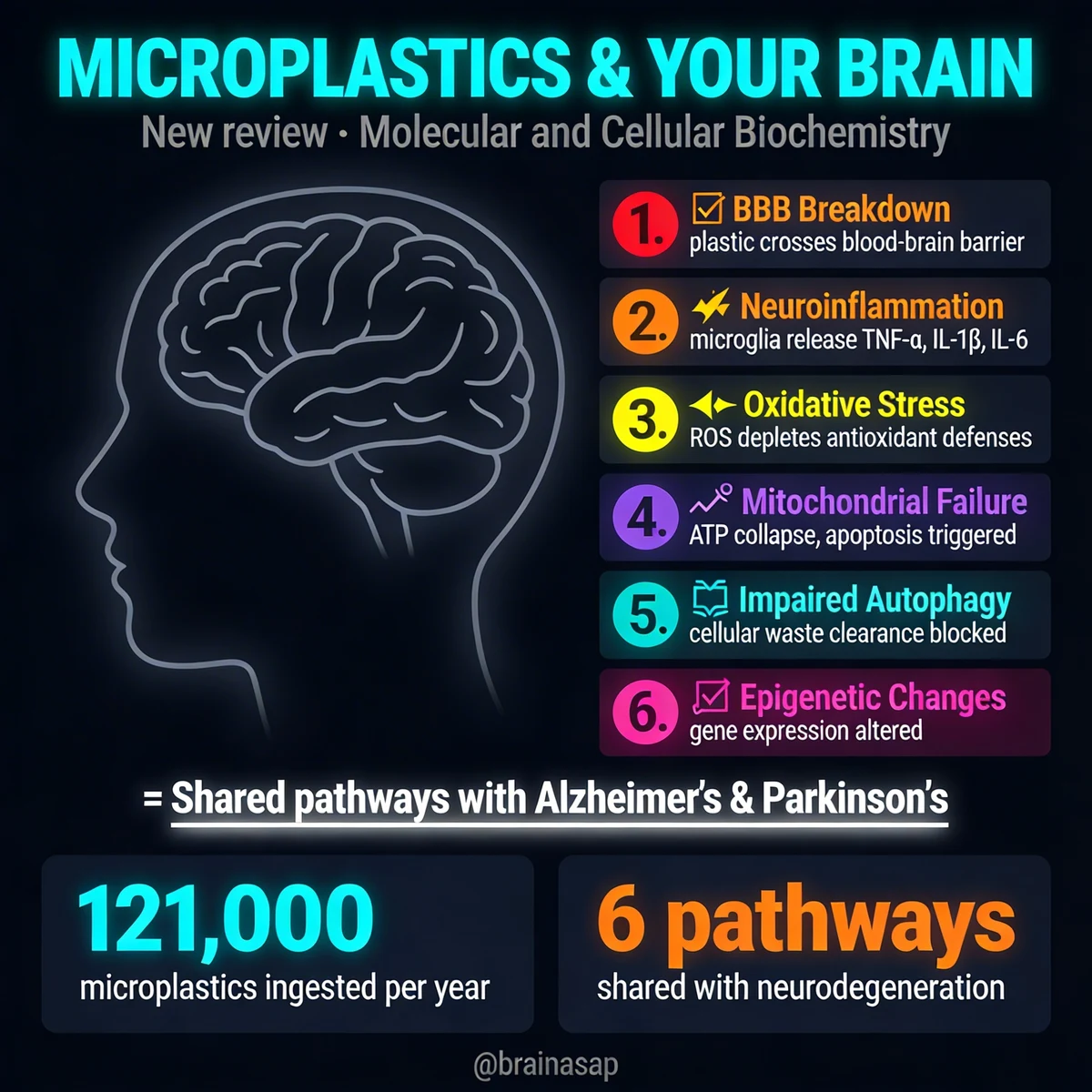
Microplastics and Brain Damage: The Hidden Link TL;DR: Microplastics circulating in your blood may accelerate Alzheimer’s and Parkinson’s disease through six shared pathways—including blood-brain barrier breakdown, chronic inflammation, and oxidative stress. Y…
Read article ↗