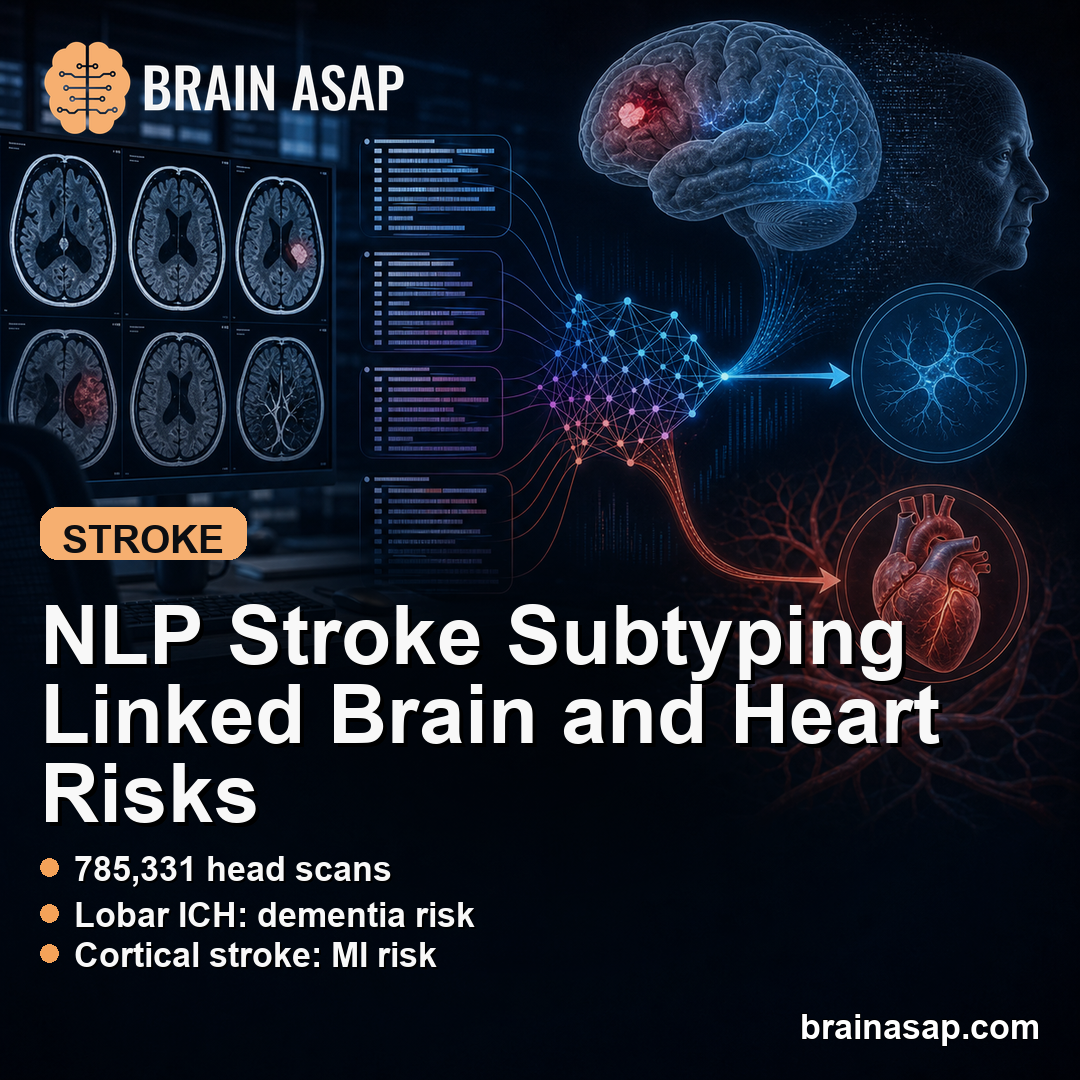
NLP Stroke Subtyping Linked Lobar ICH to Dementia and Cortical Stroke to MI

NLP Stroke Subtyping Linked Lobar ICH to Dementia and Cortical Stroke to MI

TL;DR: A 2026 preprint in medRxiv used natural language processing (NLP) on Scottish CT and MRI reports to subtype stroke at scale, linking lobar intracerebral hemorrhage to higher later dementia risk and cortical ischemic stroke to higher early myocardial infarction risk. Key Findings 785,331 head scans: Researchers applied NLP to CT and MRI head-scan reports …

Read more

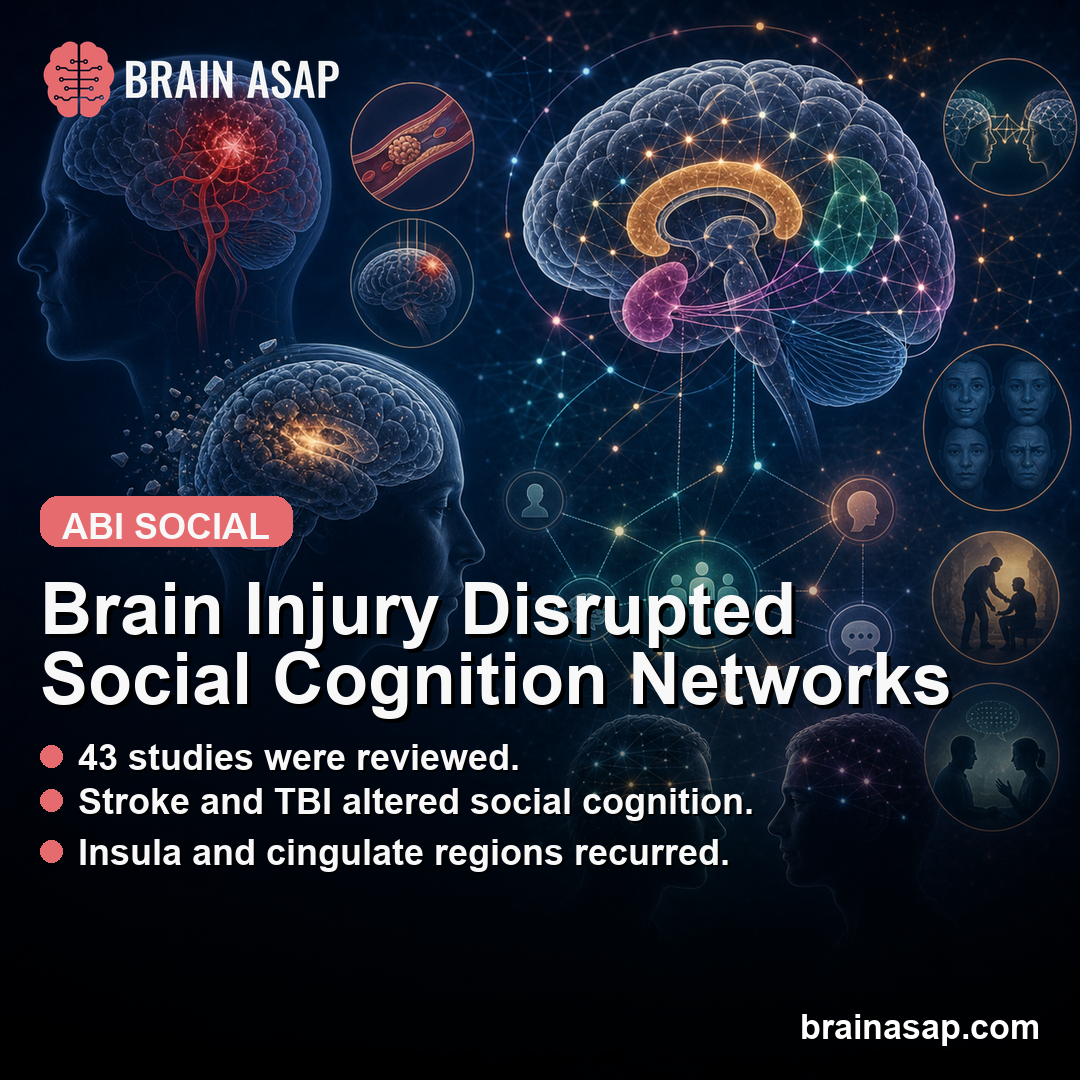
Social Cognition Deficits After Brain Injury Involved Distributed Networks

Social Cognition Deficits After Brain Injury Involved Distributed Networks

TL;DR: A 2026 systematic review in Cognitive, Affective, & Behavioral Neuroscience found that stroke and traumatic brain injury populations showed consistent social cognition alterations across domains, while insula, cingulate cortex, middle frontal gyrus, and corpus callosum were repeatedly implicated. Key Findings Study type: a PRISMA-guided systematic review of social cognition domains after stroke and traumatic …

Read more

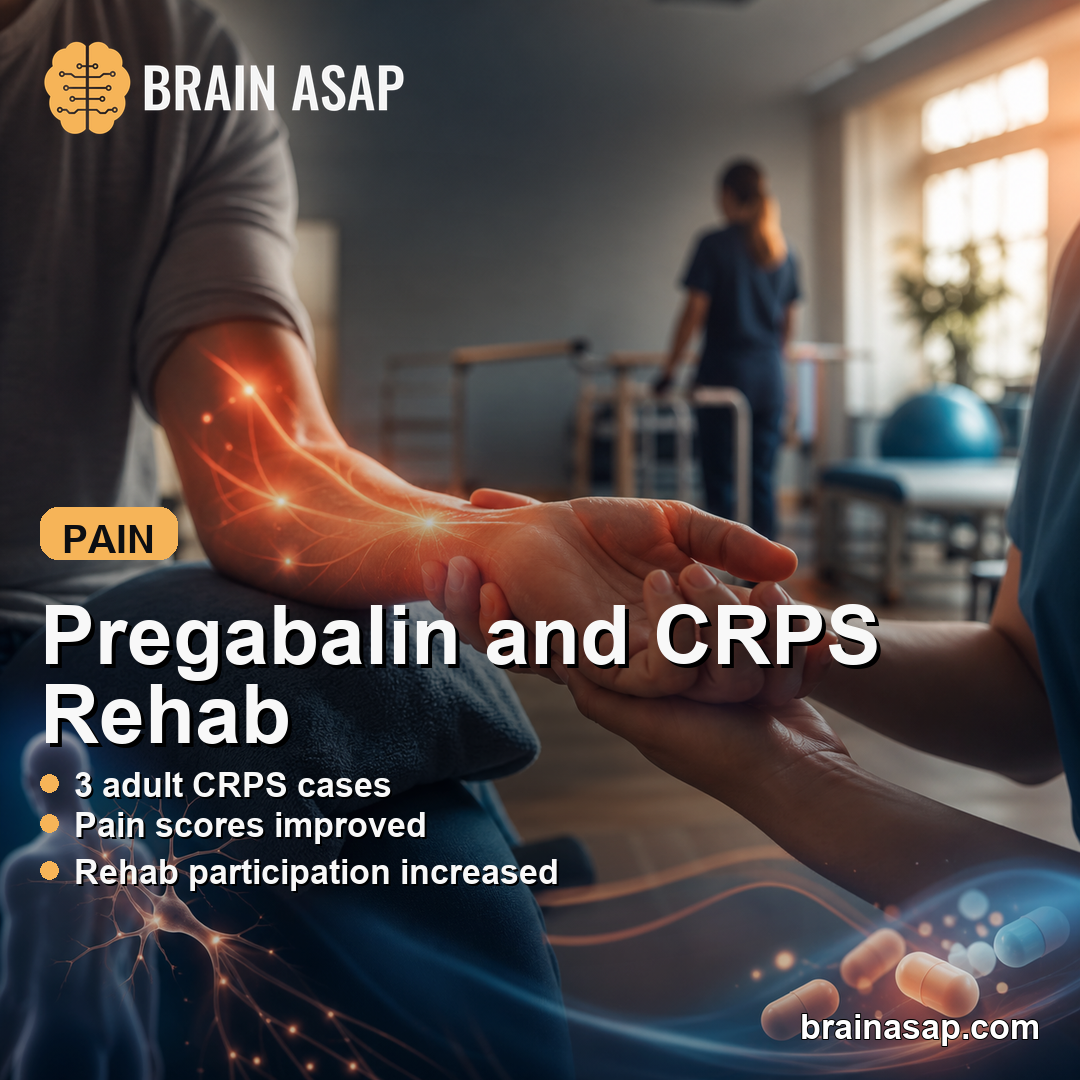
Pregabalin Reduced Pain Enough to Support CRPS Rehabilitation in Case Series

Pregabalin Reduced Pain Enough to Support CRPS Rehabilitation in Case Series

TL;DR: A 2026 study in Journal of Pain Research described 3 adults with type I complex regional pain syndrome (CRPS), a severe neuropathic pain condition with sensory, autonomic, motor, and skin changes, whose pain scores improved after pregabalin and who were then able to participate more fully in rehabilitation. Key Findings Case-series evidence: Researchers reported …

Read more

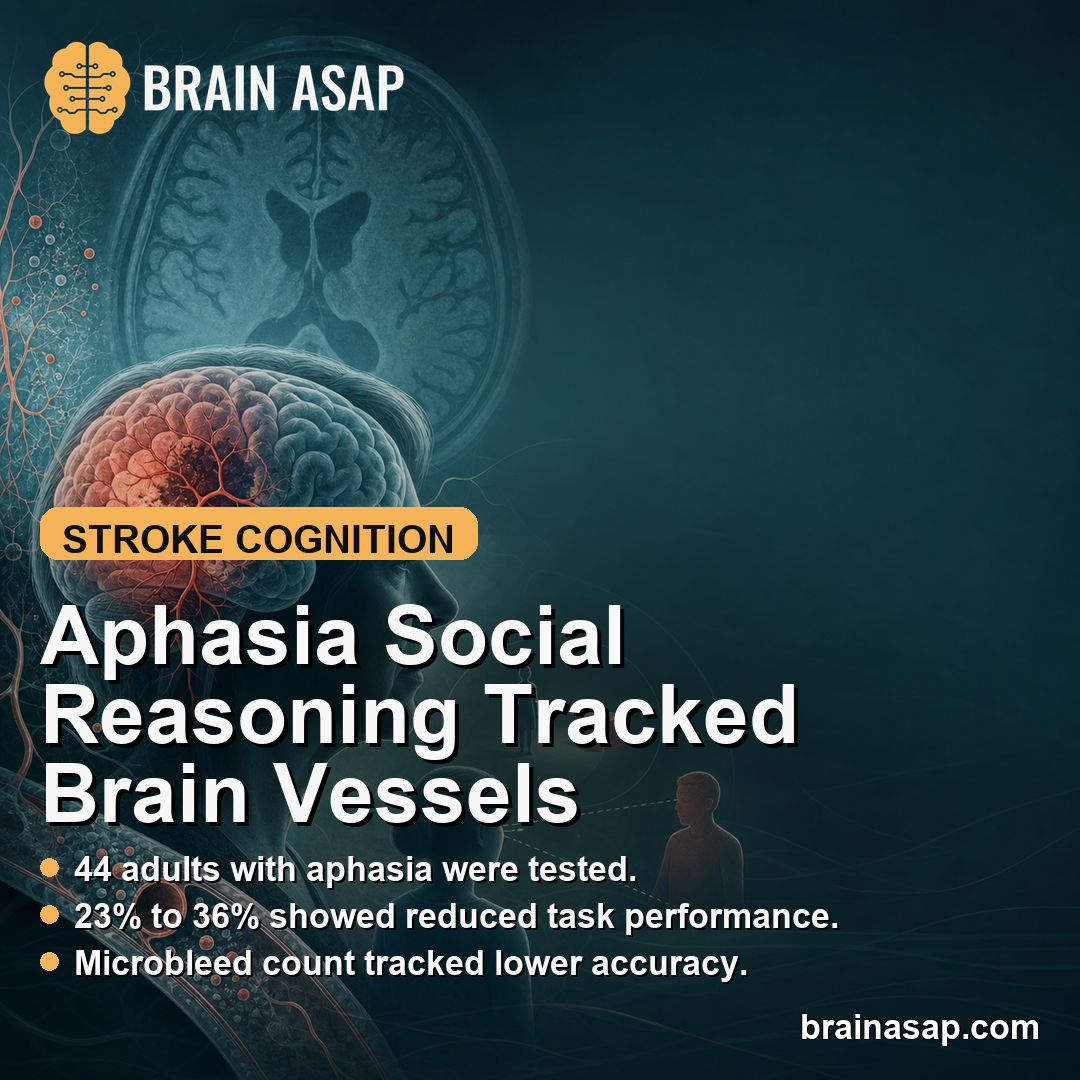
Post-Stroke Aphasia Theory of Mind Performance Tracked Vascular Brain Health

Post-Stroke Aphasia Theory of Mind Performance Tracked Vascular Brain Health

TL;DR: A 2026 medRxiv preprint found that nonverbal Theory of Mind (ToM), the ability to infer another person’s beliefs or perspective, varied in 44 adults with post-stroke aphasia and was more closely tied to vascular brain-health markers than to aphasia severity. Key Findings Study group: 44 adults with aphasia after mostly left-hemisphere stroke completed 2 …

Read more

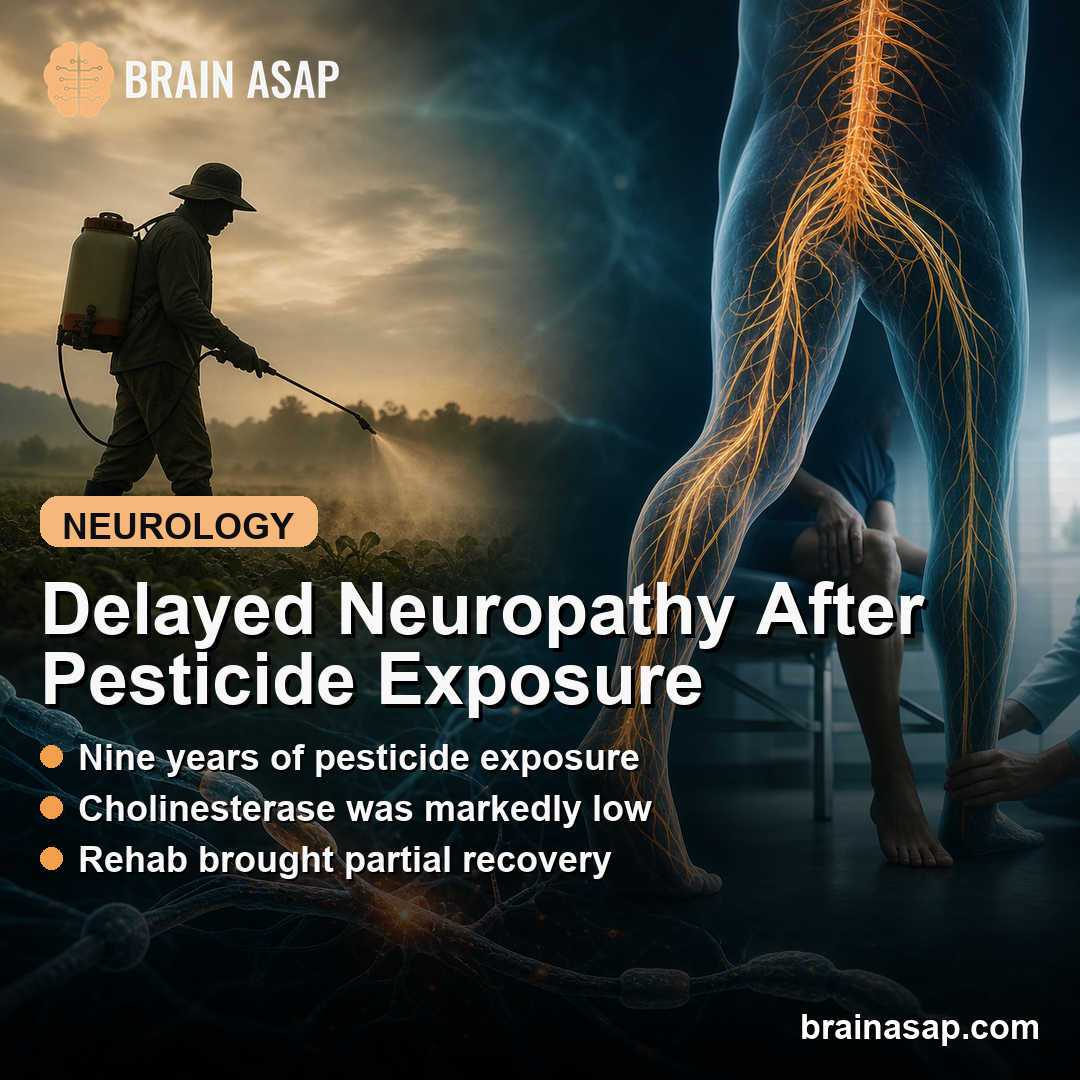
Organophosphate Exposure Linked to Delayed Neuropathy in Case Report

Organophosphate Exposure Linked to Delayed Neuropathy in Case Report

TL;DR: A 2026 study in Journal of Medical Case Reports described organophosphate-induced delayed neuropathy (OPIDN), a delayed nerve-injury syndrome, in a 44-year-old pesticide applicator after years of low-level exposure without a typical acute poisoning crisis. Key Findings 9-year exposure history: The patient had worked with chlorpyrifos, malathion, and diazinon for years, often 6-9 hours daily …

Read more

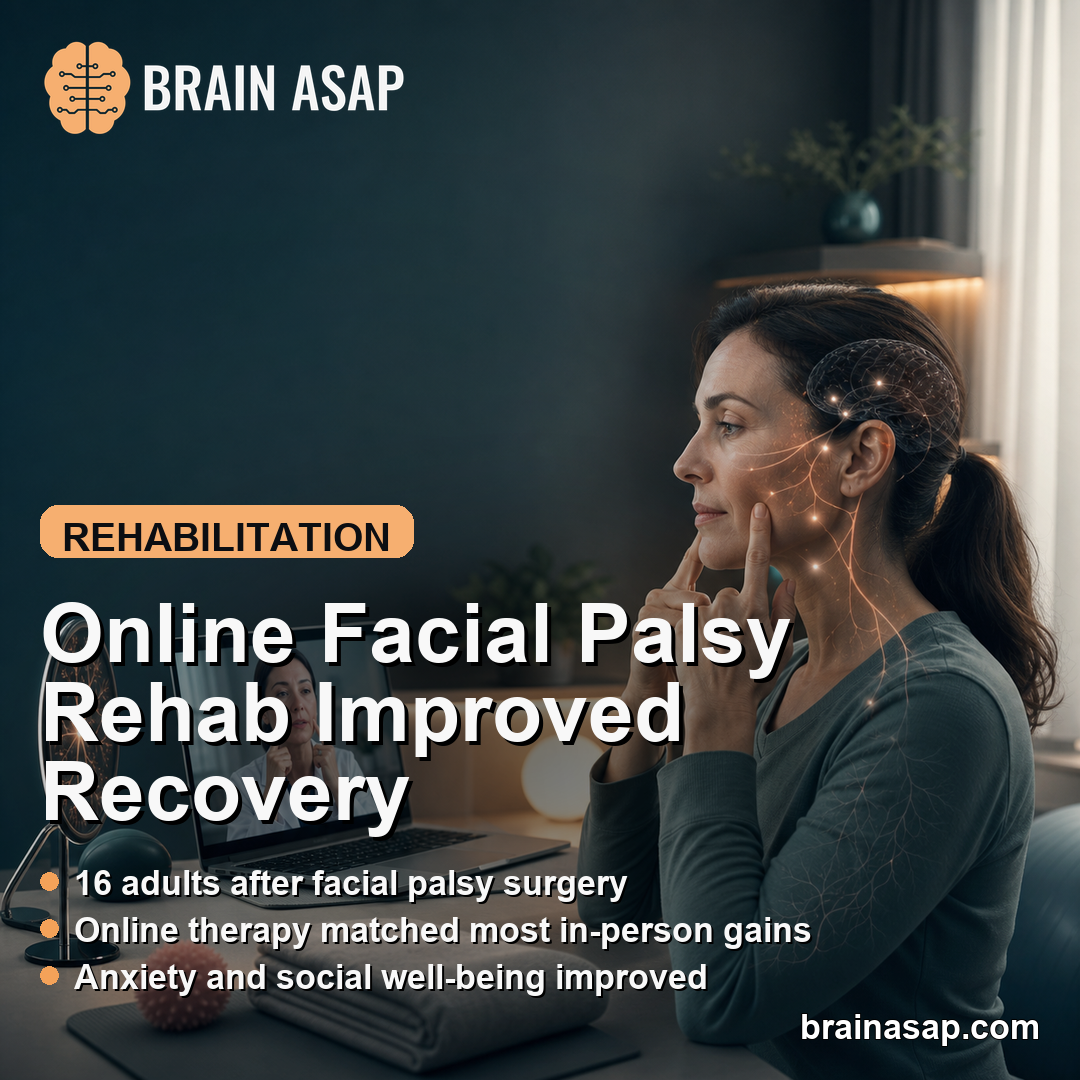
Online Emotional Training Improved Facial Palsy Recovery After Surgery

Online Emotional Training Improved Facial Palsy Recovery After Surgery

TL;DR: A pilot cohort study in JMIR Rehabilitation and Assistive Technologies found that online emotional training after facial palsy surgery improved facial movement, social well-being, and anxiety about as much as in-person therapy in 16 adults. Key Findings Population: The study followed 16 adults after triple innervation surgery for unilateral peripheral facial nerve palsy. Delivery: …

Read more

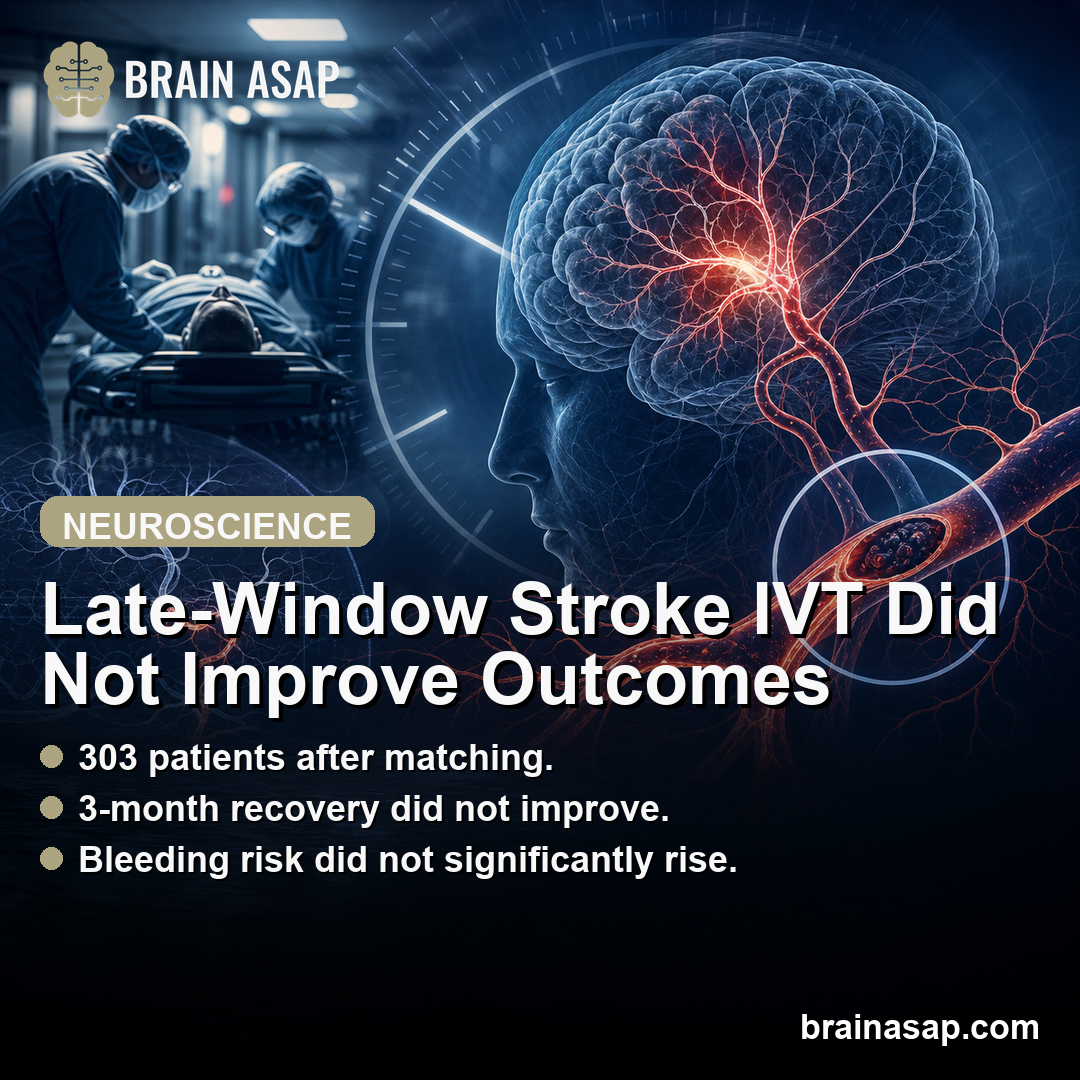
Late-Window Stroke IVT Did Not Improve Thrombectomy Outcomes

Late-Window Stroke IVT Did Not Improve Thrombectomy Outcomes

TL;DR: A 2026 medRxiv preprint found that giving intravenous thrombolysis (IVT), a clot-dissolving drug treatment, before endovascular thrombectomy (EVT), a catheter procedure to remove a large brain clot, did not significantly improve 3-month recovery or increase bleeding risk in selected stroke patients treated 6 to 24 hours after symptoms began. Key Findings Registry cohort: The …

Read more

Chemotherapy Neuropathy Review Links Pain to Brain Changes

Chemotherapy Neuropathy Review Links Pain to Brain Changes

TL;DR: A 2026 review in Reviews in the Neurosciences argues that chemotherapy-induced peripheral neurotoxicity (CIPN), nerve injury from cancer treatment, can involve central nervous system changes that help explain chronic neuropathic pain and chemotherapy-related cognitive impairment. Key Findings 70-80% during treatment: The review cites chemotherapy-induced peripheral neurotoxicity as affecting about 70-80% of patients during treatment. …

Read more

EPA Impaired Brain Vessel Repair After Repetitive Brain Injury (CTE)

EPA Rewired Brain Vessels After Repetitive Brain Injury

EPA Rewired Brain Vessels After Repetitive Brain Injury TL;DR: Fish-oil-derived EPA looked less like a simple neuroprotective supplement and more like a lipid signal that changed brain-vessel repair after repetitive mild traumatic brain injury. Key Findings EPA accumulated before injury: In a fish-oil diet model, eicosapentaenoic acid built up in the brain at baseline rather …

Read more

Ethylene Oxide Levels Increase Stroke Risk in Young Adults in the U.S. (2024 Study)

Higher ethylene oxide (EtO) exposure is significantly associated with an increased risk of stroke in U.S. adults, particularly those under 50 years old. Highlights: Higher levels of EtO are linked to increased stroke rates, with individuals in the top 25% of exposure showing a stroke prevalence 1.6 times higher than those in the bottom 25%. …

Read more