Chemotherapy Neuropathy Review Links Pain to Brain Changes
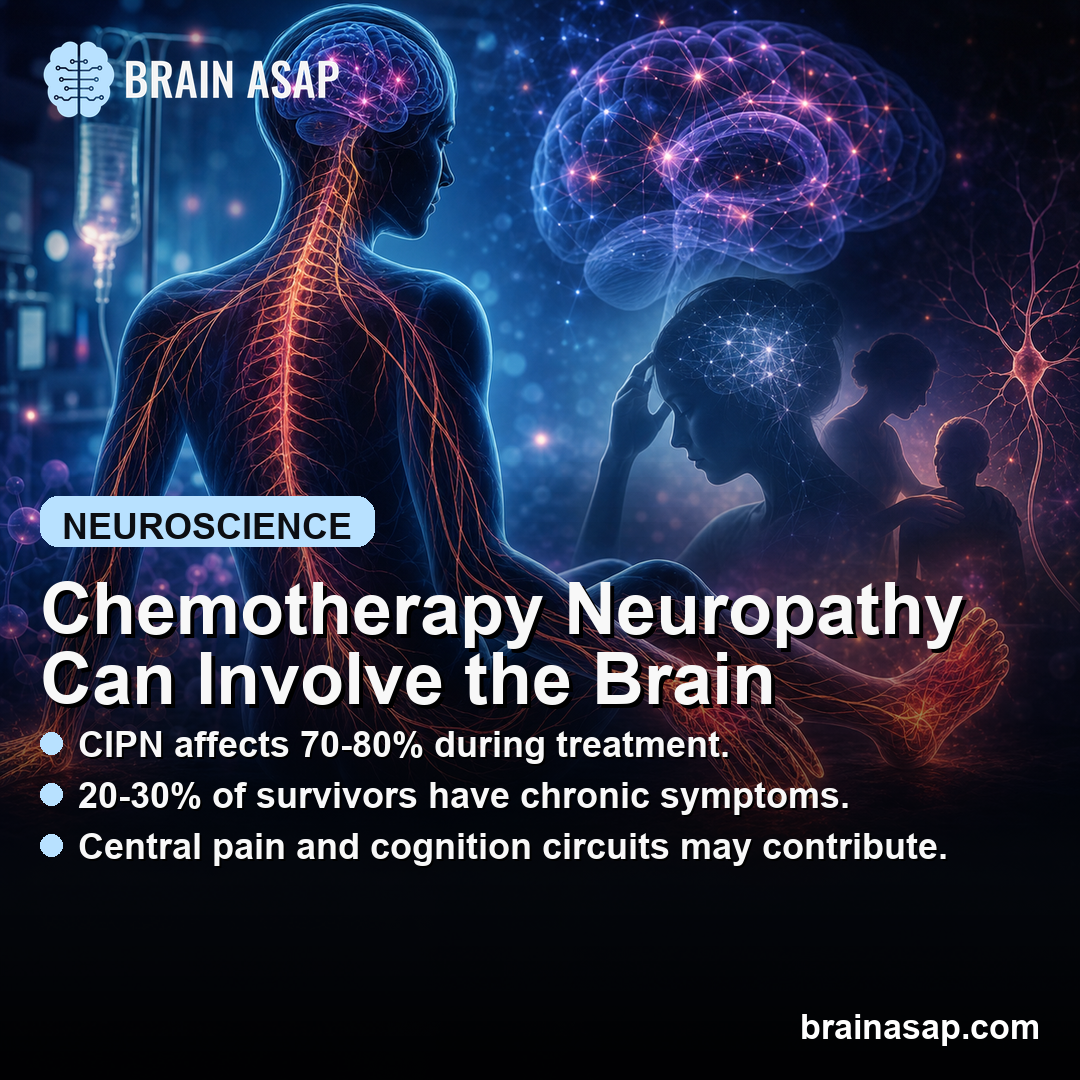
Chemotherapy Neuropathy Review Links Pain to Brain Changes

TL;DR: A 2026 review in Reviews in the Neurosciences argues that chemotherapy-induced peripheral neurotoxicity (CIPN), nerve injury from cancer treatment, can involve central nervous system changes that help explain chronic neuropathic pain and chemotherapy-related cognitive impairment. Key Findings 70-80% during treatment: The review cites chemotherapy-induced peripheral neurotoxicity as affecting about 70-80% of patients during treatment. …

Read more

EPA Impaired Brain Vessel Repair After Repetitive Brain Injury (CTE)

EPA Rewired Brain Vessels After Repetitive Brain Injury

EPA Rewired Brain Vessels After Repetitive Brain Injury TL;DR: Fish-oil-derived EPA looked less like a simple neuroprotective supplement and more like a lipid signal that changed brain-vessel repair after repetitive mild traumatic brain injury. Key Findings EPA accumulated before injury: In a fish-oil diet model, eicosapentaenoic acid built up in the brain at baseline rather …

Read more

Ethylene Oxide Levels Increase Stroke Risk in Young Adults in the U.S. (2024 Study)

Higher ethylene oxide (EtO) exposure is significantly associated with an increased risk of stroke in U.S. adults, particularly those under 50 years old. Highlights: Higher levels of EtO are linked to increased stroke rates, with individuals in the top 25% of exposure showing a stroke prevalence 1.6 times higher than those in the bottom 25%. …

Read more

Nanoparticle Enhanced Radiotherapy (NERT) for Brain Tumor Treatment (2024 Research)

Nanoparticle-enhanced radiotherapy (NERT) is a promising approach to improving brain tumor treatment by enhancing radiotherapy efficacy through targeted delivery and radiosensitization while overcoming challenges posed by the blood-brain barrier. Highlights: Mechanisms of Action: NERT utilizes nanoparticles (NPs) as radiosensitizers, enhancing radiation-induced damage through physical dose enhancement and biological/chemical sensitization. Types of Nanoparticles: Various NP types, …

Read more

Lithium Appears Neuroprotective in Traumatic Brain Injury (TBI) (2024 Research)

Lithium shows promise in treating traumatic brain injury (TBI) by mitigating neuroinflammation, protecting against neuronal damage, and improving cognitive functions. Highlights: Neuroprotective Mechanisms: Lithium’s therapeutic effects involve complex molecular mechanisms including gene expression, neurotransmitter signaling, and circadian modulation, contributing to neuronal protection and recovery post-TBI. Targeted Brain Regions: Post-treatment, lithium concentrations are notably higher in …

Read more

Selegiline Reverses Anxiety & Memory Impairment in Amyloid Beta-Induced Alzheimers Model Rats (2024 Study)

The study demonstrated that selegiline (SEL) improves memory performance, reduces anxiety, and modulates oxidative stress in an Alzheimer’s disease (AD) rat model. Highlights: Memory Improvements: SEL administration improved recognition memory, spatial memory, and passive avoidance memory in AD rats. Anxiety Reduction: SEL significantly reduced anxiety-like behavior in AD rats, as evidenced by performance in the …

Read more

Repurposing Antipsychotics & Antidepressants to Treat Glioblastoma (2024 Study)

Repurposing antipsychotics and antidepressants with favorable safety profiles and blood-brain barrier permeability shows promise for glioblastoma (GBM) treatment, primarily through disrupting lysosomal function and inducing cell death. Highlights: Mechanism of Action: The studied antipsychotics and antidepressants induce GBM cell death by disrupting lysosomal function, leading to lysosomal membrane rupture. PTEN Sensitivity: GBMs with intact PTEN …

Read more

Type 2 Diabetes Linked to Lower Cerebral Blood Flow (CBF) in Hippocampus (2024 Study)

This study shows that type 2 diabetes causes decreased blood flow and changes in neural activity in specific parts of the hippocampus, which may initially compensate for cognitive decline but deteriorate with worsening diabetes. Highlights: Decreased Perfusion: Patients with type 2 diabetes have lower blood flow in the right hippocampal CA1, DG, and subiculum areas. …

Read more

1-Year Post-COVID Neuropsychiatric Symptoms: Fatigue, Cognition, Anxiety, Depression, Headache, Dizziness (2024 Study)

A study found that adults recovering from their first COVID-19 infection more than 1-year ago have higher levels of fatigue and other chronic neuropsychiatric symptoms, influenced by vaccination status and socioeconomic factors. Highlights: Adults who had their first COVID-19 infection over 1-year ago reported significantly higher fatigue levels compared to those who never had COVID-19 …

Read more

BPC-157 Peptide May Treat CNS Disorders: Stroke, Schizophrenia, Spinal Cord Injury

The naturally occurring peptide BPC 157 shows potential to treat stroke, schizophrenia symptoms, and spinal cord injury in animal models. Key facts: BPC 157 rapidly counteracted stroke damage and led to full recovery of memory, coordination and movement in rats. The peptide alleviated schizophrenia-like symptoms and catalepsy in rodent models by modulating dopamine, glutamate and …

Read more