TL;DR: A 2026 study in Annals of General Psychiatry found that, among 457 adults with recurrent major depressive disorder in Pakistan, escitalopram was the most common single antidepressant and reported side effects varied sharply by drug class. Key Findings C…
Read article ↗
TL;DR: A 2026 narrative review in the Japanese Journal of Radiology reported that Alzheimer’s brain positron emission tomography (PET) imaging has shifted from supportive diagnosis toward treatment selection because amyloid PET is now central to confirming eli…
Read article ↗
TL;DR: A 2026 study in Environmental Science & Technology found that male guppies exposed for 11 days to environmentally relevant amitriptyline, a tricyclic antidepressant detected in waterways, made more spatial-learning errors in a maze while females were la…
Read article ↗
TL;DR: A 2026 medRxiv preprint applied ChatGPT-4o-assisted Bayesian-frequentist hybrid inference to Alzheimer’s single-nucleus RNA-seq data and identified gamma-secretase and HP1 transcription pathways that a no-evidence frequentist setting did not recover. Ke…
Read article ↗
TL;DR: A 2026 medRxiv review found that mental-health AI agents are moving quickly toward large-language-model chatbots, but most systems still rely on text self-report, narrow depression/anxiety/suicide use cases, and offline tests rather than prospective cli…
Read article ↗
TL;DR: A 2026 study in Biological Psychiatry: Global Open Science found that trauma-exposed adolescents, especially those with higher posttraumatic stress symptoms, showed disrupted parent-cued fear extinction across skin-conductance, behavioral-learning, and…
Read article ↗
TL;DR: A 2026 study in Aging Cell found that fasting and caloric restriction activated ADIOL, a steroid hormone, through an NHR-91-kynurenic acid pathway that improved several healthspan measures in worms without extending lifespan. Key Findings ADIOL was the…
Read article ↗
TL;DR: A 2026 medRxiv preprint from the ENIGMA Addiction Working Group used structural MRI from 2,782 people with substance use disorder (SUD) and 1,951 controls and reported that addiction-related brain differences followed cortical network hubs and neurotran…
Read article ↗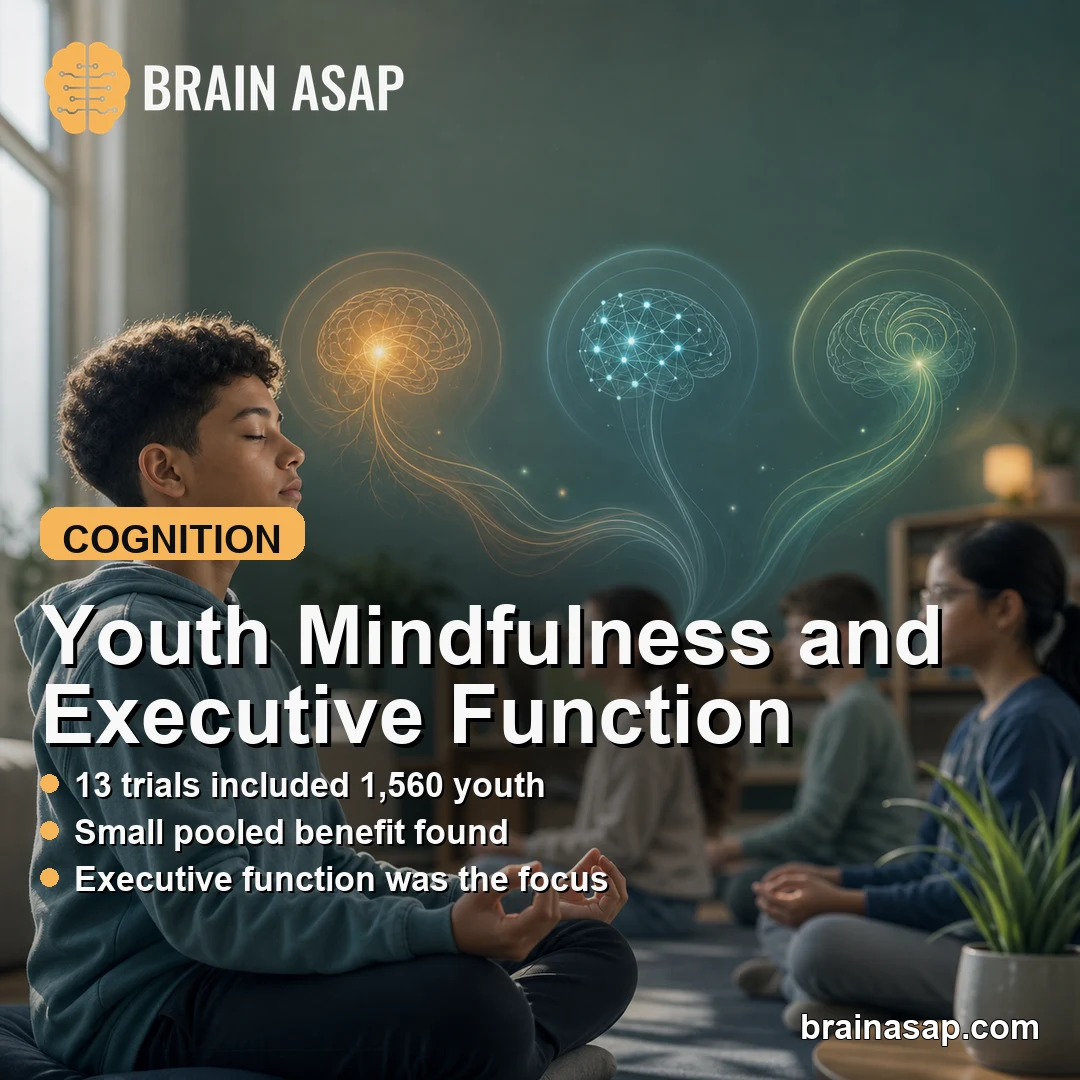
TL;DR: A 2026 systematic review and meta-analysis posted as a medRxiv preprint found that mindfulness-based programs were linked to a small improvement in executive function, meaning inhibition, working memory, and flexible thinking, across 13 youth trials. Ke…
Read article ↗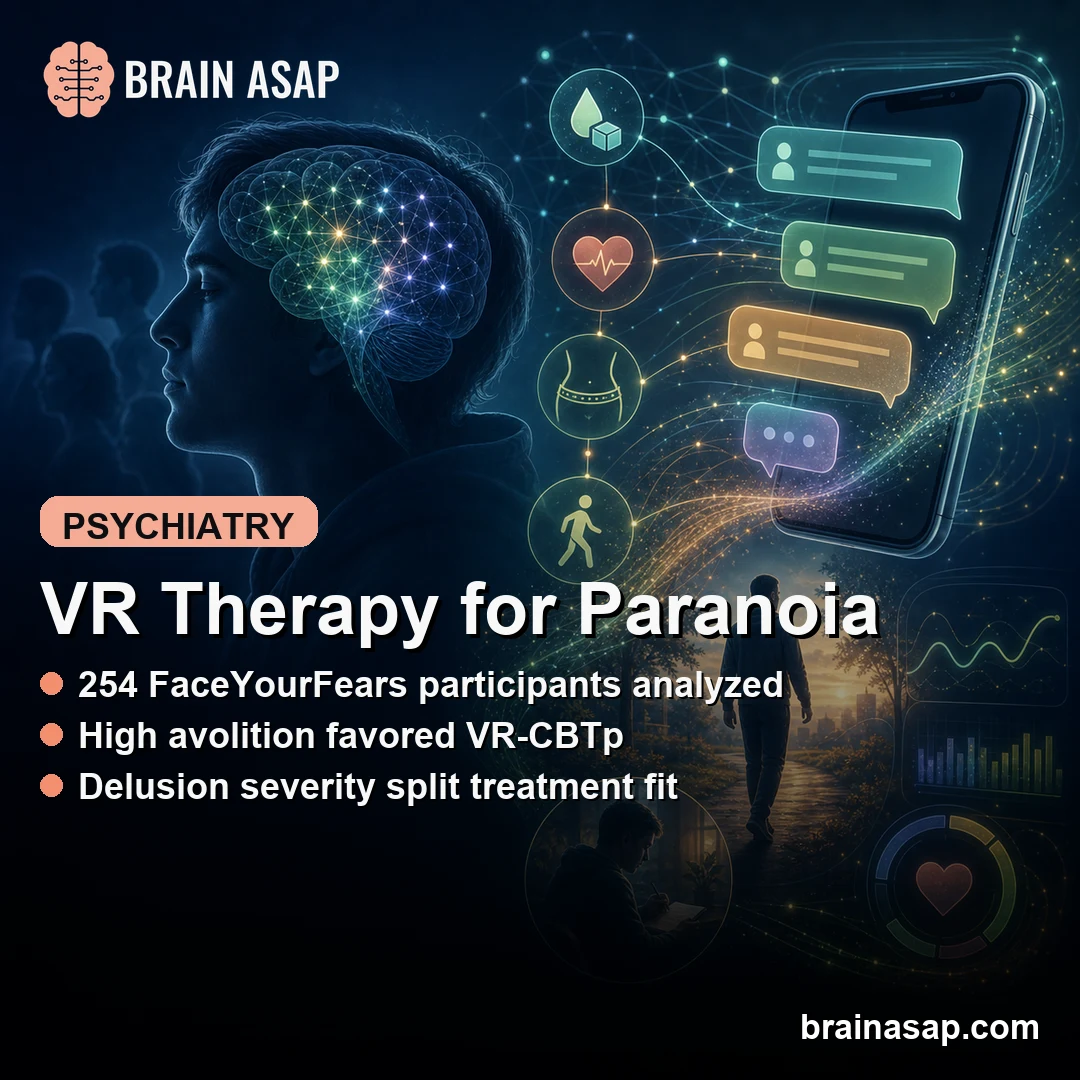
TL;DR: A 2026 study in Psychological Medicine found that people with schizophrenia spectrum disorders and higher avolition or moderate-to-high delusion severity appeared to improve more after virtual reality cognitive behavioral therapy for psychosis (VR-CBTp)…
Read article ↗