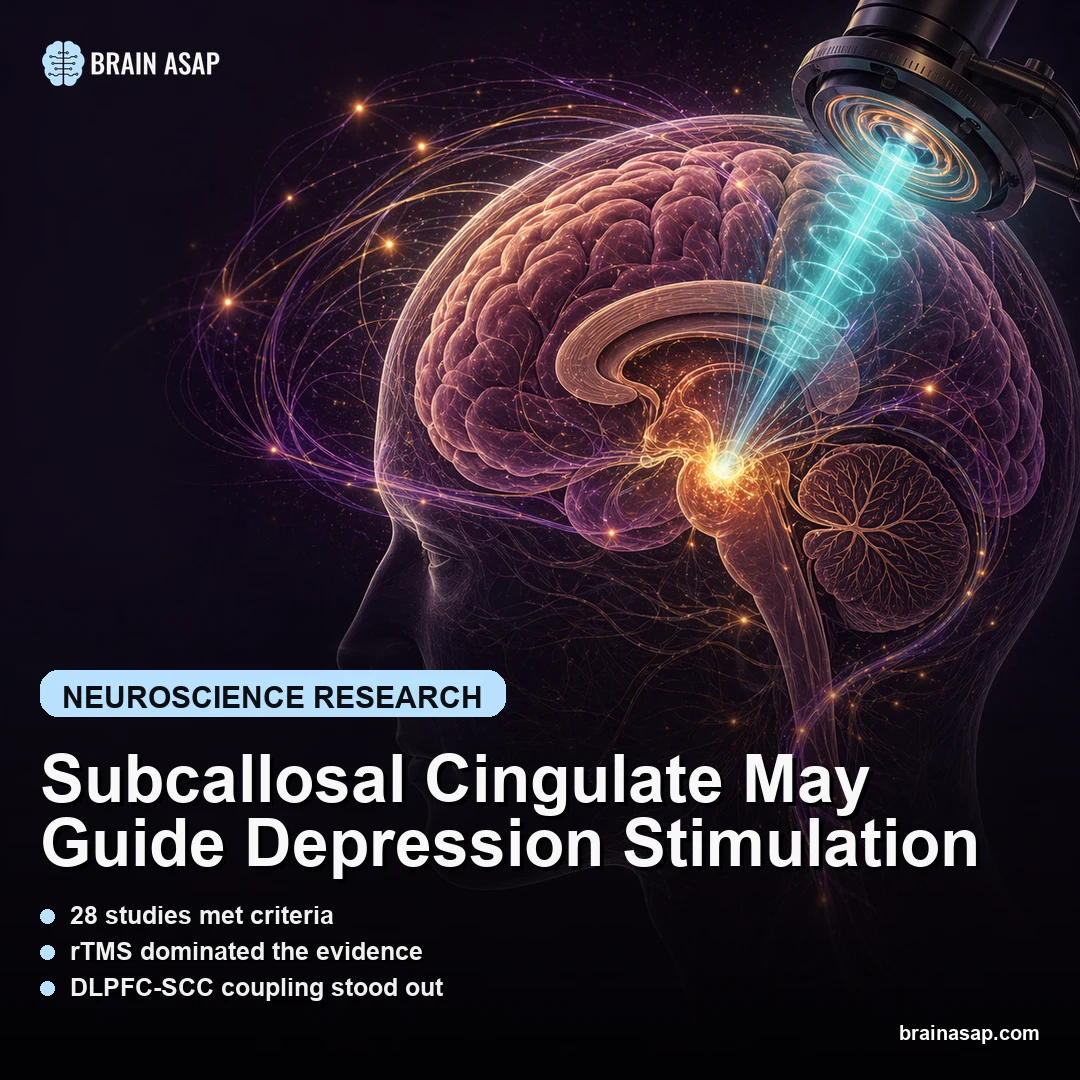
TL;DR: A 2026 systematic review in Translational Psychiatry found that depression brain-stimulation studies repeatedly linked treatment response to subcallosal cingulate connectivity, but inconsistent methods still limit its use as a treatment-selection biomar…
Read article ↗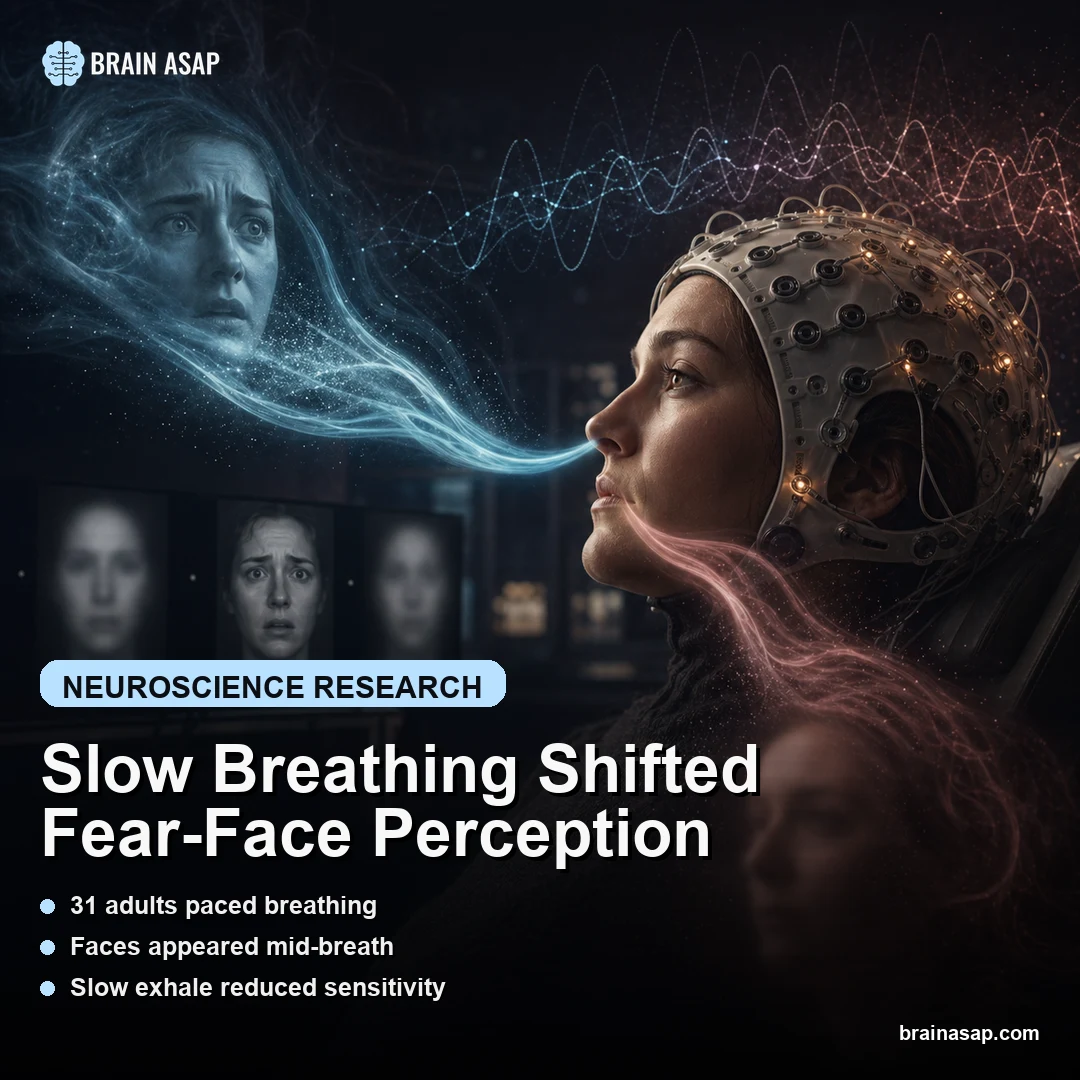
TL;DR: A 2025 study in European Journal of Neuroscience found that slow breathing sharpened fearful-face perception during inhalation but weakened it during exhalation, with magnetoencephalography showing brain-timing changes before the face appeared. Key Find…
Read article ↗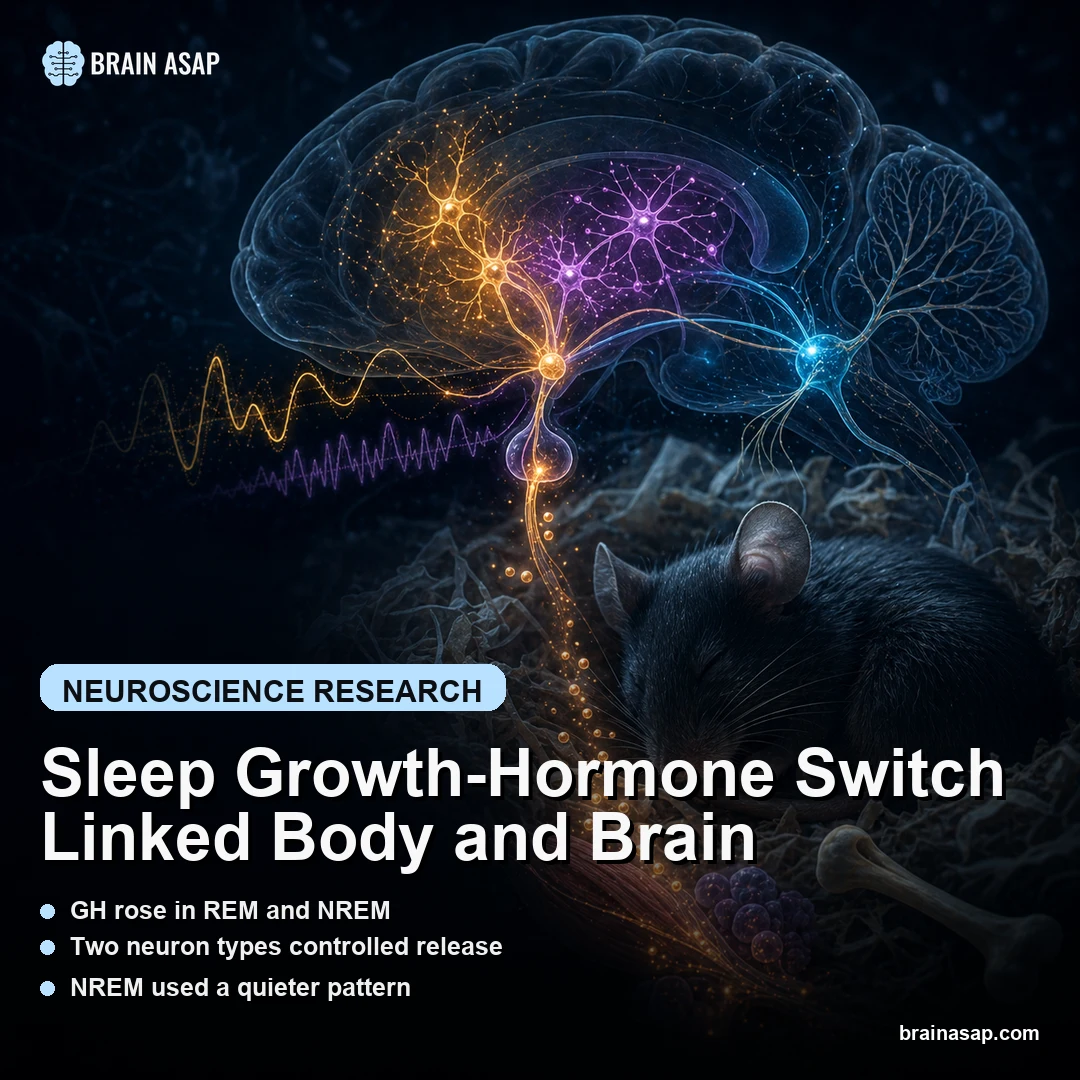
TL;DR: A 2025 mouse study in Cell mapped a sleep-growth hormone circuit, showing how hypothalamic GHRH and somatostatin neurons coordinate hormone pulses and then feed back onto wakefulness. Key Findings GH rose in REM and NREM: Growth hormone release was enha…
Read article ↗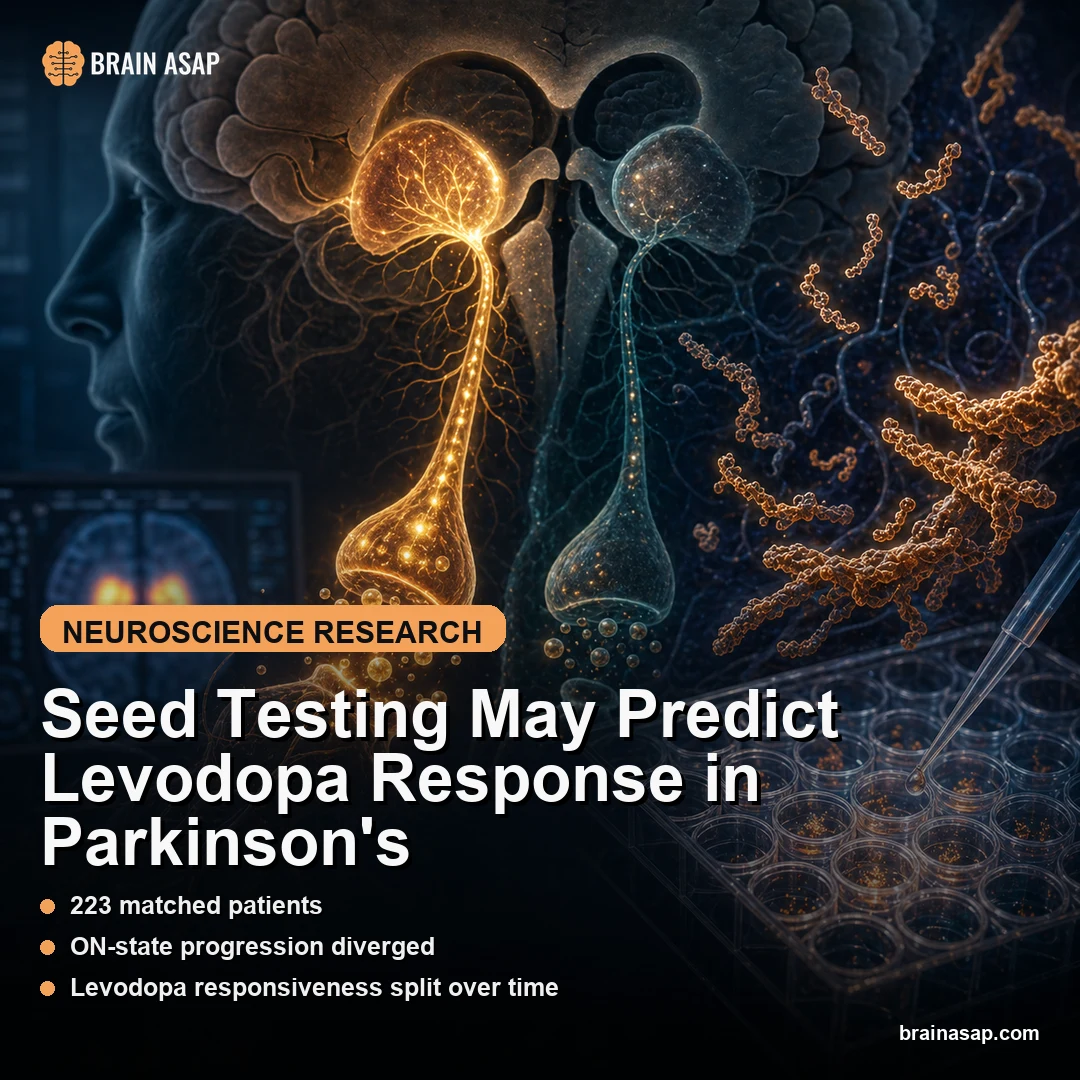
TL;DR: A 2026 medRxiv preprint found that alpha-synuclein seed-positive Parkinson’s patients had slower ON-medication motor progression, measured while usual Parkinson’s medication was active, and more sustained levodopa responsiveness than matched seed-negati…
Read article ↗
TL;DR: A 2026 systematic review in The British Journal of Psychiatry linked schizophrenia to a multisystem advanced-aging phenotype, including older-appearing brain scans, shorter telomeres, inflammation, and higher dementia risk. Key Findings 170 studies incl…
Read article ↗
TL;DR: A 2026 meta-analysis in Psychological Medicine found postpartum depression (PPD) brain-activity differences across default-mode, limbic, and sensorimotor regions, with spatial overlap in serotonin, dopamine, and vesicular acetylcholine transporter maps.…
Read article ↗
TL;DR: A 2026 medRxiv preprint found that plasma p-tau217 AI models still separated amyloid-positive from amyloid-negative people across ADNI and A4, but calibration drift made the same probabilities less dependable for clinical decisions. Key Findings Calibra…
Read article ↗
TL;DR: Across 4,000+ people, the relationship between brain activity and cognitive control flipped direction depending on whether researchers compared people to each other or tracked the same person over time. The finding is called nonergodicity — and it means…
Read article ↗
TL;DR: A 2026 review in BMC Psychiatry found 441 primary MRI and electroencephalogram (EEG), a scalp recording of brain electrical activity, mental-health biomarker studies, but most were small, cross-sectional, and concentrated in depression, making routine c…
Read article ↗
TL;DR: A 2022 study in Nature Communications used non-contrast 3D T2-FLAIR MRI, a scan that suppresses ordinary cerebrospinal-fluid brightness, to map possible brain-border drainage routes toward cervical lymph nodes, but FLAIR brightness alone does not prove…
Read article ↗