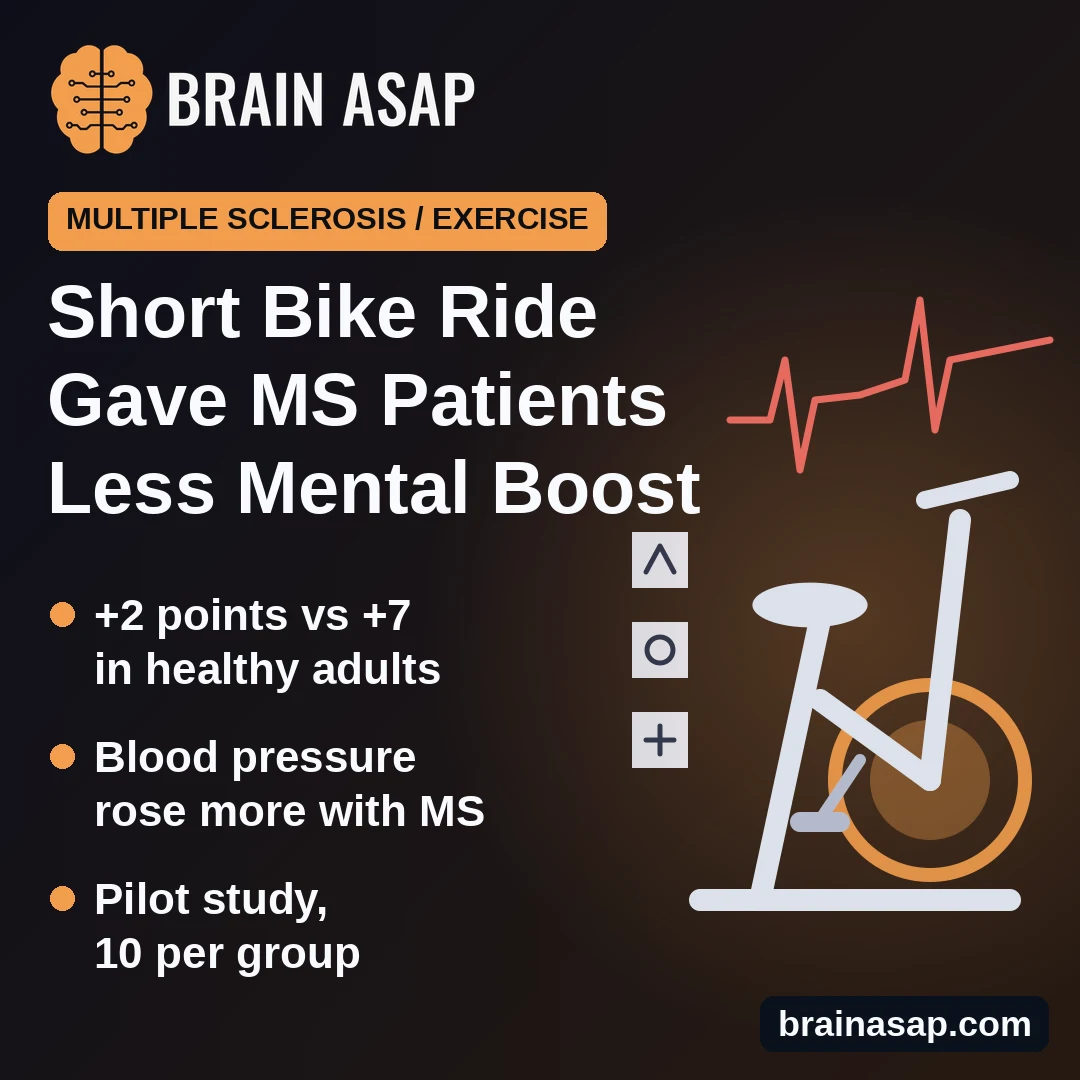
TL;DR: In a tiny pilot study, a few minutes on an exercise bike boosted thinking speed scores by about 7 points in healthy adults but only about 2 points in people with relapsing-remitting multiple sclerosis. With 10 people per group, it is an early clue, not…
Read article ↗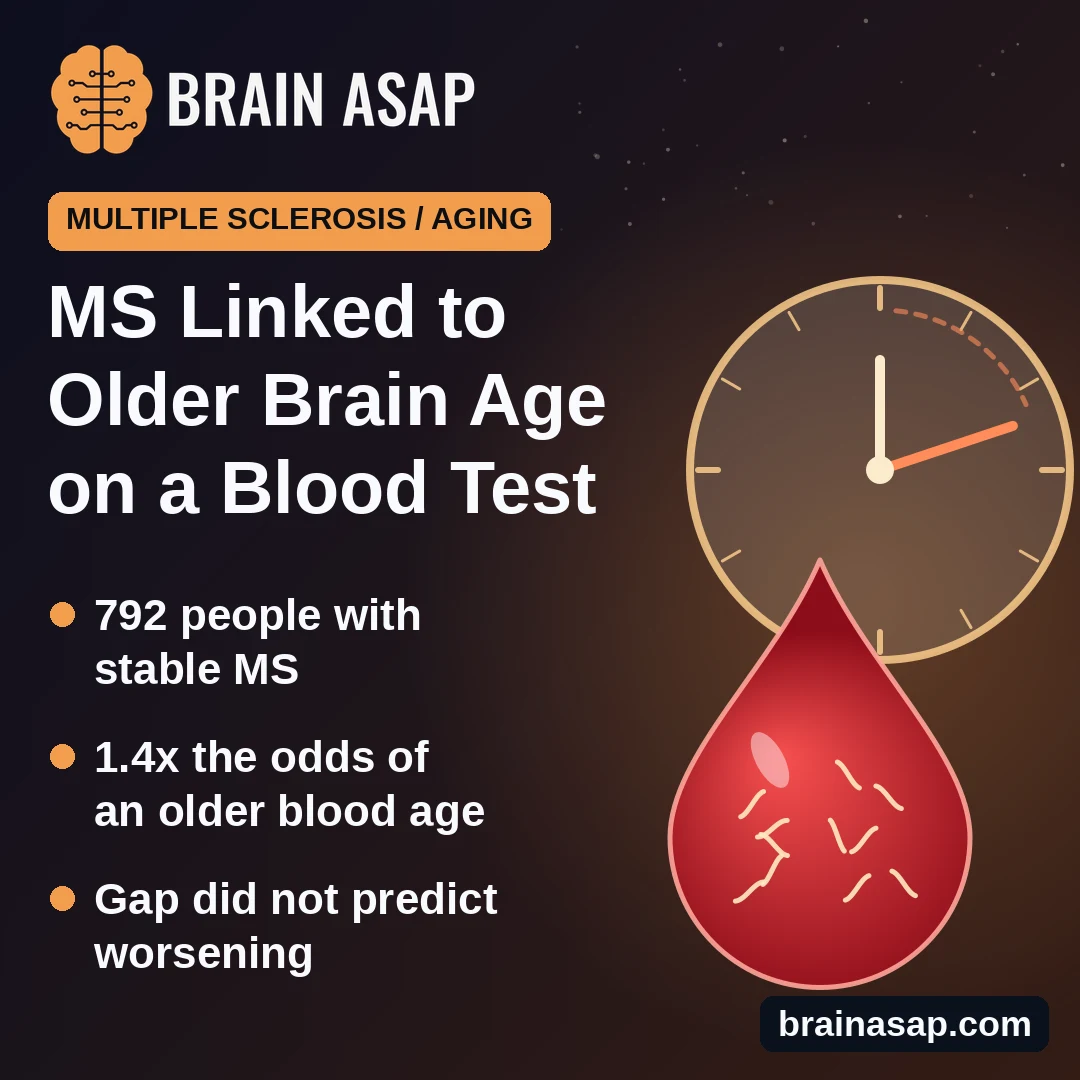
TL;DR: In 792 people with stable multiple sclerosis, a blood marker of nerve damage more often placed them in an older age band than their actual age, compared with 302 people without MS. The gap was larger in people with more disability or progressive MS, but…
Read article ↗
TL;DR: A 2026 study in Communications Medicine reported that artificial intelligence (AI) and multi-contrast MRI post-processing could reveal cortical lesions in multiple sclerosis trial scans that standard MRI review usually misses. Key Findings 80-person met…
Read article ↗
TL;DR: A 2026 Nature Neuroscience study found that multiple sclerosis lesions rich in lipid-filled foamy microglia had a molecular profile tied to faster disability progression, cerebrospinal-fluid oxylipins, and a druggable lipid enzyme called MAGL. Key Findi…
Read article ↗
TL;DR: A 2026 study in Journal of Neuroinflammation found that people with multiple sclerosis had altered peripheral immunoglobulin repertoires, and several disease-modifying treatments shifted B-cell repertoire patterns after 6 months. Key Findings 33 MS pati…
Read article ↗
TL;DR: A 2026 preprint in medRxiv reported that REDDI, an interpretable AI pipeline using resting-state magnetoencephalography (MEG), classified four neurodegenerative diseases with mean balanced accuracy of 0.81. Key Findings The dataset covered four disease…
Read article ↗
TL;DR: A 2026 Reviews in the Neurosciences review argues that glycolysis, the cell pathway that turns glucose into usable energy and lactate, is a disease-shaping process across Alzheimer’s disease, Parkinson’s disease, ALS, Huntington’s disease, Wilson diseas…
Read article ↗
TL;DR: A 2026 medRxiv preprint found that adults with multiple sclerosis showed accelerated long-term forgetting (ALF), meaning unusually steep memory loss over days despite normal early recall, on two verbal memory tests. Key Findings The long-delay test was…
Read article ↗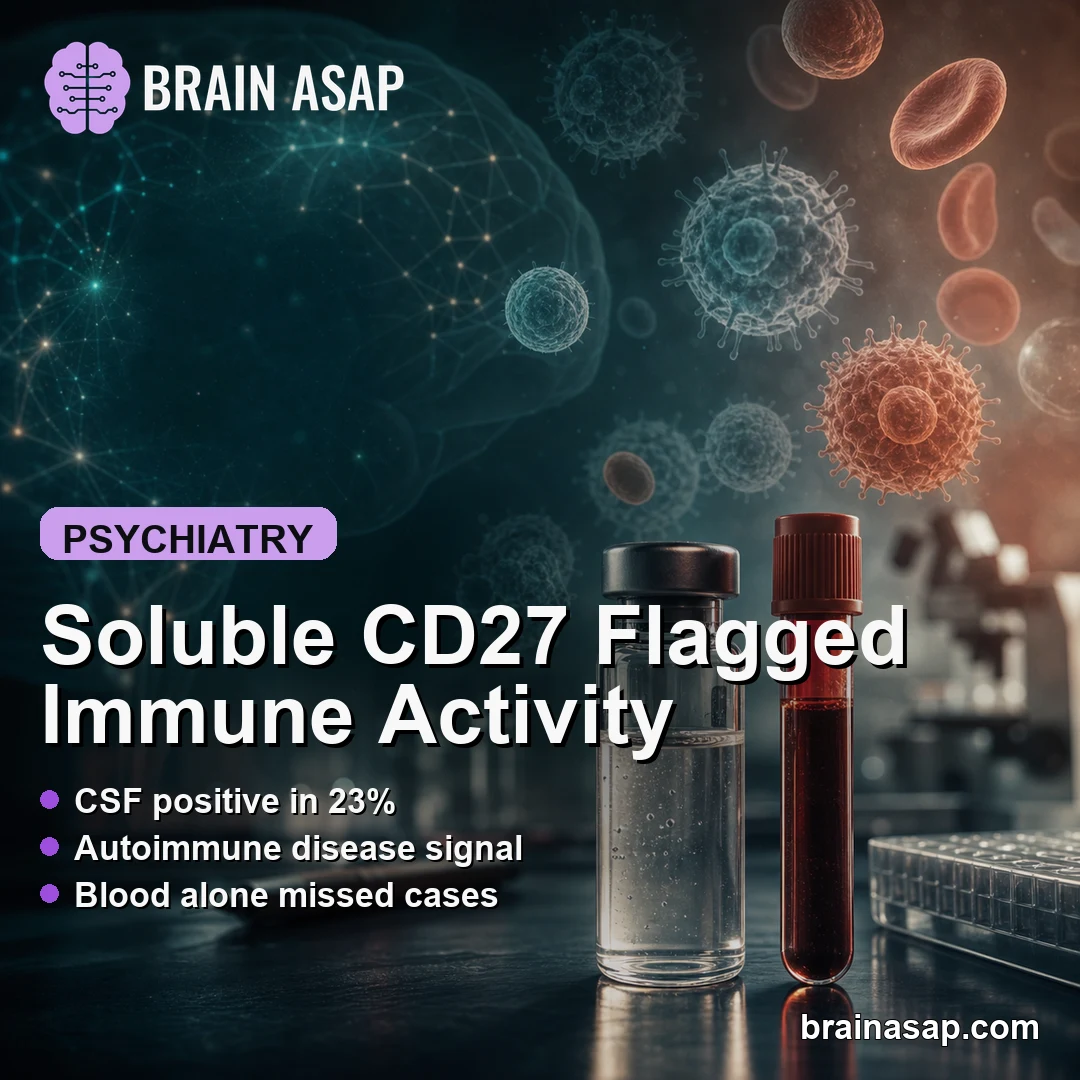
TL;DR: A 2026 medRxiv preprint found that soluble CD27 (sCD27), a T-cell activation marker, was elevated in a subgroup of patients with severe psychiatric disorders and was more common when autoimmune disease or abnormal cerebrospinal fluid (CSF) inflammation…
Read article ↗
TL;DR: A 2026 paper in Current Therapeutic Research described an acute PGAD-like genital arousal episode after self-initiated duloxetine withdrawal, with symptoms resolving within 5 hours after emergency admission and no recurrence over 36 months. Key Findings…
Read article ↗