TL;DR: A 2026 human laboratory study in Drug and Alcohol Dependence Reports found that naltrexone/bupropion did not change whether people with binge-eating disorder started eating preferred snacks, but it reduced how many calories they ate once they began. Key…
Read article ↗
TL;DR: A 2026 longitudinal pilot study in Psychosis from Yale recruited 20 adults with schizophrenia or distressing auditory hallucinations into 6 weeks of group songwriting and found reduced paranoia in less-severely affected participants plus a shift from se…
Read article ↗
TL;DR: A 2026 study in Cognition & Emotion found that moral anger did not improve falsehood detection; it lowered the evidence threshold for sharing, making the choice faster and less dependent on source credibility. Key Findings Severe moral violations made f…
Read article ↗
TL;DR: A 2026 Journal of Intelligence study of 170 adults found that math ability and music ability were only weakly related, and the link was reduced to almost zero after researchers accounted for general intelligence. Key Findings Adult ability groups were t…
Read article ↗
TL;DR: A 2026 Imaging Neuroscience functional MRI (fMRI) study found that emotional pictures were recalled better than neutral pictures, but amygdala and insula activity appeared tied mainly to arousal rather than whether memories were negative or positive. Ke…
Read article ↗
TL;DR: A 2026 double-blind trial in Psychopharmacology found that methylphenidate reduced cheating in healthy adults compared with placebo, contrary to survey respondents’ expectations about smart drugs. Key Findings Methylphenidate reduced dishonesty vs place…
Read article ↗
TL;DR: A 2025 study in The Journal of Prevention of Alzheimer’s Disease found that stress internalization, not acculturation or activity engagement, predicted memory decline across three waves in 1,528 older Chinese Americans. Key Findings Stress internalizati…
Read article ↗
TL;DR: A 2026 preprint registry-family study in medRxiv found that some maternal diagnosis-autism associations fit shared direct genetic effects, while other diagnoses showed stronger parallel-cousin associations, suggesting indirect genetic effects through th…
Read article ↗
TL;DR: A 2026 Frontiers in Behavioral Neuroscience study reported that inaudible infrasound shifted mood toward unease and raised stress-hormone markers under controlled conditions, offering a physiological explanation for some room-specific fear sensations wi…
Read article ↗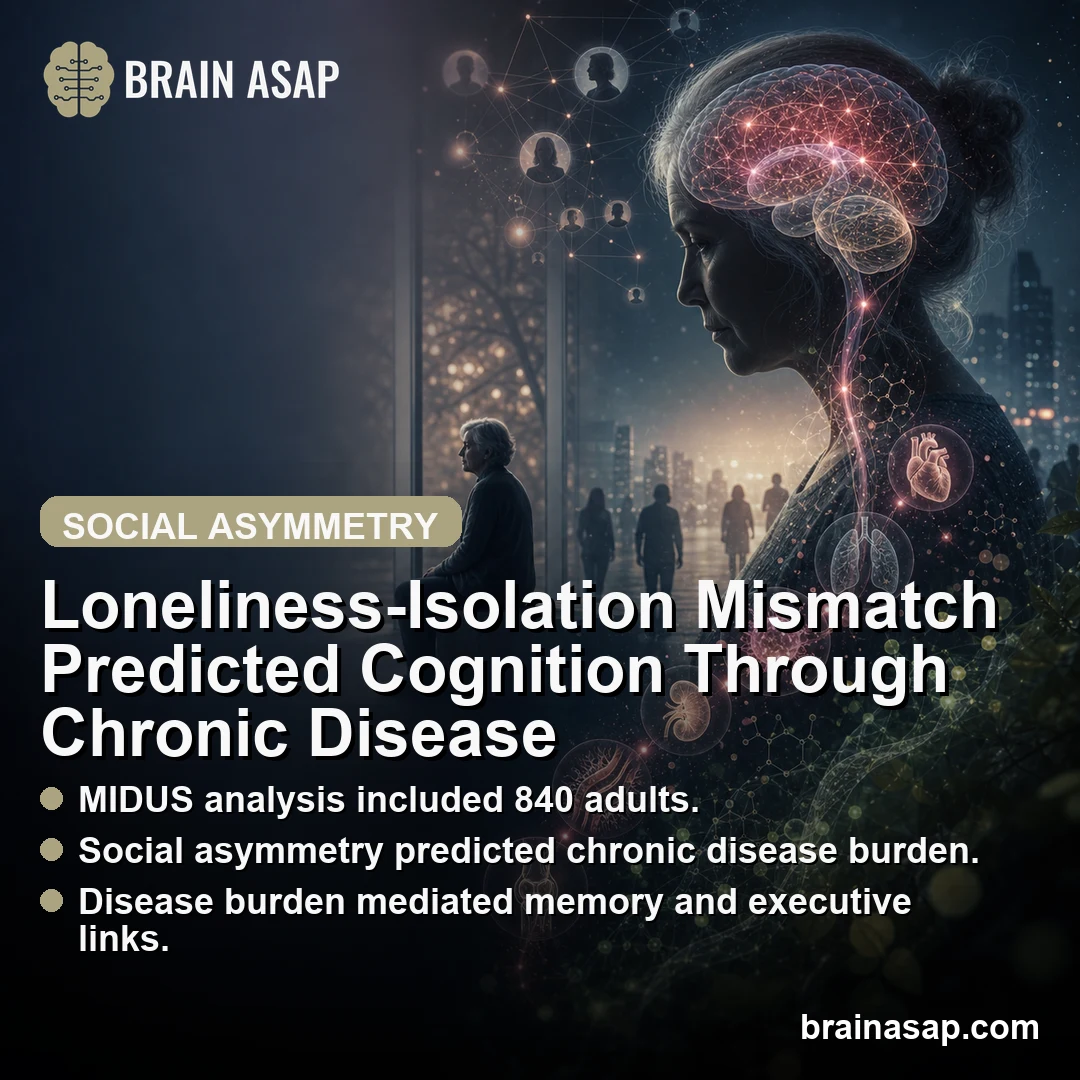
TL;DR: A 2026 MIDUS mediation study in Brain, Behavior, & Immunity – Health found that social asymmetry was associated with greater chronic disease burden, while chronic disease burden mediated links between social asymmetry and episodic memory and executive f…
Read article ↗