Robot Utterances Shaped Human-Robot Relationship Expectations More Than Appearance

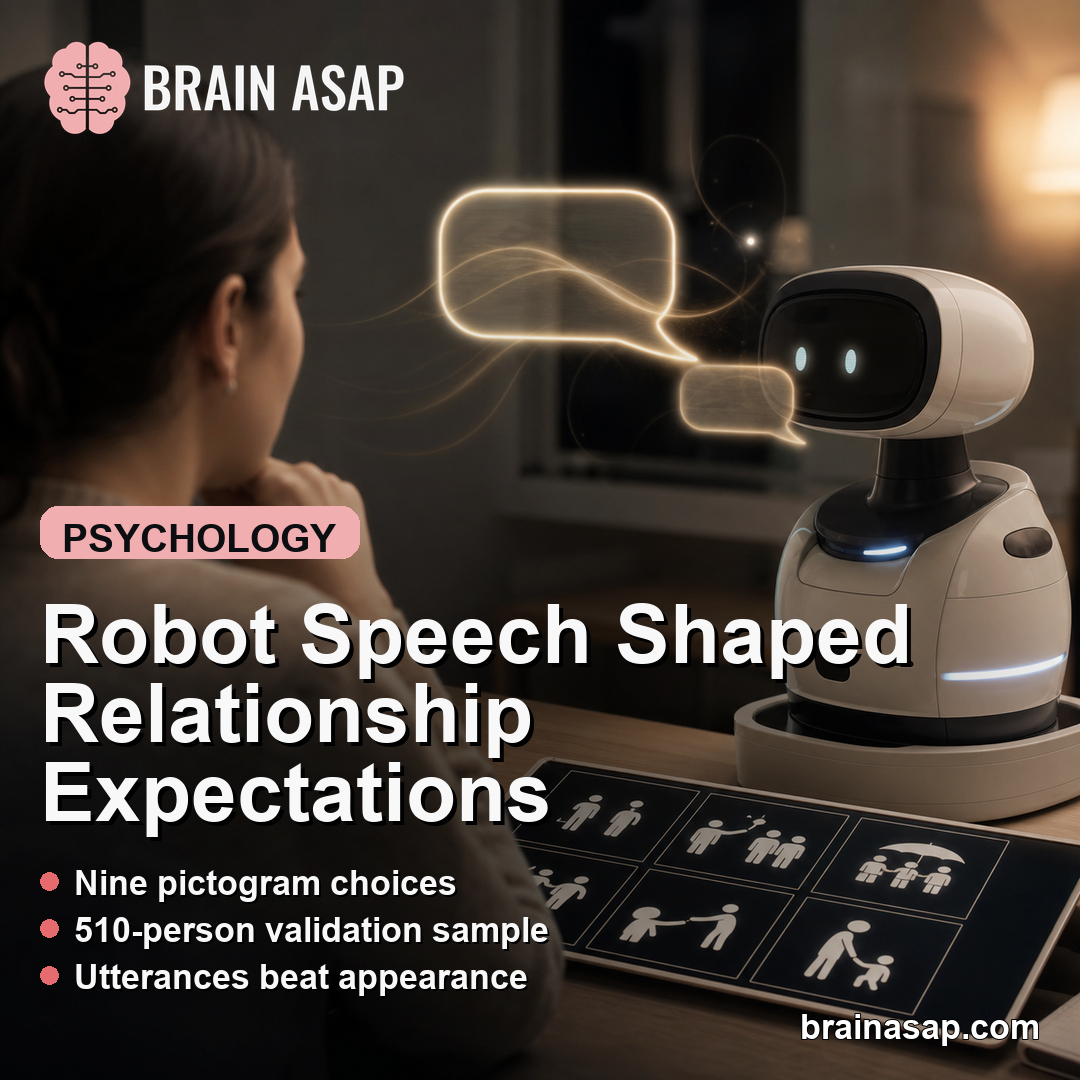
Robot Utterances Shaped Human-Robot Relationship Expectations More Than Appearance

TL;DR: A 2026 Scientific Reports study found that a robot’s utterances shaped expected human-robot relationship structure far more than the robot’s physical appearance in Japanese online scenario experiments. Key Findings Nine pictograms: Researchers built a nine-pictogram questionnaire to capture perceived relationship structures such as balanced contribution, one-sided service, and shared goals. 510-person validation sample: Survey …

Read more

Mental Health Apps Split Depression, Anxiety, and Workplace Well-Being Effects

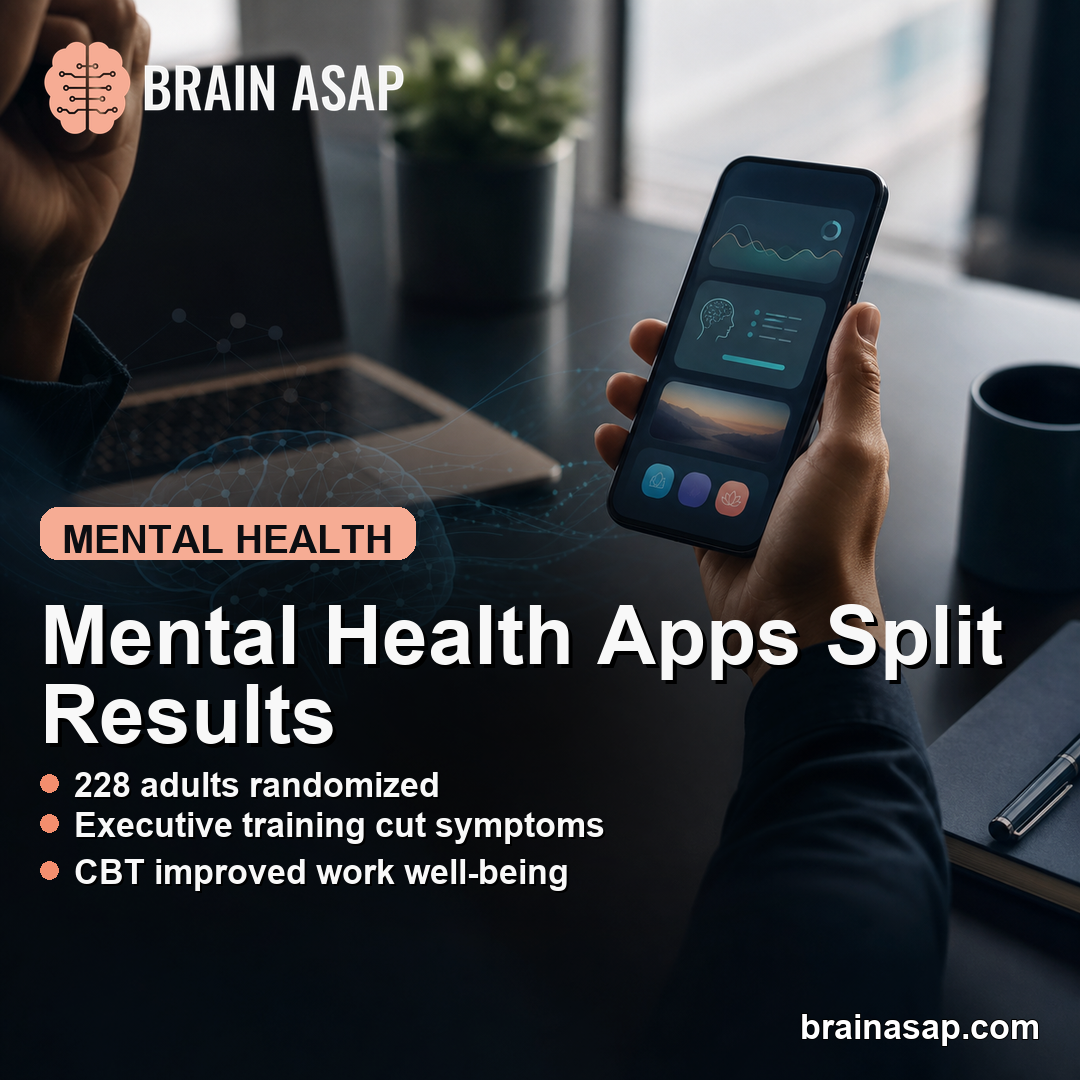
Mental Health Apps Split Depression, Anxiety, and Workplace Well-Being Effects

TL;DR: A 2026 randomized trial in JMIR Mental Health found that a 4-week executive-function training app reduced depression and anxiety symptoms at 12-week follow-up, while a self-guided CBT app mainly improved workplace well-being. Key Findings Workplace app trial: Participants with mild-to-moderate depression and anxiety symptoms were assigned to waitlist control, NeuroNation executive-function training, or Moodfit …

Read more

AI Remote Monitoring Studies Favored Parkinson’s but Had High Bias Risk

AI Remote Monitoring Studies Favored Parkinson's but Had High Bias Risk

TL;DR: A 2026 systematic review in BMC Medical Informatics and Decision Making found that AI models using remote-monitoring data were most often studied in Parkinson’s disease, but 56 of 76 prospective studies had high risk of bias. Key Findings 6,668 records were screened: Researchers narrowed the search to 76 prospective studies of machine learning for …

Read more

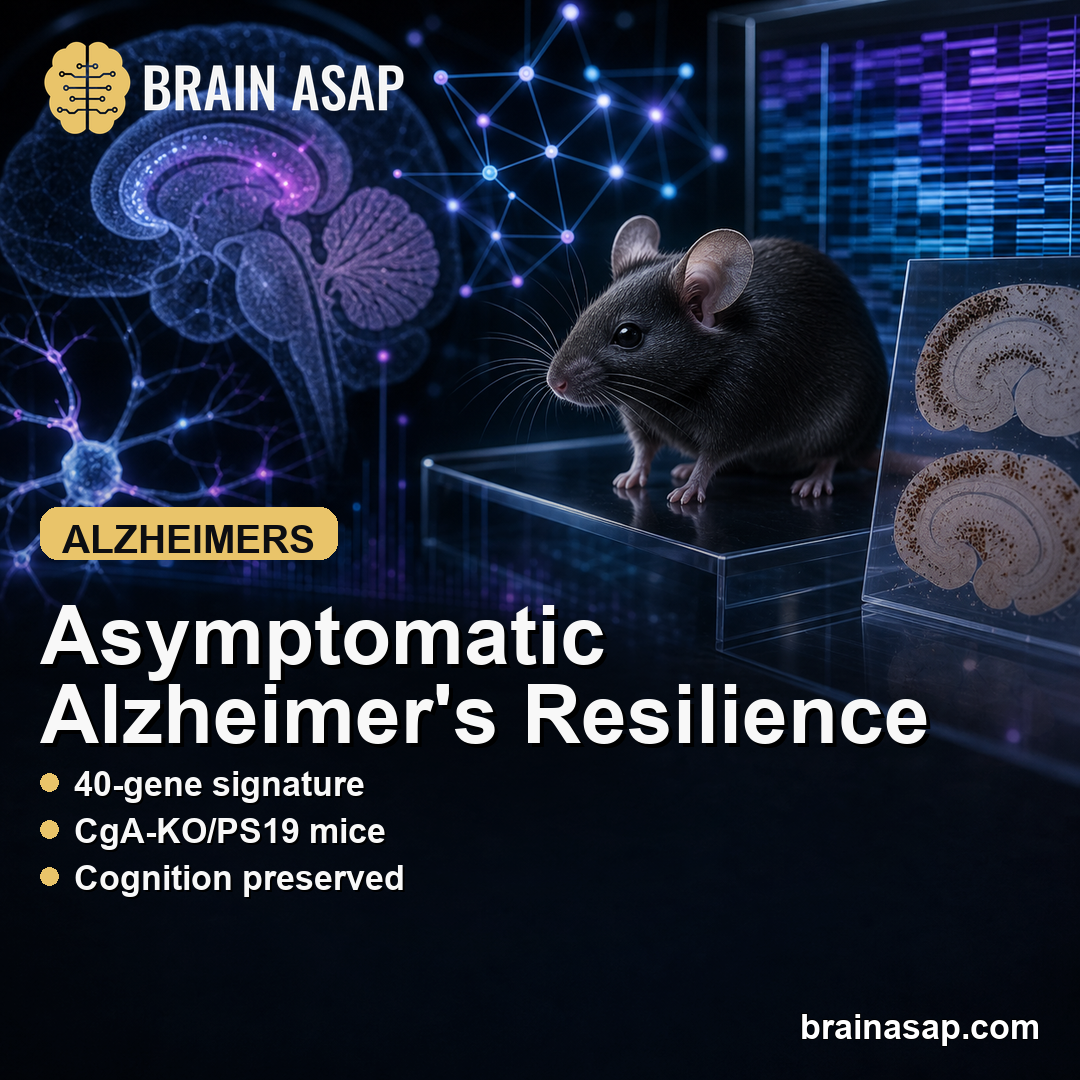
AI Identified CgA-KO/PS19 Mouse Model of Asymptomatic Alzheimer’s Resilience

AI Identified CgA-KO/PS19 Mouse Model of Asymptomatic Alzheimer’s Resilience

TL;DR: A 2026 study in Acta Neuropathologica Communications used Boolean-network AI analysis of Alzheimer’s RNA-seq data to identify a 40-gene disease signature and validate CgA-KO/PS19 mice as a model of asymptomatic Alzheimer’s-like resilience. Key Findings 289-person training set: Boolean Network Explorer was trained on cortical RNA-seq data from 70 cognitively normal controls and 219 Alzheimer’s …

Read more

Uncensored Trauma Videos Were Linked to Higher PTSD Symptoms

Uncensored Trauma Videos Were Linked to Higher PTSD Symptoms

TL;DR: A 2026 preprint cohort analysis in medRxiv found that about 24.1% of the sample met the PCL-5 threshold for probable post-traumatic stress disorder, or PTSD, while frequent uncensored video exposure was associated with higher PTSD symptom severity after accounting for other risk factors. Key Findings Indirect trauma design: Researchers studied people who were not …

Read more

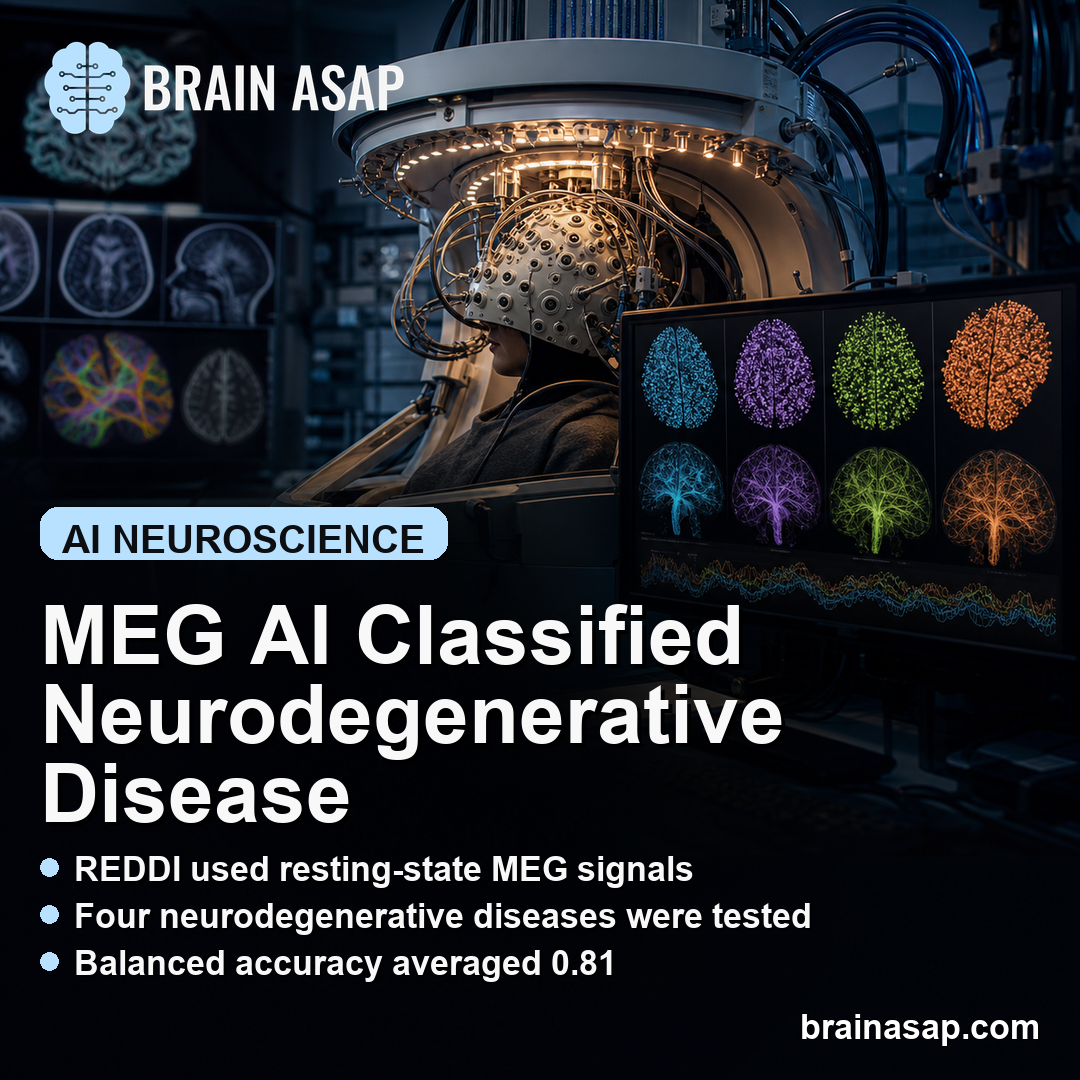
REDDI MEG AI Classified Four Neurodegenerative Diseases With 0.81 Balanced Accuracy

REDDI MEG AI Classified Four Neurodegenerative Diseases With 0.81 Balanced Accuracy

TL;DR: A 2026 preprint in medRxiv reported that REDDI, an interpretable AI pipeline using resting-state magnetoencephalography (MEG), classified four neurodegenerative diseases with mean balanced accuracy of 0.81. Key Findings The dataset covered four disease groups: it included 32 people with mild cognitive impairment, 18 with multiple sclerosis, 20 with Parkinson’s disease, and 39 with amyotrophic …

Read more

Portable MRI Supported Brain Volume Analysis During ECMO

Portable MRI Supported Brain Volume Analysis During ECMO

TL;DR: A 2026 medRxiv preprint reported that bedside 64 mT portable MRI scans from ECMO patients could support brain-volume analysis, with segmented volumes broadly comparable to conventional MRI and low-field MRI scans without ECMO equipment. Key Findings 30 ECMO scans: The volumetric pipeline analyzed T2-weighted portable MRI scans from 30 patients receiving extracorporeal membrane oxygenation. …

Read more

NeXtSwin-X Classified Brain Tumors From MRI and CT Benchmarks

NeXtSwin-X Classified Brain Tumors From MRI and CT Benchmarks

TL;DR: A 2026 study in Scientific Reports reported that NeXtSwin-X, a dual-branch AI model combining ConvNeXt and Swin Transformer features, achieved strong brain tumor classification performance across eight public MRI and CT datasets after only 10 training epochs. Key Findings Eight imaging datasets: The model was evaluated on eight public brain tumor MRI and CT …

Read more

Empathy for Pain Persisted Across Live and Prerecorded Video in EEG Study

Empathy for Pain Persisted Across Live and Prerecorded Video in EEG Study

TL;DR: A 2026 electroencephalography (EEG) study in Cognitive, Affective, & Behavioral Neuroscience found that observers’ empathy-for-pain ratings and physiological coupling stayed similar whether they watched another person receive painful stimulation through a live video call or a prerecorded video, although live interaction produced an earlier frontal theta brain response. Key Findings 35 observers tested: Researchers …

Read more

E-GAT + Bi-LSTM AI Classified Emotion Across Modalities

E-GAT + Bi-LSTM AI Classified Emotion Across Modalities

TL;DR: A 2026 study in PLOS One reported that an artificial intelligence model combining enhanced graph attention with bidirectional long short-term memory classified emotion from text, speech, facial cues, and video benchmarks with its strongest performance on the CMU-MOSEI multimodal dataset. Key Findings Three benchmark datasets: The model was tested on SemEval-2018 text, RAVDESS speech-and-face …

Read more