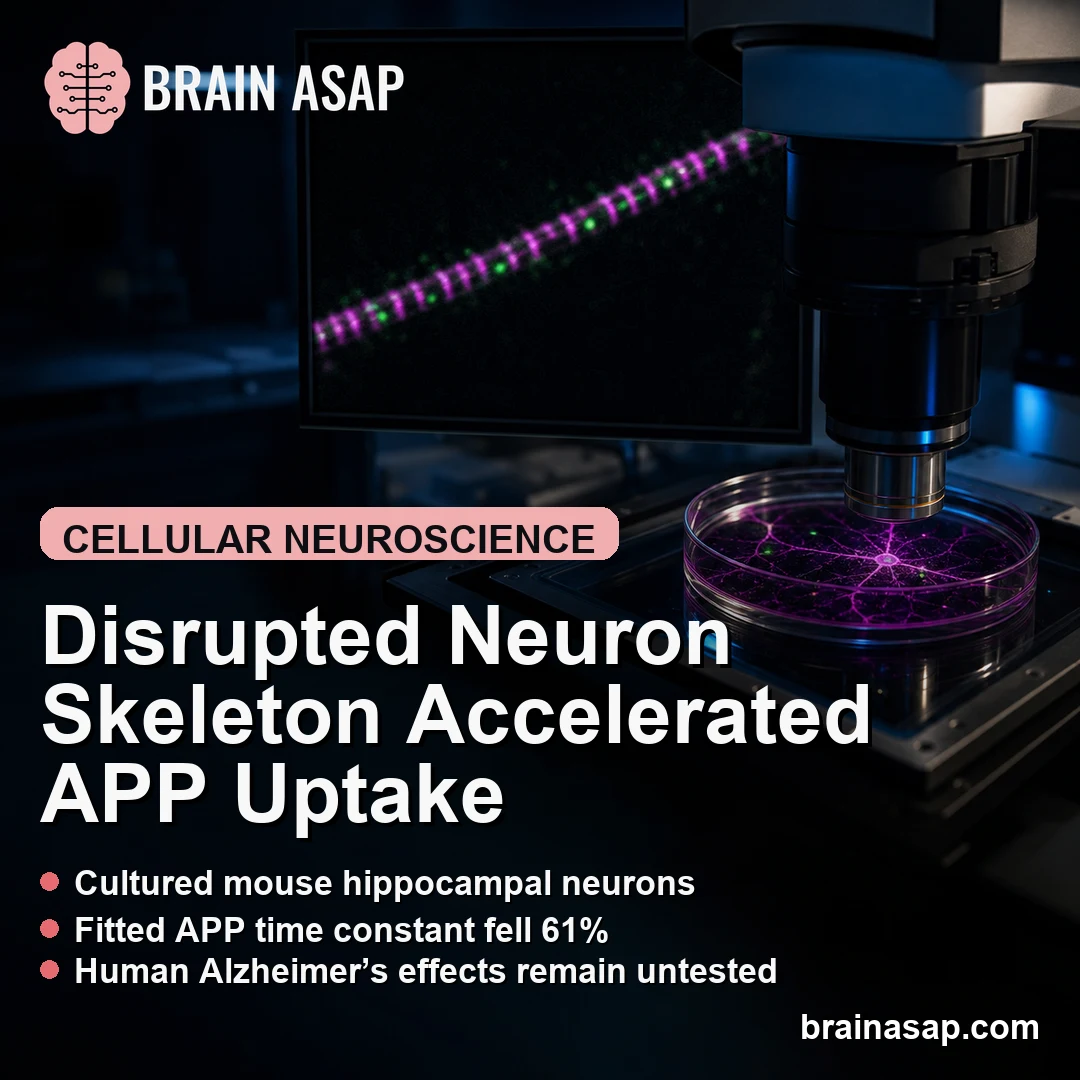
TL;DR: A 2026 study in Science Advances reported that disrupting the membrane-associated periodic skeleton (MPS), an actin-spectrin lattice beneath neuron membranes, reduced the fitted amyloid precursor protein (APP) uptake time constant in cultured mouse hipp…
Read article ↗
TL;DR: A 2026 review in Journal of Neuroinflammation proposed that Alzheimer microglial dysfunction can be understood as checkpoint collapse, where failed regulatory controls feed three interacting lipid, iron/ferroptosis, and inflammation/complement axes. Key…
Read article ↗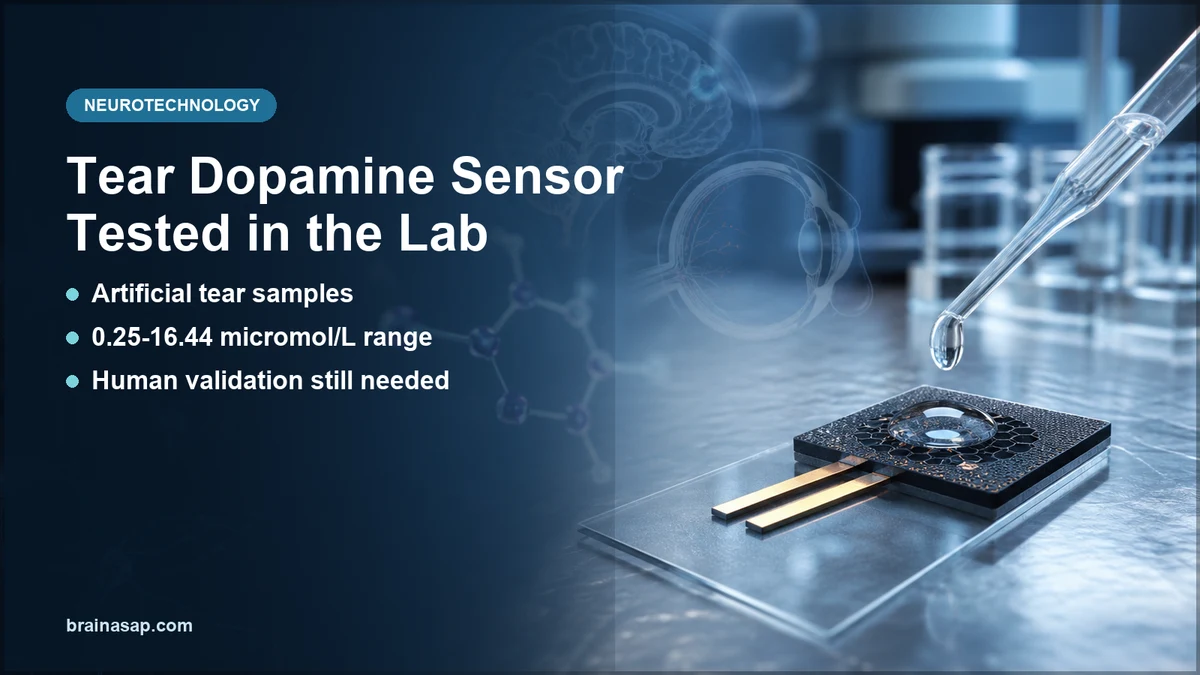
TL;DR: A 2026 laboratory study in ACS Omega reported that a laser-induced graphene sensor detected dopamine across a controlled range in artificial human tears, supporting a possible noninvasive biomarker-monitoring route that still needs real human tear testi…
Read article ↗
TL;DR: A 2026 post-hoc reanalysis in Molecular Psychiatry found that women assigned davunetide in a prior 52-week progressive supranuclear palsy trial had more favorable scores on the 10-item PSP Rating Scale (PSPRS-10), daily-living measures, and several cogn…
Read article ↗
TL;DR: A 2026 preprint in medRxiv reported that people living with dementia (PLwD) and carers were generally open to artificial intelligence (AI) support in structured medication reviews, but only when AI remained validated, transparent, secure, and subordinat…
Read article ↗
TL;DR: A 2026 Nature Communications paper introduced EmulatRx, a multi-agent AI framework that used real-world clinical data to help design target-trial-emulation workflows for acute and chronic diseases, including Alzheimer disease and Parkinson disease examp…
Read article ↗
TL;DR: A 2026 study in eNeuro used intracranial electroencephalography (EEG), a recording method for brain electrical activity, during deep brain stimulation surgery and found that Parkinson’s disease and essential tremor patients with elevated depression symp…
Read article ↗
TL;DR: A 2026 preprint in medRxiv analyzed plasma proteomics in Alzheimer’s disease and mild cognitive impairment and found that four continuous molecular axes described the data better than hard subtype labels. Key Findings 5,895-person AD/MCI sample: The dis…
Read article ↗
TL;DR: A 2026 preprint in medRxiv warned that a standard Alzheimer’s disease biomarker-clock analysis can create a countdown paradox, where later biomarker-clock ages appear linked to faster mild cognitive impairment onset because of the way remaining time is…
Read article ↗
TL;DR: A 2026 study in Communications Medicine reported that artificial intelligence (AI) and multi-contrast MRI post-processing could reveal cortical lesions in multiple sclerosis trial scans that standard MRI review usually misses. Key Findings 80-person met…
Read article ↗