TL;DR: A 2026 study in Nature Communications found that different brain-connectivity measures predicted different parts of associative learning: functional connectivity predicted acquisition, structural connectivity predicted extinction learning, and effective…
Read article ↗
TL;DR: A 2026 Research Square preprint linked DNA methylation (DNAm), an epigenetic mark measured in cord blood at birth, with default mode network-limbic brain development and age-13 anxiety symptoms in boys. Key Findings Birth-to-teen pathway tested: Researc…
Read article ↗
TL;DR: A 2026 case study in Neurological Sciences described 2 Tourette syndrome patients who developed oculogyric crisis, a sustained upward eye-rolling dystonia, after aripiprazole was increased to 20-30 mg/day, with both cases resolving after dose reduction.…
Read article ↗
TL;DR: A 2026 medRxiv preprint reported that Hwa-free, a 4-week acceptance and commitment therapy app for Hwa-byung, was used on an average of 19.9 of 28 days and was followed by lower Hwa-byung symptoms, depression scores, and state anger in a small single-ar…
Read article ↗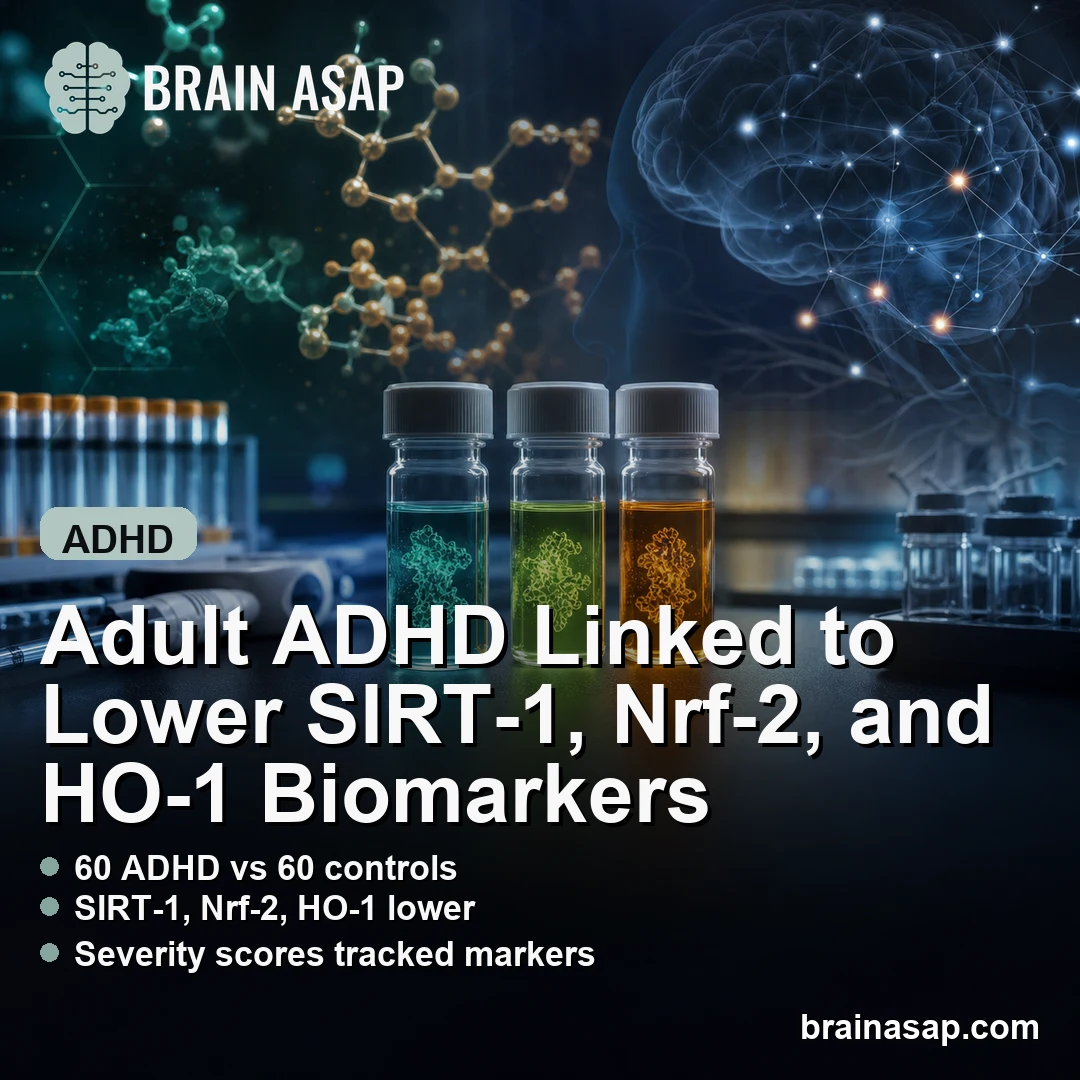
TL;DR: A 2026 cross-sectional study in Metabolic Brain Disease linked adult attention-deficit/hyperactivity disorder (ADHD) with lower serum SIRT-1, Nrf-2, and HO-1, three redox-regulation markers tied to antioxidant defense. Key Findings 120 adults studied: T…
Read article ↗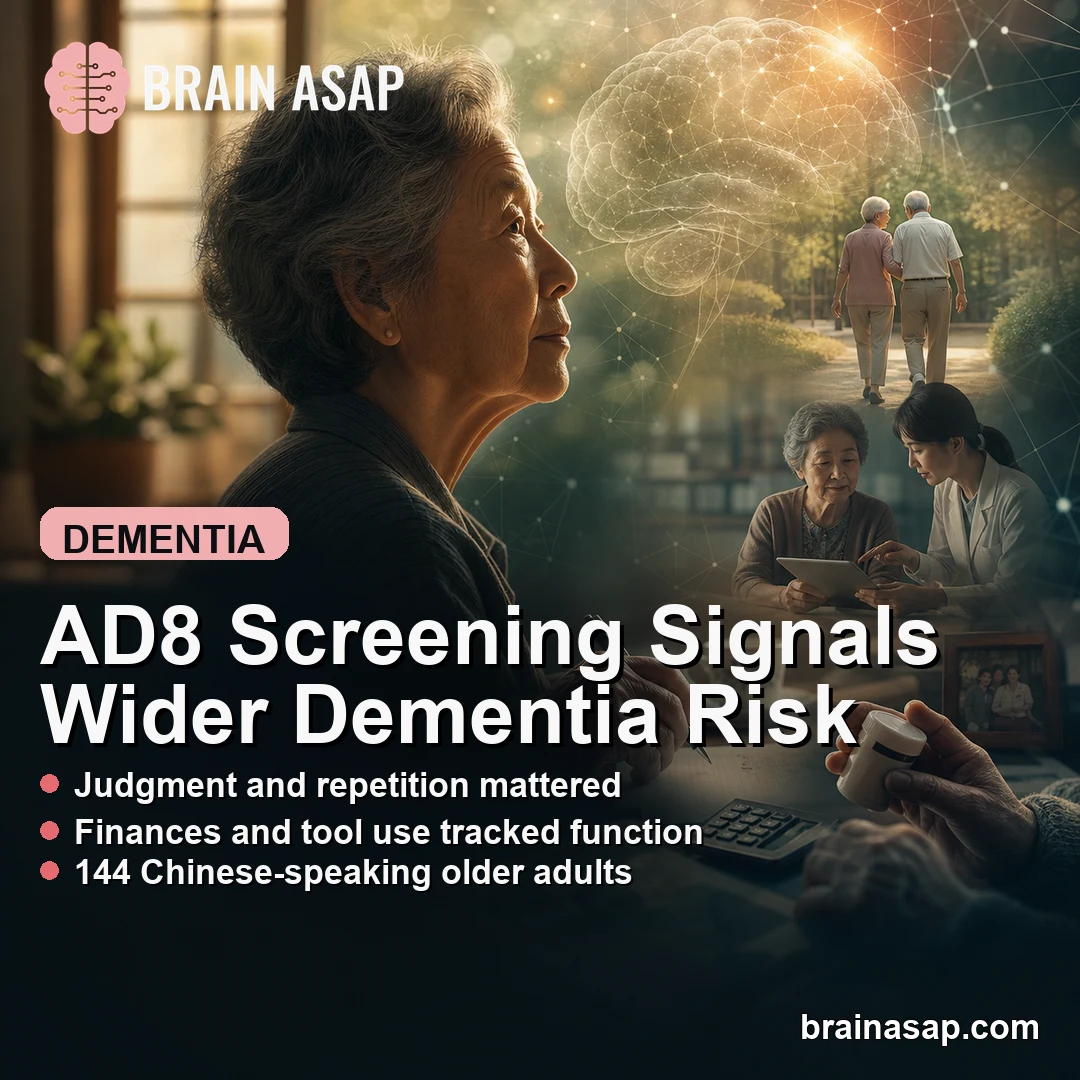
TL;DR: A 2026 medRxiv preprint found that specific AD8 dementia-screening items, especially judgment, repetition, finances, tool use, and daily memory problems, tracked functional and psychosocial vulnerability in 144 Chinese-speaking older adults. Key Finding…
Read article ↗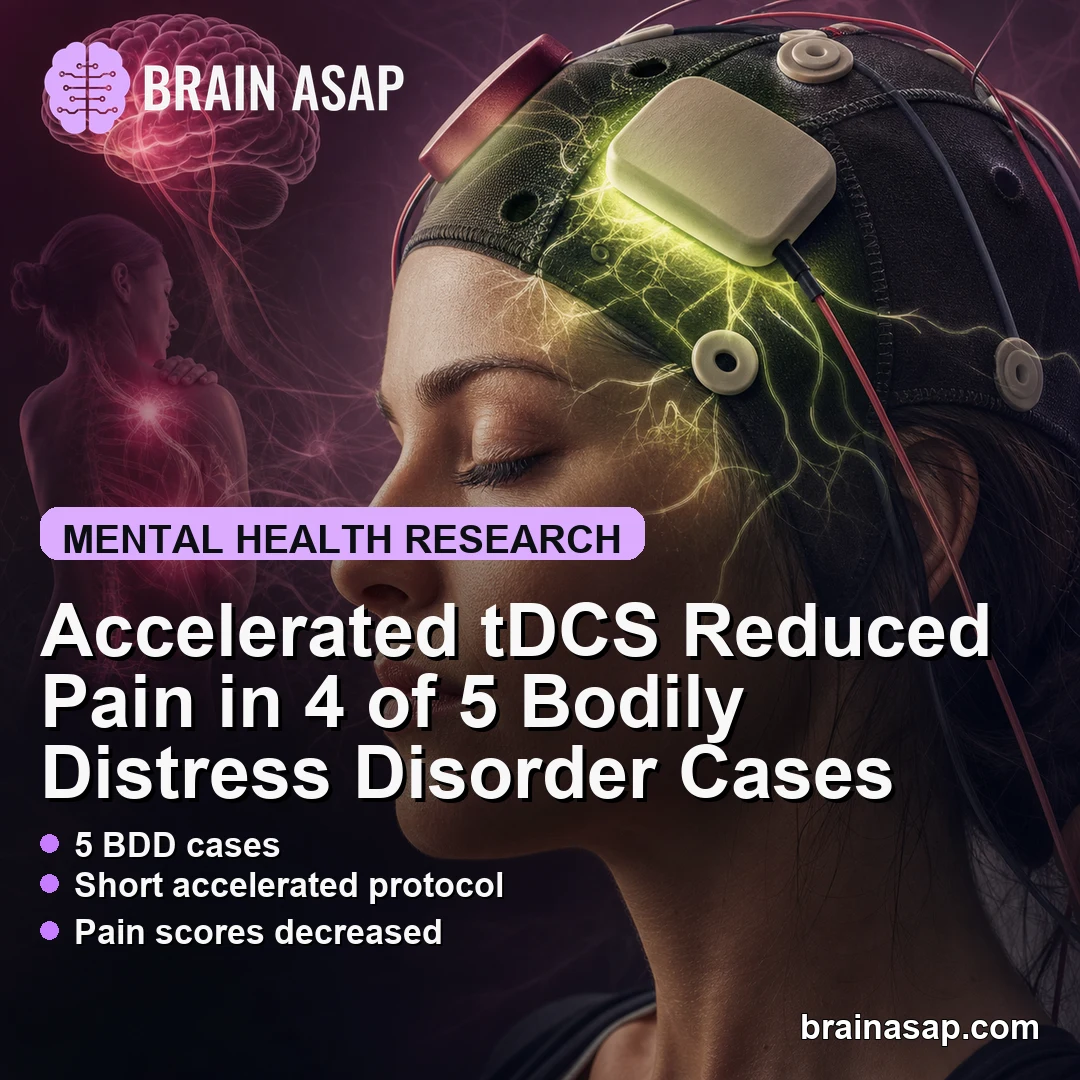
TL;DR: A 2026 case-series study in Indian Journal of Psychological Medicine reported rapid pain and symptom improvement after accelerated transcranial direct current stimulation in 4 of 5 patients with treatment-resistant bodily distress disorder. Key Findings…
Read article ↗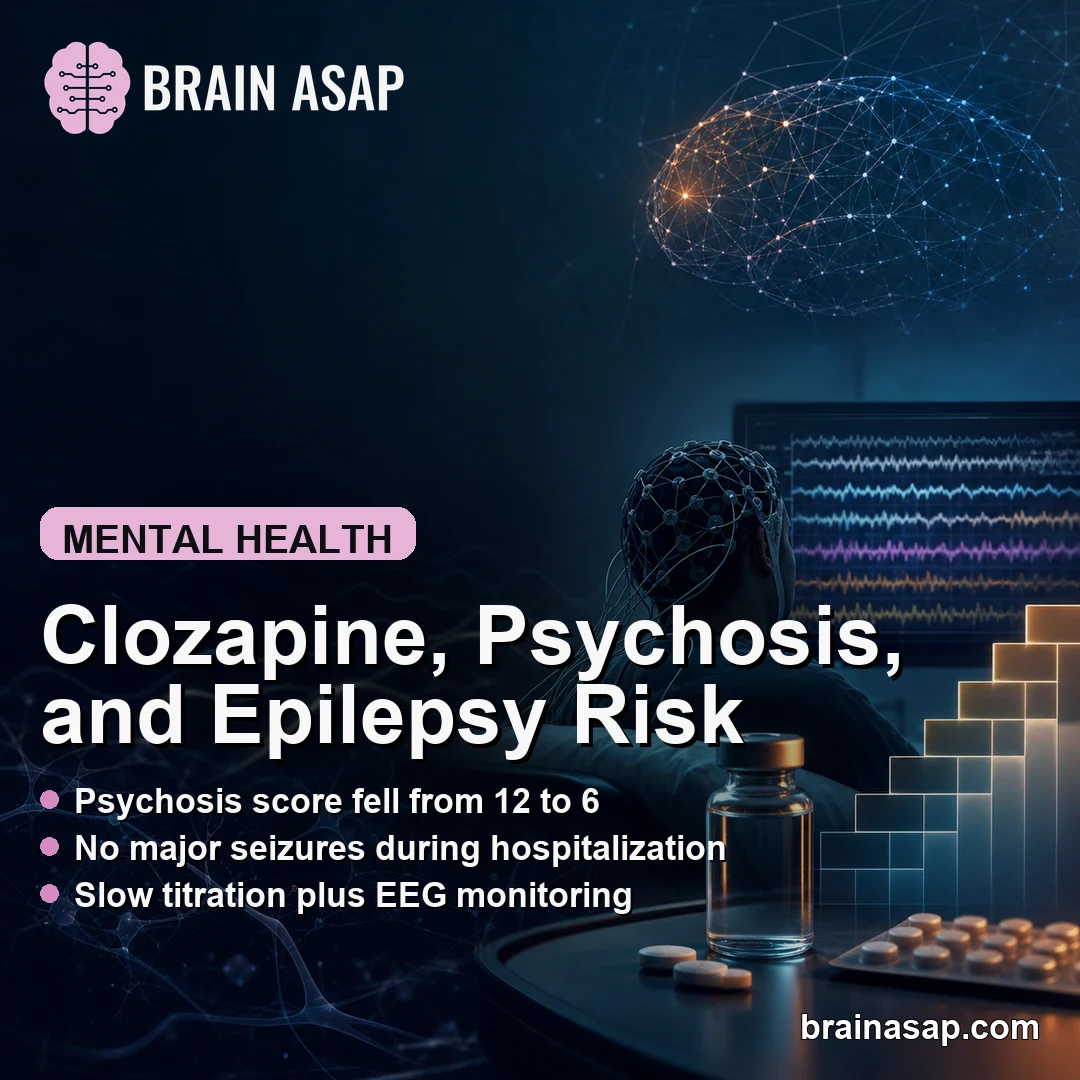
TL;DR: A 2026 case study in Psychiatry and Clinical Neurosciences Reports described a 36-year-old man with treatment-resistant schizophrenia and focal epilepsy whose psychosis improved after slow clozapine titration, without worsening seizure frequency or seve…
Read article ↗
TL;DR: A 2026 meta-analysis in European Journal of Psychotraumatology found that trauma cues increased substance craving in trauma-exposed people who use substances, and the strongest pathway ran through cue-triggered negative affect. Key Findings 32 studies:…
Read article ↗
TL;DR: A 2025 study in Computers in Human Behavior linked at-risk problematic gaming to weaker basic working memory, while recreational gaming was linked to better target detection on an attention-control task. Key Findings Three gaming groups: Researchers com…
Read article ↗