TL;DR: A 2026 network analysis study in European Archives of Psychiatry and Clinical Neuroscience found that insomnia was present in 18.3% and childhood trauma in 49.5% of patients, while daytime dysfunction and sleep-related distress were central nodes, while…
Read article ↗
TL;DR: A 2026 BMC Medicine study of UK Biobank adults linked adversity in both childhood and adulthood to higher frailty, older metabolomic age profiles, lower grip strength, and some telomere differences, with the clearest associations in people reporting mul…
Read article ↗
TL;DR: A 2026 cohort study in BJPsych Open found that childhood attention-deficit/hyperactivity disorder (ADHD) and autism spectrum disorder (ASD) difficulties predicted poorer young-adult outcomes, but rare copy number variants (CNVs), which are deleted or du…
Read article ↗
TL;DR: A 2025 randomized trial in Scandinavian Journal of Primary Health Care found that a self-help book based on cognitive behavioral therapy for insomnia (CBT-I), a structured non-drug insomnia treatment, reduced daily hypnotic sleep-medication use and anxi…
Read article ↗
TL;DR: A 2026 systematic review in European Archives of Psychiatry and Clinical Neuroscience argues that catatonia, a syndrome of freezing, mutism, and abnormal movement, may involve underweighted limbic-system circuitry linking emotional regulation with motor…
Read article ↗
TL;DR: A 2026 study in the Journal of Child Psychology and Psychiatry found unexpected bilingualism in 38.7% of autistic children aged 2-6, about 4.4 times the rate in typically developing peers, with caregivers reporting screen media as the usual source. Key…
Read article ↗
TL;DR: A 2026 preprint electrophysiology study in medRxiv found that the Hurst exponent and gamma oscillations tracked different aspects of excitation-inhibition balance, while human EEG data suggested two autism neurosubtypes with opposing Hurst-gamma profile…
Read article ↗
TL;DR: A 2026 study in Psychological Medicine found that stopping maintenance antidepressants did not meaningfully change facial emotion recognition over 12 or 52 weeks in adults with recurrent depression who were currently well. Key Findings Trial sample: The…
Read article ↗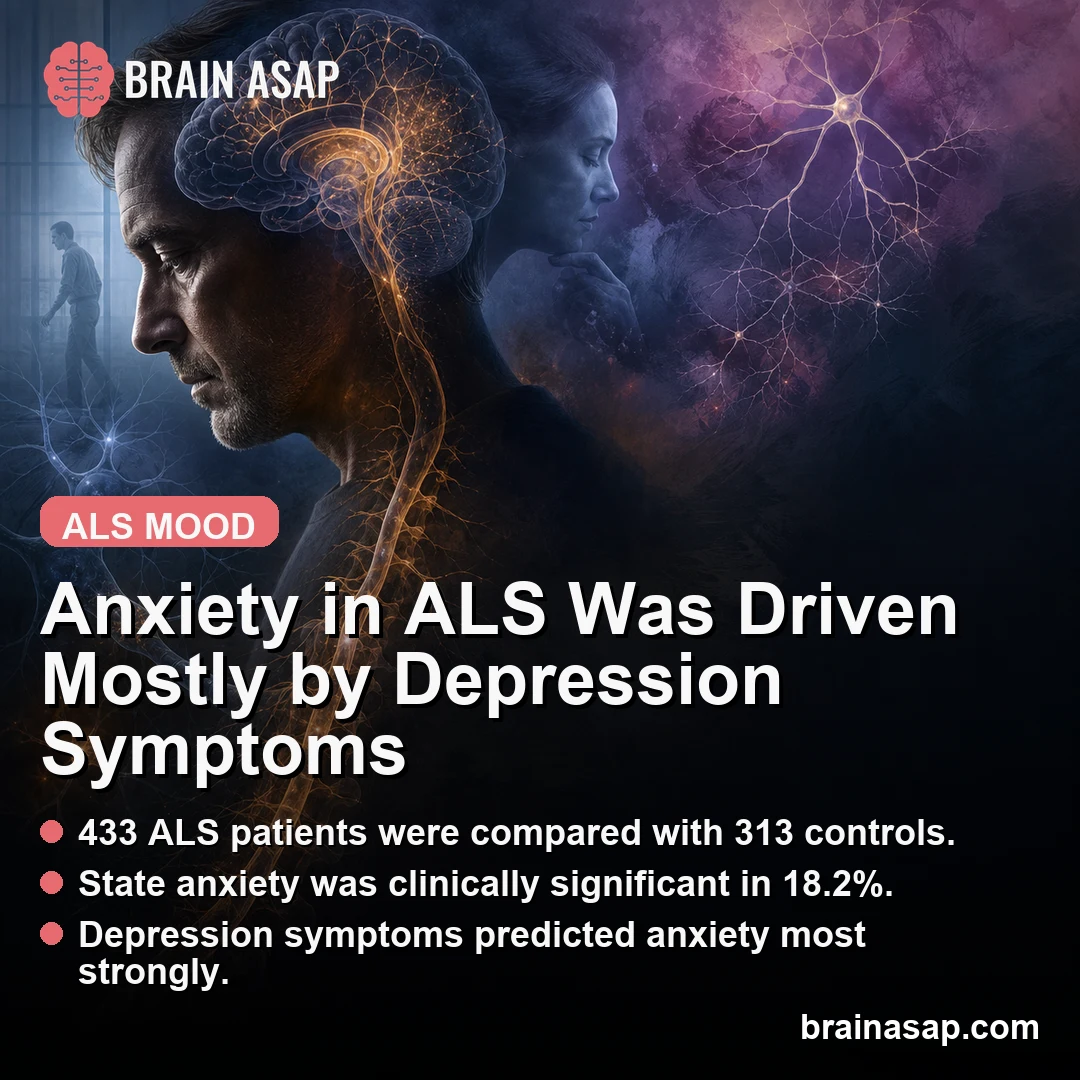
TL;DR: A 2026 BJPsych Open study found clinically significant anxiety in about 18% of non-demented ALS patients for state anxiety and 14% for trait anxiety, with anxiety scores driven mainly by cognitive-affective depression symptoms rather than motor severity…
Read article ↗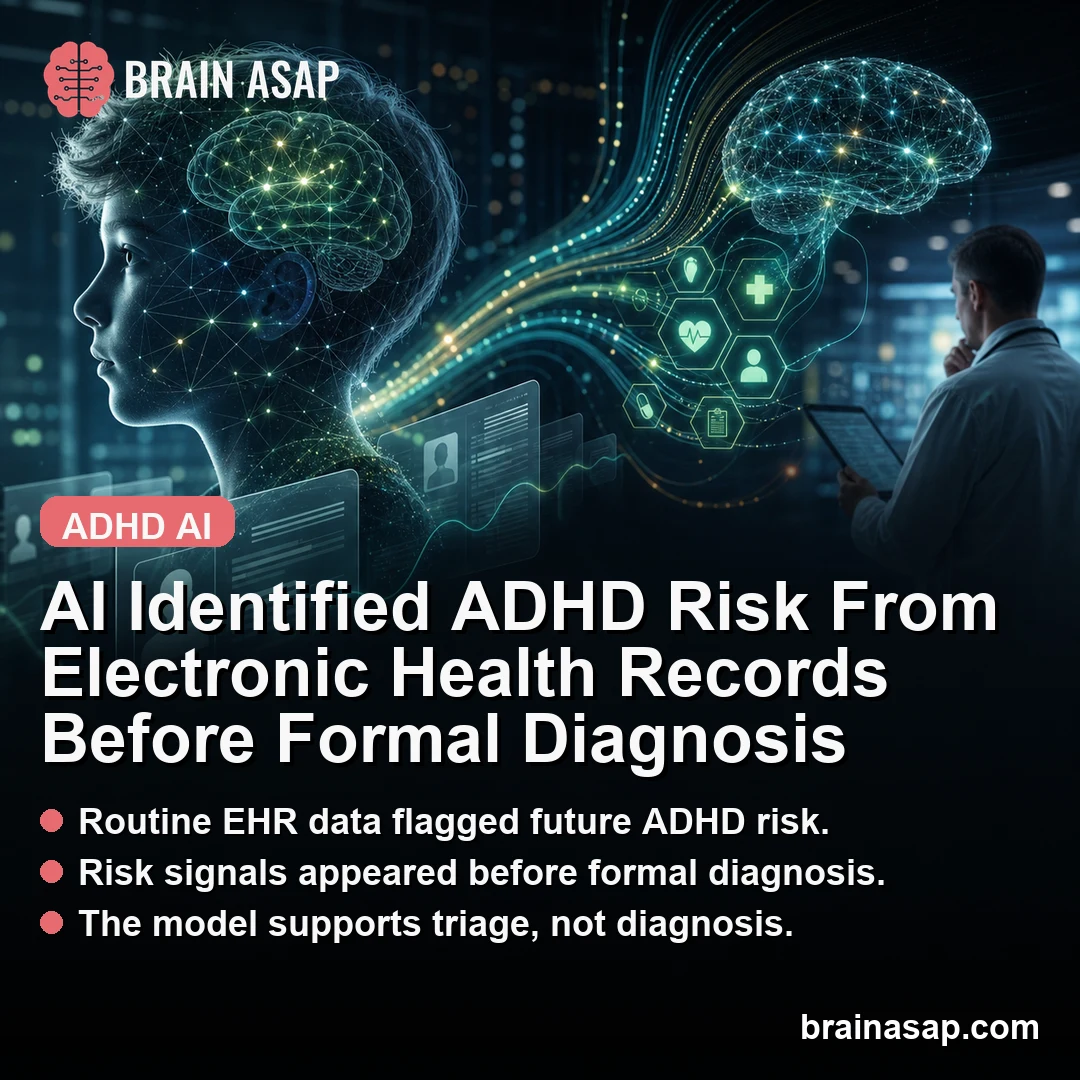
TL;DR: A 2026 study in Nature Mental Health describes an AI system that scans routine electronic health records (EHRs) and combines early-life visits, prescriptions, and comorbidities into a risk flag for ADHD evaluation before formal diagnosis. Key Findings A…
Read article ↗