Esketamine PTSD Flashbacks Usually Faded in Treatment-Resistant Depression Case Series
Esketamine PTSD Flashbacks Usually Faded in Treatment-Resistant Depression Case Series

TL;DR: A 2026 retrospective case series study in European Journal of Psychotraumatology found that trauma flashbacks during esketamine nasal spray sessions were distressing but usually time-limited in 22 patients with treatment-resistant depression and PTSD; when treatment continued, depression response was 45.5% and PTSD improvement was 45.5%. Key Findings 22-patient case series: Researchers reviewed adults with …
Read more

Electroacupuncture for Depression Needs Biomarker-Guided Trials

Electroacupuncture for Depression Needs Biomarker-Guided Trials

TL;DR: A 2026 review in Neuropsychiatric Disease and Treatment argued that electroacupuncture (EA), acupuncture delivered with small electrical stimulation, has depression-related mechanism evidence, but clinical trials need biomarker-guided patient groups, standardized stimulation dose, and objective outcomes before EA can be treated as precision depression care. Key Findings Clinical evidence remains uneven: some randomized trials and …

Read more

Metoclopramide and Antipsychotics Led Drug-Induced Dystonia Reports

Metoclopramide and Antipsychotics Led Drug-Induced Dystonia Reports

TL;DR: A 2026 study in Health Science Reports found that metoclopramide and several antipsychotics were strongly overrepresented in FDA adverse-event reports for drug-induced dystonia, with many reported cases appearing within the first month after drug initiation. Key Findings 28,938 dystonia reports: Researchers analyzed FDA Adverse Event Reporting System records from the first quarter of 2004 …

Read more

Dreams and Mind Wandering Had Similar Bizarre-Element Density

Dreams and Mind Wandering Had Similar Bizarre-Element Density

TL;DR: A 2026 study in Consciousness and Cognition found that waking mind wandering and nighttime dreaming had nearly the same density of bizarre elements, even though dreams were more likely to be rated as bizarre whole reports. Key Findings 379 experience reports: Researchers analyzed daily audio descriptions of one dream and one waking mind-wandering episode …

Read more

DNA Methylation Clock Ages Differed Across Saliva and Blood Samples

DNA Methylation Clock Ages Differed Across Saliva and Blood Samples

TL;DR: A 2026 study in Epigenetics found that DNA methylation clocks, which estimate biological aging from chemical marks on DNA, gave substantially older age estimates in saliva than in two blood-derived samples from 91 early-to-mid-adult participants. Key Findings The sample included 91 adults: Researchers analyzed participants from a twin and sibling study with a mean …

Read more

Childhood Poverty and Inhibitory Control Split Behavioral Risk Patterns

Childhood Poverty and Inhibitory Control Split Behavioral Risk Patterns

TL;DR: A 2026 preprint in medRxiv using ABCD Study data found that childhood poverty strengthened the link between early-life adversity and later behavioral problems, while inhibitory-control brain and temperament profiles separated higher- and lower-risk patterns within poverty-exposed youth. Key Findings 10,112 youth were analyzed: Researchers used the Adolescent Brain Cognitive Development Study to link baseline …

Read more

Childhood Blood Proteome Shifted With Age and Sex in Longitudinal Study

Childhood Blood Proteome Shifted With Age and Sex in Longitudinal Study

TL;DR: A 2026 Nature Communications study followed 100 Swedish participants from age 4 to 24 and found that more than half of detectable blood proteins changed with age, with sex-related protein differences becoming much larger by adolescence and early adulthood. Key Findings Four repeated blood draws: Researchers measured plasma proteins at ages 4, 8, 16, …

Read more

CBD Psychiatric Claims Need Standardized Products and Safety Monitoring

CBD Psychiatric Claims Need Standardized Products and Safety Monitoring

TL;DR: A 2026 paper in Neuropsychopharmacology argued that cannabidiol (CBD), a non-intoxicating cannabis compound, has plausible psychiatric and neurological uses, but clinical claims need standardized products, exposure tracking, and safety monitoring before retail CBD can be treated like medicine. Key Findings Epilepsy evidence is strongest: Approved prescription CBD has the clearest support in rare pediatric …

Read more

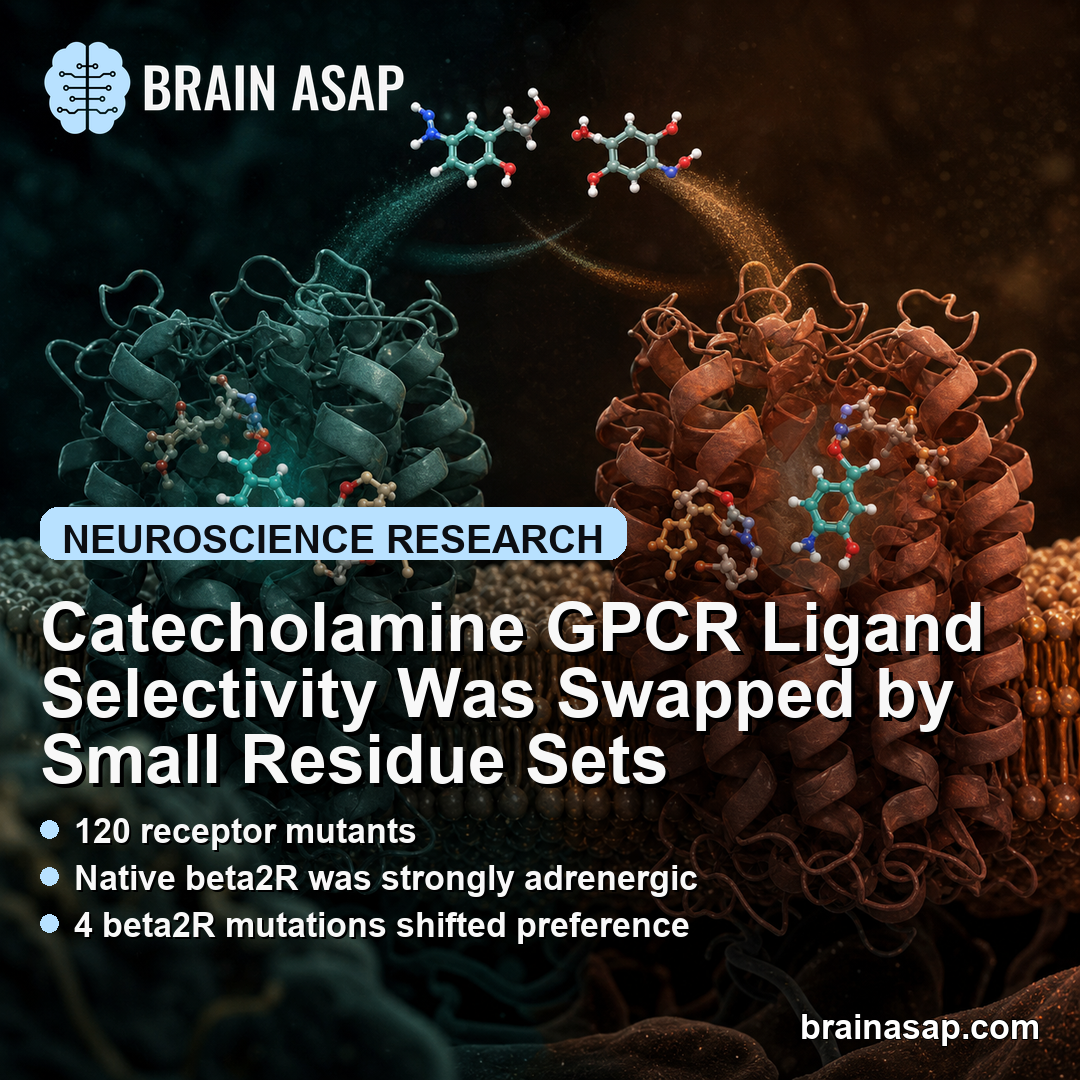
Catecholamine GPCR Ligand Selectivity Was Swapped by Small Residue Sets

Catecholamine GPCR Ligand Selectivity Was Swapped by Small Residue Sets

TL;DR: A 2026 Nature Communications study found that small sets of amino-acid changes could swap ligand preference between beta2 adrenergic and D1 dopamine receptors, showing that receptor selectivity depends on both the binding pocket and surrounding structural interfaces. Key Findings 120 receptor mutants: Researchers tested 120 engineered catecholamine receptor mutants across beta2 adrenergic and D1 …

Read more

Bumetanide Study Captured Sensory-Reactivity Changes in Neurodevelopmental Disorders

Bumetanide Study Captured Sensory-Reactivity Changes in Neurodevelopmental Disorders

TL;DR: A 2026 preprint in medRxiv found that a parent-cocreated sensory-reactivity outcome set captured anxiety, mood, sleep, fatigue, cognition, and peer-relationship changes during bumetanide treatment in children and adolescents with neurodevelopmental disorders, but the unmasked design means the results should not be treated as definitive drug efficacy evidence. Key Findings Treatment cohort: 113 children and …

Read more