Six Weeks of Static Arm Holds Raised Strength 27% and Shifted Brain-to-Muscle Signals
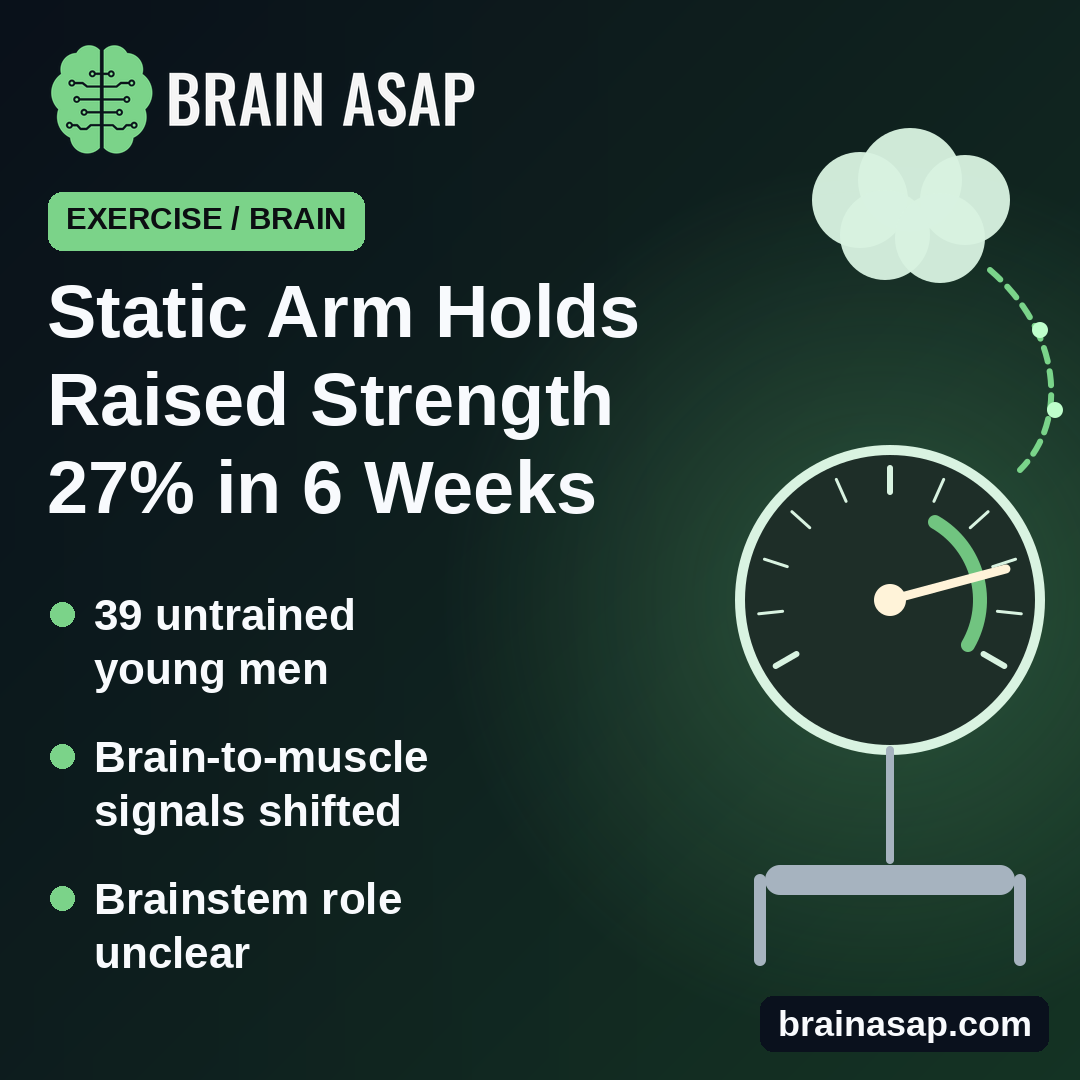
Six Weeks of Static Arm Holds Raised Strength 27% and Shifted Brain-to-Muscle Signals

TL;DR: Six weeks of home “static hold” arm training made untrained young men about 27% stronger and increased how fast they built up force by about 60%. Brain-to-muscle signals changed too, but tests of a proposed brainstem pathway gave mixed results. Key Findings Stronger fast: Maximum elbow-bending force rose about 27% in trained groups. Quicker …
Read more

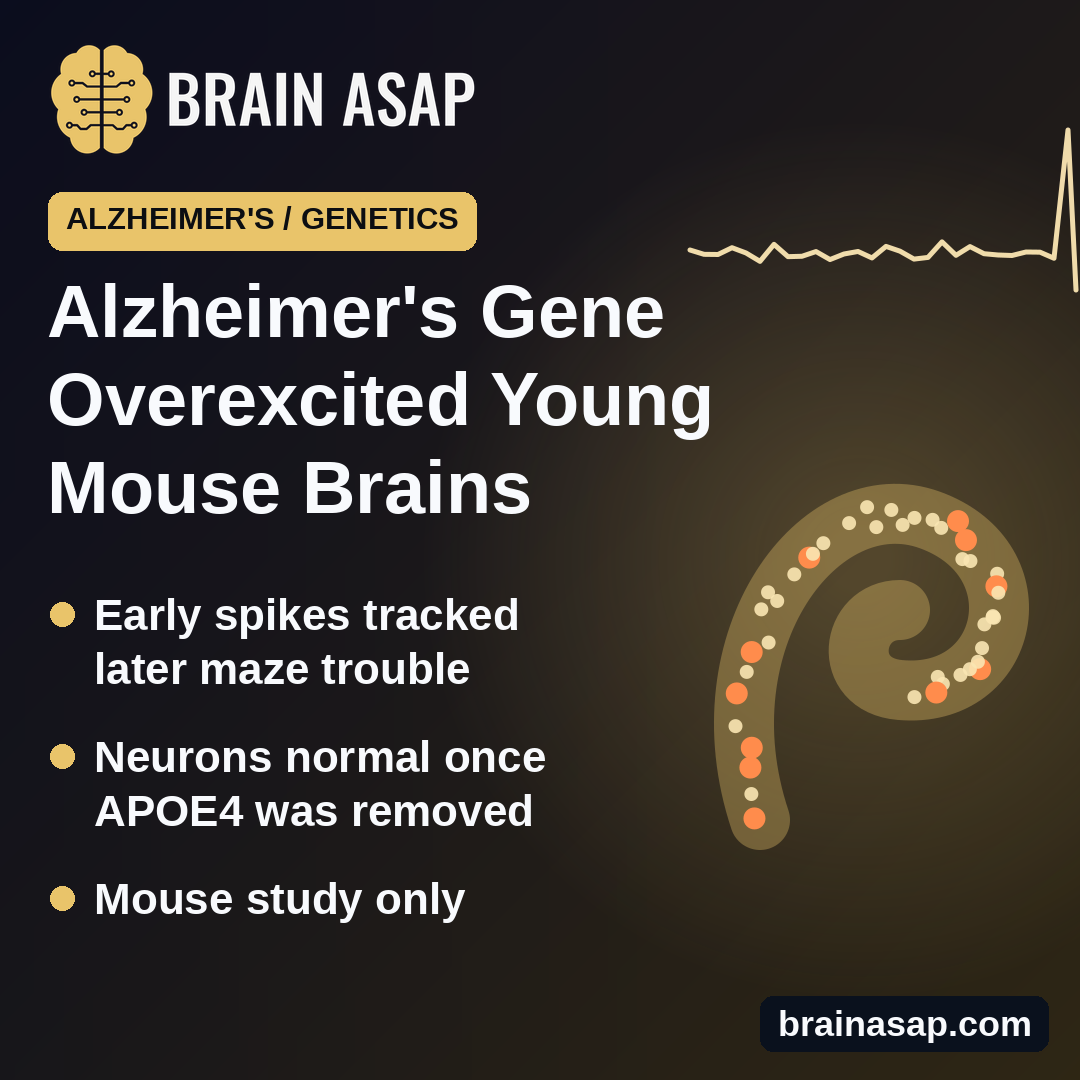
Alzheimer’s Risk Gene APOE4 Overexcited Young Mouse Memory Circuits Before Memory Declined

Alzheimer's Risk Gene APOE4 Overexcited Young Mouse Memory Circuits Before Memory Declined

TL;DR: Young mice carrying the human APOE4 gene, the biggest genetic risk factor for Alzheimer’s, had overexcited memory circuits months before any memory trouble showed up. Removing APOE4 from their neurons returned those cells to normal. Key Findings Early warning spikes: Young APOE4 mice had more abnormal electrical spikes in parts of the hippocampus. Spikes …

Read more

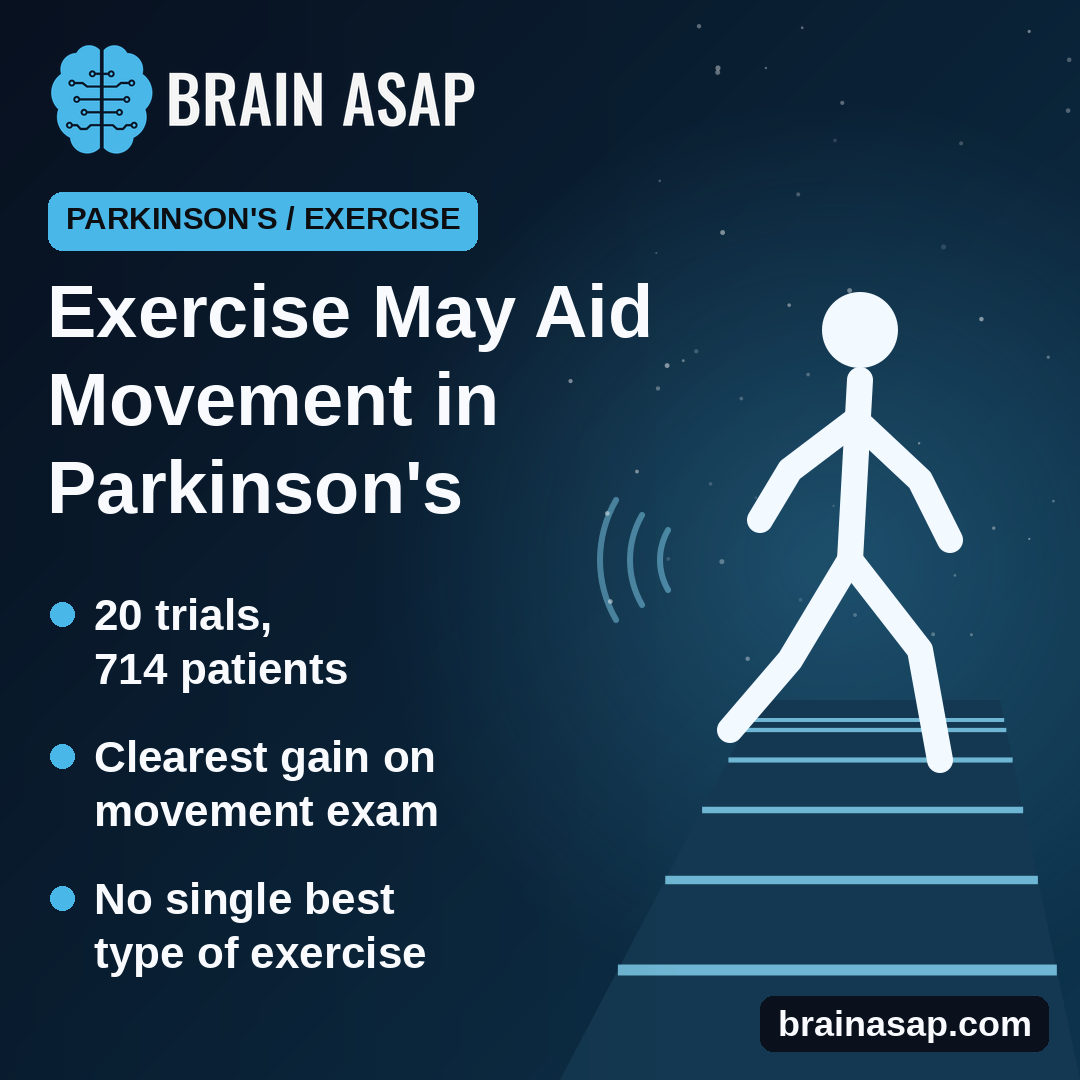
Exercise May Improve Movement, Freezing and Balance in Parkinson’s, Review Finds

Exercise May Improve Movement, Freezing and Balance in Parkinson's, Review Finds

TL;DR: Pooling 20 small trials in Parkinson’s disease, structured exercise improved movement-exam scores, freezing while walking and one balance test compared with usual care. The strongest evidence was for the movement exam, and no one type of exercise stood out. Key Findings 20 trials, 714 people: Tai chi, dance, treadmill, yoga, strength, water exercise and …

Read more

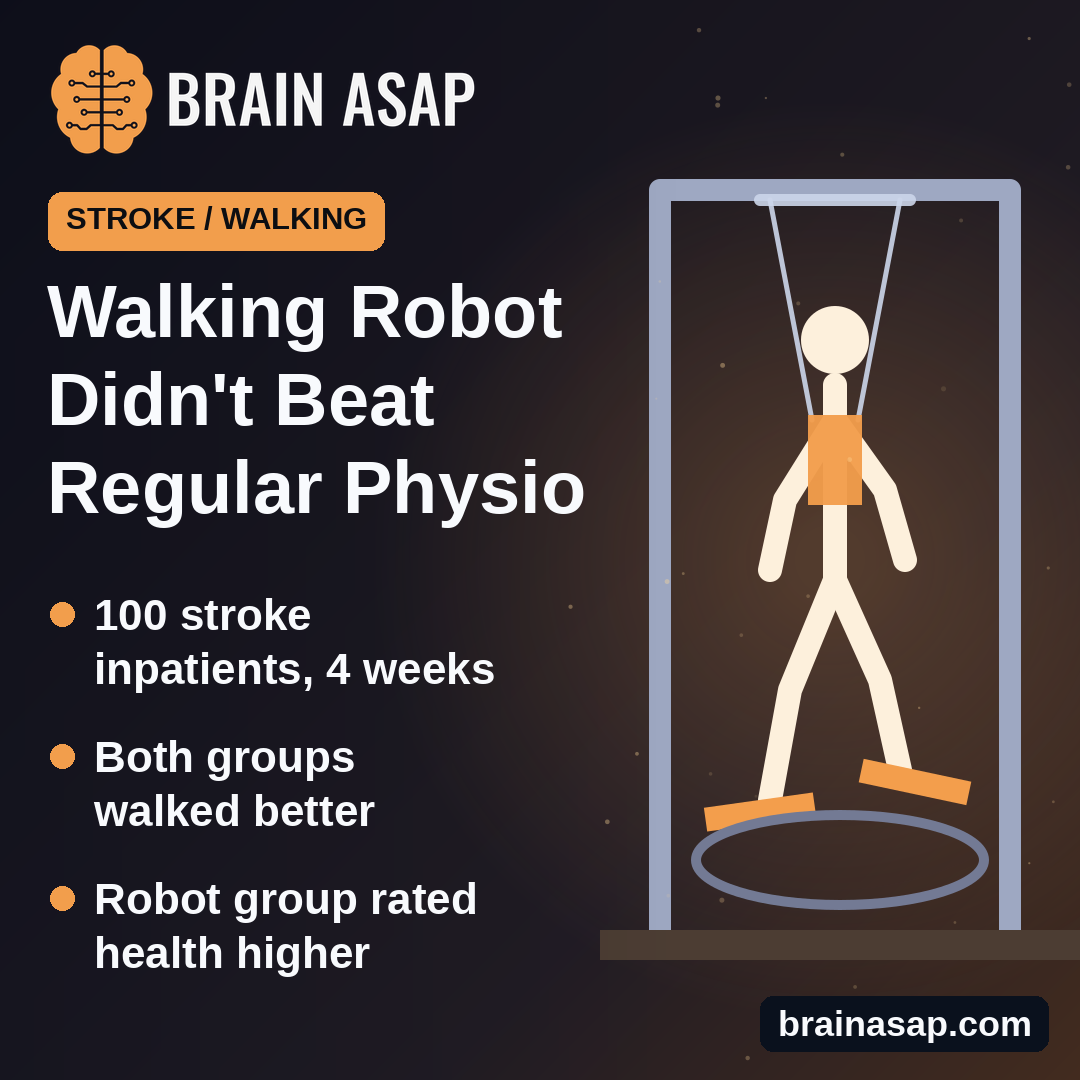
Robot Walking Training Did Not Beat Regular Physiotherapy After Stroke

Robot Walking Training Did Not Beat Regular Physiotherapy After Stroke

TL;DR: In a 4-week trial of 100 stroke rehab inpatients, walking practice on a robot showed no clear advantage over regular physiotherapy for walking independence or daily activities. Both groups improved, and the robot group rated their own health higher. Key Findings 100 inpatients, 4 weeks: Half in the first 6 months after stroke, half …

Read more

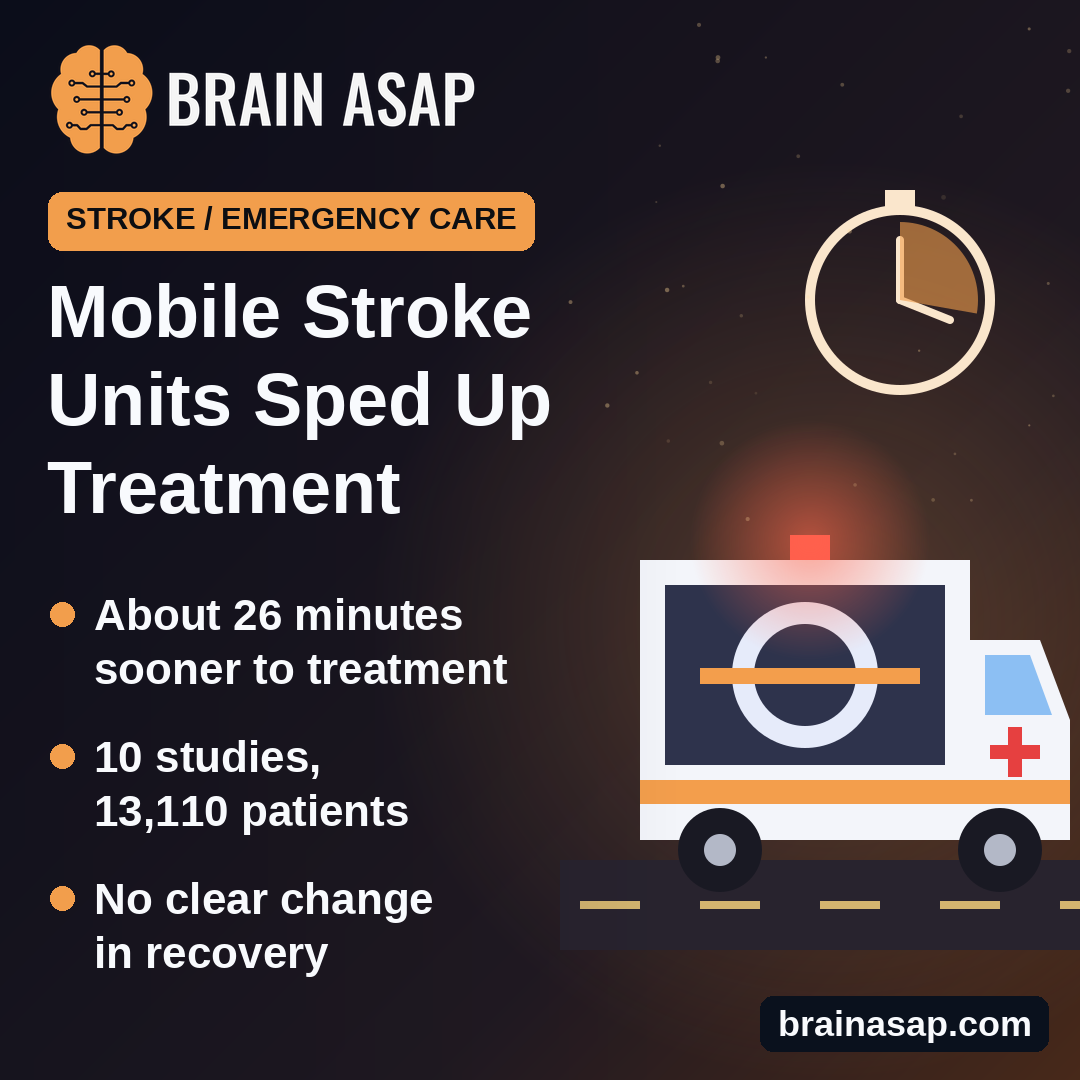
Mobile Stroke Units Started Treatment About 26 Minutes Sooner, Review Finds

Mobile Stroke Units Started Treatment About 26 Minutes Sooner, Review Finds

TL;DR: Across 10 studies and 13,110 stroke patients, ambulances carrying their own CT scanner got clot-busting treatment started about 26 minutes sooner than regular ambulances. The review found no clear difference in recovery or safety, though it may have been too small to see one. Key Findings 10 studies, 13,110 patients: 4 randomized, 6 not, …

Read more

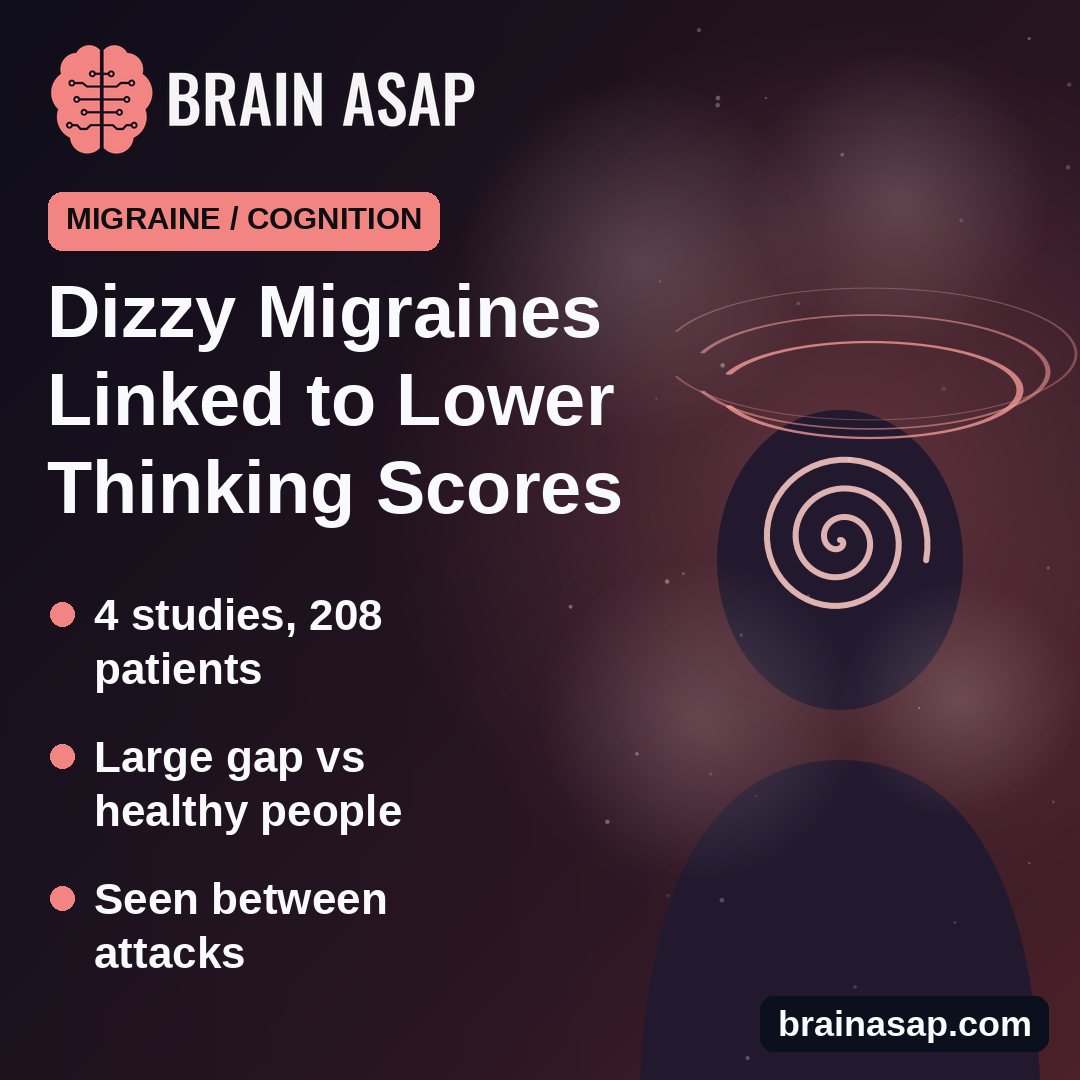
Vestibular Migraine Linked to Lower Thinking-Test Scores, Small Review Finds

Vestibular Migraine Linked to Lower Thinking-Test Scores, Small Review Finds

TL;DR: Across four small studies, adults with vestibular migraine, a type that causes dizzy spells, scored noticeably lower on thinking tests than healthy people, even between attacks. The review was small and could not rule out anxiety, poor sleep or medicines as causes. Key Findings 6 studies found; 4 pooled: 208 people with vestibular migraine, …

Read more

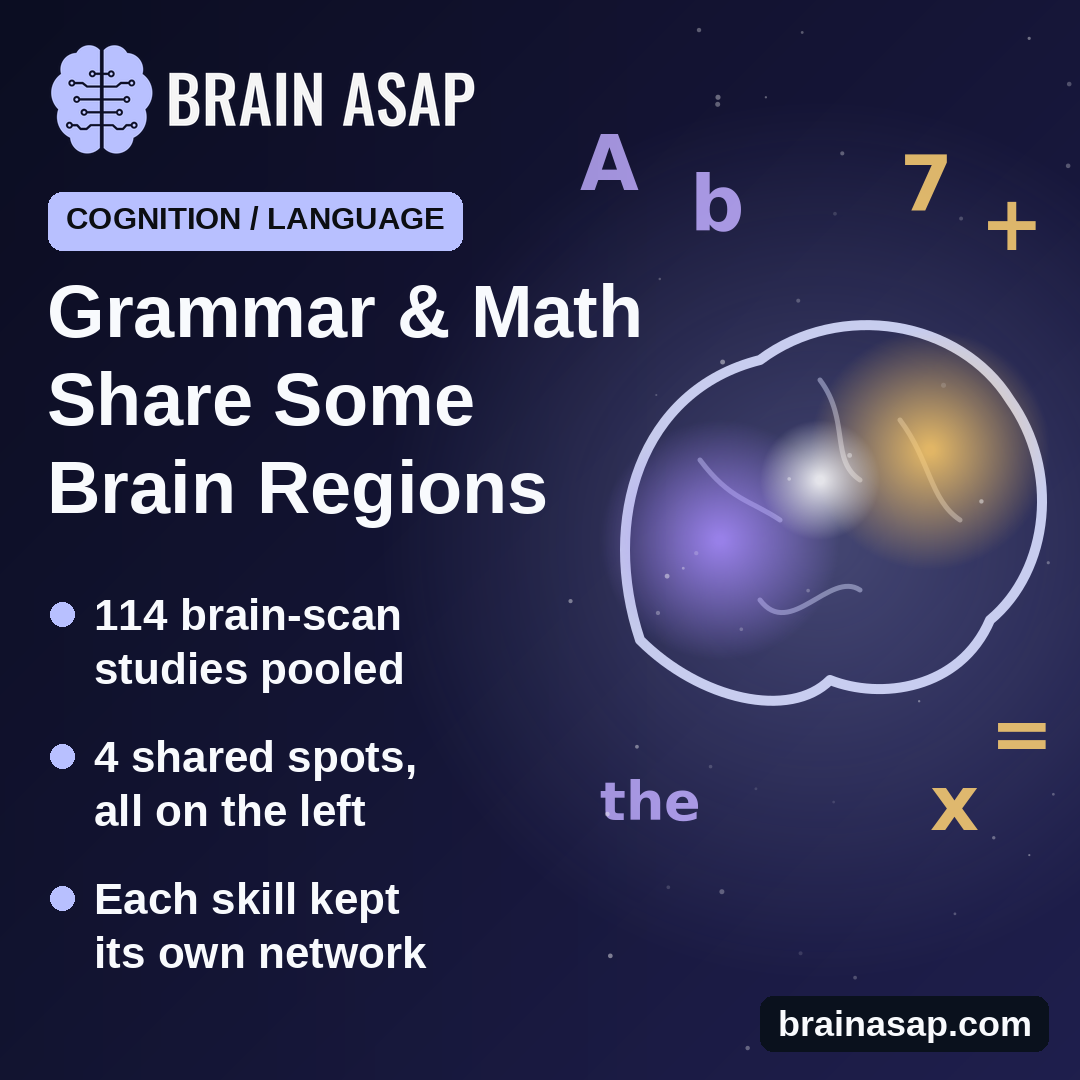
Grammar and Math Share Some Brain Regions, but Each Has Its Own Network

Grammar and Math Share Some Brain Regions, but Each Has Its Own Network

TL;DR: Pooling 114 brain-scan studies, researchers found that grammar and arithmetic both lit up four spots on the left side of the brain, all part of a general problem-solving network. Beyond that, each skill leaned on its own separate regions. Key Findings 114 fMRI studies: 48 on grammar, 66 on arithmetic, in healthy children and …

Read more

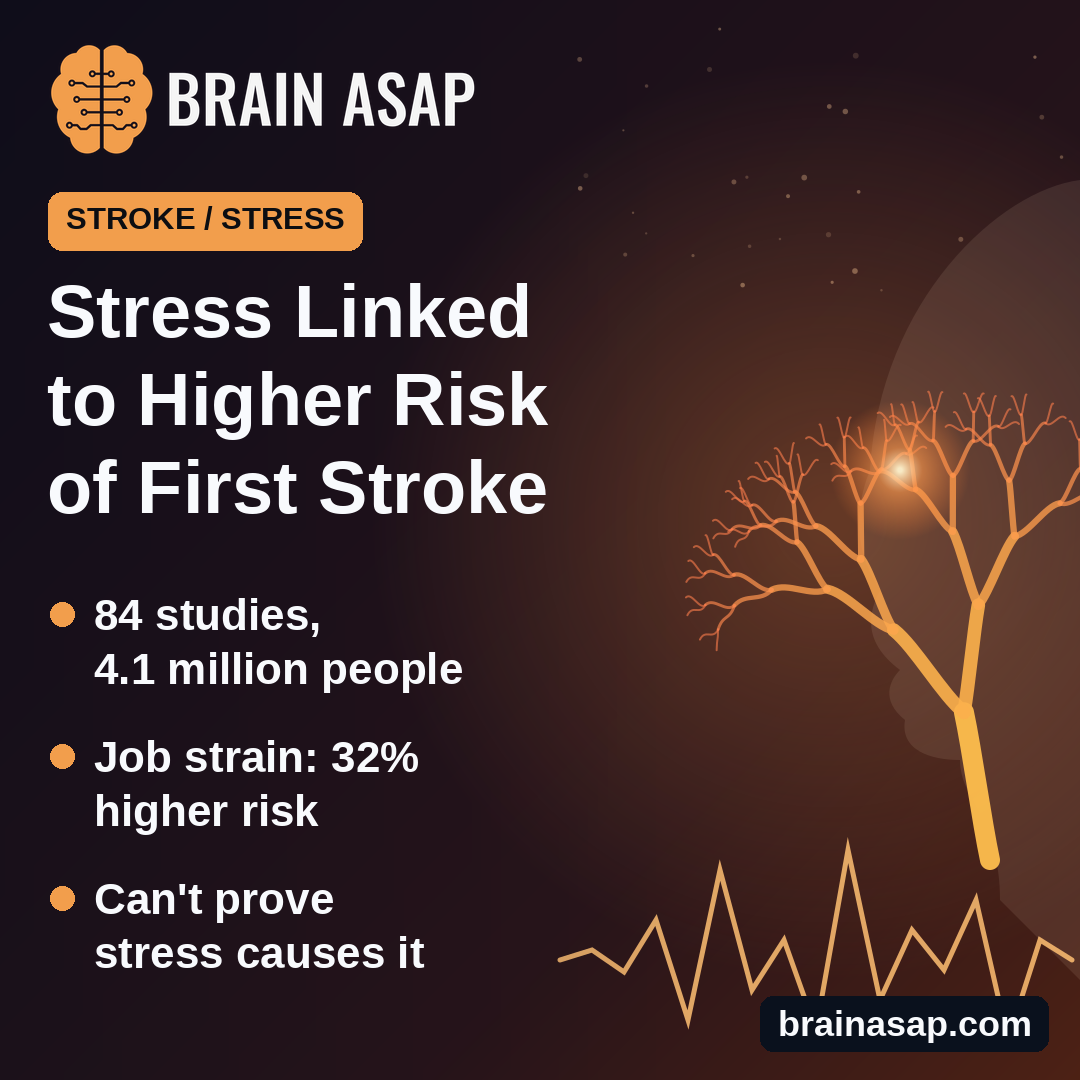
Psychological and Job Stress Linked to Higher Risk of a First Stroke

Psychological and Job Stress Linked to Higher Risk of a First Stroke

TL;DR: In a review of 84 studies covering 4.1 million people, those with psychological distress or job strain had roughly 30% higher risk of a first stroke. The studies were observational, so they cannot show that stress itself causes strokes. Key Findings 84 studies, 4.1 million people: All stroke-free when first assessed. Psychological distress: 27% …

Read more