TL;DR: In four online experiments with Chinese university students, a study-app assistant with a friendly face or chatty wording led to more positive feelings than a plain version. The boost was bigger in students who felt lonelier. Key Findings 4 experiments,…
Read article ↗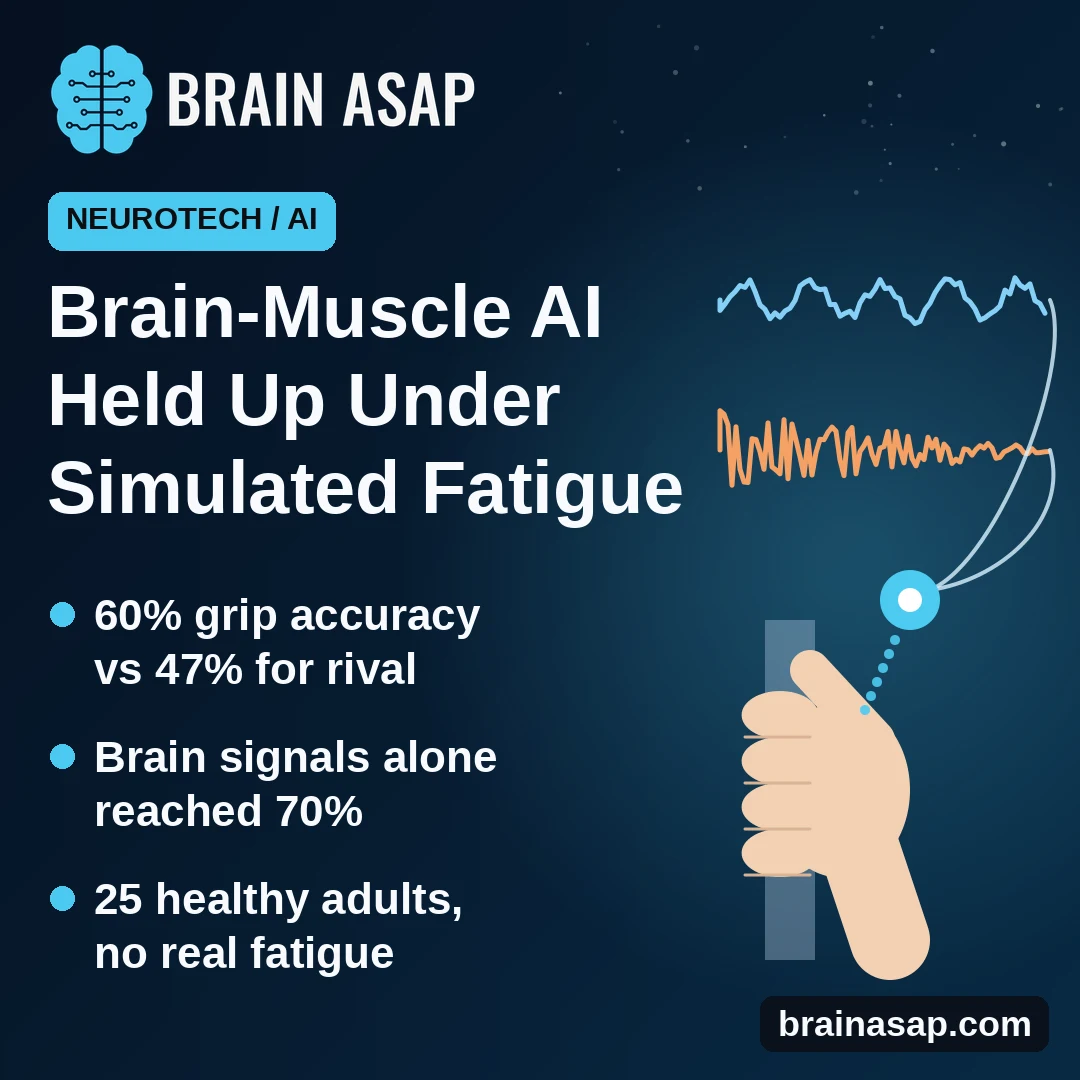
TL;DR: A new AI model that combines brain and muscle signals kept recognizing hand grips better than rival models when the muscle signals were artificially weakened to mimic fatigue. At the heaviest weakening, though, brain signals alone did better than any co…
Read article ↗
TL;DR: In female mice without ovaries, a model of menopause, the osteoporosis drug raloxifene and the hormone progesterone each protected brain dopamine from a toxin that mimics Parkinson’s. Giving both together worked no better than either alone. Key Findings…
Read article ↗
TL;DR: Alzheimer’s-model mice fed very salty chow for 6 months had altered gut bacteria, more brain inflammation and plaques, and more anxious behavior than mice on normal chow. It’s a mouse study, and the gut-to-brain link was not proven. Key Findings 8% vs 0…
Read article ↗
TL;DR: Eleven Indian children whose parents had addiction or serious mental illness all completed 8 sessions of brain-activity feedback training with no side effects. Their brain signals and thinking scores did not change clearly, and there was no comparison g…
Read article ↗
TL;DR: In a 40-person stroke rehab trial, people who did video-game balance training with a tight cuff on the weak thigh improved balance, walking and leg strength more over 4 weeks than people doing the same training without the cuff. The trial was small, sho…
Read article ↗
TL;DR: Mouse studies of spinal muscular atrophy have reported anywhere from no loss to 60% loss of motor neurons, and a German-American team found that which slice of spinal cord gets counted explains much of that spread. Counting the right segments with a rel…
Read article ↗
TL;DR: A Swedish study of 42 people with depression found no link between the brain’s main calming chemical, GABA, and slowed movement, early waking or poor appetite. The researchers measured GABA with two kinds of scans, but most patients had fairly mild vers…
Read article ↗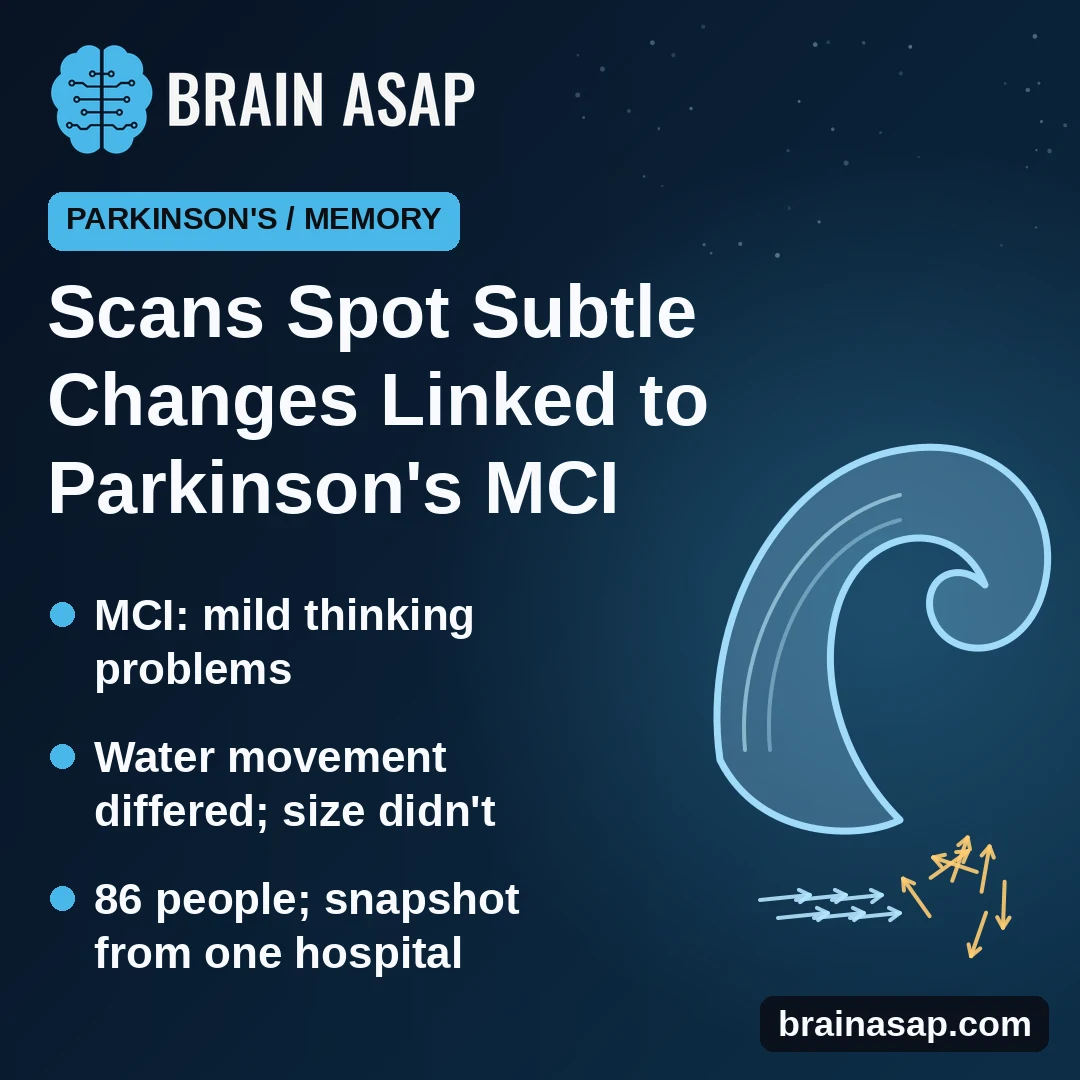
TL;DR: In 86 people from one hospital in China, those with Parkinson’s and mild thinking problems showed changes in how water moves through parts of the hippocampus, a memory center. The hippocampus was not measurably smaller, suggesting a diffusion scan may p…
Read article ↗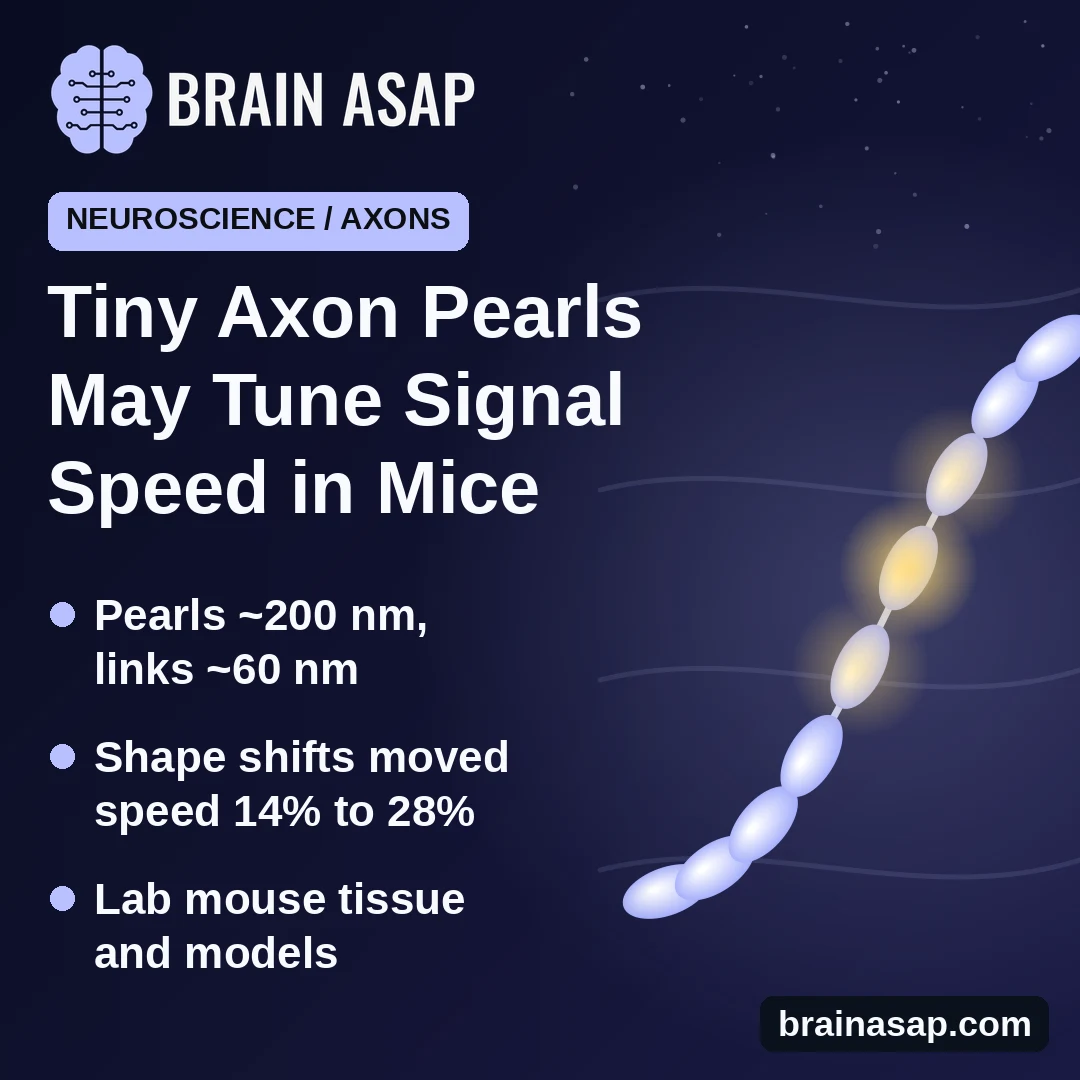
TL;DR: Thin nerve fibers in the mouse brain are not smooth tubes but look like strings of tiny pearls, a shape set by the physics of their outer membrane. Changing that shape with drugs or heavy activity sped up or slowed down nerve signals by roughly 14% to 2…
Read article ↗