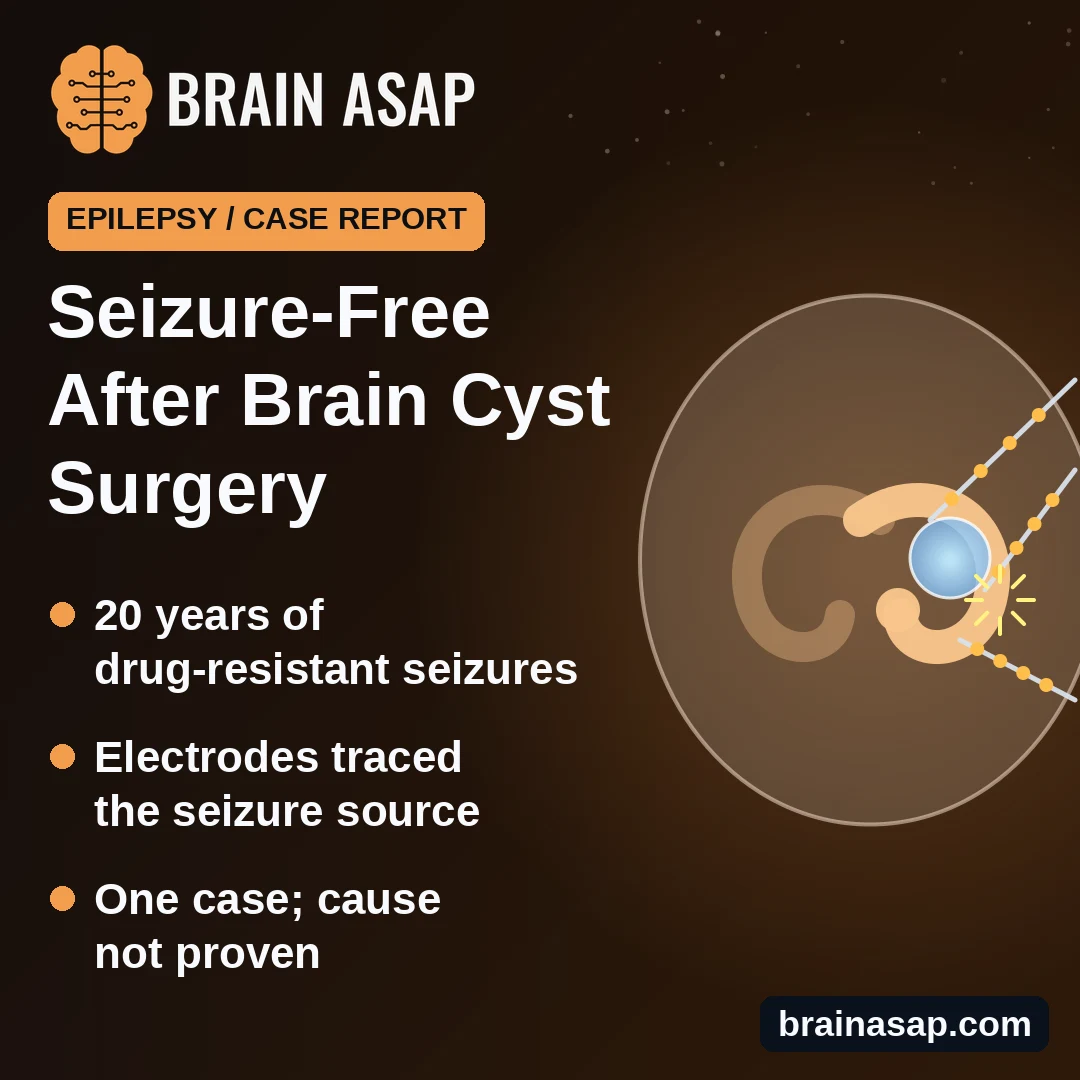
TL;DR: A 35-year-old woman with 20 years of seizures that medicines could not control became seizure-free after surgery removed a small fluid-filled cyst and the nearby part of her brain where seizures started. It is one case, so it cannot prove the cyst cause…
Read article ↗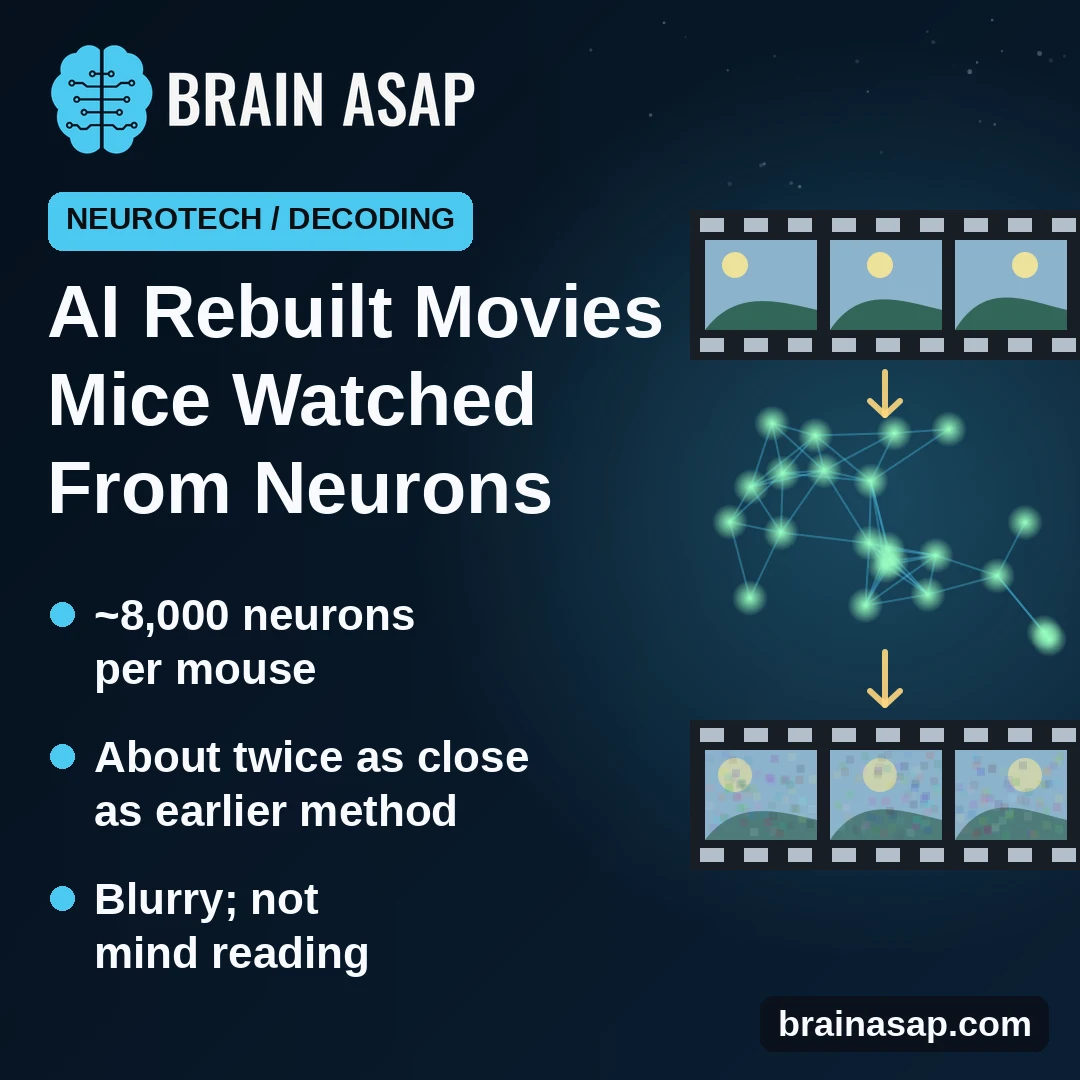
TL;DR: Researchers rebuilt 10-second movie clips that mice had watched, using only recordings from about 8,000 neurons in each mouse’s visual cortex. The blurry, low-resolution results matched the originals fairly well, but this is not mind reading. Key Findin…
Read article ↗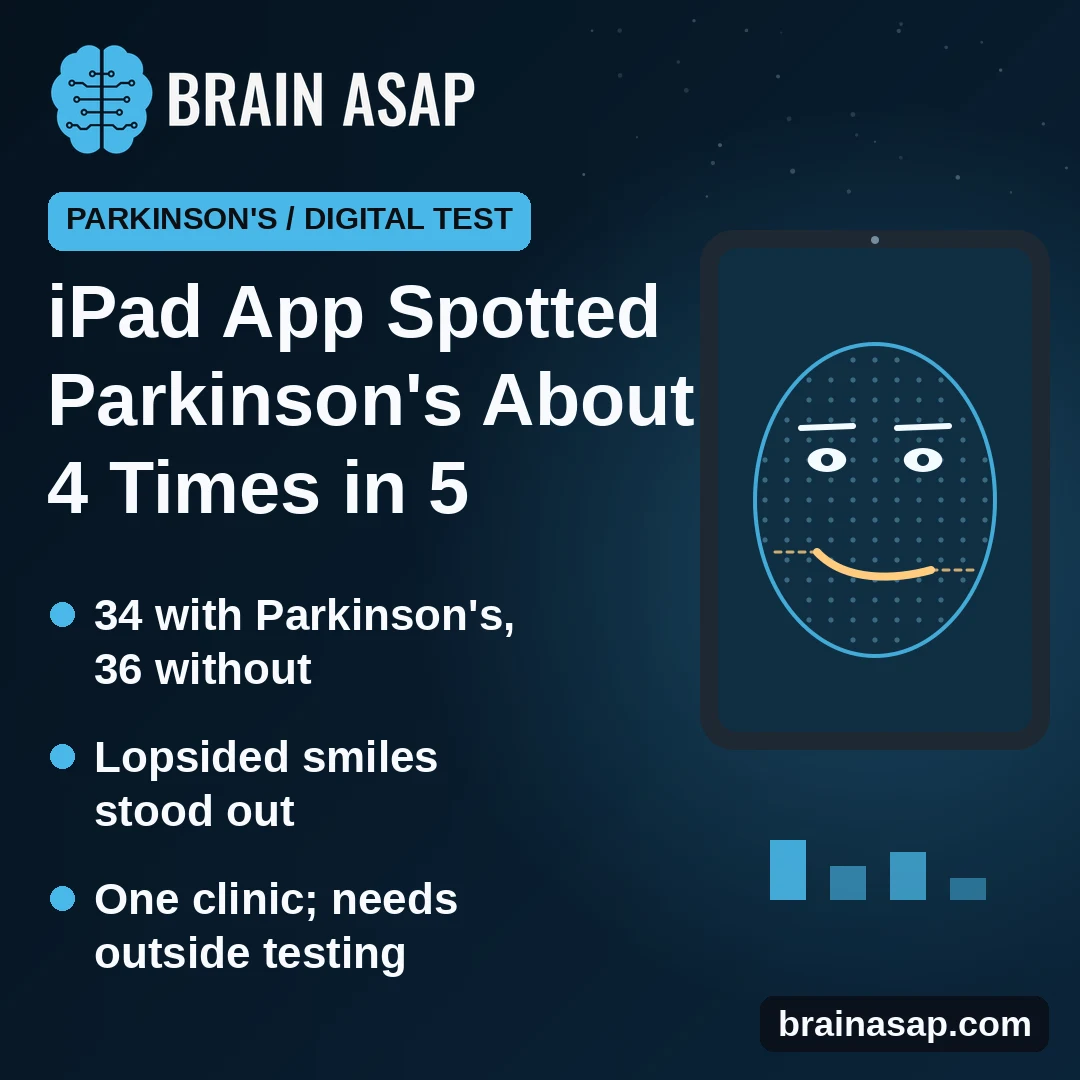
TL;DR: An iPad app that tracks 52 facial movements told apart people with Parkinson’s from people without it about 4 times in 5 in a 70-person study. Lopsided expressions mattered as much as smaller ones. Key Findings 34 people with Parkinson’s, 36 without: Ea…
Read article ↗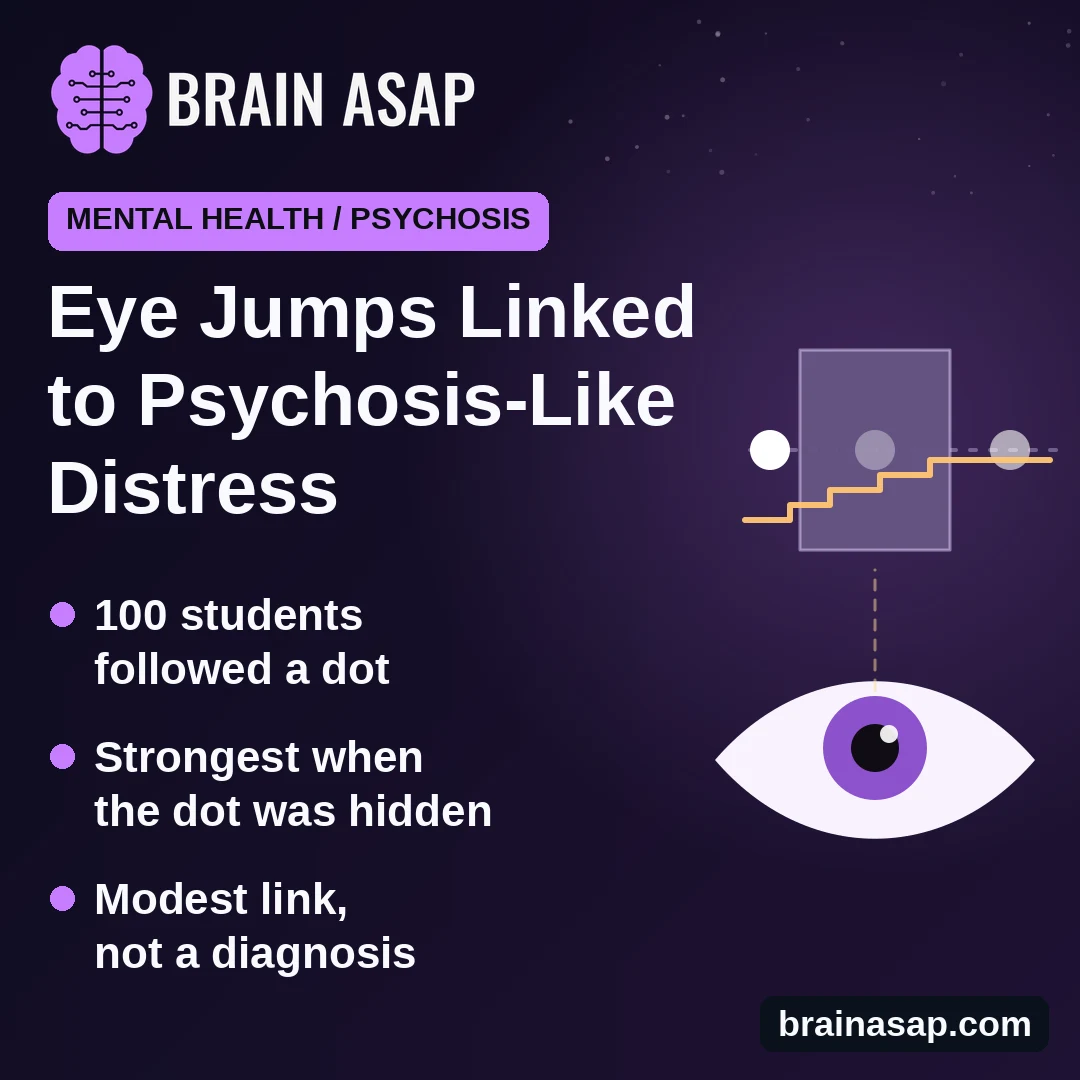
TL;DR: Among 100 college students, those more distressed by unusual experiences like odd perceptions or suspicious thoughts made more jerky “catch-up” eye jumps while following a moving dot. The link was modest, and it was strongest when the dot briefly disapp…
Read article ↗
TL;DR: Brain scans of 48 women with borderline personality disorder showed less gray matter in the insula and parts of the frontal lobe than in 54 women without it. Some of those frontal areas were more strongly in sync with other brain regions, and that synci…
Read article ↗
TL;DR: In a small pilot study, immune cells from people in an untreated schizophrenia episode made more of their energy by burning sugar than cells from healthy people or from patients stable on medication. There was no sign of higher inflammation in the blood…
Read article ↗
TL;DR: In rats trained to spot a brief flash of light, a drug that blocks one nicotine-type receptor (alpha-7) made them better at telling flash from no flash, even with distractions. Drugs that boosted the same receptor made them worse at high doses. Key Find…
Read article ↗
TL;DR: In a small Polish trial of 22 children aged 6 to 9 with coordination problems, coordination exercises with and without moves that cross the body’s center line both improved movement planning and two-sided coordination. Final scores were about the same i…
Read article ↗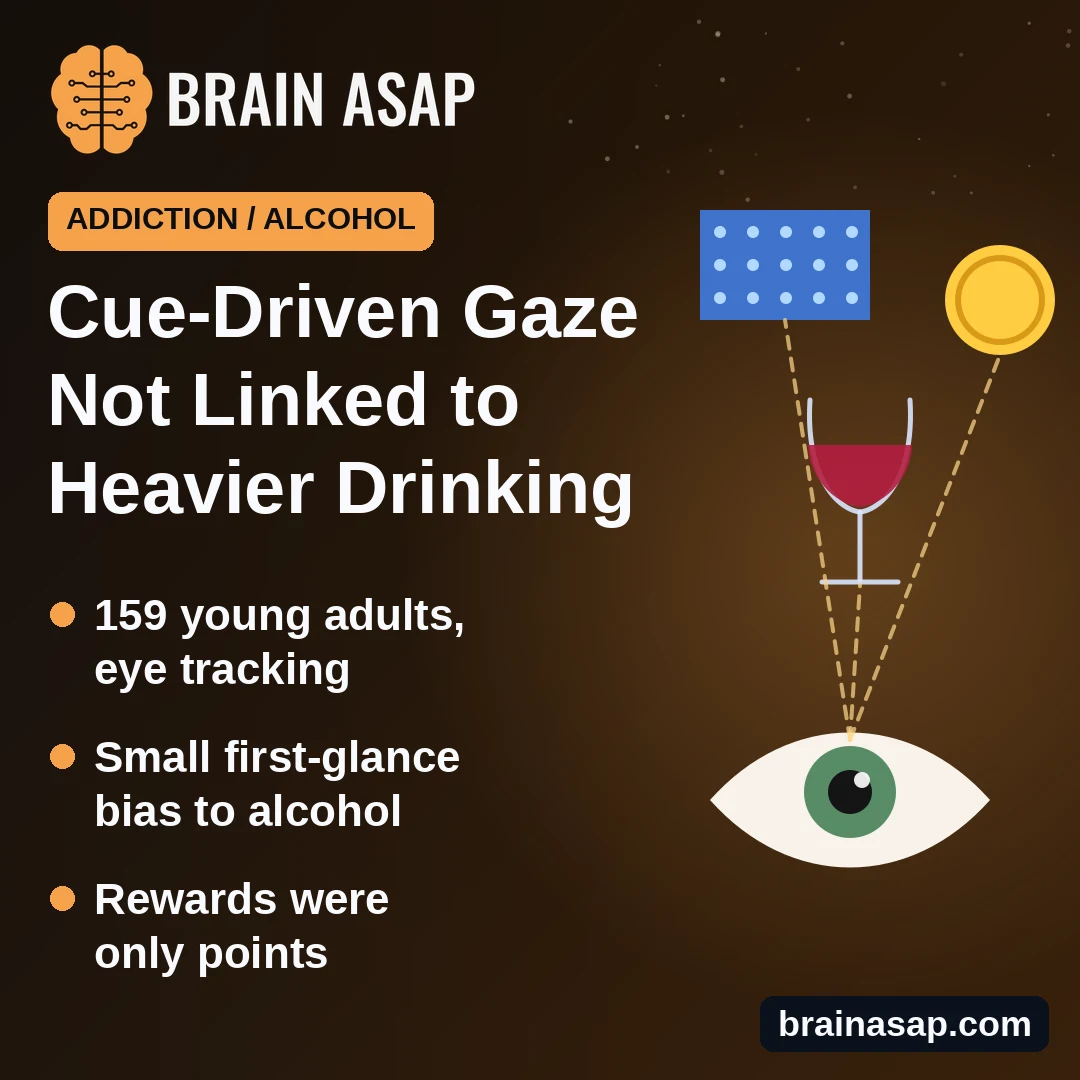
TL;DR: In 159 young adults, people whose eyes were drawn to reward cues rather than to the rewards themselves glanced first at alcohol images slightly more often than one comparison group, but not the other. They did not drink more, contrary to an earlier stud…
Read article ↗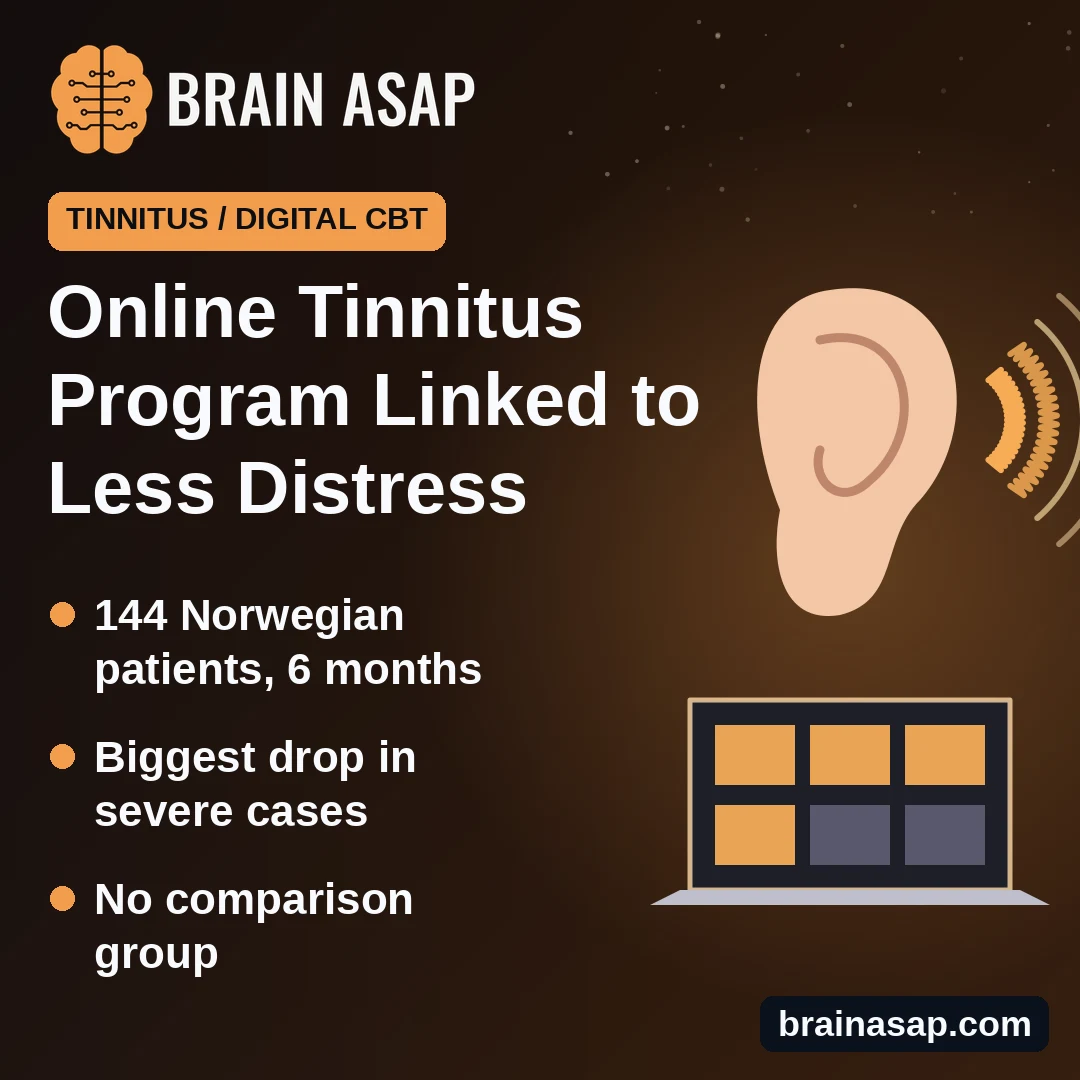
TL;DR: In 144 Norwegian tinnitus patients, an online program of retraining therapy and CBT was linked to less tinnitus distress after 6 months, most in severe cases. With no comparison group, the program can’t take full credit. Key Findings 144 patients: A 6-h…
Read article ↗