
TL;DR: A 2026 preprint in medRxiv used natural language processing (NLP) on Scottish CT and MRI reports to subtype stroke at scale, linking lobar intracerebral hemorrhage to higher later dementia risk and cortical ischemic stroke to higher early myocardial inf…
Read article ↗
TL;DR: A 2026 preprint in medRxiv reported that an interpretable CatBoost machine-learning model predicted stroke-associated pneumonia after acute ischemic stroke bridging therapy with a test-set AUC of 0.932, with 7-day stroke severity and early inflammatory…
Read article ↗
TL;DR: A 2026 study in BJGP Open found no clear cohort-level increase in major bleeding outcomes when selective serotonin reuptake inhibitors (SSRIs) were used with direct oral anticoagulants (DOACs), but the self-controlled analysis still pointed to extra cau…
Read article ↗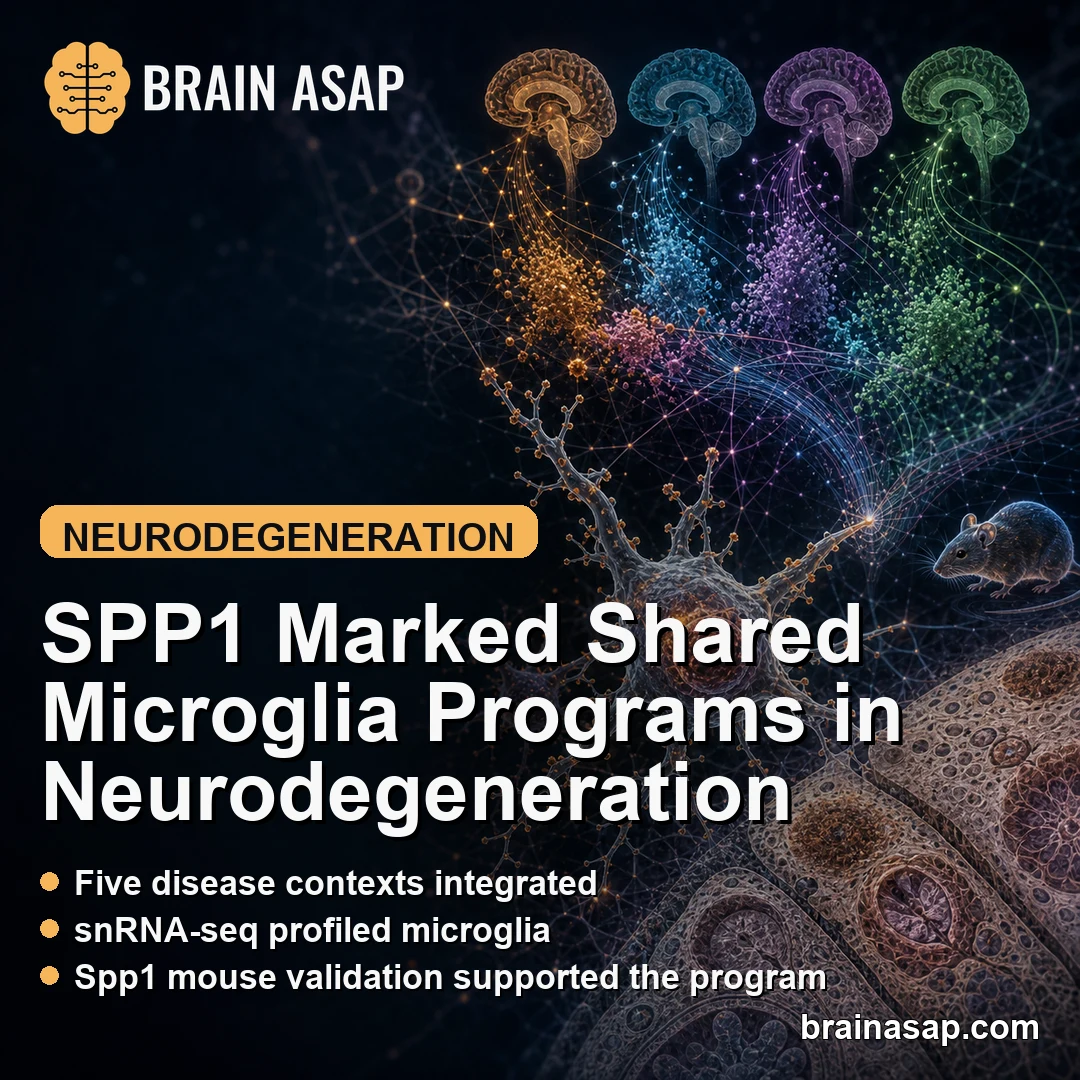
TL;DR: A 2026 study in Glia used human single-nucleus RNA sequencing datasets and mouse validation to identify a shared neurodegeneration-linked microglial transcription program, highlighting SPP1 as a disease-associated microglia marker. Key Findings Five dis…
Read article ↗
TL;DR: A 2026 systematic review in Cognitive, Affective, & Behavioral Neuroscience found that stroke and traumatic brain injury populations showed consistent social cognition alterations across domains, while insula, cingulate cortex, middle frontal gyrus, and…
Read article ↗
TL;DR: A 2026 uncontrolled pilot study in BJPsych Open found that SMART, a personalized text-message program for metabolic health in people with schizophrenia spectrum disorders, improved patient activation, diabetes self-management confidence, health literacy…
Read article ↗
TL;DR: A 2026 mouse study in Nature mapped more than 76,000 single-neuron projections from the orofacial motor cortex (OMC) and found that Alston’s singing mouse, which produces audible song, has 2.8-fold higher OMC connectivity to an auditory cortical region…
Read article ↗
TL;DR: A 2026 preprint in medRxiv reported that serum myelin oligodendrocyte glycoprotein (MOG) protein was higher in multiple sclerosis than controls and higher during clinical relapse than remission. Key Findings 20.5 pg/ml higher: Serum MOG protein was high…
Read article ↗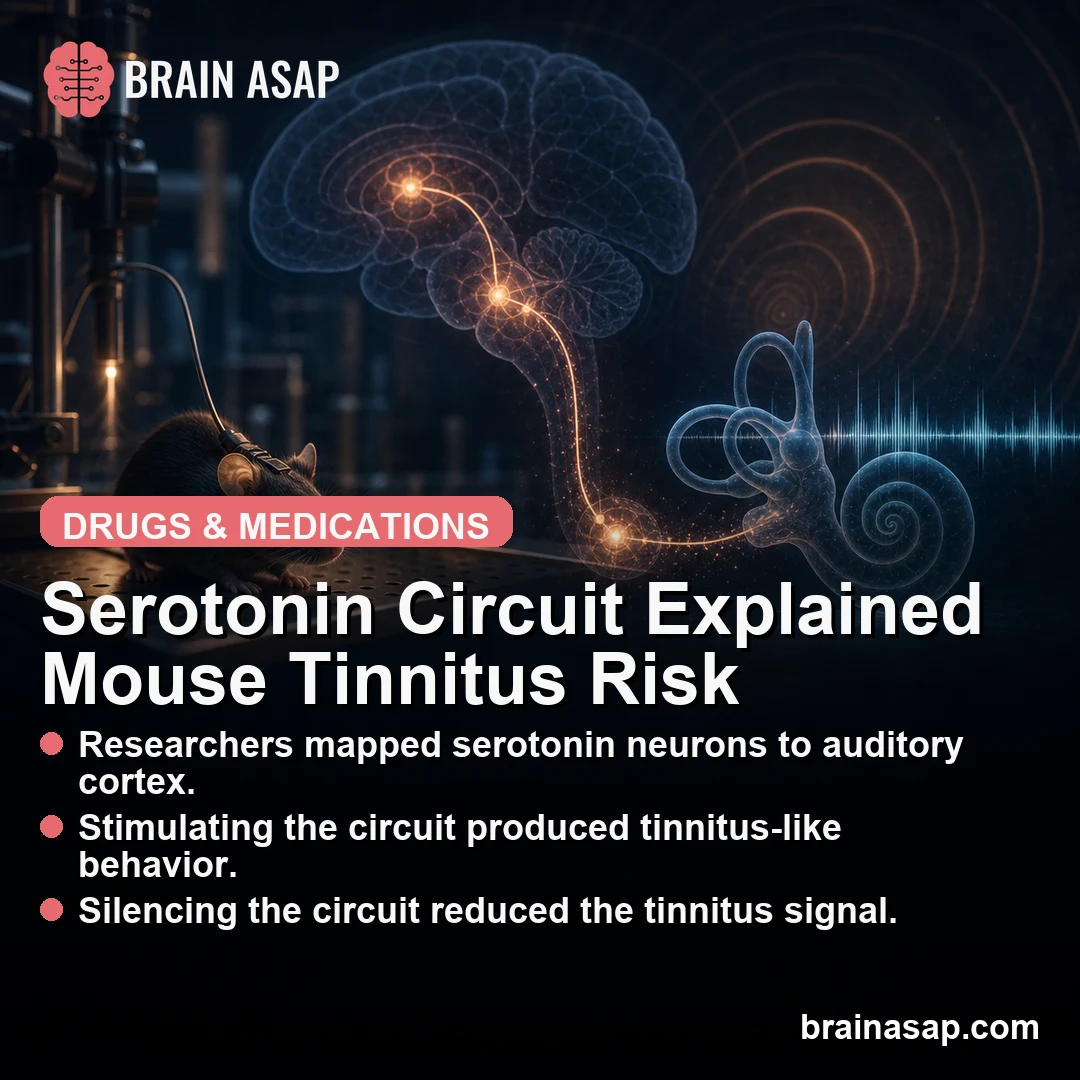
TL;DR: A 2026 study in PNAS from Oregon Health & Science University and Anhui University used optogenetics in mice to map a specific serotonin-producing brain circuit that runs straight to the auditory system, showed that activating this circuit produced tinni…
Read article ↗
TL;DR: A 2026 preprint in medRxiv reported that SenseCheQ, a home quantitative sensory testing device, produced reliable vibration and temperature-threshold measurements in 30 healthy adults and tracked early sensory changes in 3 breast cancer patients receivi…
Read article ↗